Saturday, January 10, 2026
Home Blog Page 32

Wheat Scoop: 2025 U.S. Crop Quality Report

0
Kansas Wheat

Contact: Marsha Boswell, [email protected]

For the audio version, visit kswheat.com.

Quality testing results are in for this year’s U.S. hard red winter (HRW) crop. Global customers will once again be able to purchase good quality wheat that provides high value, according to a recently released report by U.S. Wheat Associates (USW).


Kansas delivered a strong hard red winter wheat crop in 2025, producing more than 340 million bushels as timely late-spring rains helped fields rebound from earlier drought stress. Harvest ran later than normal due to frequent storms, but test weight and falling number concerns proved minimal, and most disease pressures like stripe rust, leaf rust and wheat streak mosaic stayed localized. While protein levels came in slightly lower than recent drought years, overall yield and grain quality across Kansas reflected a resilient crop supported by improved moisture.


After the collection and analysis of more than 2,250 samples of wheat collected from coast to coast, U.S. Wheat Associates (USW) has officially published the 2025 U.S. Crop Quality Report. The report, which is the 46th issued since 1979, provides essential, objective information to help global wheat buyers purchase the wheat they need at the best value possible.


“We are happy to share the 2025 U.S. Crop Quality Report, a detailed look at the high-quality wheat grown by U.S. wheat farmers and used by millers and bakers around the world,” said USW President and CEO Mike Spier. “This USW report reflects not only the quality of the 2025 crop, but also the hard work and commitment of U.S. wheat farmers. We’re proud to share the results of their efforts with our global partners.”


The 2025 report is supported by funding from the USDA’s Foreign Agricultural Service (FAS) export market development programs and USW’s state wheat commission members. The report includes class-specific information, starting with samples collected during harvest. Those samples are then sent to six partner laboratories across the United States, who conduct rigorous testing and analysis. This year’s report includes expanded extensograph testing and additional RVA (Rapid Visco Analyser) flour data for both soft and hard winter wheat.


The results are then compiled into the Crop Quality Report, which provides grade, non-grade, flour and specific end-product data. For example, this year’s report included additional data on sponge cake performance for soft red winter wheat. Overall, across all classes, global buyers will find U.S. wheat to be a consistent and reliable foundational ingredient for wheat-based food products.


USW also shares more detailed, regional reports for all six U.S. wheat classes and Desert Durum® on its website. There is also a new standalone document on collection and analysis methods. Find all crop quality reports and related information at uswheat.org/cropquality.


USW staff will now take this data to international customers during the organization’s annual crop quality seminars. This global showcase is expected to include 35 seminars in 30 countries across all regions of the world.


Shawn Thiele, associate director of the IGP Institute, will join Casey Chumrau, CEO of the Washington Grain Commission, and Senay Simsek, food science department head at Purdue University, for the crop quality seminar series in South America.


From November 3 to 10, the trio presented to key customers and

stakeholders in Peru, Colombia, Ecuador and Chile. These markets have purchased substantially more U.S. wheat in the current marketing year than in years prior, thanks to the competitiveness of U.S. wheat in the world marketplace and USW’s technical assistance and trade servicing activities, like the crop quality seminars.


Unusual farm purchase

0
Thayne Cozart
Milo Yield

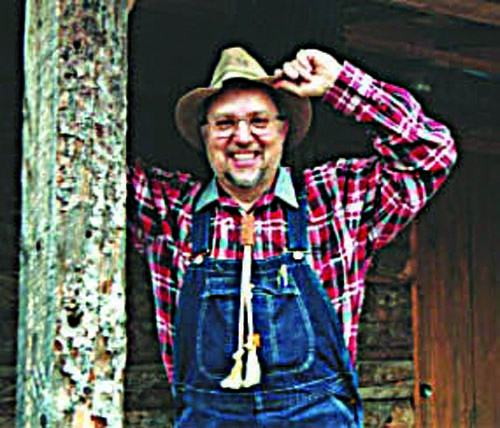
Within our group of old geezers who gather twice a day to convene a gabfest and guzzle coffee, the topics of conversations run the gamut — from popcorn to politics, from history to hair-balls, from sports to shooting the bull, from old cars and trucks to old, achy knees.

Well, recently the conversation one afternoon turned to the price of farmland changing hands across the U.S. Several guys pointed to recent farmland sales that were in the stratosphere compared to the land’s ability to turn a production profit.

That’s when one conversationalist broke in and said, “Yep, it’s a far cry from a farm sale that happened in our family way back in the Great Depression.”

He went on to say that this farm land sale happened near Waynoka, Okla., sometime in the 1930s. There wuz a quarter-section of land that the far-distant relative wanted badly to own.

But, as was the norm in the Great Depression, cash money wuz hard to come by and bartering for many necessities wuz a common practice. So, after considerable hassling over the barter detail between the two parties, they reached a barter deal agreeable to both.

The kinsman gave the landowner a wagon load of alfalfa seed, the wagon it was in, and a team of nice mules to pull it. The landowner handed over the deed to the quarter-section.

Since that time, that farm has been handed down through several generations. And, the story has been retained and retold within the family for the same amount of time.

At first glance, that farm barter seemed to not have much value. But, then our group considered how much time and effort it took in the 1930s to combine a wagon-load of alfalfa seed and the value of a good team of work mules.

***

Statistics reveal that farming and ranching are always close to the top as the most dangerous of ways to working for a living. And, just looking at elderly agriculturists will show a sad number of them are missing a body part or living with a maimed one. And, we don’t see the ones that a fatal farm accident took from us.

But, the counter side of those high farm accident statistics is that many lucky agriculturists live severe-accident-free for all their long and productive lives.

The following is a supposedly true story about a one of the luckiest of those long-lived farmers. He long ago joined the “Big Farm” in the sky.

His name wuz ol’ S. Kipp deFahls, or just plain “Skip” to his friends. He wuz mainly a grain farmer, but he had a side bizness of doing earth-moving and tree-clearing jobs with his caterpillar.

Ol’ Skip wuz the hard-driving, type-A personality. He worked hard, but at the same time never missed an opportunity to work smarter, too — even it it meant taking a personal risk.

The following wuz a prime example of his calculated risk-taking. If Skip needed to move both his caterpillar and his pickup to another location on a big parcel of relatively level land he wuz working on, here’s how he did it in one trip.

First, he aimed the caterpillar toward the location he wanted to move. Then he put the caterpillar into a low gear and throttled the motor down to just a crawl. Then, as soon as the caterpillar started to move, Skip nimbly stepped off onto its moving track and hopped to ground.

Then he trotted back to his pickup and followed close behind the caterpillar as it crawled across the land. Then, when the two-vehicles got close to his desired destination, Skip shut the pickup off, quickly got out and trotted up to the rear of the still-moving caterpillar. Then he expertly put a foot on a rotating cleat of the caterpillar track and rode it up to the cab and hopped into the cab and shut the rig down. It wuz a time-saving trick that worked safely for Skip all his life.

However, the accident stats indicate that Skip might have been luckier than smart.

***

My 2025 gardening came to an end with the first late frost. All in all, I’d rank this year’s gardening results as among the best ever. For the first time in my life, I ate fresh-picked peas and new tomatoes in November. I’m still eating vine-ripened tomatoes. All the dried beans are shelled and vacuum packed. The pantry and freezer have lots of canned and frozen veggies in them.

All the frosted vegetation is now in my compost pile. All that’s left to do is put away the hoses and stash the tomato cages for the winter. Hope I’m healthy enuf to do it all again next year.

***

Last week I ended my column with three “Debbie Downer” depressing limericks about “problems” I see in American life. Well, pessimism ain’t really my bag. I prefer optimism.

So, for my column’s “wise words” this week, here are the upbeat lyrics to a song my beloved maternal grandmother, Anna Johanna, wrote back in the 1950s. It’s title is “Happy Go-Lucky Me.”

***

Happy Go-Lucky me.

I go around a’singing.

Happy Go-Lucky me.

Don’t know what tomorrow is bringing.

I can see happiness

Once more at my door.

It just came a’knocking

Like it did before.

When I thought that I was down and out,

I still kept my head up.

Didn’t know what it was all about.

At times I was quite fed up.

With troubles. Then double troubles.

But then the sun came shining through.

Never let yourself down.

Wear a smile, not a frown.

It’s the best thing to do.

***

Have a good ‘un.

Horticulture 2025 Newsletter No. 20

0
KSU horticulture

1712 Claflin, 2021 Throckmorton Plant Science Center
Manhattan, KS 66506 (785) 532-6173
PDF Version: HORT Newsletter #20

ANNOUNCEMENTS
K-State Garden Hour
Wednesday, December 3, 12:00 (noon) – 1:00 PM CST
Register to attend this free live webinar at the following link: K-State Garden Hour

Join Butler County, Extension Agent, Calla Edwards as she shares ideas for the perfect holiday gift for gardeners during this free, live webinar.

Kansas Turf & Landscape Conference
The 75th Annual Kansas Turf and Landscape Conference will be held on December 3 and 4 (Wednesday and Thursday) at the Hilton Garden Inn, Manhattan. The conference is an excellent way to learn about turf and landscape management, visit with old friends, network with new ones, and see all the latest products and supplies from local and national vendors.

The conference has been approved for commercial pesticide recertification hours:
1 Core hour
3A 7 hours
3B 7 hours
GCSAA education points and International Society of Arboriculture CEUs will also be available by attending the conference.

Download a copy of the program, get exhibitor information or register online at:
https://www.kansasturfgrassfoundation.com/

Register before November 21 to receive a discounted rate.

GARDEN TO-DO
Drain hoses and irrigation systems before winter
Fertilize cool-season lawns
Dig and store tender bulbs after leaves are browned by frost
Water landscape plants, as needed, before winter
Plant spring-flowering bulbs

FLOWERS
Amaryllis
Amaryllis (Hippeastrum) is a classic bloom during the holidays. If you are purchasing bulbs, select the largest ones available that are firm and dry. If growth is visible, it should be bright green. Each bulb should produce three to four blooms on a one to two-foot stem. Larger bulbs will produce more flowers.

Amaryllises grow best in tight spaces. Select a container about one-inch larger in diameter and twice as tall as the bulb with drainage holes in the bottom. Hold the bulb over the container with the roots dangling to the bottom and add a sterile potting mix. Firm the soil around the roots carefully to avoid damaging them. Leave the top third to half of the bulb visible above the soil.

Put the container in a sink and water thoroughly. When the water has stopped draining, set the plant in a warm, sunny location. As the flower opens move the plant away from direct sunlight and to a cooler location to prolong the bloom period which can last up to one month.

When blooming is complete, the amaryllis plant is still growing. Remove the bloom stalk to prevent the bulb from expending energy on seed formation. Move the container back to the sunny window. When the danger of frost has passed, you can gradually expose the plant to the outdoors by first moving it to an area with dappled shade. Over time move it to a location with six hours of full sun each day. Apply a balanced houseplant fertilizer monthly.
Prior to the first frost bring the amaryllis back inside and place it in a dark location. Stop watering it and when the leaves dry cut them off just above the bulb. Allow the bulb to rest for eight to twelve weeks with no water. When new growth appears or when you are ready to force the bloom, relocate the bulb to a sunny window and begin watering and fertilizing regularly. From dormancy to bloom it usually takes four to six weeks. Though amaryllises only require repotting every three to four years, the time to do this is after dormancy.

Winterizing Roses
Although most shrub roses are hardy through Kansas winters, many hybrid teas and other modern varieties require protection. It is important to winterize roses AFTER several hard frosts have occurred, but BEFORE the ground freezes. Winterizing too early keeps the stems warm and moist which promotes. Winterizing too late risks damaging the sensitive graft union where the rootstalk attaches to the above ground growth.

Clean up plant debris in the area surrounding the roses to prevent diseases from overwintering. Mound soil or compost eight to ten inches high around each rose plant. Bring in new soil for this instead of displacing soil from the area around the roses to avoid exposing and damaging the roots.

Once the ground has frozen, add a 4-inch layer of straw, leaves, wood chips or other mulch over the mound and cover with a layer of soil to hold it in place. This will help protect the plants from the cold but also prevent early budding during warm winter and early spring days. As the mulch settles during winter you may need to add more.

Prune canes to 36-inches and remove weak or thin canes. Tie the remaining canes together loosely to keep them secure during windy weather. If the canes are allowed to whip in the wind it can cause damage to the crown and disturb the soil.

When the ground thaws in the spring remove the mulch and soil from the base of the plant to return the soil level to normal.

FRUIT
Winterizing Strawberry Plants
Whether your strawberry plants are young or established, mulching is necessary to protect them from winter damage. Sudden drops to freezing temperatures can kill fruit buds and injure roots and crowns. When the soil freezes and thaws repeatedly, plants can be heaved out of the soil exposing the roots.
A 3-inch layer of straw mulch can be applied to protect plants after they have been exposed to several frosts but before the heavy freezes begin. In Kansas, this timing usually falls between Thanksgiving and Christmas.
For more about growing Strawberries, visit our KSRE Publication: Strawberries.

TURF
Fall Knotweed Control
Knotweed, or knotgrass, is an aggressive warm season annual that reproduces by seed. It germinates in early spring resembling grass. Later in the season it develops into a flat mat up to two feet in diameter. The stems are slender and wiry with a papery sheath at each node giving them a knotted or swollen appearance.

Knotweed is commonly found in poor quality soils. This includes areas of compaction with poor fertility as often occurs near busy walkways. Lawns with thin turf are susceptible to knotweed, particularly those with heavy traffic such as athletic fields.

Proper maintenance is the first step to controlling knotweed. Minimize/reduce soil compaction and manage turf density with recommended care protocols.

Knotweed germinates in late February to early March so if you plan to use a preemergence, it should be applied in late fall. If you will be re-seeding your lawn in the spring, DON’T use a preemergence. Contact your local Extension agent for recommendations on knotweed control.

To read more about knotweed, visit K-State’s Turfgrass resource: Knotweed.

TREES
Wrap Trees to Prevent Sunscald and Frost Cracking
Sunscald affects young trees with thin, smooth bark. It is most common in late winter on the southwest side of the trunk. Exposure to sunlight and warm temperatures during the day heats up the tissues causing them to lose their dormancy. After sunset, when the temperature drops, these cells freeze and die. The result is large, irregular wounded sections of the bark on this side of the trunk.

Frost cracks are long splits in the trunk or stems. They are caused by old wounds and drastic changes in temperature heating and cooling the outer and inner layers of bark at different rates.

Tree wraps can be used during the winter to protect young trees from weather-related injury. Wraps can be purchased for this purpose and should be light-colored with some elasticity. The trunk should be wrapped starting at the base of the tree upward and stopping just below the lowest branches. This is only seasonal protection for trees during their first few years of establishment. Remove the wrap in the spring and never staple the wrap onto the trunk.

Colorado State University Extension has a helpful publication with the proper steps for wrapping a tree for winter protection: Wrapping Trees for Winter.

MISCELLANEOUS
Compost Pile Maintenance
Decomposition in the compost pile slows down as the weather gets cooler. Avoid turning the pile during this time of year since the inside of the pile is warmer and turning it to the outside will cool down the entire pile. The freezing and thawing that often takes place through the winter is actually beneficial for decomposition.

If you choose to add food waste to the compost pile through the winter months, recognize it will not decompose as quickly and could attract pests. You can prevent this by covering any scraps with a layer of dried leaves or bury them into the heap.

Keep the compost pile moist to promote decomposition. The pile should not be waterlogged however because this restricts oxygen and causes rotting. The edges of the pile will dry out first and a light sprinkling of water may be sufficient if there has been no precipitation.

QUESTION of the WEEK
Are the K-State Garden Hour webinars recorded?
I’m not available to watch the K-State Garden Hour webinars at the time they’re offered. Is there a way to watch a recording of the webinars?

YES! The K-State Garden Hour is an educational webinar presented live on the first Wednesday of each month from noon to one o’clock PM. Though we’d love to have you join us at that time so you can ask your questions of our experts presenting at that time we know that doesn’t work for everyone.

Each webinar is recorded and archived so you can re-visit any of the webinars at any time. We even have a YouTube playlist of all the K-State Garden Hour recordings.
Take a look, listen and learn!
K-State Garden Hour History

Contributors:
Cynthia Domenghini, Instructor
Kansas State University Extension Specialists
Kansas Garden Guide
K-State Turfgrass Extension
Division of Horticulture
1712 Claflin, 2021 Throckmorton
Manhattan, KS 66506
(785) 532-6173

For questions or further information, contact: [email protected].

This newsletter is also available on the World Wide Web at:
http://hnr.k-state.edu/extension/info-center/newsletters/index.html

The web version includes color images that illustrate subjects discussed. To subscribe to this newsletter electronically, send an e-mail message to [email protected] listing your e-mail address in the message.

Brand names appearing in this newsletter are for product identification purposes only. No endorsement is intended, nor is criticism implied of similar products not mentioned.
K-State Research and Extension is committed to making its services, activities and programs accessible to all participants. If you have special requirements due to a physical, vision or hearing disability, or a dietary restriction please contact Extension Horticulture at (785) 532-6173.

Cynthia Domenghini, Ph.D.
Instructor, Horticulture and Natural Resources
Kansas State University
[email protected]

Access the HORTNEWS-L Home Page and Archives

Unsubscribe from the HORTNEWS-L List

Houseplants Lose Leaves After Being Brought Inside?

0

Those houseplants brought in from outside or newly bought often lose at least a portion of their leaves. In order to understand why this occurs, we need to look at how these plants are grown and what the plant needs to do to adapt to its new environment. Houseplants are normally produced either under shade outdoors in southern states or in greenhouses. Also, many homeowners move their houseplants outside during the summer. Regardless, the plants receive much more sunlight than they do in an indoor environment. Research done in Florida in the late 1970s revealed that tropical plants grown under high light conditions produce ‘sun leaves’ while those grown under low light conditions have ‘shade leaves.’ These leaf types differ structurally in that sun leaves have less chlorophyll (the substance that plants use to convert sunlight to energy) and the chlorophyll that is present is located deeper inside the leaf. Sun leaves also tend to be thick, small and numerous while shade leaves are more thin, larger, and fewer in number. When plants are moved from one light condition to another they need time to adjust. This process is known as acclimatization. If they are forced to acclimatize too quickly, they will drop their sun leaves and produce a new set of shade leaves. If the acclimatization process is slower and less drastic, the plant can convert their sun leaves to the shade leaves that do better under low light. If going from shade to sun, this process is reversed.


Some houseplants are acclimatized before they are sold but many are not. So how do we help our new houseplants or those moved inside acclimatize to their new home environment? Houseplants should start out in an area of the home that receives plenty of light and then gradually moved to their permanent, darker location. This process should take 4 to 8 weeks depending on the degree of difference in light levels between the initial and final location of the plant. Remember, plants need to be acclimatized whether they are moved from a sunny location to one that receives less light or from shade to sun. Understanding plant processes allows us to anticipate potential problems. Acclimatization gives our houseplants a greater chance of retaining leaves and avoiding the stress of completely replacing them.

Salmon Spread

0

It’s hard to believe we are already 12 days into the month of November. By the time everyone reads the column, it will be like half the month is over. Too fast for this gal, I know that much. I’m trying to get a great deal accomplished in what appears to be a very small window of time. I fell behind this past weekend so now I’m starting to doubt myself.

Every family has their favorite appetizers for the holidays, super bowls and the like. One of my family faves is my Salmon Spread. It’s super easy to make, and it usually shows its self sometime during the holiday season. I may slip a small batch into two lovebirds stash as they head to the airport on their honeymoon. It will hold for several days in the refrigerator, and it’s much better after it has set for 24 hours before serving.

Often I will smoke my own salmon, but you can always purchase smoked salmon in a pouch, at the grocers. Which remind me to put it on my list

along with a couple of quarts of eggnog! I already have the shortbread cookies in the pantry as we enter the holiday season. They are another mandatory on the holiday ‘must have’ list. Now if I could just find the chocolate drops. Usually I get them at Hobby Lobby, but they were already out last week.

Serve the salmon spread with crackers or toasted rye. On Thanksgiving Eve we always have a specialty soup & this would be a nice side along with a few vegies and dip. That also reminds me I haven’t squared away the Thanksgiving dinner yet. Ervin and I are planning something like a stew on Thanksgiving Day and then follow up on Sunday with our big dinner. By that time I also need to have the tree up, followed by most of the décor. wow, it’s lots to think about!

Get those lists started for the groceries, and don’t forget to shop at Aldi’s, also watch for sale items in your other grocery stores. Make as much ahead of time as possible, so the cook too, can enjoy the big day. One of our other Thanksgiving standards is cinnamon rolls and scrambled eggs on

Thanksgiving morning. I will say my dried bread is crumbled and in the freezer, ready to go, and the celery is diced and sitting in the freezer too. I’d like to find time for homemade egg noodles, but that may be pushing it too much. Enjoy the crisp air, and the warmth of a good fire. Simply yours, The Covered Dish.

Smoked Salmon Spread

1 can, skinless, boneless salmon, flaked, (6 oz.)

8 ounces cream cheese

1 tablespoon lemon juice

½ cup finely minced onion or green onion

1 tablespoon mayonnaise

1 tablespoon liquid smoke, I only use organic

(Will omit, if salmon is already smoked.)

Parsley, finely chopped.

Soften the cream cheese if necessary. Add all ingredients and blend until smooth. Some may choose to use a little dry dill instead of parsley, I would suggest a small amount if you go this route.

At our home I always present the spread in a fish shaped appetizer bowl. Refrigerate. Keeps for 7-10 days in frig.