Pheasant/Quail Seasons
Youth: Nov. 4-5, 2023
Regular: November 8, 2025 – January 31, 2026
Greater Prairie Chicken Seasons
Regular: September 15, 2025 through January 31, 2026
Forecast Factors
Two important factors impact availability of upland game during the fall hunting season: number of breeding adults in the spring and the reproductive success of the breeding population. Reproductive success consists of both the number of hatched nests and chick survival. For pheasant and quail, annual survival is relatively low; therefore, the fall population is more dependent on summer reproduction than spring adult numbers. For prairie chickens, reproductive success is still the major population regulator, but higher adult survival helps maintain hunting opportunities during poor conditions. In this forecast, breeding population and reproductive success of pheasants, quail, and prairie chickens will be discussed. Breeding population data were gathered using spring calling surveys for pheasants, quail, and prairie chickens. Data for reproductive success were collected during late-summer roadside surveys for pheasants and quail, which quantify both adults and chicks observed. Reproductive success of prairie chickens cannot be easily assessed using the same methods because they do not associate with roads like pheasants and quail.
Kansas has a dramatic rainfall gradient from more than 50 inches of average annual rainfall in the far east to less than 16 inches in the far west. The amount and timing of rainfall plays a major role in reproduction for upland birds. In the west, wet years typically improve the available cover and increase insect availability for chicks. In the east, dry years are typically more optimal, as heavy rains during spring and summer can reduce survival of nesting birds and young chicks. Above average summer rainfall in 2023 across much of western Kansas greatly improved nesting cover going into spring of 2024. Adequate rainfall continued into mid-summer across much of the west providing good nesting and brooding cover. As a result, production was significantly better than we have seen in some time.
2025 Species Summaries
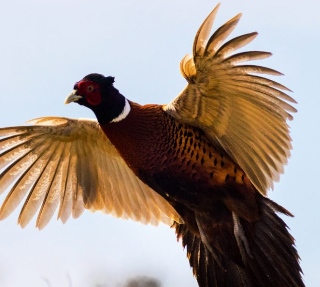
Pheasant
Pheasant densities continued to improve this year as above average rainfall maintained better habitat across much of the primary range. The central regions saw the best improvements as these regions continued to recover from drought. The High Plains region of the western 1/3 of the state maintained solid but slightly lower densities. Chick survival was likely reduced this year due to cold wet conditions during peak hatch. However, the improved habitat resulted in more broods, largely offsetting the smaller brood sizes. After 2 years of good nesting conditions, summer surveys were well above the 10-year average. Acres enrolled in CRP were released to be used for emergency forage for cattle across most of the state again this year. To this point it appears CRP has not been relied on as heavily as in the past, but this has the potential to impact hunter success where it was. Hunting will be much improved this year and harvest should increase. The best areas will be in the High Plains of northwest and southwest Kansas; however, pheasant densities were relatively similar across most of the western half of the state.
Quail
Statewide quail populations were significantly improved this summer after above average rainfall helped recover rangelands and other habitats through the western regions. This increase was a result of a wide swath of the central portion of the state seeing improved densities this year. While brood sizes actually declined some, likely associated with frequent heavy storms, nest success was greatly improved across much of the state resulting in many more broods this year. The highest densities tended to remain in the southern half of the state similar to last year, with the highest regional densities in the Southcentral Prairies and Southern High Plains. After a few poor years of production in the Smoky Hills in northcentral Kansas, brood surveys rebounded this year. Kansas maintains one of the strongest quail populations in the country and given our abundant access, harvest will again be among the highest in the country. The best opportunities will be across the southern half of the state extending up through northcentral Kansas, with quality hunting opportunities scattered in the remaining regions.
Prairie Chicken
Kansas is home to both greater and lesser prairie-chickens. Both species require a landscape of predominately native grass and benefit from a few interspersed grain fields. Greater prairie-chickens are found primarily in the tallgrass and mixed-grass prairies that occur in the eastern third and northern half of the state. Greater prairie-chickens have recently expanded in numbers and range in the Northwestern portion of the state while declining in the eastern regions. While prairie chickens are typically less volatile than other upland birds species, recent prolonged drought conditions have impacted production resulting in lower spring densities. Improved rainfall this year likely facilitated better production but the regions with the best remaining prairie chickens did not recover as well as the remaining regions. Hunting opportunities will be best in the Smoky Hills Regions this fall where populations have remained the most stable, and public access is more abundant to appropriate habitat.
The Southwest Prairie Chicken Unit, where lesser prairie-chickens are found, is closed to hunting. Greater prairie-chickens may be harvested with a 2-bird daily bag limit in the Greater Prairie-Chicken Unit. All prairie chicken hunters are required to have a Prairie Chicken Permit, which allows KDWP to better track hunter activity and harvest to inform management.
2025 Regional Summaries
Northern High Plains (Northwest)
Public Land: 12,849 acres
WIHA: 361,667 acres
Pheasant: This region saw slight declines on brood survey this year, but largely maintained the improvements from last year. While most of the state saw heavy precipitation throughout the summer, the Northern High Plains actually had below average rainfall coming into the summer. This appears to have had the most impact in our shortgrass prairies along the Smoky Hill river. The remainder of the region maintained better densities . Some of the areas that had not seen as good as recovery last year filled in this summer. Milo is less common in this region so targeting good cover such as waste ground or quality CRP adjacent to food is key.
Quail: Quail are limited and are typically harvested opportunistically by pheasant hunters. Weather patterns have facilitated a population expansion into the area where appropriate habitat exists, providing hunters with a welcomed additional opportunity in recent years. Densities on the summer roadside survey increased this year as a result of improvements in the Northeastern counties of the region along the Smoky Hills where opportunity will be best this year.
Prairie Chicken: Prairie chicken populations had recently expanded in both numbers and range within the region however, drought conditions reduced spring densities of prairie chickens considerably. Only portions of this region are open to hunting (see map for unit boundaries). Production in the region was likely good this year based on other upland bird production which should improve hunting opportunity from last year. Within the open area, the best hunting opportunities will be found in counties along the Nebraska state line in native prairies and adjacent CRP grasslands.
Smoky Hills (Northcentral)
Public Land: 106,720 acres
WIHA: 281,436 acres
Pheasant: This region had the greatest improvement on the roadside survey, after only minimal improvements last year. Similar to NW Kansas, late spring was drier in this region then much of the state. However, good soil moisture and early summer rains appeared to largely maintain habitat and resulting in the highest regional chick and brood measurements this year. The western half of the region will have the best densities, however some eastern counties in the region have densities rivaling those further west, and much better than observed in several years. Quality hunting opportunities exist across much of the Smoky Hills with a good combination of bird densities and access.
Quail: This region saw major rebounds across most routes after several consecutive years of poor production. Production measures were greatly improved this year, nearly doubling the number of birds on the brood survey. However, after several consecutive years of poor production this improvement was not enough for this region to reclaim the highest regional density. While this region has lower fall densities than some of the other major quail regions this year, densities are still good, and the Smoky Hills is a large region with ample access providing hunting opportunity throughout. Densities within the region appear to be best in the center of the region with lower densities along the high plains and Flint Hills. Similar to pheasant, densities appear to be the best in the South and Southwestern portion of the region where some improvements were observed.
Prairie Chicken: Prairie Chicken hunting opportunities in the region should remain fair. Production was likely improved as precipitation offered better conditions, although precipitation was not as good as other regions. This region has maintained relatively stable densities paired with the greatest access in the state to appropriate habitat. Greater prairie-chickens occur throughout the Smoky Hills where large areas of native rangeland are intermixed with cropland. The best hunting will be found in the central portion of the region, but several other areas support huntable densities of birds in appropriate habitat. The southwestern portion of the region is within the closed zone (see map for unit boundaries).
Glaciated Plains (Northeast)
Public Land: 51,469 acres
WIHA: 64,122 acres
Pheasant: Pheasant habitat has continually declined in the region as ag practices within the cropland have moved away from practices that support pheasants (i.e. grass waterways, small grain crops, etc.). Pheasants were not recorded on any routes in the region for the second straight year. Pheasant densities across the region are typically low, especially relative to other areas in central and western Kansas. Opportunities will remain poor with pheasants occurring only in pockets of habitat, primarily in the northwestern portion of the region or areas specifically managed for upland birds.
Quail: Regional densities remained above average and with many low-density counties seeing slight increases. Last year densities were highest in the areas adjacent to large block of rangeland in the western portion of the region. While some of these western counties declined, the eastern portions of the region in mixed cropland/woodland habitats saw increases offsetting these losses. Densities will still be greatest in the western portion of the region along the flint hills. With the limited amount of nesting and roosting cover throughout much of this region, targeting areas with or near native grass is key for success.
Prairie Chickens: Very little prairie chicken range occurs in this region and opportunities are limited. Opportunities for encounters are highest in the western edges of the region along the Flint Hills, where some large areas of native rangeland still exist.
Osage Cuestas (Southeast)
Public Land: 109,883 acres
WIHA: 28,736 acres
Pheasant: This region is outside the primary pheasant range and very limited hunting opportunity is available. Pheasants are occasionally found in the northwestern portion of the region at very low densities.
Quail: Some quality opportunities should exist this year particularly in the Northwest portion of the region. Roadside estimates were down this year. Above average rainfall in the region is typically bad for production. But good densities were observed in the Northwest portion of the region adjacent to the Flint Hills. Hunting in this area should be greatly improved, although the bulk of the region will remain poor. Hunters should target grasslands that can support quail or those areas specifically managed for upland birds.
Prairie Chicken: Greater prairie chicken populations have consistently declined over the long term in this region. Fire suppression and loss of native grassland has gradually reduced the amount of suitable habitat. Hunting opportunities are limited, but chickens can occasionally be found in large blocks of native rangeland, primarily along the edge of the Flint Hills.
Flint Hills
Public Land: 196,901 acres
WIHA: 78,075 acres
Pheasant: This region is on the eastern edge of the primary pheasant range in Kansas and offers limited opportunities. Pheasant densities have always been low in the Flint Hills and the highest densities are found on the western edge of the region. The roadside index increased this year in the region, and pheasants were across more routes than last year. While there were some areas with high densities in the region, given the limited distribution of pheasant in the region, opportunities will remain limited for hunters. The best hunting will be in the northwest portion of the region along the Smoky Hills where some quality opportunities will exist.
Quail: The Flint Hills maintained good regional densities of bobwhite this year. After good production last year densities on the summer roadside survey were stable to slightly increased. The highest densities were observed in the southern Flint Hills where surveys were up, while the areas further north saw densities slide. After consecutive years of reduced burning in the Flint Hills resulted in above average nesting cover, burning this year returned to average. This will likely limit huntable cover in the core of the flint hills to riparian areas and low lying crop fields, while outside the core should have good, intermixed cover. Walk-in hunting areas can be limited in the area but there are several reservoirs that combine to provide good access across much of the region.
Prairie Chickens: The Flint Hills is the largest in-tact tallgrass prairie remaining in North America and has been a core habitat for greater prairie-chickens for many years. Management changes resulting in both areas of too little and too much prescribed fire have gradually degraded habitat quality and prairie chicken numbers have declined as a result. Better precipitation facilitated increased burning over the last 2 years but total acres burned in the Flint Hills remained below average. The combination of good moisture and average burning is likely combined for good production. Hunting opportunities will likely be similar to slightly improved over last year throughout the region.
South Central Prairies
Public Land: 41,125 acres
WIHA: 54,953 acres
Pheasant: Roadside survey estimates were greatly improved in this region. The regional increase was largely driven by large improvements on a few routes in the western portion of the region. Routes in the eastern half of the region were consistently down, likely due to excess rainfall during key nesting timeframe. The heavy rainfall has resulted in high quality habitat heading into the fall. The best opportunity will be in the western portion of the region where densities were greatly improved.
Quail: Quail densities in the Southcentral prairies saw the greatest regional improvements this year with good densities across almost all survey routes in the regions. The intermixing of quality cover types in the region generally provides more consistent opportunities across the South-Central Prairies compared to other regions. Public access in the region is more limited than in the other major quail regions of the state. Highest density were found in riparian areas in the center of the region and into the Red Hills, although good densities existed throughout the region.
Prairie Chickens: The large rangeland areas in this region are almost entirely closed to prairie chicken hunting (see map for unit boundaries). Chickens occur in very limited areas in the remainder of this region at very low densities. Encounters are unlikely but possible in the few remaining large tracts of rangeland in the northeastern portion of the region.
Southern High Plains (Southwest)
Public Land: 116,821 acres
WIHA: 124,600 acres
Pheasants: Similar to the Northern High Plains, this region saw slight declines this year in brood surveys, but densities maintained relatively stable across the region. Rainfall has been much improved over the last 2 years creating conditions that have been favorable for pheasants across much of the region. CRP makes up a large percent of grassland in the region and most counties in the region were released for emergency CRP use again this year, which may impact the amount of huntable cover. Good opportunities should exist across most of this region, particularly in areas with good CRP cover remaining.
Quail: The quail population in this region is highly variable and dependent on weather. Good rainfall continued this year after good rainfall last summer, greatly improved roadside estimates in the region this year. While the highest densities in this region are typically found along riparian corridors, given current roadside estimates, hunters should also have success targeting habitat away from riparian areas this year that contains shrubs or other cover that can act as surrogate for this woody cover. Scaled quail can also be found in this region within the sand sage prairies but make up a small proportion of total quail. While there were more scaled quail recorded this year, they have been depressed for the last couple of years and will remain at low densities.
Prairie Chickens: Prairie chicken hunting is closed in this area.
Other Information
Conservation Reserve Program
Under the 2018 Farm Bill, the Conservation Reserve Program (CRP) acreage cap gradually increased each year. Kansas currently has 2.04 million acres of CRP statewide. However, over 560,000 acres of this is grassland CRP while traditional CRP acres that provides more wildlife benefit continue to decline. In addition to loss of acres, the quality of habitat on the remaining acres has been reduced with increased frequency of emergency use. Despite much improved rainfall, 83 counties in Kansas were eligible for emergency Haying and Grazing of CRP. A large portion of properties in the WIHA program include CRP and expirations/haying can reduce habitat quality or exclude properties from the program. Kansas WIHA program has nearly 1 million acres enrolled for 2025 (atlases are available at ksoutdoors.gov/wiha or at any license vendor.)
Kansas has almost 1.7 million acres open to public hunting (Wildlife Areas, federal properties, and WIHA combined). There are more than 50 million acres of private land that also provide opportunity where permission can be obtained.
By Kansas Department of Wildlife and Parks