Tuesday, January 13, 2026
Home Blog Page 47

Control Broadleaf Weeds in Lawns in Late October-early November

0
The best defense against common turfgrass weeds is a dense, healthy lawn. With proper maintenance year-round, the dense lawn restricts light from reaching the soil and prevents weed seeds from germinating. Homeowners who choose the right grass species and then maintain it properly are less likely to have serious issues with weeds.
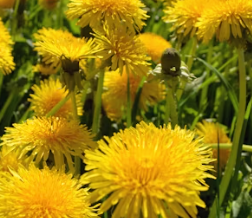
If weeds do pop up in small areas, manual removal is recommended. For taproots, such as dandelions, use a tool to help pry the deep root from the soil. In some cases, chemical removal may be warranted to keep the lawn healthy and prevent the problem from spreading.
The next step for weed control, after proper lawncare, is weed identification. If you don’t know what weed(s) you’re trying to control, you won’t be able to develop an efficient plan. This time of year, the common weeds are dandelions, henbit and chickweed. Treating the area when the weeds are small will provide the best control. For any chemicals applied, always read and follow the label carefully. Only apply chemicals on a day that is wind-free and at least 50 degrees F.
For help identifying weeds in your lawn and developing an action plan for controlling them, contact your local Extension agency.

Just a Little Light: Trees and Seasons

0

Dawn Phelps
Columnist

Autumn has made her presence known.  A beautiful maple tree over on the hill in our town is showing off colors of orange and red, and splotches of bright yellow leaves are showing up in the trees alongside the highways.  

After our first hard frost, our red blaze maple trees outside our front window will change from green to dark red.  Then the leaves will quickly fall and form a colorful red blanket on the ground under the trees.  Only a few isolated leaves will be left clinging to the parent trees.

The trees reminded me of a poem by Joyce Kilmer (1886-1918).  Joyce, a writer, was a man in the New York National Guard who was sent to France during WWI.  He was killed by a sniper, and died at the age of 31, but that’s another story. 

One of my grade-school teachers required our class to memorize and recite the poem.  It is entitled “Trees,” and I still remember the words.

I think that I shall never see

A poem lovely as a tree.

A tree whose hungry mouth is pressed

Against the sweet earth’s flowing breast;

A tree that looks at God all day,

And lifts her leafy arms to pray;

A tree that may in summer wear

A nest of robins in her hair;

Upon whose bosom snow has lain;

Who intimately lives with rain.

Poems are made by fools like me,

But only God can make a tree.

Fields of soybeans have turned bright yellow, and milo crops have turned brown.  Some of the beans have been harvested, creating clouds of dust as the harvesting machines crawl across the fields.  Farmers are working hard to get their crops harvested.

The mornings are becoming chilly now with temperatures in the 40s and 50s.  I have not seen a hummingbird at our feeders in a few days, so I will soon wash our feeders for the last time this season.

It is time for the monarch butterflies to wing their way south to Mexico, and oddly enough, our neighbor’s lilacs are blooming again, as if it is springtime!  Yesterday, mature monarchs and some younger ones were feeding on the lilac blossoms, and I snapped some photos of them!

The ground under our neighbor’s walnut tree across the alley from our house is laden with a dense crop of walnuts.  And the squirrels are chasing, scurrying around, and picking up walnuts that they will plant in unusual places.  

 During the winter, the walnuts will freeze and pop open.  Next spring, tiny walnut trees will emerge in places where there is no space for walnut trees to grow.  Yes, autumn is here, and it is hard to believe that Thanksgiving is only a few weeks away. 

Our changing seasons are like the seasons of our lives with spring quickly giving way to summer, summer to autumn, with winter to soon follow.  If you are older, you may feel the effects of “autumn” in your joints.

Albert Camus said, “Autumn is a second spring when every leaf is a flower.”  Oh, how beautiful the trees are becoming! 

Since we cannot and would not want to control the seasons, we will just have to be thankful—thankful for every day we are given.  To everything there is a season, and a time to every purpose under the heaven” Ecclesiastes 3:1And the trees in the autumn season are glorious!


[email protected]

Cheney Shooting Range to Reopen Following Lead Testing

0

State officials confirm no threat to public or wildlife; range to reopen this month

TOPEKA –The Kansas Department of Wildlife and Parks (KDWP) today announced that the Cheney Shooting Range in Reno County will reopen later this month following an investigation assisted by the Kansas Department of Health and Environment (KDHE) into potential lead contamination. Results from soil, groundwater, and stream surveys confirm the range is safe for public use with no threat to the public or wildlife.

“We took every necessary step to ensure there is no threat to the public or wildlife,”  said KDWP Secretary Christopher Kennedy. “I understand the delayed reopening was frustrating for some users, but given our commitment to protecting both people and wildlife, we prioritized a thorough investigation before resuming operations.

KDWP delayed the range’s reopening after the standard winter closure earlier this year, due to a range user’s concerns about lead contamination. Due to the range’s proximity to Cheney Reservoir, which supplies drinking water for Wichita, KDWP ordered independent soil and groundwater testing and conducted stream surveys along the North Fork Ninnescah River above the reservoir. The range is operated by KDWP and located on land owned by the federal Bureau of Reclamation. Testing conducted by a third party in April 2025 included surface soil, subsurface soil, and groundwater sampling. Additional groundwater testing in July 2025 increased the number of sample sites between the range and the river to assess potential lead migration. Those testing results were reviewed by the Kansas Department of Health and Environment.

Key findings include:

  • Surface soil near the rifle and handgun backstops showed elevated lead levels, which is expected for an active shooting range due to bullet debris.
  • Subsurface soil samples did not indicate lead movement underground.
  • Groundwater samples showed no dissolved lead at levels of concern.
  • Stream surveys conducted in 2025 showed no significant differences in fish and aquatic macroinvertebrate communities compared to surveys conducted in 2002. In fact, fish numbers improved in some areas, and the Arkansas Darter, a species in need of conservation, was documented in 2025 but not in 2002.

“The investigation of the Cheney Shooting Range completed by KDWP has shown that there has been no migration of lead contamination from the backstop/impact area and lead has not impacted the shallow groundwater aquifer, which flows into the North Fork Ninnescah River,” KDHE Deputy Secretary and Director of Environment Kate Gleeson said. “The operation of the Cheney Shooting Range is in compliance with applicable regulations.”

Secretary Kennedy added, “Now that we can safely say that lead remnants at the Cheney Shooting Range are not posing a threat to the public or wildlife, I have charged our staff with reopening the range no later than October 25, 2025, so hunters can adjust their sights and scopes before the regular deer firearms season opens in December.

Previously planned renovations to the Cheney Shooting Range will begin in 2026, including upgrades to accommodate more users and sound attenuation for a safer, more pleasant experience. Reopening updates and range information will be posted here as they become available.

###

The Kansas Department of Wildlife and Parks (KDWP) is dedicated to the conservation and enhancement of Kansas’s natural resources for the benefit of both current and future generations. KDWP manages 29 state parks, 177 lakes and wildlife areas, more than 300 public waterbodies, and five nature centers. Other services include management of threatened, endangered, and at-risk species, law enforcement, and wildlife habitat programs. For more information about KDWP, visit ksoutdoors.gov.

The Kansas Department of Health and Environment (KDHE) works to protect and improve the health and environment of all Kansans. KDHE’s work impacts the lives of Kansans every day through its three divisions: Public Health, Environment and Health Care Finance (Medicaid). The important tasks the agency performs range from health prevention and promotion, responding to public health emergencies, licensing hospitals and health care facilities to monitoring air and water quality and regulating landfills, as well as overseeing the state’s Medicaid program. For more information about KDHE, visit KDHE’s website.

The sky’s the limit for drones on the farm

0
The technology has moved from novelty to necessity on many farms and ranches.

Enthusiasm for drone use in agriculture is growing quickly, says Caleb O’Neal, University of Missouri Extension field specialist in plant science.

O’Neal teaches classes about drones across the state. He’s seen interest from farmers, commercial sprayers, cow-calf operators, real estate professionals and some who are just curious about new technology. According to the American Spray Drone Coalition, acres sprayed in the United States increased from 4 million to 10.3 million from 2023 to 2024.

Drones much like the ATVs in the 1980s

O’Neal likens increased drone usage to what happened decades ago with all-terrain and utility task vehicles. “Back in the 1980s, it would have been rare to see a UTV being used on a farm,” he says. “Visiting farms today, I’m hard-pressed to find an operation larger than 20 acres that doesn’t have some type of UTV that they utilize on a regular basis.”

This likely will be the case of drones on the farm as more farmers and ranchers see what an incredible tool they are, he says. “Drones have progressed from being a neat toy we might get our kids for Christmas to becoming a necessity for many agricultural operations.”

Drones save time and money

Drones with high-resolution cameras can reduce the need for ground-based field inspections, O’Neal says.  They can help row crop farmers identify nutrient deficiencies, locate areas of poor soil health, scout for insects and disease and make crop stand assessments.

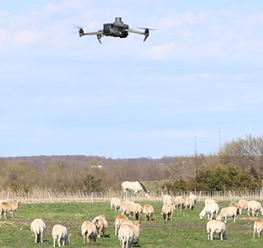
Livestock producers can monitor fences and availability of water and can make sure animals are where they should be without even opening a gate. Drone technology lets cattlemen quickly check estrus indication patches for optimized breeding timing, monitor cows during calving season, look for hidden newborn calves and look out for potential predators.

“Time is one of a farmer’s most valuable and limited resources, so the more of it we can save while still completing the task, the better,” O’Neal says.

Drones in precision ag

But precision agriculture is where drones truly shine, he says. “Using data-driven insights, drones can enable farmers to apply site-specific fertilizers, pesticides and other inputs to maximize return on investment,” he says.

“A pasture with a rash of blackberry weeds in isolated areas has great potential for a prescription herbicide application where only the problematic areas receive treatment via a spray drone, as opposed to a broadcast application where the entirety of the field is treated whether it needs it or not. A targeted spray application like this minimizes waste, reduces negative environmental impact and often can leave more dollars in the wallet of the landowner due to reduced chemical costs.”

Drones provide accessibility

Drones also provide access to hard-to-reach areas of the farm, turning unproductive acreage into a moneymaker.

“In my neck of the woods in southwestern Missouri, the topography can be quite unforgiving, with some areas too harsh to allow access by ground spray rig or even ATV,” O’Neal says. “With an aerial piece of equipment like a utility drone, landowners can now get herbicide applications on these problematic areas and put them into useful forage production. With current land values reaching for the heavens, it can be difficult to justify buying more acreage as we try to expand our farming operations. It may be a more prudent investment to ensure every acre of land we already own is highly productive. If we can reclaim a quarter acre here and a half acre there on property we already own, it can add up quickly and make sense from an investment perspective.”

Training required

While drones are a wonderful asset in modern farming, there are inherent risks, as well as state and federal licensing requirements, says O’Neal.

Training programs hosted by MU Extension equip farmers and applicators with many tools for determining flight parameters different spray applications. Through research, MU Extension specialists have also found that there are times when conventional equipment such as a ground spray rig is a better option for an effective application.

“Drones are another tool available to modern farmers, and as most farmers will agree, you can never have too many tools,” says O’Neal. “As drone technology continues to advance, its potential uses in agriculture grow as well. On many farms, drones are saving producers time, reducing input costs and bringing new levels of productivity to their land. Drones are no longer futuristic machines; they are transforming agriculture today, and they are tools that can enable farmers to optimize every acre and ensure their operational success.”

University of Missouri Extension