Friday, January 2, 2026
Home Blog Page 4749

From harvest to health: Apples

0

Low calorie apples are a dieter’s dream — a medium apple is only about 80 calories! Apples are also a good source of fiber, especially if you eat the peel, and they contain only a trace of sodium and fat.

Selecting Apples:

High quality apples are smooth-skinned, crisp, juicy and well-colored for their variety. Varieties of apples that are not solid red should have a yellow-green undertone, often called “ground color.” A ground color that is too green indicates a less sweet or underripe apple. Ground color that is too yellow identifies an apple that is overripe, soft and mealy textured. Avoid apples with bruises, soft spots or wrinkled skin.

Handle apples gently to avoid bruising them. Apples will remain crisp and juicy longer if refrigerated. Keep apples in plastic bags with small air holes to maintain a high moisture level and delay withering. Missouri fall apples maintain excellent quality longer than apples that have been in commercial storage.

There are three major varieties available in Missouri from early to late fall: Jonathans, Red Delicious and Golden Delicious.

Find more about the best uses for each type, as well as tips for selecting, using and preserving fresh apples (including recipes) at http://missourifamilies.org/features/nutritionarticles/harvesttohealth/apples.htm

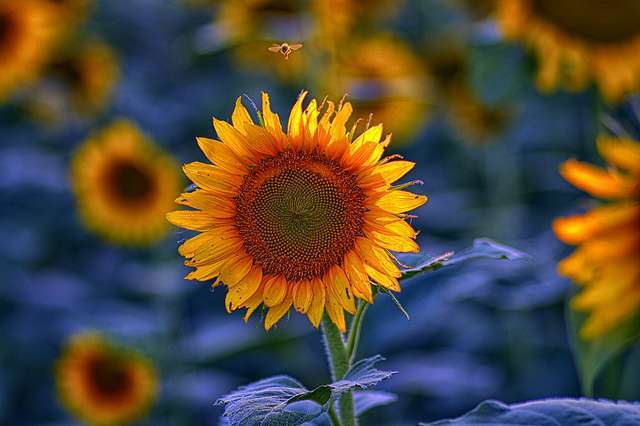
Roasting seeds

0
photo credit - Patrick Emerson
Patrick Emerson
Patrick Emerson

Raw, mature seeds may be prepared at home by covering unshelled seeds with
salted water (2quarts of water to 1/4 to 2 cup salt). Bring to a boil and
simmer 2 hours, or soak in the salt solution overnight. Drain and dry on
absorbent paper.
Put sunflower seeds in a shallow pan in a 300-degree F oven for 30 to 40
minutes or until golden brown, stirring occasionally. Take seeds out of the
oven and add 1 teaspoon of melted butter or margarine, or cooking oil per 1
cup of seeds if they are to be eaten immediately. Stir to coat. Put on an
absorbent towel. Salt to taste.

By: Ward Upham

Do you know your cholesterol numbers?

0

Tammy Roberts, MS, RD, LD, Nutrition and Health Education Specialist, Bates County, University of Missouri Extension

It is important to be aware of cholesterol numbers because high cholesterol is one of the major controllable risk factors for coronary heart disease, heart attack and stroke. There’s no better time than right now to know your numbers — September is Cholesterol Awareness Month.

When you get the results of your cholesterol blood test you should know your total cholesterol, HDL cholesterol and LDL cholesterol. The desirable total cholesterol level is 200 mg/dL or below.

Low density lipoprotein or LDL is considered a good gauge for risk of heart attack and stroke. It is the LDL, along with other substances, that builds up on artery walls, forming a thick plaque that narrows arteries and makes them less flexible. When a clot forms and blocks an artery, a heart attack or stroke can be the result. It is optimal for LDL to be below 100 mg/dL.

High density lipoprotein or HDL is referred to as the good cholesterol. High levels of HDL can provide some protection against heart attack and stroke. HDL helps keep the LDL from building up on artery walls. For men, the average HDL reading is 40 to 50 mg/dL. In women, it is 50 to 60 mg/dL. Less than 40 for men and 50 for women puts you at a higher risk for heart disease. Above 60 mg/dL provides protection against heart disease.

There are some things that impact cholesterol that you have no control over; however, there are other things you can control. To learn about these risk factors and when to have your cholesterol tested, check out the full version of this article at http://missourifamilies.org/features/nutritionarticles/nut222.htm

Reblooming Christmas and Thanksgiving cacti Christmas cactus

0

Stuart

Reblooming Christmas and Thanksgiving Cacti Christmas Cactus (Schlumbergera
bridgesii) and Thanksgiving Cactus (Schlumbergera truncate) are popular
flowering holiday plants. Both are epiphytes native to the jungles of South
America. Epiphytic plants grow on other plants and use them for support but
not for nutrients. Though these cacti are different species, they will
hybridize and produce varying stem shapes. Christmas cactus normally has
smooth stem segments.
Thanksgiving Cactus has hook-like appendages on each segment.
Flowering will not occur unless induced by temperature and light treatment.
If the temperature is held at 50 to 55 degrees F, flowering will occur
regardless of day length. But flowering usually is not uniform. Temperatures
below 50 degrees F prevent flowering. Nights greater than 12 hours long and
temperatures between 59 and 69 degrees also can generate flowers.
Twenty-five consecutive long nights is enough for flower initiation. Nights
will naturally become greater than 12 hours close to the fall equinox, which
is on September 23 this year. A plant receiving natural sunlight but no
artificial light during night hours, will have this 25-day requirement met
about October 20. It takes an additional nine to 10 weeks for flowers to
complete development and bloom.
Both of these cacti like bright indirect light. Too much sun may cause
leaves to turn yellow. Common household temperatures are fine. Keep soil
constantly moist but not waterlogged. These plants seem to flower best if
kept a little pot bound. If you need to repot, try waiting until spring.


By: Ward Upham

Huck Boyd Institute and Foundation offer grants for leadership projects

0
kksu
K-State Research and Extension, Candice Shoemaker

MANHATTAN, Kan. – Mini-grants are now available to support community service projects as identified by community or college-based leadership development programs.


The Huck Boyd National Institute for Rural Development and the Huck Boyd Foundation, with support from the Kansas Health Foundation, are offering up to 10 mini-grants worth $450 each. The mini-grants are to be used to implement a project of community or local need as identified through an educational leadership development program.


“These funds can be used to help a local leadership class or a leadership student carry out a community service project to meet local needs,” said Clare Gustin, chair of the Huck Boyd Institute board of directors. “We encourage community- or college-based leadership development programs to apply.”


More information, including examples of successful grants from previous years, can be found at www.kansasleadershipfund.org.


Proposals should be submitted electronically (in pdf or Word format) to [email protected] no later than Oct.15, 2014.  Please put “Proposal” in the subject line.


All proposals must be received by Wednesday, Oct.15, 2014 to be considered. Winning proposals will be selected through an independent third-party review. Questions can be emailed to the Huck Boyd Institute at [email protected].


The Huck Boyd National Institute for Rural Development is a public/private partnership between K-State Research and Extension and the Huck Boyd Foundation. The foundation office is at the Huck Boyd Community Center in Phillipsburg, Kansas. The institute office is at Kansas State University in Manhattan.

For more information contact Ron Wilson – [email protected]