Wednesday, January 14, 2026
Home Blog Page 67

K-State moves into Top 5 of country’s agriculture colleges

0

The university’s College of Agriculture has gained two spots, according to recent Niche.com rankings

Kansas State University’s College of Agriculture has moved up to No. 5 in Niche.com’s annual list of the Best Colleges for Agricultural Sciences, reinforcing its reputation as one of the nation’s premier agriculture programs.

The ranking is determined through a combination of U.S. Department of Education data and millions of student and alumni reviews. For K-State, the recognition reflects the quality of academics, opportunities for student growth and the close-knit community that defines the college.

The university’s College of Agriculture was listed at No. 7 in last year’s rankings.

“Applying to Kansas State University has been one of the most rewarding and impactful decisions of my life,” said Layton Johnson, an agricultural education student. “I first connected with (agricultural education professor Jon) Ulmer at the Kansas FFA state convention during high school, and that conversation gave me the confidence to pursue my degree here. Since then, I’ve experienced an environment where professors know me personally, care about my goals and prepare me for success in and beyond the classroom.”

Dan Moser, the interim Eldon Gideon Dean of the College of Agriculture, said the recognition demonstrates the college’s growing impact.

“We are proud to see K-State’s College of Agriculture ranked in the top five nationally,” Moser said. “This distinction reflects the excellence of our faculty and staff, the achievements of our students and the forward-looking innovation that defines our program.”

A centerpiece of that innovation is the Agriculture Innovation Initiative, which is reshaping the future of agricultural teaching, research and outreach at K-State. The initiative includes state-of-the-art facilities under construction across campus and strategies to attract top-tier faculty and researchers.

Johnson said those investments, combined with a supportive culture, are preparing students like him to lead.

“One of the most valuable aspects of my time here has been the close-knit, supportive learning environment,” he said. “In addition to strong academics, I’ve built lifelong friendships and leadership skills through organizations and activities in the College of Agriculture. K-State doesn’t just help us (as students) meet our goals — it pushes us to exceed them and step into roles that will shape the future of agriculture.”

Niche.com’s top 10 agriculture schools for 2025 are:

No. 1 Cornell University

No. 2 Texas A&M University

No. 3 University of Florida

No. 4 University of Illinois Urbana–Champaign

No. 5 Kansas State University

No. 6 North Carolina State University

No. 7 University of California – Davis

No. 8 Oklahoma State University

No. 9 University of Georgia

No. 10 Purdue University

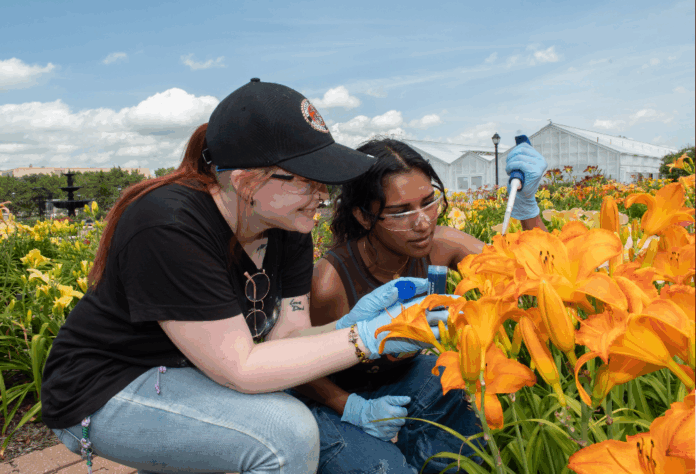
PHOTO: Entomolgy Students – K-State’s College of Agriculture has achieved a Top 5 ranking in Niche.com’s 2025 annual list of the Best Colleges for Agricultural Sciences. Students credit caring faculty and real-world experience among factors that makes K-State stand out. (K-State Extension news service)

Kindness is more than just being nice; It’s good for your health

0

K-State community health specialist touts benefits of intentional kindness.

Holding the door for someone is a nice gesture, but Kansas State University community health specialist Elaine Johannes says there’s a deeper, more impactful practice that benefits both giver and receiver.

She calls it ‘intentional kindness.’

“Being nice keeps social lubricants moving,” said Johannes, the Kansas Health Foundation’s Distinguished Professor of Community Health at K-State. “But being kind is more intentional. It has to do with our relationship with people and the world. It takes a little bit more interaction to be kind and to show that with our acts.”

Listen to an interview by Jeff Wichman with Elaine Johannes on the weekly podcast, Sound Living

Johannes said there is a growing body of research indicating that intentional kindness is a critical component of physical and mental health, as well as economic wellbeing.

“We’ve known for some time that toxic, hostile environments can trigger fight-or-flight responses,” she said. “Those places can be argumentative; it’s not a kind place. When we’re in those spaces, our bodies tense up. Cortisol builds. Our capillaries and veins constrict. Our heart pumps faster. Some people freeze because they don’t know how to get out of that place.”

On the other hand, an environment of kindness can benefit health.

“When we’re around people who treat us kindly, our bodies relax,” Johannes said. “We produce oxytocin – which is often called the love hormone or bonding hormone – which helps improve everything from heart function to breathing.”

Johannes said K-State Extension has recently released a fact sheet titled Kindness Matters that aims to help communities, schools, families and workplaces understand and implement more intentional acts of kindness. The publication can be downloaded online for free.

Johannes said kindness should happen naturally, but also can be planned. She even suggests writing intentional acts of kindness into a calendar, or store on a computer app.

“Yes, kindness can be random, but it can also be scheduled,” she said. “You can put it on your calendar or app — check in with a colleague, grab someone coffee, or take out the office trash. These small, thoughtful acts have ripple effects.”

Kindness Matters, which was written primarily by K-State Extension family and consumer sciences agent Lisa Newman, includes resources and ideas for building kindness into daily habits. From volunteering to active listening, the guide offers practical suggestions for individuals and groups.

One section even explores the economic benefits of working in or investing in businesses and organizations that promote kindness.

Johannes said in cardiac care and cancer treatment units, for example, studies have shown that physicians working in kind environments stay longer and patients actually recover faster.

“Kindness isn’t just about grand gestures,” Johannes said. “It’s about being present, listening, and recognizing the humanity in each other, even strangers.”

She adds: “This is something we can all do. Whether it’s intentional or spontaneous, the act of being kind — to others and ourself — creates healthier, happier communities. And it might just become a habit worth keeping.”

A longer discussion with Johannes is available online on the weekly podcast, Sound Living, produced by K-State Extension.

More information also is available at local K-State Extension offices.

Time to Plant Spring-flowering Bulbs Approaching 

0
Hardy bulbs require a chilling period before they bloom in the spring. These varieties can be planted now through October giving them time to establish roots before winter.
Choose an area with full sun to part shade. Ideally the soil should be sandy loam, but if not, amend it by adding compost to a depth of at least one-foot to promote good drainage. Incorporate fertilizer only if recommended based on a soil test. The soil pH should be between 6.0 and 7.0.
Determine the planting depth based on the bulb size. Bulbs the size of tulips and hyacinths are typically planted six-inches deep while daffodil-size bulbs should be six- to eight-inches deep. In general, bulbs should be planted two to three times as deep as their width. This is determined by the distance from the depth where the base of the bulb will rest to the soil surface after the hole is backfilled.
Space large bulbs four- to six-inches apart. Small bulbs can be spaced one- to two-inches apart. Mass plantings create a more aesthetically-pleasing display when spring blooms emerge.
Backfill each hole halfway and water in to settle the soil. Replace the remaining soil and water again. Though you will not see above-ground growth in the fall, roots are still growing. Keep the soil moist and add mulch after the soil freezes to provide insulation and prevent bulbs from being heaved out of the soil.
Here are some hardy bulbs to consider if you want to have variety in your spring show:
  • Hyacinth
  • Allium
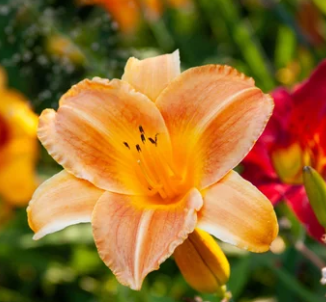
  • Asiatic Lily
  • Crocus
  • Snowdrops
  • Oriental Lily

Harvesting and roasting sunflower seeds

0

K-State’s Domenghini shares tips for the upcoming sunflower harvest and home roasting

It is sunflower season in the sunflower state and harvest is just around the corner, starting mid-September into October.

As seed heads begin to ripen, protecting them from birds is essential. said Kansas State University horticulture expert Cynthia Domenghini, who recommends covering the heads once the petals begin turning brown with a paper sack or cheesecloth and securing the cover with a rubber band.

“This will not only help keep the birds out, but will prevent ripened seeds from dropping out of the head,” she said.

Maturity is indicated by shriveled florets in the center of the flower disk, the backside of the head turning a lemon-yellow color and heads facing down. “The ultimate check is to pull a few seeds to see if they have turned black with white stripes, the typical color,” Domenghini said.

If there are empty shells, this usually indicates a lack of pollination earlier in the year, she added.

To harvest the seeds, cut the heads and place them in a paper sack, or leave a foot of stem attached and hang the heads upside down to dry. Cover the heads to prevent seeds from dropping as they dry. Once the heads dry, seeds can be removed by rubbing gently.

Roasting

Prepare the seeds for roasting by removing the shell and covering with salted water (2 quarts of water to ¼ to 2 cups salt). Then, bring them to a boil and simmer for two hours, or soak in the salt solution overnight. Then, it is important to drain and dry the seeds on absorbent paper.

To roast the seeds, spread them in a shallow pan in a 300 degree Fahrenheit oven for 30-40 minutes, stirring occasionally. Remove the seeds from the oven when they appear golden brown, according to Domenghini.

Seeds can be tossed in melted butter and salted, if desired.

Domenghini and her colleagues in K-State’s Department of Horticulture and Natural Resources produce a weekly Horticulture Newsletter with tips for maintaining home landscapes and gardens.

Interested persons can subscribe to the newsletter, as well as send their garden and yard-related questions to Domenghini at cdo[email protected], or contact your local K-State Research and Extension office.


Chaos gardening – wild beauty, or just a mess?

0

If you’ve spent any time in the gardening corners of social media lately, you’ve likely come across a trend called “chaos gardening.”

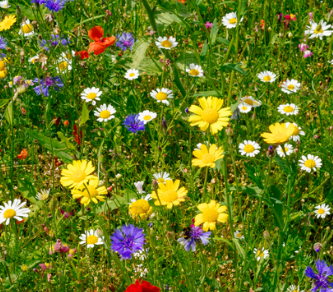
The name alone is eye-catching – equal parts fun, rebellious and slightly alarming. Picture someone tossing random seeds into bare soil, watering once or twice, and ending up with a backyard jungle of blooms. No rows, no color coordination, no spacing charts. Just sprinkle and hope for the best.

As a sustainable landscape specialist at Colorado State University Extension, I think a lot about how to help people make designed landscapes more sustainable. Occasionally, a new trend like this one crops up claiming to be the silver bullet of gardening – supposedly it saves water, saves the bees and requires no maintenance.

But what is chaos gardening, really? And does it work? As with most viral trends, the answer is: sometimes.

What chaos gardening is and isn’t

At its core, chaos gardening is the practice of mixing a wide variety of seeds, often including leftover packets, wildflower mixes, or cut flower favorites, and scattering them over a planting area with minimal planning.

The goal is to create a dense, colorful garden that surprises you with its variety. For many, it’s a low-pressure, joyful way to experiment.

But chaos gardening isn’t the same as ecological restoration, pollinator meadow planting or native prairie establishment. Unlike chaos gardening, all of these techniques rely on careful species selection, site prep and long-term management.

Chaos gardening is a bit like making soup from everything in your pantry – it might be delicious, but there are no guarantees.

Chaos gardening’s appeal

One reason chaos gardening may be catching on is because it sidesteps the rules of garden design. A traditional landscape design approach is effective and appropriate for many settings, but it is a time investment and can feel intimidating. Design elements and principles, and matching color schemes, don’t fit everyone’s style or skill set.

Even the apparently relaxed layers of blooms and informal charm of an English cottage garden actually result from careful planning. Chaos gardening, by contrast, lets go of control. It offers a playful, forgiving entry point into growing things. In a way, chaos gardening is an antidote to the pressure of perfection, especially the kind found in highly curated, formal landscapes.

There’s also the allure of ease. People want gardening to be simple. If chaos gardening brings more people into the joy and mess of growing things, I consider that a win in itself. Broader research has found that emotional connection and accessibility are major motivators for gardening, often more than environmental impact.

When does chaos gardening work?

The best outcomes from chaos gardening happen when the chaos has a few guardrails:

  • Choose plants with similar needs. Most successful chaos gardens rely on sun-loving annuals that grow quickly and bloom prolifically, like zinnias, cosmos, marigolds, snapdragons and sunflowers. These are also excellent cut flowers to use in bouquets, which makes them doubly rewarding.
  • Consider your region. A chaos garden that thrives in Colorado might flop in North Carolina. It is beneficial to select seed mixes or individual varieties suited to your area since factors like soil type and growing season length matter. Different plants have unique needs beyond just sun and water; soil pHcold hardiness and other conditions can make a big difference.
  • Think about pollinators. Mixing in nectar- and pollen-rich flowers native to North America, such as black-eyed Susans, bee balm or coneflowers, provides valuable resources for native bees, butterflies, moths and other local pollinators. These species benefit even more if you plan your garden with phenology – that is, nature’s calendar – in mind. By maintaining blooms from early spring through late fall, you ensure a steady food supply throughout the growing season. Plus, a diverse plant palette supports greater pollinator abundance and diversity.
  • Prep your site. Even “chaos” needs a little order. Removing weeds, loosening the top layer of soil and watering regularly, especially during germination when seeds are sprouting, will dramatically improve your results. Successful seed germination requires direct seed-to-soil contact and consistent moisture; if seeds begin to grow and then dry out, many species will not survive.

When does chaos gardening not work?

The best outcomes from chaos gardening happen when the chaos has a few guardrails:

  • Choose plants with similar needs. Most successful chaos gardens rely on sun-loving annuals that grow quickly and bloom prolifically, like zinnias, cosmos, marigolds, snapdragons and sunflowers. These are also excellent cut flowers to use in bouquets, which makes them doubly rewarding.
  • Consider your region. A chaos garden that thrives in Colorado might flop in North Carolina. It is beneficial to select seed mixes or individual varieties suited to your area since factors like soil type and growing season length matter. Different plants have unique needs beyond just sun and water; soil pHcold hardiness and other conditions can make a big difference.
  • Think about pollinators. Mixing in nectar- and pollen-rich flowers native to North America, such as black-eyed Susans, bee balm or coneflowers, provides valuable resources for native bees, butterflies, moths and other local pollinators. These species benefit even more if you plan your garden with phenology – that is, nature’s calendar – in mind. By maintaining blooms from early spring through late fall, you ensure a steady food supply throughout the growing season. Plus, a diverse plant palette supports greater pollinator abundance and diversity.
  • Prep your site. Even “chaos” needs a little order. Removing weeds, loosening the top layer of soil and watering regularly, especially during germination when seeds are sprouting, will dramatically improve your results. Successful seed germination requires direct seed-to-soil contact and consistent moisture; if seeds begin to grow and then dry out, many species will not survive.

When does chaos gardening not work?

There are a few key pitfalls to chaos gardening that often get left out of the online hype:

  • Wrong plant, wrong place. If your mix includes shade-loving plants and your garden is in full sun, or drought-tolerant plants whose seeds end up in a soggy low spot, they’ll struggle to grow.
  • Invasive species and misidentified natives. Some wildflower mixes, especially inexpensive or mass-market ones, claim to be native but actually contain non-native species that can spread beyond your garden and become invasive. While many non-natives are harmless, some spread quickly and disrupt natural ecosystems. Check seed labels carefully and choose regionally appropriate native or adapted species whenever possible.
  • Soil, sun and water still matter. Gardening is always a dialogue with place. Even if you’re embracing chaos, taking notes, observing how light moves through your space, and understanding your soil type will help you know your site better, and choose appropriate plants.
  • Maintenance is still a thing. Despite the “toss and walk away” aesthetic, chaos gardens still require care. Watering, weeding and eventually cutting back or removing spent annuals are all part of the cycle.

Beyond the hashtag

Beneath the chaos gardening memes, there’s something real happening: a growing interest in a freer, more intuitive way of gardening. And that’s worth paying attention to.

Once someone has success with a zinnia or cosmos, they may be inspired to try more gardening. They might start noticing which flowers the bees are visiting in their garden. They may discover native plants and pay attention to the soil they are tending, seeing how both are part of a larger, living system. A chaotic beginning can become something deeper.

Chaos gardening might not replace the structured borders of a manicured garden or a carefully curated pollinator patch, but it might get someone new into the garden. It might lower the stakes, invite experimentation and help people see beauty in abundance rather than control.

If that’s the entry point someone needs, then let the chaos begin.