Wednesday, January 14, 2026
Home Blog Page 74

Wheat Scoop: AgriLand inspires generations at Kansas State Fair

0

Contact: Marsha Boswell, [email protected]

For the audio version, visit kswheat.com.

What started as a small idea nearly three decades ago has grown into one of the most popular attractions at the Kansas State Fair. AgriLand, the interactive agricultural exhibit in the Pride of Kansas Building, has been giving families and school groups a hands-on look at farming and food production since 1995. For Kansas Wheat and other commodity groups, it remains a key way to tell the story of agriculture in a format that sticks with visitors long after they leave Hutchinson.


The inspiration for AgriLand came after the 1994 Kansas State Fair, when Cindy Falk, while working with the Kansas Wheat Commission (KWC), noticed that booths with interactive features drew more attention.


“Every year, busloads of schoolchildren came to the fair, wide-eyed and ready to explore,” Falk said. “I couldn’t help but think how powerful it would be to have a place just for them, a space where they could see, touch and learn about the important role agriculture plays in their everyday lives.”


Soon after, Falk and KWC Administrator Steven Graham began conversations with the Kansas Department of Agriculture, Kansas Foundation for Agriculture in the Classroom and commodity organizations across the state. Together, they launched the first AgriLand exhibit, a 260-square-foot space in the middle of the Pride of Kansas Building. The idea quickly gained momentum, and with support from the fair staff and building superintendent, the display expanded to the east end of the building.


“Honestly, I don’t remember any real obstacles,” Falk said. “Everyone pitched in to help fund it, build it and work the exhibit.”


The original goal was to highlight the wide variety of Kansas farm products and show how they connect to everyday life. Falk remembers lockers filled with items made from Kansas crops and livestock, such as crayons, a wool scarf and a football. Visitors could climb into a combine cab, step onto a livestock scale or explore bins of different grains.


“Agriculture is the foundation of life, the one industry every person depends on to survive,” Falk said. “Here in Kansas, we are especially blessed. Our land, climate, water and people make this state one of the best places on earth to grow the crops and livestock that nourish families, not only here at home but all around the globe.”


Over the years, AgriLand has grown into a staple of the state fair. Children line up to take turns on the combine simulator, which features harvest footage filmed on Kansas farms. Families pause for photos with animal cutouts, while teachers use free lesson plans and educational resources that extend the learning into classrooms across the state. Additions such as the cotton display, walk-through soil tunnel and an animatronic cow named Maybelle have kept the exhibit fresh and engaging.


Falk said some of her fondest memories are of families sharing laughter inside the exhibit or kids so eager to try each activity that volunteers needed stopwatches to move them along. She also recalls building the first Food Guide Pyramid with a wooden garden display, paint and food items, turning it into a colorful and inexpensive nutrition display. Today AgriLand continues to grow, with commodity groups and farm organizations taking turns staffing the exhibit and sharing their stories with visitors.


For Falk, the most rewarding part is seeing how the exhibit has impacted generations.


“It is inspiring to see its lasting impact, like the little boy who once perched on a horse saddle in AgriLand and is now returning as a high school senior to assist in the exhibit,” she said. “Generations of families will keep exploring, learning and connecting with Kansas agriculture in a way that is as engaging as it is unforgettable.”


The Kansas State Fair opens on Sept. 5 – 14, 2024. This year, AgriLand has a brand new Gleaner Combine Cab for everyone to explore! Visit AgriLand for an action-packed, interactive agricultural experience in the Pride of Kansas Building, which has been giving families and school groups a hands-on look at farming and food production for generations.

KU News: Fair will offer opportunity to explore technology to increase accessibility, independence

0

From the Office of Public Affairs | https://www.news.ku.edu

Headlines

Fair will offer opportunity to explore technology to increase accessibility, independence

LAWRENCE — University of Kansas staff will offer the public an opportunity to explore technology options for work, home, employment and recreation at the AT Fair on Sept. 9 in Topeka. The event will feature hands-on demonstrations of assistive technology to help Kansans with daily tasks, employment and recreation.

University Distinguished Professor to examine ‘America First’ influence on trade law

LAWRENCE — Raj Bhala, the first University of Kansas School of Law faculty member to earn the title of University Distinguished Professor, will present “Deceitful Destruction of International Trade Law: America First and Xenophobic Autarky” at 5:30 p.m. Sept. 15 in the Kansas Union. The event is free and open to the public.

Charlotte Street award show draws on artist’s Asian heritage

LAWRENCE – In the current exhibition of Charlotte Street Visual Artist Award winners at the University of Kansas’ Spencer Museum of Art, KU lecturer Merry Sun has constructed three monumental sculptures made of interlocking concrete pieces that weigh hundreds of pounds each and three fish-shaped windsocks made of paper-thin Tyvek fabric that hang on a wall, twisting in the slightest breeze. “My Mother’s Tongue Ties Me Together” is on view until Jan. 4, 2026.

Full stories below.

————————————————————————

Contact: Jen Humphrey, Life Span Institute, 785-864-6621, [email protected]
Fair will offer opportunity to explore technology to increase accessibility, independence

LAWRENCE — With an aim to share the wide variety of advances in technology including smart home technology, Meta Glasses and accessible gaming, University of Kansas staff will offer the public an opportunity to explore technology options for work, home, employment and recreation at an upcoming fair in Topeka.

Specialists from Assistive Technology for Kansans (ATK) will offer the AT Fair from 10 a.m. to 2 p.m. Sept. 9 at the Topeka & Shawnee County Public Library, Room 123, 1515 SW 10th Ave. Individuals can drop by the fair any time to learn about tools designed to make daily tasks more functional and enjoyable.

Abby Azeltine, ATK director, said event attendees can test devices, check out hands-on demonstrations and speak to specialists about options.

“Technology offers so many ways to make the world more accessible — from smart home tools that let you control your lights with your voice or a tap on your phone to devices that make it easier to take your medication, to solutions that help you hear your TV more clearly,” Azeltine said.

The fair is for people in all stages of life, whether they are working professionals or enjoying retirement.

“No matter the need, technology can be a great tool to support accessing the world around us,” Azeltine said.

This fair will promote technology to support adults with memory, mental health, smart homes, medication management, activities of daily living like cooking and getting dressed, communication, vision, hearing and employment.

ATK, which is federally funded through the Administration for Community Living and is a part of the KU Life Span Institute, works with Kansans across the state to increase access to and acquisition of technology for people with disabilities and health conditions.

Azeltine said people are generally surprised by how useful the tools can be.

“People generally state the following or some variation, ‘What? I did not know that was a thing!’ or, ‘Whoa I had no idea!’” she said.

In addition to adults who may benefit from these technologies, Azeltine encouraged professionals in occupational therapy, physical therapy, speech language pathologists, vocational rehabilitation counselors, social work, managed care organizations and others to attend.

“We’re encouraging anyone who would be a user or promoter of assistive technology to attend,” Azeltine said.

More information about ATK and the event is available at the ATK website.


-30-

————————————————————————

For every $1 invested in KU, taxpayers gain $2.90

in added tax revenue and public sector savings.

https://economicdevelopment.ku.edu/impact

————————————————————————


Contact: Elizabeth Barton, Office of Faculty Affairs, [email protected]
University Distinguished Professor to examine ‘America First’ influence on trade law


LAWRENCE — As one of the world’s foremost international trade law scholars and teachers, Raj Bhala is the first University of Kansas School of Law professor to earn the title of University Distinguished Professor. Bhala is renowned for his scholarship in trade law, law and literature, and Islamic law, and he has written 13 books and over 100 law review articles.

Bhala will focus on aspects of his international trade law scholarship during his inaugural University Distinguished Professor lecture, “Deceitful Destruction of International Trade Law: America First and Xenophobic Autarky,” which will take place at 5:30 p.m. Sept. 15 in the Kansas Union’s Kansas Room on the sixth level. Individuals can register to attend the lecture in person or via livestream, and a recording of the lecture will be posted afterward on the Office of Faculty Affairs website.

During the lecture, Bhala will explore how international trade law is being destroyed, why it is happening and whether it is worth preserving.

“I will argue that trade law is being destroyed through a series of ‘America First’ unilateral trade measures, which violate international — and in some cases U.S. — law due to xenophobic autarky,” Bhala said. “By that I mean a misguided impulse to onshore or reshore industries and jobs in lieu of trade (autarky) owing to a distrust, even dislike, of foreign sources of goods and services (xenophobia). Preserving trade law is important because destroying legal rules and diplomatic norms hurts the U.S. by eroding its economy and political soft power and its hard power military alliances.”

Bhala’s publications embody signature themes in each of his specialties. In trade, he highlights why attention to the interests of poor countries matters, explores the link between trade and national security and connects practical issues to Catholic social justice theory. In his work in law and literary classics in the Western canon (especially Shakespeare), he trisects the field of law “and” literature into interpretation (law “as” literature), themes (law “in” literature) and rhetoric (law “with” literature). In Islamic law, which he taught to U.S. special operations forces as well as at the School of Law, he explores the distinction between authentic and inauthentic dogmas and identifies common themes across the Abrahamic faiths.

Among Bhala’s published articles are three trilogies, on precedent “stare decisis” (the principle that courts should adhere to previously decided cases) in international trade law, the failed Doha Round of World Trade Organization negotiations and India’s inconsistent trade law and policy, plus a major piece on Brexit, and one on literary criticism and treaty interpretation. His upcoming lecture draws from his latest research, including two forthcoming articles in the Texas International Law Journal on U.S. tariff policy during the second administration of President Donald Trump.

Among Bhala’s books is the sixth revised edition of “International Trade Law: A Comprehensive E-Textbook,” all eight volumes of which are available via Open Access on KU ScholarWorks and used at over 100 law schools around the world. He also wrote the two-volume “Modern GATT Law,” the first treatise on the General Agreement on Tariffs and Trade in nearly 50 years; “Trade War: Causes, Conduct, and Consequences of Sino-American Confrontation,” the first comprehensive analysis of a seemingly forever trade war between the U.S. and China; and “Understanding Islamic Law (Sharī‘a),” the first textbook in the field written by a non-Muslim American legal scholar. Bhala’s current book project is “Principles of Law, Literature, and Rhetoric: A Shakespearean Approach.”

Bhala has taught around the world, including on both sides of hot zones in India and Pakistan, China and Taiwan, and Israel and Arab countries. He is widely quoted in the world’s media, including the Associated Press, Bloomberg, Reuters, CNN, The New York Times, The Washington Post, Business Insider, Financial Times (London), The Globe and Mail (Toronto) and numerous other international outlets.

Bhala was born in Toronto and is of Indian (Punjabi) and Celtic (Scottish-Irish) heritage. He earned his bachelor’s degree at Duke University, was a Marshall Scholar in England and obtained a master’s degree at the London School of Economics and Oxford (Trinity College). His juris doctor is from Harvard University. Bhala practiced international banking law at the Federal Reserve Bank of New York, where he twice won the President’s Award for Excellence for his work on payment systems, and for his service as a United States delegate to the United Nations Commission on International Trade Law to draft a Model Law on International Credit Transfers.

The first distinguished professorships were established at KU in 1958. A university distinguished professorship is awarded wholly based on merit, following exacting criteria. A complete list is available on the Distinguished Professor website.

-30-

————————————————————————

KU provides fire, rescue and law enforcement training across Kansas.


https://ku.edu/distinction

————————————————————————


Contact: Rick Hellman, KU News Service, 785-864-8852, [email protected]
Charlotte Street award show draws on artist’s Asian heritage


LAWRENCE – In the current exhibition of Charlotte Street Visual Artist Award winners at the University of Kansas’ Spencer Museum of Art, Merry Sun has constructed three monumental sculptures made of interlocking concrete pieces that weigh hundreds of pounds each and three fish-shaped windsocks made of paper-thin Tyvek fabric that hang on a wall, twisting in the slightest breeze.

Sun is a third-year lecturer in KU’s Department of Visual Art and the new director of its Off-Site Art Space.

Sun said she is drawn toward industrial materials in her work.

“I like the idea of a working object where labor and service are built into its intrinsic nature,” she said. “That is something I feel a kinship to.”

Sun’s concrete sculptures are a reference to the ancient Chinese dougong bracketing system used to support the roofs and eaves of temples and other large structures. They’re titled “In the Tempest, Through the Eaves?”

“I’ve reimagined them in concrete here,” Sun said. “Traditionally, dougong are timber-framed architectural structures. Here, the material shift acts as a metaphor for myself and my immigrant identity. When you sever something from its place of origin and transplant it somewhere else, I imagine that maybe some material change would occur, like petrification or calcification.”

Terra cotta roofing tiles are strung from the center sculpture toward the tops of the museum’s columns.

“I formed each tile on parts of my body when the clay was still wet, like plate armor,” Sun said.

When viewers walk around the piece, vibrational sounds are triggered and cascade down the ceramic tiles.

The original dougong bracketing system was engineered to endure strong earthquakes along China’s many fault lines.

“I took earthquake data from near the places I’ve lived in my 28 years and translated the seismographs into soundwaves,” Sun said.

Sun was born in China and emigrated to the United States as a child, growing up in North Carolina before earning bachelor’s and master’s degrees in art.

The fish sculptures also stem from Sun’s heritage.

“Each fish is dedicated to one of my deceased family members,” Sun said. “I took traits from that person as I was designing their respective fish.”

“This first one is my maternal grandfather, who was a scholar and the chief of surgery at his hospital. The white-on-white stitching on his fish references his white doctor’s coat.

“The middle fish is for my paternal grandmother, who was a seamstress and a devout Buddhist. And the last fish is my uncle. He was a gentle, charismatic soul, and so he has this really big, vibrant fish.”

Additionally, Sun said, the windsocks reference the Chinese Dragon Gate myth.

“It is a story about carp that are strong enough to swim upstream in the Yellow River and to jump over a waterfall and through a Dragon Gate. The carp are thereby transformed into dragons,” she said. “So I’m eulogizing my family members as powerful water dragons in their afterlives.”

Sun said she is proud and grateful to have been chosen for the Charlotte Street Visual Artists award, with its $10,000 grant. Noelle Choy and Hùng Lê are the other award recipients this cycle.

“It allowed me to make this body of work — the largest sculptural installation that I’ve built to date,” Sun said. “This is also the first time that three people of Asian descent have won the Charlotte Street Visual Artist Awards in the same year. So I’m also really proud to be a part of that and to be able to exhibit alongside my friends and fellow artists.

“We decided to combine our work into one big show this year. The exhibition is about our individual personal histories, but it also brings our stories together through broader, overarching themes.”

“My Mother’s Tongue Ties Me Together” is on view until Jan. 4, 2026.

-30-

————————————————————————


KU News Service

1450 Jayhawk Blvd.

Lawrence KS 66045

[email protected]

https://www.news.ku.edu


Erinn Barcomb-Peterson, director of news and media relations, [email protected]


Today’s News is a free service from the Office of Public Affairs

 

Increase flower power by dividing overgrown perennials

0

As clump-forming perennials mature, they often become overcrowded, competing among themselves for light, water and nutrients. This typically results in fewer blooms, said David Trinklein, state horticulture specialist with University of Missouri Extension.

Don’t despair. “With a little garden surgery, new life can be instilled into ragged, overgrown perennials,” said Trinklein.

While division may seem like a spring task, early fall is ideal, he said. Cooler weather and reduced water stress help plants recover and reestablish roots before winter. Root growth continues into late fall as long as soils remain warm.

Why divide perennials?

Overcrowding stresses plants and reduces flowering. Dividing them restores vigor and lets gardeners expand their beds or share plants with others.

How to divide perennials

  • A sharp spade or garden fork works best.
  • Slice the clump, making sure roots remain intact.
  • Take half the clump with as many roots as possible.
  • Refill the original hole with good soil and replant the removed portion elsewhere, or pass it along to a friend.
  • Keep the soil moist for several weeks while the plant settles in.

What to divide, and what not to

Some perennials thrive when divided, including:

  • Daylilies.
  • Irises.
  • Ornamental grasses.
  • Black-eyed Susans.
  • Purple coneflowers.

Not all perennials require division. Peonies prefer to stay put. If unsure, check plant care recommendations or consult the MU Extension website.

Fertilizing: timing matters

Avoid fertilizing in fall, since winter cold may damage new growth. Wait until spring, when plants break dormancy. Use a balanced fertilizer and follow label instructions.

September is National Fruits and Veggies month

0
Summer’s bounty helps to make eating healthy an easy choice.

It’s not really a coincidence that the Produce for Better Health Foundation recognizes September as National Fruits and Veggies month in the United States.

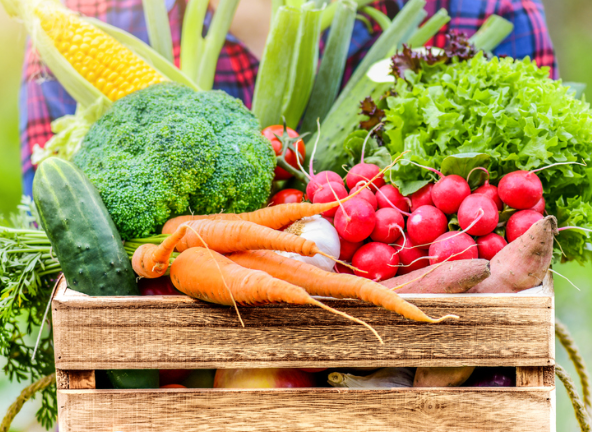
Summer is filled with colorful fruits and vegetables, from strawberries to melons, tomatoes to greens, and many more. It’s the season to indulge in foods that are tasty and good for you, too.

“There are many reasons to include fruits and vegetables every day in a meal or snack,” said Kansas State University food scientist Karen Blakeslee. “The fiber in produce helps keep you full, helps improve digestion and helps reduce risks and effects of several diseases such as heart disease, type 2 diabetes, high blood pressure and more.”

Many fruits and vegetables are packed with vitamins and minerals that our bodies can’t produce on their own, said Blakeslee, who recommends filling half of your plate during meals with fruits and vegetables.

“By consuming more fruits and vegetables, you lower calorie intake, reduce weight gain and reduce the intake of high-calorie foods,” she said. “Whether they are fresh, frozen, canned or dried, fruits and vegetables can be consumed year-round.”

In fact, with many garden foods reaching harvest, it’s a perfect time to preserve fresh produce. Blakeslee said freezing is easy and doesn’t take a lot of equipment; many foods can be frozen, though some – such as lettuce – do not freeze well.

“Canning and pickling are great options to reduce food waste,” Blakeslee said.

In a monthly newsletter she publishes in her role as coordinator of K-State’s Rapid Response Center for food science, Blakeslee suggests trying something new: Watermelon Rind Pickles.

“After enjoying the juicy watermelon fruit, save the rinds and turn them into a unique pickle,” she said. “Always follow tested recipes and instructions for best safety and quality for all food preservation methods.”

National Fruits and Veggies month also comes with a reminder to cut food waste in the United States. The Environmental Protection Agency estimates that nearly 40% of food waste occurs at home.

“When shopping, plan meals and snacks to be a better shopper,” Blakeslee said. “Before going to the store, shop your kitchen first. Incorporate what you already have into menus. Know your schedule and family likes to be sure fresh produce is used before it gets wasted.”

Other tips for reducing food waste include:

  • Add perishable foods to a casserole, salad or soup.
  • Freeze fresh produce to use later.
  • Don’t buy in bulk if it’s not an item you can use quickly.
  • Prepare fresh produce so that it’s easy to grab and go for easy snacks.
  • If food is spoiled, consider composting if you have space available.

More information on incorporating fruits and vegetables into your daily diet plan – not just in September – is available from several sources, including:

Six-man football in Kansas is keeping the Friday night lights on for rural towns

0

Small Kansas high schools are switching to six-man football to keep their teams alive, while their towns’ populations shrink. And state high school sports officials think it’s a trend that will likely grow.

INGALLS, Kansas — On the edge of town next to the railroad tracks, the sound of pads crunch and whistles echo. A train chugs by toward the grain elevator that backdrops the football field that features only a handful of players. And a bulldog painted on the town’s water tower watches over them.

High school football season is approaching, and this is what many rural Kansas towns feel like this time of year. Even if they are like Ingalls, a community with a population of less than 300.

“When I first drove into town, you see Ingalls Bulldogs everywhere,” Ingalls Head Coach Logan Hernandez said. ”The pride the town of this size has for its team, it runs deep.”

But it’s getting harder to field a football team year after year.

More towns across western Kansas are adopting six-man football, a version of football with smaller teams to help keep the sport alive.

Six-man football is a high-flying and high-scoring game that only has six players on the field for each team, opposed to the usual 11. Smaller schools usually resort to eight-man or six-man football when enrollment is low and there are only a few students who want to play.

Back in 2021, the Kansas State High School Activities Association voted to officially sanction six-man football with 15 teams taking the field that year. Last season it grew to 23 teams in Kansas. This season the KSHSAA expects similar numbers.

But each season it can fluctuate, with some towns having smaller classes and then bigger classes the next year.

Mark Lentz, assistant executive director for the KSHSAA, said keeping the football team going gives small towns a chance to bring their community together.

“When you play a varsity game on a Friday night, that’s what’s going on in town,” Lentz said. “And that’s what we want to keep and we want schools to thrive and communities to thrive and have that opportunity.”

Adapting the game 

This is Hernandez’s first year as a head coach and first year coaching six-man football.

“There’s a lot of adapting, the rules are a bit different, when I first watched the tape I had to count because I thought surely there wasn’t enough guys on the field,” Hernandez said.

The Bulldogs are coming off a successful 9-2 season. Hernandez is getting his team ready to kickoff the season against the Triplains/Brewster Titans.

They are an example of the lengths rural schools will go to keep the Friday night lights on for their communities. Triplains High School in Winona combined programs with Brewster High School to form a team.

Bucklin High School in southern Kansas also joined forces with Ashland High School’s team this year to give their students an opportunity to play.

“These towns, they’re kind of away from everybody, and with schools consolidating, if they couldn’t play, that’d be a real big issue,” Hernandez said.

But that doesn’t stop them from getting creative to keep the tradition alive for their towns and their youth.

Six-man football is heavy on offense and scoring. Take Golden Plains High School in Rexford, Kansas, for example. Last season, the team played in games with scores of 82-45, 62-16 and 58-0.

The game is played on a slightly shorter field of 80 yards opposed to the standard 100 yards. And unlike standard football rules, everyone including linemen are eligible to catch a pass, leading to wildly entertaining plays.

“A lot of teams of this size don’t have anyone real big on their team, so it’s more about speed,” Hernandez said. “When you see a running back break off a 60-yard run you drew up, it’s hard to contain your excitement.”

Shrinking towns

Lentz said more small towns that are shrinking may soon get in on that excitement.

About three out of four counties in Kansas lost population from 2020 to 2022. There’s not a lot of entertainment or amenities in small towns in the High Plains, but high school football remains a gathering opportunity for these communities.

And for the teens growing up there, six-man allows them to pursue the game they love and receive opportunities despite their rural surroundings, Lentz said.

“It’s just an opportunity for smaller schools who don’t have the enrollment, or may not have a lot of boys in their school to play the game of football,” Lentz said.

KSHSAA this year raised the maximum enrollment threshold so more small schools could join the program. Before only schools with less than 55 students could drop down to six-man football, but now the maximum is 65 students.

Lentz believes that in the upcoming seasons, Kansas might see several more teams join the trend to keep a consistent team together. He said KSHSAA hopes in the next few years the state will have up to 32 teams playing in that division.

“I’m not saying the community is going to shut down if they don’t have a football team,” Lentz said. “But, you want the community involved in your school, and football’s part of that school.”

Calen Moore covers western Kansas for High Plains Public Radio and the Kansas News Service. You can email him at [email protected].