Wednesday, January 14, 2026
Home Blog Page 75

Travis Kelce proposed to Taylor Swift in a Kansas garden. Here are 7 of state’s best

0

A Kansas garden drew national attention last week when singer Taylor Swift and football player Travis Kelce revealed they’d gotten engaged there.

More than 36 million people “liked” the Instagram post announcing Swift’s acceptance of that flower-filled proposal amid the secluded horticultural wonderland behind Kelce’s mansion in Leawood in Johnson County.

Though Kelce’s property is private, the Sunflower State is filled with enchanting gardens that are open to the public.

Following are seven of those.

The Lavender Patch Farm, Fort Scott

More than 1,000 plants and 20 varieties of lavender “turn the prairie purple during June’s peak bloom,” the kstravel.com website said of the Lavender Patch Farm at Fort Scott.

Visitors may wander the farm’s fields to pick lavender plants to purchase or take a tour to learn how the crop is grown, harvested and dried, that site said.

Lavender ice cream can be bought during an annual festival held annually on the third weekend of June at the farm, where handmade lotions and soaps are also among items available for purchase.

Reinisch Rose Garden, Topeka

Established in 1930, Gage Park’s Reinisch Rose Garden in Topeka features more than 4,500 roses of 180 varieties, said the Shawnee County Parks and Recreation website.

The garden is a popular wedding spot. It includes newly released rose varieties and numerous unusual varieties that are no longer commercially available, that site said.

Each April, Reinisch Rose Garden is among settings for “Tulip Time,” in which more than 100,000 tulips are planted at Gage Park, Ted Ensley Gardens and Ward-Meade Botanical Garden, all at Topeka.

Bramble’s Edge Farm, Rose Hill

Seasonal flowers, a market, workshops, tours, special events and gorgeous meadows for photoshoots are offered at Bramble’s Edge Farm, located on 8 acres at Rose Hill in Butler County in south-central Kansas, its website said.

Visitors may pick a bouquet of flowers to buy at a cost of $6 for 12 stems, the kstravel website said, adding that the farm also sells eggs, fresh produce, herbs, mints, berries, pumpkins and locally made candles and soaps.

The farm closes in the late fall and reopens in May, its website said. It offers fresh eggs and herbs, as well as photoshoot options year-round.

Ted Ensley Gardens, Topeka

This 37.5-acre garden area on the west side of Lake Shawnee features 1,200 varieties of perennials and 300 varieties of annuals, as well as roses, trees and shrubs, said the Visit Topeka website.

That site said Ted Ensley Gardens provides “a panoramic view of the lake and spectacular plantings in a beautiful and tranquil setting with meandering paths and seating areas.”

Ted Ensley Gardens also features water and rock gardens, a gazebo, a pergola and a pagoda with a meditation garden, said the website for Shawnee County Parks and Recreation.

Klamm Flowers-U-Pick-Flower-Maze, Bonner Springs

“Outfitted with loaned clippers and a jumbo water cup, visitors venture through the farmyard’s raised beds, snipping zinnias, sunflowers, dahlias, celosia, and basil for a take-home bouquet,” said the kstravel.com website.

“The fifth-generation farm hosts Sip and Snip (wine and flower picking) and flower-arranging classes,” that site added. “It also takes bookings for photo shoots in the fields.”

Visitors for $25 may pick and purchase enough flowers to fill a 32-ounce cup, which will produce a large bouquet or two smaller bouquets, the Klamm Flowers website said.

Ward-Meade Botanical Garden, Topeka

Visitors can “blend history with gorgeous grounds” by strolling through the 2.5-acre Ward-Meade Botanical Garden at Old Prairie Town/Ward-Meade Historic Site at 124 NW Fillmore in Topeka, said the travelks.com website.

“Its National Hosta Display Garden, one of only a few in the country, features hundreds of hostas,” that site said. “A National Daylily Display Garden and more than 500 varieties of flowers, trees, and shrubs round out the show.”

The site also offers an herb garden, a monarch butterfly way station, water features, a gazebo, bridges, paved trails, 10,000 annuals and the Asian Garden at Anna’s Place, said the Shawnee County Parks and Recreation website.

Botanica, Wichita

This 20-acre group of botanical gardens offers 4,000 plant species as well as sculptures, water features and a restored 1949 carousel, said the kstravel.com website.

“Open year-round, Botanica celebrates the seasons with flower festivals, concerts, traveling exhibits and the illuminating finale: gardens aglow with more than 2 million holiday lights,” it said.

Botanica’s Downing Children’s Garden features a “rainbow trail,” “sunflower plaza fountain,” “monster woods” and “salamander stream,” the Botanica website said.

Admission is $12 for adults, $10 for children, senior citizens and the military and free for children 2 and younger.

As reported in the Topeka Capital Journal
 

Management strategies for calves

0
K-State beef cattle experts discuss mitigating health risks in the cattle herd.

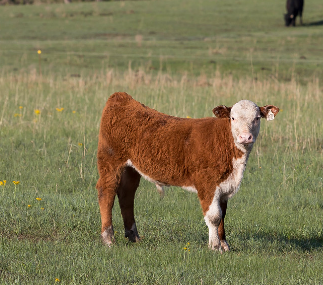
As calving season approaches, experts from the Kansas State University Beef Cattle Institute are encouraging producers to focus on proactive management strategies to support calf health and herd performance.

One key practice is the early castration of bull calves. K-State veterinarian Brad White explained that castration at about two months of age can reduce health risks and improve long-term productivity.

“Uncastrated bulls are 2.3 times more likely to develop bovine respiratory disease compared to steers, potentially leading to significant economic impacts,” White said. “Price discounts for uncastrated bulls could range from 3% to 15% depending on weight and age.”

Along with castration, the experts highlighted newborn calf care, emphasizing fly control and deworming. White and K-State veterinarian Bob Larson advised producers to:

  • Treat adult cows for fly control.
  • Use age-appropriate dosing for young calves.
  • Consider deworming calves around 2 to 3 months of age.
  • Tailor interventions to geographic and environmental conditions.

The experts noted that targeted, early interventions can help improve animal well-being and support profitability.

The full discussion is available on the Cattle Chat podcast at https://ksubci.org/2025/09/05/newborn-fly-control-bovin

Kansas warns of potential for human infestations of flesh-eating maggots

0

Kansas public health officials are advising providers to be on the lookout for humans infected with flesh-eating maggots of the New World screwworm.

The Kansas Department of Health and Environment sent a Kansas Health Alert Network notification Sept. 5. The alert warned health care providers of increased New World screwworm activity and the potential for travel-associated cases in humans.

New World screwworm, or NWS, is a fly but gets its name from its maggot larvae. The female fly lays eggs on a wound or opening, which hatch into maggots that burrow into living flesh. Screwworm infections are primarily associated with livestock, but can also affect pets and humans.

“The Kansas Department of Agriculture has been working closely with the U. S. Department of Agriculture (USDA) to develop rapid, effective reporting and response plans should an animal in Kansas be diagnosed with NWS,” the KDHE alert said.

“Humans can become infected with NWS when they travel to endemic or outbreak areas. Healthcare providers should be aware of the possibility of travel-related cases of NWS in Kansas residents and report any suspected cases to the Kansas Department of Health and Environment immediately.”

KU School of Nursing partners with McPherson College to increase nursing graduates in central Kansas

0
 
 
FOR IMMEDIATE RELEASE
 
 
Contact:     Kay Hawes, M.S.
                  Associate Director of News and Media Relations
                  University of Kansas Medical Center
       913-617-8698
[email protected]
KU School of Nursing partners with McPherson College to increase
nursing graduates in central Kansas

KANSAS CITY, KANSAS (Sept. 11, 2025) — The University of Kansas School of Nursing hopes to welcome many more graduates from central Kansas and surrounding areas with a new partnership with McPherson College.

This new partnership with KU School of Nursing will make it possible for McPherson College students to earn a Bachelor of Science in Nursing degree, with courses beginning in the 2026-27 academic year. That degree will come from KU, and the students will be able to complete courses on the KU School of Nursing’s Salina campus and online. Since there’s no need to relocate, the hope is that more students will choose to practice in Central Kansas or similar rural areas in the state.

“KU School of Nursing is excited to partner with McPherson College to help more central Kansas students become nurses,” said Jean Foret Giddens, Ph.D., FAAN, dean of KU School of Nursing. “Our Salina campus community is ready to welcome, educate and graduate nurses prepared to practice in rural communities and beyond.”

The collaboration strengthens McPherson College’s commitment to addressing health care needs in rural Kansas. “McPherson College and KU School of Nursing share the same goal of educating health care professionals to support the workforce needs of rural Kansas,” said McPherson College Executive Vice President Aaron Meis, Ed.D. “A critical nursing workforce shortage exists in many rural Kansas communities. Our collaboration with KU School of Nursing’s Salina campus will educate nurses interested in and committed to serving in rural settings, including those like the McPherson Center for Health.”

Students enrolling in the program will complete 60 credits of prerequisite nursing courses at the McPherson campus. They will be eligible for guaranteed admissions into the KU nursing program and complete the remaining 60 credits of nursing courses at the KU campus in Salina and online, while remaining at McPherson College. Nursing degrees will be awarded by KU.

Clinical experiences will be available at health care agencies located in rural communities, including Salina and McPherson.

“This program is designed for students interested in studying nursing at a strong, well-resourced public institution while retaining a small, residential liberal arts college experience,” Meis said.

A report published last fall by the Kansas Nursing Workforce Center, based at KU School of Nursing, found a direct correlation between the number of nurses per 1,000 residents and county health outcome rankings. “The number of nurses matters to the health and well-being of Kansans,” the report stated.

The second volume of the report, issued this month, anticipates continued nursing shortages as 26% of registered nurses and 23% of licensed practical nurses in Kansas are planning to retire within the next five years, and enrollment in nursing education programs is down 38% over the past 10 years. Additionally, the Kansas Department of Labor predicts the state will need more than 28,000 nursing assistants, 18,000 registered nurses, and 6,000 home health aides in 2026.
                                                                        # # #
About the University of Kansas School of Nursing
KU School of Nursing, designated a Center of Excellence in Nursing Education by the National League for Nursing (NLN), prepares hundreds of students each year for successful nursing careers as clinical nurses, advanced practice nurses, educators, leaders, administrators, scholars and researchers. Its award-winning programs are offered at campuses in Kansas City, Kansas, and Salina, Kansas, as well as online.
About McPherson College
McPherson College’s mission is to “develop whole persons through scholarship, participation, and service” within a career-focused liberal arts environment. In 2023, the college secured an unprecedented $1B commitment to its endowment, marking one of the largest single endowment commitments of any small liberal arts college in the U.S. Nationally recognized by U.S. News & World Report, Money Magazine, and the Chronicle of Higher Education’s “Great Colleges to Work For,” McPherson College is renowned for its innovative programs. Its Automotive Restoration program, the first four-year degree program of its kind, made history when a student-restored Mercedes-Benz 300 S earned a class award at the Pebble Beach Concours d’Elegance — the first time a student-restored car received such an honor at the prestigious Concours. Learn about all of its programs at www.mcpherson.edu.

Fall is great time to plant perennials

0

A Kansas State University horticulture expert says that while fall is a great time to plant perennials, selecting the right plants for the Kansas landscape is important.

Cynthia Domenghini says that for fall planting, it’s best to wait until the weather is cool, but far enough in advance for the roots to establish before the ground freezes.

She shared a list of plants that can tolerate drought once established:

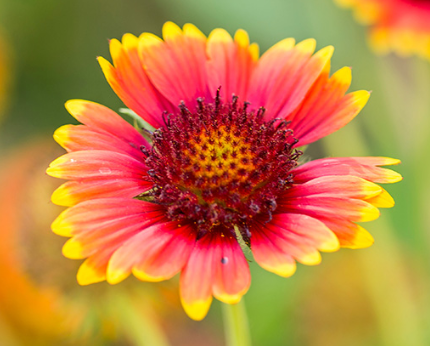
Perennials: Aster, Monada, Butterfly Weed, Coreopsis, Dianthus, Gaillardia, Garden Phlox, Black-eyed Susan.

Herbs: Artemisia, Basil, Lavender, Lemon Balm, Marjoram, Oregano, Sage, Thyme.

Ornamental grasses: Big Blue Stem, Blue Fescue, Fountain Grass, Switchgrass, Porcupine Grass.

Shrubs: Lilac, Forsythia, Rose of Sharon, Cotoneaster, Viburnum, Ninebark, Mockorange, Juniper, Japanese Flowering Quince.

“Though these plants will be tolerant to drought once established, they will need supplemental water initially, especially during hot periods,” Domenghini said.

Domenghini and her colleagues in K-State’s Department of Horticulture and Natural Resources produce a weekly Horticulture Newsletter with tips for maintaining home landscapes and gardens.

Interested persons can subscribe to the newsletter, as well as send their garden and yard-related questions by email to [email protected], or contact your local K-State Research and Extension office.