Thursday, January 15, 2026
Home Blog Page 85

The Case of the Missing Propeller

0

Do you ever contemplate the things you’ve done that leave you wondering why you weren’t killed doing them? One such incident always comes to my mind this time of year.

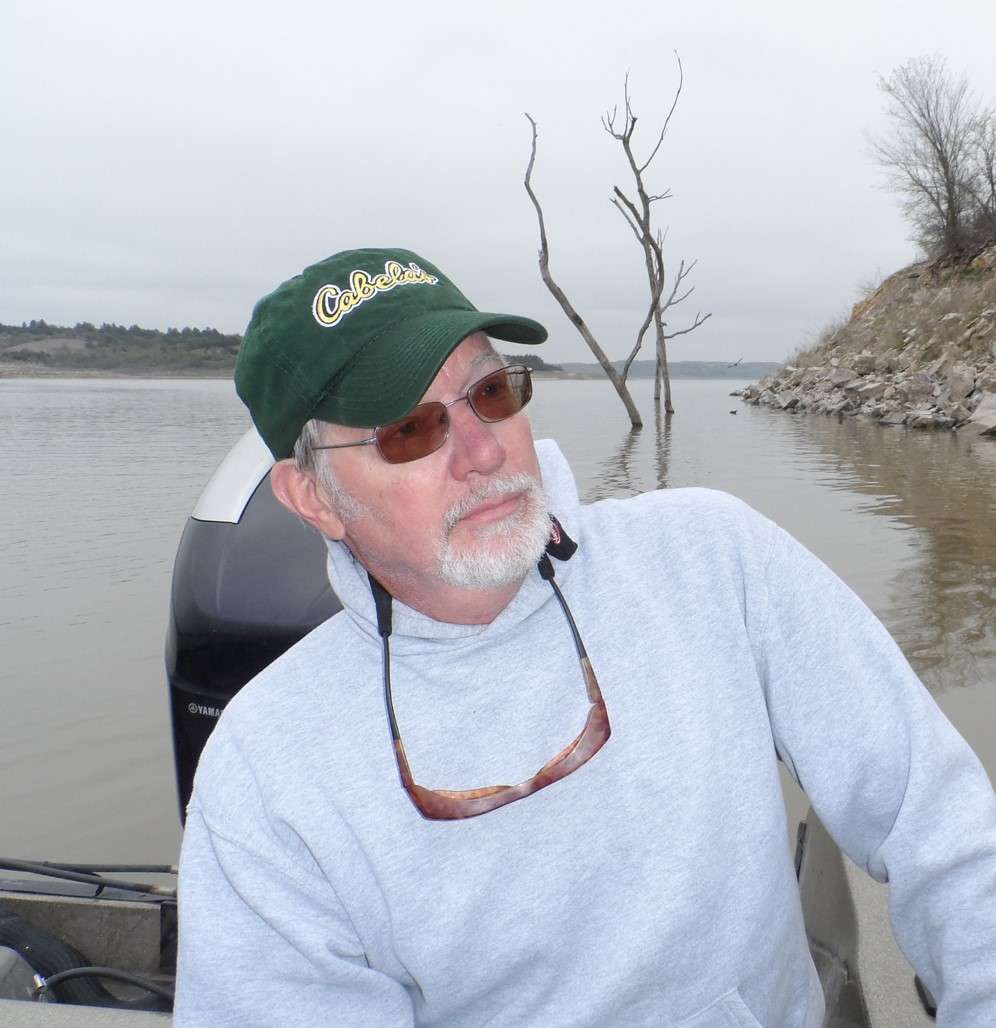
Maybe I enjoy setting lines for catfish because it reminds me of trapping, which is my passion. Or, maybe I just like fresh catfish. Anyway, many years ago shortly after moving to Kansas, I went with my brother-in-law and some of his buddies to set bank lines for catfish on the Smoky Hill River near the little town of Bridgeport, KS. It was to be an overnight trip, and we camped in an alfalfa field near the river. The “smokey” was very high due to recent heavy rains to our north. The big channel and flathead catfish hide and wait for prey in deep holes around bends and beneath banks and high water brings them out to move around, so “bank liners” relish these occasional times of high water during the dog days of summer.

The plan was to set and bait lines late in the evening, then to check them around midnight and again at first light. One of the guys had borrowed a small aluminum boat and outboard motor, which barely held the five of us with lines, bait, etc. As high and swift as the river was running, the boat and motor were necessary as well as convenient.

As we set the lines, we looked for the aforementioned deep holes near the bank or under logs, with a tree limb or log on which to fasten a line. The lines were made of heavy cord like trotline, with large hooks tied onto one end. They were baited with live goldfish, lowered to the bottom, then tied onto a green springy branch or fastened with a rubber bungee cord to help keep a large fish from pulling the hook from its mouth. By nightfall, several lines were set, baited, and marked and the plan was on schedule.

Around midnight, after numerous camp-fire roasted hotdogs and very little sleep, we all piled into our tiny yacht and set off to check the lines, which were all downstream from camp. We motored beyond the farthest line, then turned and began to travel upstream against the current, but the boat soon stopped moving forward and started drifting backwards with the raging river. Someone grabbed the first passing limb and held on while the guy with the headlamp climbed to the back of the boat, jostling and rocking the tiny craft as he went. The motor was tilted from the water and inspected, but after finding nothing wrong, it was lowered into the water for another try and we were soon moving forward again. After a short distance, the problem reoccurred, this time with a much different outcome. As the motor was tilted from the water, an expletive or two informed us that the propeller, a major component in our forward movement, was missing from the motor. Our only option was to drift with the river until we reached a road where the boat could be beached and later retrieved by pickup. The night was still and very dark, and it was a quiet ride in more ways than one. Our man with the light was in front of the boat, and we could see raccoon eyes and other eerie sights as he panned back and forth along the bank. A heron scared the tar out of us all as it rose from the water just ahead. Finally the boat was beached beneath a bridge and retrieved by pickup after a long walk back to camp. The night had been an experience, but the real adventure, checking the lines on a boiling river with no motor, awaited us at first light.

As I remember, the August morning seemed to come earlier than most, and was clear, hot and steamy. The plan was to launch the boat upstream somewhere beyond the farthest

line, then attempt to reach each one as we steamed past with the current. With either the bravery of crusaders or the ignorance of youth, we were soon off and bouncing on the rolling river. The fellow with the sharpest eyes was up front, and as he saw each bank line approaching, the rest of us paddled like slaves to reach shore. Someone would grab hold of anything available and attempt to hold the boat, while the line was checked and retrieved, then the “anchorman” would release us to be swept on to the next one. The closest call came in the form of a huge cottonwood tree, totally intact with green leaves and all, lying across the river ahead. Despite our valiant paddling, the current sent us squarely through the middle of the tree, and as forward movement ceased, the seething river snapped the boat sideways and began to roll it over. We must have looked like monkeys in a mango tree as we all scrambled to break branches and get our little war canoe righted again! Then once more, whether by bravery or by ignorance, we were soon free and moving. Huck Finn would have been proud! The rest of the trip must have been reasonably docile, because the next memories I have are all about helping clean several nice channel cats and a couple respectable flathead catfish.

I’m pretty sure all of us can look back today and agree that this adventure was ill advised. Someone has said, “A good scare is worth more to a man than good advice.” Today, I would opt for the good advice, but back then those thoughts were probably trumped by each bite of fresh catfish…Continue to Explore Kansas Outdoors.


Saint Peter And The Sandman (Best Of)

0
lee pitts

On a wall in my office is a sign that reads: “Employees dying on the job are failing to fall down. This practice must stop, as it becomes impossible to distinguish between death and the natural movement of the staff. Any employee in the future found dead in the upright position will be dropped from the payroll.”

I mention this because I have the same problem with animals… I can’t tell the live ones from the dead ones. Just last week my wife and I were driving on the road that adjoins the horse pasture and I noticed the buzzards circling over Gentleman’s body. “Oh, no! He’s dead,” I screamed hysterically as I wheeled into the horse pasture.

“No, he’s just sleeping,” said my wife calmly.

“Then why are the buzzards circling?”

“Gentleman never has had the best horse hygiene if you know what I mean,” said the wife sarcastically.

“He’s dead I tell you. He’s saddled a cloud and rode to the great beyond.” Despite my serenading him with my best rendition of “Wake up, wake up, you sleepy head, come on, come on, get out of bed,” Gentleman didn’t twitch a muscle. So I got the chain out of the truck to drag my departed steed to the bone pile. About the time I made my second half hitch around Gentleman’s hind leg my good horse miraculously came back to life.

“How did you know he wasn’t dead?” I asked my wife.

“Horses generally don’t die standing up,” she replied accurately. Now all I ever hear when we see Gentleman is the sarcastic comment, “Looks pretty good for a dead horse doesn’t he?”

It’s the same way with cows. Whenever we are out checking for newborn calves I always get a glimpse of the grim reaper. I remember the time we were out riding and we spotted a cow through the binoculars with a calf hanging halfway out her rear end. Neither the cow or the calf were moving. The grass was waving over the pair and I just knew they were in the clutches of St. Peter, not the Sandman.

“She’s just resting between contractions,” suggested my wife looking through the binoculars.

“No, trust me. I’m sure on this one.” So we headed back to the house to call the tallow man. Funny thing is that when he arrived and we went out to get that cow and her dead calf we couldn’t find their bodies. Bears must have carried them away, I suppose.

And then there was the time I was driving into town and I saw a dead bull in my neighbor’s front field. Being the good neighbor that I am I called my neighbor to inform him of the passing of his expensive registered Angus herd bull. But when I dialed my neighbor’s number his recorded message indicated that he was trying to enjoy a much deserved vacation on the islands. So I naturally just left a message on his recorder that the bull he had just paid $15,000 for had passed on to the great never-never land.

How was I supposed to know the bull slept with all four legs in the air? I sure hope it didn’t ruin his vacation coming home four days early.

This habit of mine of thinking everything is dead when in fact the animals in question merely have a sleep disorder is causing my wife to stay awake nights. “Why can’t you ever go to sleep before me,” I asked her last night as she lay tossing and turning?

“Because I’m afraid if you look over and see me with my eyes closed you’ll have me buried in the bone pile before I even wake up.”

Why Armadillos Are Invading Kansas and Freaking Everyone Out

0

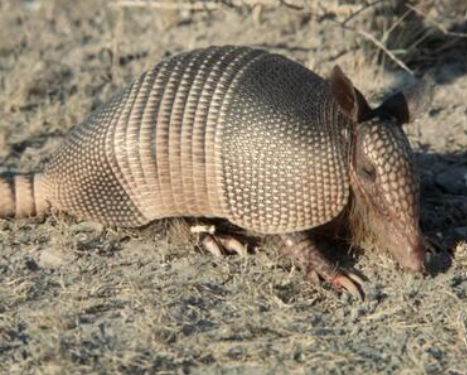
Something strange is happening on the plains of Kansas. Picture this: you’re driving down a country road, and out of nowhere, a strange, armored creature scuttles across your headlights. No, it isn’t a prehistoric relic or a visitor from another world—it’s an armadillo! Once a rare sight, these quirky animals are now popping up everywhere in Kansas, leaving locals surprised, confused, and sometimes even a little unsettled. But why are armadillos suddenly marching north into the Sunflower State? The answer is as bizarre and fascinating as the creatures themselves.

The Unexpected Arrival of a Southern Wanderer

Just a few decades ago, spotting an armadillo in Kansas would have been the stuff of tall tales. Native to South and Central America, the nine-banded armadillo was historically a creature of the warm, humid south. Now, however, sightings have exploded in Kansas, with reports from city parks, rural fields, and even suburban backyards. This sudden arrival has caught many Kansans off guard, sparking both fascination and fear. The armadillo’s odd appearance—with its bony shell and tendency to jump when startled—has even inspired urban legends and social media buzz across the state.

Climate Change: The Great Enabler

One of the primary reasons for the armadillo’s invasion is the shifting climate. Winters in Kansas have become milder over recent years, with fewer deep freezes that would once have killed off these warm-weather creatures. Armadillos are highly sensitive to cold, so as the average temperature rises, their range steadily expands northward. Scientists point to climate records showing a clear trend: as frosty nights decrease, the armadillo’s playground grows. This is a vivid example of how even modest climate shifts can trigger surprising ripple effects in wildlife populations.

Highways to the Heartland

Armadillos aren’t just wandering north by accident—they’re following the ribbons of highways, railways, and cleared land humans have carved through the landscape. These corridors make it easier for armadillos to travel long distances, avoiding dense forests or impassable prairies. As Kansas’s infrastructure has grown, so too has the opportunity for armadillos to explore new territory. Observers have even noted that freshly built roads seem to act like armadillo superhighways, quickly drawing them into regions where they were never seen before.

Food and Survival: The Kansas Buffet

Kansas offers the perfect menu for a hungry armadillo. With its abundance of insects, grubs, and worms, the state’s soil is a smorgasbord for these natural foragers. Armadillos use their keen sense of smell to locate food underground, rooting through lawns and gardens with their pig-like snouts. This has been great for armadillos but less so for Kansas homeowners, who sometimes wake up to find their yards riddled with holes. Yet, the rich pickings mean armadillos are thriving and multiplying at an astonishing rate.

Surprising Adaptations and Resilience

What makes armadillos such successful invaders? For starters, they are incredibly adaptable. Their tough armor protects them from most predators, and their ability to dig allows them to create burrows for shelter. Armadillos also have a quirky reproductive strategy: each litter is made up of genetically identical quadruplets, boosting their numbers quickly. These traits, combined with their insatiable curiosity and willingness to explore, have helped them survive—and even flourish—in Kansas’s changing landscape.

The Human Reaction: Fear, Fascination, and Frustration

The arrival of armadillos has sparked a whirlwind of emotions among Kansans. Some people are delighted to see such an unusual animal in their backyard, quickly snapping photos and sharing stories online. Others feel uneasy, worried about the damage to gardens, golf courses, and even the risk of disease—since armadillos are known carriers of leprosy bacteria, though the risk to humans is extremely low. Still, the shock of seeing an “alien” creature in familiar surroundings has stirred up excitement and anxiety in equal measure.

Impact on Local Wildlife and Ecosystems

The appearance of armadillos in Kansas is more than just a curiosity; it has real consequences for local ecosystems. Armadillos compete with native animals like skunks, raccoons, and opossums for food and shelter. Their digging can disrupt the habitats of insects and small ground-nesting birds. Scientists are watching closely to see if the armadillo’s presence will tip the balance of Kansas’s intricate web of life. In some cases, armadillos may even help by eating pests, but their long-term impact remains uncertain.

Armadillos and Disease: Separating Fact from Fear

One of the more alarming rumors about armadillos is their connection to leprosy, a disease that conjures up ancient fears. While it’s true that armadillos can carry the bacteria that cause leprosy, the risk of transmission to humans in Kansas is vanishingly small. Most experts agree that direct contact is rare, and simple precautions—like avoiding handling wild armadillos—are more than enough to stay safe. Still, the association has fueled a mix of fascination and worry, adding to the armadillo’s mysterious reputation.

Can We Coexist with Kansas’s Newest Residents?

As armadillos continue to march across Kansas, the big question is how people will adapt. Some communities are learning to live with these oddball neighbors, focusing on ways to protect gardens and lawns without harming the animals. Wildlife agencies offer tips for deterring armadillos, such as fencing and humane traps, and encourage people to appreciate the unique role these creatures play in the ecosystem. The key may be understanding—not fear—as Kansans adjust to life alongside their unlikely new residents.

A Glimpse Into the Future: What Comes Next?

With armadillos now firmly established in Kansas, experts predict their numbers will only grow in the coming years. Will they keep moving north, reaching Nebraska or even farther? Only time will tell. What’s clear is that the story of the armadillo in Kansas is still unfolding—a living reminder of how quickly nature can surprise us, and how adaptable both animals and people must be in a world that’s always changing. What unexpected creature might show up next in your backyard?

K-State Salina to hold webinar for drone pilots on proposed FAA changes

0

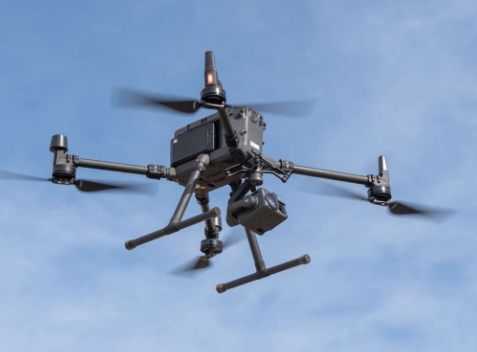
As the drone industry continues to advance and develop new regulations at a rapid pace, Kansas State University Salina’s Applied Aviation Research Center, or AARC, prepares the next generation of drone pilots to be Federal Aviation Administration compliant through world-class uncrewed aircraft systems training and education.

The Federal Aviation Administration, or FAA, is planning new regulations aimed at standardizing operations beyond the visual line of sight for commercial drones. Currently, Part 107 regulations with the FAA do not permit drones to fly beyond the visual line of sight of the operator without a special waiver.

The new set of regulations will allow for more expansive uncrewed aircraft systems, or UAS, operations beyond the visual line of sight, impacting all industries, including agriculture, engineering and public safety.

Upcoming webinar explains proposed UAS regulations

With this immense change coming to the industry, the Applied Aviation Research Center will provide a free informational webinar explaining the proposed regulations on Sept. 4. The webinar will discuss the new regulations, including guidance on detect-and-avoid, minimum operational standards, certification and training requirements, and integration into the national airspace.

“The AARC has a close connection to the FAA from our years of UAS experience,” said Kurt Carraway, executive director of the Applied Aviation Research Center. “As the first university to receive a waiver of beyond visual line-of-sight UAS operations back in 2018, we have proven to be detailed and system-oriented with our operations. Training and operations on the new set of regulations are the next step in K-State Salina’s strategic goals that enable technologies to advance us in our work and connect the world in new ways.”

To stay up to date with the FAA and advance your training in UAS technology, register by Sept. 2 for the free webinar with the AARC drone experts at noon on Thursday, Sept. 4.

Leading the way in advanced air mobility

In alignment with K-State’s mission to become a next-generation land-grant university, the Salina campus has been tasked with leading exploration, integration and operation of next-generation, revolutionary drone technologies and air transport systems known as advanced air mobility — a rapidly emerging, new sector of the aerospace industry that aims to safely and efficiently integrate highly automated aircraft into the national airspace system.

Advanced air mobility is not just a single technology; it’s a collection of new and emerging technologies being applied to the aviation transportation system, including urban mobility, public services and cargo delivery.

K-State Salina is in a unique position to positively impact the aerospace industry by training thousands of drone pilots through the bachelor’s degree program and providing instruction to learners from many industries through professional education. The Applied Aviation Research Center is also conducting groundbreaking research into drone operations in natural disasters.

As the industry flies forward with advancement, K-State’s advanced air mobility research and education will help transform the lives of Kansans and those around the world.

JEREMY BOHN
K‑State Salina