Wednesday, February 4, 2026
Home Blog Page 4435

Stiefel Theatre – Marc Cohn has been rescheduled for Saturday, May 30 at 8pm

0

The Stiefel Theatre announces that Marc Cohn has rescheduled for Saturday, May 30 @ 8PM.  Tickets are $38 and $48.  The show was originally booked for April 26, and was cancelled last week due to a family situation. It was rescheduled and confirmed today for May 30.  (All tickets were refunded for the original date.) Tickets go on sale tomorrow, March 25.  To buy tickets call the Stiefel at 785-827-1998 or go online to ticketmaster.com.

Marc Cohn

Grammy Award winning singer-songwriter Marc Cohn has been obsessed with pop music for as long as he can remember: “I was hooked from day one. My older brother had a band that rehearsed in our basement, so I heard Bacharach, The Beatles, Ray Charles, and Motown coming up through the floorboards from the time I was six years old. By the time I was eleven though, the Beatles were breaking up and singer-songwriters were breaking through, and a lot of that music really resonated for me”

1970 was a milestone for Marc – and for pop culture at large, given the unprecedented range of notable artists who made the charts that year. It was the momentous beginning of a new decade, and Cohn himself was moving closer to the precipice of young adulthood. The songs of that eventful year would stick with him forever, the way they would with anyone of a tender age just discovering the deeper meanings and life lessons – the romance, the sex, the sadness, the fun — to be gleaned from a seemingly simple pop tune.

Collaborating with longtime producer-arranger-multi-instrumentalist and fellow Grammy Award winner John Leventhal, Cohn doesn’t merely recreate the sounds of this storied time. On Listening Booth:1970, he transforms songs from such artists as Cat Stevens, John Lennon, Paul McCartney, Van Morrison, Smokey Robinson, Creedence Clearwater Revival and even Bread into tracks that are warm, soulful, more than a little sexy and full of easy-going charm. These highly personal interpretations say as much about Cohn’s own history – his experiences, his memories, his inspirations – as about the legacy of these songs. They’ve been so creatively and confidently re-imagined, and sung with such feeling, they practically feel brand new.

As a songwriter and singer, Cohn combines the precision of a brilliant tunesmith with the passion of a great soul man. He’s a natural storyteller, balancing the exuberant with the poignant, and able to distill universal truth out of his often romantic, drawn-from-life tales. He similarly finds the emotional essence in the vintage songs he’s just recorded, even as he brilliantly reshapes his source material. Cohn’s own career took off at the turn of another decade, in 1990, with the recording of his critically acclaimed, self-titled debut disc, which yielded such classics in their own right as “Walking In Memphis,” “Silver Thunderbird,” and the lovely “True Companion.” For Cohn, 1970 – -which saw the release of Moondance, Bridge Over Troubled Water, and John Lennon/Plastic Ono Band to name but a few — “was still the golden age of the single, but was also the beginning of the golden age of the Album. Even while all these deeply personal and poetic records were being released, there was this eclectic mix of pop music on the radio; it was great to be able to explore that range on this record. Just as a consumer and a total music fan, if I saw a sequence on a record that had songs by Paul Simon, Badfinger, John Lennon, Cat Stevens, The Grateful Dead and Bread, I would immediately be intrigued, and I’d probably buy it just to find out how badly the artist had lost the plot! But somehow all those disparate styles and approaches to songwriting seem like they belong together.”

Says Leventhal, “Marc’s voice is the unifier. There’s a depth and a soulfulness that I don’t think people are aware of, and I really wanted to bring that out. That Creedence song, ‘ Long As I Can See the Light,’ is a good example. That track is as empty as can be and Marc just fills it with this unbelievably great singing.”

Instead of working out a firm set list or precise arrangements before they began to cut tracks, the pair went straight into Leventhal’s Manhattan studio to see what they could do with some of their favorite tunes, and they left the tape rolling. At first it was just the two of them, accompanied by the engineer/producer Rick DePofi; farther along, they invited in such guests as Aimee Mann, India Arie, Jim Lauderdale and up-and-coming vocal powerhouse Kristina Train. It was a process of discovery for the pair; Cohn and Leventhal recorded as they went along, often finding they’d have just about completed a song, with a finished vocal, after only a single day’s work.

At first, they considered digging up more obscure material, but Leventhal counseled Cohn to go with what he knew best: “I told him, you love great pop music, let’s just put it out there. They’re great songs, there’s a reason they were popular; let’s see if we can find our own unique versions of them. Let’s not copy them, let’s see if we can make it so that people feel they are hearing these songs for the first time. That’s a great challenge, and I like to think that we did it. I think Marc and I are a good combo because we both gravitate towards the same things and we understand good, fresh ways to approach material. Neither one of us were interested in doing anything verbatim.”

Hence, Bread’s sweetly chaste “ Make It With You,” performed as a duet with India. Arie, becomes a playfully sexy, Al Green/Willie Mitchell-style R&B groove with a gospel like call-and-response coda; as with the Rev. Al’s work, there’s no mistaking what the declaration of the song title means. Paul Simon’s ode to his fractured friendship with Art Garfunkel, “The Only Living Boy In New York,” is recast as a strikingly solitary folk song with a heartbreaking, intimate vocal. Badfinger’s “No Matter What,” featuring Aimee Mann, has yearning pedal steel rather than gleaming power-pop electric guitar. Cat Stevens’ “Wild World” is a bluesy shuffle, with Stevie Wonder-style harmonica — a cautionary tale narrated from a gritty, grownup point of view. The Box Top’s “The Letter” ( sung by the late Alex Chilton and covered in 1970 by Joe Cocker), has a similarly loose-limbed after-hours vibe; Cohn’s yearning to get back to his baby, but from the sound of it he may never leave the bar.

Says Leventhal, “The real epiphany was when we grabbed ‘Wild World’ and ‘The Letter.’ They had a kind of slinkiness to them, a late night feel. Once we embraced the more relaxed approach, everything felt right to us.”

“I’m singing in a different place in my voice on this record” says Cohn. “It was ultimately extremely liberating to just be the singer, not the songwriter, and to try to find the most interesting, unforced way to approach what we already knew were such beautifully written songs.

“To be honest” Cohn explains, “I don’t even view this as a ‘covers’ record in the traditional sense. Records like ‘Nick of Time’ by Bonnie Raitt, or ‘Raising Sand’ by Alison Krauss and Robert Plant were more the templates for me in the way these songs were arranged and performed. What those records taught me was that just because the singer didn’t write the songs, the record itself didn’t need to be any less of an original statement.”

In fact, Listening Booth:1970 represents a continuation of a creative resurgence for Cohn, ultimately brought on by one of the strangest and scariest events of his life. In 2005, while driving back to his hotel with his band and tour manager after a show in Denver, Cohn was shot in the head by a would – be carjacker. Although the bullet had to be removed from his left temple, it miraculously missed penetrating his skull by a centimeter, causing no physical damage and allowing him to be released from the hospital the next day. After working through a bout with post-traumatic stress syndrome, Cohn has been busier than ever. Ending a nearly ten-year absence from the studio, he released one of his most critically acclaimed records, Join The Parade, in 2007 and followed it with well over 150 shows across the country. “I had always had my priorities straight when it came to my family. For me, it never felt right bringing children into the world and then spending all your time in a studio or a tour bus. But that night in Denver somehow brought me a new appreciation for my work and my audience.”

Now, Listening Booth:1970 ultimately brings Cohn back to where he began– writing songs like ‘Walking In Memphis’ which spoke so eloquently about the transformative, healing power of music. Like that hit single, Listening Booth: 1970 is really the soundtrack to his life. As Cohn reflects, “It seemed like such a natural progression for me to do a record like this because, if you’ve been following my records from my first single, I have been paying tribute to musicians through my writing all along, from Al Green to Elvis to Levon Helm to Charlie Christian, It’s really been a touchstone for me. Now I’m just repaying a debt of gratitude to the artists who’ve changed my life and taught me how to do what I do.”

Quail Forever Annual Report: 202,630 Wildlife Habitat Acres Conserved in ‘14

0
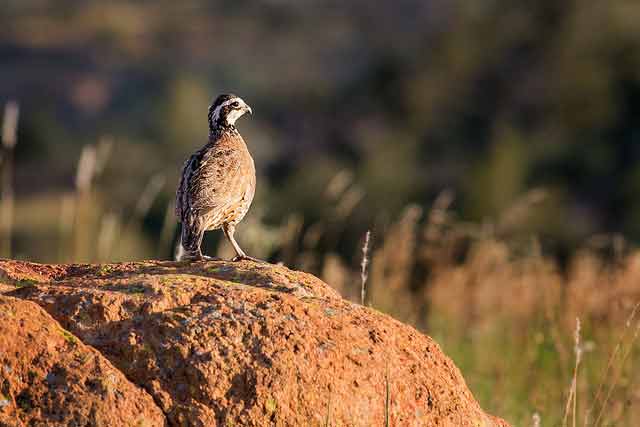
Photo credit: Larry Smith
Quail Forever completed 1,805 wildlife habitat projects and improved habitat for quail, pheasants and other wildlife on 202,630 acres in 2014. The organization – Quail Forever is Pheasants Forever, Inc.’s quail division – maintained a high level of efficiency, spending 90.42 cents of every dollar raised directly on its wildlife habitat conservation mission.
Howard Vincent, Quail Forever and Pheasants Forever President and CEO, says the organization’s grassroots model continues to be the driving force behind these upland habitat successes. “Membership, volunteerism and chapter involvement continue to lay the groundwork for successful upland habitat projects. Even as our impact grows, we remain true to accomplishing these projects with as little overhead as possible.” Due to its efficiency and effectiveness, “The Habitat Organization” continues to be recognized as a 4-star non-profit by Charity Navigator, the largest charity evaluator in the country.
Organizational Growth
In 2014, Quail Forever membership rose to 13,567 and 23 new chapters were organized, resulting in a current total of 144 chapters in 26 states. Quail Forever also added two regional representatives to its staff to service chapters in Tennessee, Mississippi, Alabama, North Carolina, South Carolina, Oklahoma and Texas.
Wildlife Habitat Projects
Quail Forever chapter habitat projects – nesting cover, upland & wetland restoration, food & cover plots, maintenance, and land acquisitions – accounted for 202,630 acres of improved wildlife habitat in 2014.
Youth, Education & Public Awareness
Quail Forever and Pheasants Forever chapters held 1,115 youth events in 2014, which attracted 65,000 youth participants, a new organizational record. Chapters hosted youth hunts, sponsored shooting teams, helped with youth pollinator projects, and held family field days in their communities.
Land Management Policies & Programs
A new federal Farm Bill was finally passed in 2014, and its conservation title addressed some of Quail Forever and Pheasants Forever’s top wildlife habitat priorities, including a regional “Sodsaver” provision, reauthorization of the Conservation Reserve Program, crop insurance linked to conservation compliance and a new Agricultural Conservation Easement Program.
New Quail Coalition
Quail Forever joined with the Florida Fish and Wildlife Conservation Commission, the Georgia Department of Natural Resources, and Tall Timbers Research Station to form the Florida/Georgia Quail Coalition – a unique partnership to enhance habitat in quail focus areas. The new Florida/Georgia Quail Coalition will also help start Quail Forever chapters in both states to raise funds for quail management and monitoring, as well as youth shooting sports and education.
Pheasants Forever, Inc. is a 501(c)(3) charitable organization. Pheasants Forever’s Annual Report is available online. Quail Forever’s Annual Report will be published in the Spring 2015 issue of the Quail Forever Journal of Quail Conservation.
Media Contact
Jared Wiklund
(651) 209-4953

New Study Shows 3D Mammography Reveals Important Details

0
3D mammography technology reveals significantly more invasive cancers than a traditional mammogram.

(NAPS)—Here’s important information for women. Human breasts are made up of different types of tissue: fatty, fibrous and glandular. If most of the tissue is fibrous and/or glandular, it is considered to be dense.

It is not unusual for a woman to have dense breasts. For most women, density decreases with age, but in some women there is little change. Breast density can only be determined by a mammogram, yet finding cancer in a woman with dense breasts is more difficult for a doctor when using traditional technology.

The good news is that there’s a more accurate exam—3D mammography—that can make detecting breast cancer easier in women with dense breasts. A new study published by the Radiological Society of North America showed that the 3D mammography exam finds significantly more cancers in women with dense breasts than a traditional mammogram.

That’s because 3D mammography technology allows a doctor to examine a woman’s breast tissue layer by layer. So instead of viewing all the complexities of the tissue in a flat image, as with traditional mammography, fine details are more visible and no longer hidden by the tissue above or below.

Determining Density Is Key

It is important for women to know their breast density. That’s because women with dense breasts have an increased risk of cancer. Experts are not certain at this time what it is about dense breast tissue that increases a woman’s risk.

Previous studies have shown that the 3D mammography exam finds more invasive cancers than a traditional mammogram—41 percent more—and decrease the number of women called back for unnecessary tests due to false alarms by up to 40 percent.

With the 3D mammography exam, women, including those with dense breasts, can feel more confident that their annual screening exam will find the truly troubling cancers while reducing the need for additional, unnecessary tests. Since 2011, over 8 million women have benefited from 3D mammography technology.

For more information, visit www.3dmammography.com. 3D mammography™ technology is available on the Selenia Dimensions system.


Frost Tolerance of Apricots and Peaches

0
Peaches and Apricots   

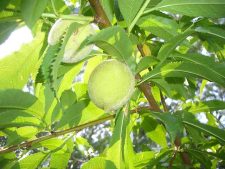
Growers of apricots and peaches often wonder at what temperature fruit buds are killed.  These two tree fruits bloom very early and are often caught by a late frost. The following will give you some guidelines but remember that the actual damage is going to be influenced by the weather before the temperature drops. An extended warm spell before the cold snap may result in more damage due to a loss in cold hardiness.  The stages listed are for the fruit buds.

Apricot
Stage             10% Kill (°F)    90% Kill (°F)
First white            24            14
First Bloom            25            19
Full Bloom            27            22
In the Shuck            27            24
Green Fruit            28            25

Peach
Stage                                 10% Kill (°F) 90% Kill (°F)
Swollen bud 18                                  2
Half-inch green 23                                  5
Pink 25                                18
Bloom 27                                 24
Petal fall 28                                 25
Fruit set 28                                 25

To check for low temperature injury to fruit buds or blossoms, use a sharp knife and cut them in half longitudinally (from top to bottom).
If the tiny seed in the center is white to cream color no damage has been done. But if the seed in several buds or blossoms is dark brown or black, it has been killed.
It is possible to give some protection to blossoms from freezing by covering the tree with a bed spread, blanket or similar fabric.
Old-fashioned Christmas lights distributed around the tree will help to give additional protection. The newer, smaller Christmas lights do not give off enough heat and are not recommended. Of course the practicality of this method of protection depends upon the size and number of trees.
Sprinkling the tree with water throughout the freezing period can also protect the blossoms. Sprinklers should be started before the temperature drops to freezing to be sure ice does not block the garden hose or water line. Continue until the temperature warms. With this protection method, there is the potential of creating an ice storm. If temperatures remain below freezing for several hours, ice will accumulate on the branches and limbs. The weight from the ice may cause branc

Crowdfunding site re-opens for Kansas communities of every size

0

Community projects can now be submitted online at wekan.kanstarter.com.

Kanstarter, a crowd-funding and volunteer-recruitment platform was launched last October on behalf of the non-profit We Kan! Network, a sister organization of the Inman-based Kansas Sampler Foundation.


Four pilot projects from rural communities completed their fundraising campaigns in early January with $30,000 being raised for projects in Plains, Wilson, Burdett and Yates Center.


These pilot projects demonstrated that additional support provided by We Kan! Network helped communities be more successful with crowdfunding. Now, all community development projects in Kanstarter will be called WeKan!Support. The website will be wekan.kanstarter.com.


Marci Penner of the We Kan! Network encourages any community looking for funding support from beyond their local area to consider putting their project on wekan.kanstarter.com. “Click on “how to start a project” at the top of the home page and you’ll find all the information you need to have a successful fundraising campaign on this site,” Penner said.


Community non-profit projects from towns of any size in Kansas are eligible.


We Kan! Network board member Luke Mahin said, “Fundraising is not easy but this site gives you many tools to expand the usual reach for your hometown projects.  Through social media, email, and other web tools you can reach alumni no matter where in the world they live and makes it possible for them to donate online.”


Monies raised from Kansas Department of Commerce Community Tax Credit paid for the development of the site.


Questions should be directed to [email protected] or call 620.585.2374.