Tuesday, February 3, 2026
Home Blog Page 4452

Tips To Help You Sell Your House

0
Selling your house can be simpler—and more lucrative—with professional help.

(NAPS)—If you’re considering putting your home on the market in the coming months, there are a few tips you should follow.

House sales generally peak around June and July, with many families beginning their home search in the spring, in hopes of settling into their new home in time for the next school year.

It’s wise to work with a Realtor. According to a survey from the National Association of Realtors, 88 percent of recent homesellers used an agent. A Realtor can provide expert advice and counsel on the selling process, including listing your house on the Multiple Listing Service (MLS), marketing it to prospective buyers and accepting offers and negotiating on your behalf. To find a Realtor nearby, go to www.realtor.com/realestateagents.

Know your neighborhood when setting your asking price. Realtors have real insights in the markets where they do business. A Realtor is your best source for accurate, up-to-date information and comparable properties to help you determine a competitive listing price for your home. He or she will give you an idea of how long homes are staying on the market and at what price they’re selling. While it’s important to get the best possible deal for your home, a Realtor will help you understand the importance of pricing your house appropriately. Overpricing your home could lead to it staying on the market too long—compelling you to compromise on the asking price or terms.

Decide on how to market your home. Given the mass amounts of information available today to consumers, the days of just placing an ad in your local newspaper and putting a “For Sale” sign in front of your yard are over. A Realtor® can place your listing on the MLS and work with you to decide other ways to market your home. Marketing your listing on a popular real estate website such as www.realtor.com will ensure your listing is generating the most eyeballs from interested buyers.

If you’re looking to sell your home as quickly and easily as possible, you could use the real insights you’ll get having a Realtor help you through the process of finding interested buyers and eventually closing the deal.


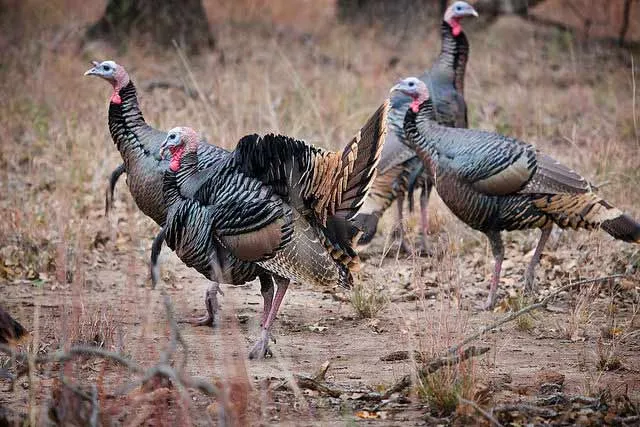
Spring turkey hunting atlas mega-map of where to hunt

0
Photo credit: Larry Smith

PRATT – You’ve got your turkey permit purchased, your slate call packed, and you’ve brought your tom and hen decoys out of hibernation – all you need is the perfect place to hunt. Lucky for you, there’s the Kansas Department of Wildlife, Parks and Tourism’s (KDWPT)2015 Spring Turkey Hunting Atlas.Available online now at ksoutdoors.com and soon to be in print wherever licenses are sold,this 66-page atlas provides the locations of nearly 200,000 acres of Walk-in Hunting Access (WIHA) areas, as well as state and federal public lands open to spring turkey hunting.

From sunrise and sunset tables, to information on where to camp, the free2015 Spring Turkey Hunting Atlasis a must-own for every turkey hunter looking to make the most of the season.

In addition to electronic and printed copies of the atlas, hunters also have access to file downloads on ksoutdoors.com that can be loaded onto Garmin GPS units, and Android and iOS devices that can be used with Google Earth, making locating areas easier than ever.

The 2015 spring turkey season will kick off with the youth/disabled season April 1-14, followed by the archery season April 6-14, and regular firearm season April 15-May 31. Spring turkey permits for Units 1, 2, 3, 5 and 6 are available at ksoutdoors.com and at any license vendor through May 30. Buy the spring turkey permit combo by March 31 and save $7.50. A valid Kansas hunting license is required of all residents age 16 through 74 and all nonresidents, except persons hunting on their own land.

To purchase your turkey permit and optional additional game tag today, visit ksoutdoors.com/License-Permits.

Source: Kansas Department of Wildlife, Parks and Tourism

Family Farms are the Focus of New Agriculture Census Data

0
Photo credit: Gerry Dincher
97 Percent of All U.S. Farms are Family-Owned, USDA Reports

WASHINGTON, March 17, 2015 – The U.S. Department of Agriculture’s National Agricultural Statistics Service (NASS) reports that family-owned farms remain the backbone of the agriculture industry. The latest data come from the Census of Agriculture farm typology report and help shine light on the question, “What is a family farm?”

“As we wrap up mining the 6 million data points from the latest Census of Agriculture, we used typology to further explore the demographics of who is farming and ranching today,” said NASS Statistics Division Director Hubert Hamer. “What we found is that family-owned businesses, while very diverse, are at the core of the U.S. agriculture industry. In fact, 97 percent of all U.S. farms are family-owned.”

The 2012 Census of Agriculture Farm Typology report is a special data series that primarily focuses on the “family farm.” By definition, a family farm is any farm where the majority of the business is owned by the operator and individuals related to the operator, including through blood, marriage, or adoption. Key highlights from the report include the following five facts about family farms in the United States:

Five Facts to Know about Family Farms

1. Food equals family – 97 percent of the 2.1 million farms in the United States are family-owned operations.

2. Small business matters – 88 percent of all U.S. farms are small family farms.

3. Local connections come in small packages – 58 percent of all direct farm sales to consumers come from small family farms.

4. Big business matters too – 64 percent of all vegetable sales and 66 percent of all dairy sales come from the 3 percent of farms that are large or very large family farms.

5. Farming provides new beginnings – 18 percent of principal operators on family farms in the U.S. started within the last 10 years.

“Whether small or large – on the East Coast, West Coast, or the Midwest – family farms produce food and fiber for people all across the U.S. and the world,” said Hamer. “It’s due in part to information such as this from the Census of Agriculture that we can help show the uniqueness and importance of U.S. agriculture to rural communities, families, and the world.”

The 2012 Census of Agriculture Farm Typology report classifies all farms into unique categories based on three criteria: who owns the operation, whether farming is the principal operator’s primary occupation, and gross cash farm cash income (GCFI). Small family farms have GCFI less than $350,000; midsize family farms have GCFI from $350,000 to $999,999; and large family farms have GCFI of $1 million or more. Small farms are further divided based on whether the principal operator works primarily on or off the farm.

To access all the data products from the Census typology report, including Highlights, infographics and maps, visit www.agcensus.usda.gov.

To learn more demographic data about women farmers, join a USDA Google+ Hangout on March 18, 2015 at 2 PM Eastern by visiting www.usda.gov/live.

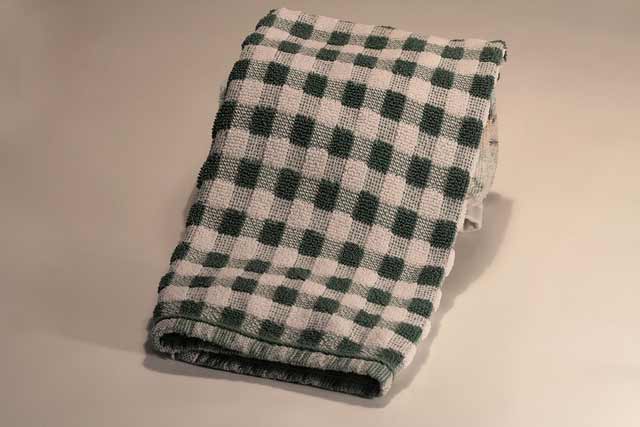
Towels Top Kitchen Contamination Hazards List

0
Photo credit: Ivy Dawned

MANHATTAN, Kan. — Although only 9 percent of reported foodborne illness outbreaks occur in the home, scientists estimate the actual number of incidents is much higher. Research shows a leading cause of cross contamination within the home is actually an object associated with cleaning, the kitchen towel.

A study recently published in the journal Food Protection Trends showcases the work of several Kansas State University faculty and students.

Lead researcher and K-State food safety specialist Jeannie Sneed said the study showed some unique observations and areas of weakness when it comes to consumers’ kitchen behavior.

“First, participants were observed frequently handling towels, including paper towels, even when not using them for drying,” Sneed said. “Towels were determined to be the most contaminated of all the contact surfaces tested.”

Video observation showed many participants would touch the towel before washing their hands or used the towel after washing their hands inadequately. Even after properly washing their hands, they would reuse the infected towel and contaminate themselves all over again.

Researchers believe this could be one of the most critical findings of the study, because cloth towels can quickly and easily become contaminated at significant levels, including microorganisms that potentially can lead to foodborne illnesses.

Other researchers found that salmonella, bacteria commonly found in raw meat and poultry products, grows on cloths stored overnight, even after they were washed and rinsed in the sink. This is why Sneed recommends washing cloth towels after using them while preparing a meal, or using paper towels and discarding them after each use.

The second observation from the study was cell phone handling during the food preparation process and the lack of proper sanitation afterward. While electronic devices are becoming useful tools for communication, entertainment and a method of gathering recipes, they add another potentially important source of contamination.

“We often take our cell phones and tablets into the kitchen,” Sneed said, “but what about all the other places we take them? Think of how many times you see someone talking on their cell phone in places like the bathroom, where microorganisms such as norovirus and E. coli are commonly found.”

If such devices are going to be used in the kitchen, Sneed recommends treating them as potential hazards and wiping the surfaces with a disinfectant solution frequently.

The U.S. Department of Agriculture (USDA) hopes to conduct further research on the use of cell phones and tablets in the kitchen.
Under the microscope

The USDA Food Safety and Inspection Service funded the K-State study “Consumer Food Handling Practices Lead to Cross Contamination” in an effort to better understand the behavior of consumers with young children and observe the effects of food safety messages.

The 123 participants of the study were randomly assigned to three separate groups.  The first group was given an education program on the four national Food Safe Families campaign messages of clean, separate, cook and chill. The second group viewed and discussed the Ad Council public service announcements that focused on the same Food Safe Families messages, and the third group did not receive any food safety education before preparing the meal.

The researchers set up a condominium on the K-State campus to reflect a home kitchen environment and videotaped the participants preparing a recipe using either raw ground beef or chicken and a ready-to-eat fruit salad. The raw meat was inoculated with Lactobacillus casei, a nonpathogenic organism commonly found in yogurt but not naturally present in meat.

The L. casei served as a tracer organism that allowed Randall Phebus, K-State food microbiologist and co-author of the study, to track the levels of meat-associated contamination spread throughout the kitchen while preparing these meals.

Phebus and his team of students found that more than 90 percent of the fruit salads prepared alongside of the meat dish were contaminated with the tracer organism, suggesting that if the tracer represented a pathogen such as Salmonella, a high risk of foodborne illness was generated during the meal preparation.
Suggested changes

The study found that all participants, regardless of food safety message group prior to the meal preparation, made mistakes in the kitchen that could lead to foodborne illness.

In addition to the high levels of contamination in their cloth towels, about 82 percent of participants also left meat-originating contamination on the handles of the sink, refrigerator, oven and trash drawer.

While the study paints a picture of the objects consumers often leave contaminated, it is also important to note common improper behaviors that occur in the kitchen, which are often difficult to change.

“I think these days a lot of people learn on their own how to cook, so they may not know how to be conscious of cross contamination,” Sneed said. “People are becoming more aware of the hazards in raw meat products, but they may not know how to prevent those hazards through things like separation or raw and ready-to-eat foods and sanitation. I think it’s fairly easy to avoid cross contamination, but it’s also easy to cause it.”

For more information about food safety practices and what consumers can do to prevent cross-contamination visit the local extension office, go online to K-State Research and Extension or visit FoodSafety.gov.


Sidebar: Tips and Tricks for a Safe KitchenKansas State University food safety specialists Jeannie Sneed and Randall Phebus will both admit that even with extensive education and experience in food safety, neither is perfect in the kitchen. With families of their own, they understand how hard it can be to prevent cross contamination in the home and have provided tips they use in their own kitchens.1. Wash your hands; don’t just splash and dash.Sneed believes the most important habit consumers should add to their routine is proper and frequent hand washing, which is often not up to par.

“You should wash them as soon as you get into the kitchen,” she said, “and you must do so with soap and water, not just splash and dash. You also have to think about where the potential for contamination lies and also wash them when handling fresh produce or raw foods such as meat or eggs.”

The Academy of Nutrition and Dietetics estimates proper hand washing may eliminate nearly half of all cases of foodborne illness and significantly reduce the spread of the common cold and flu.

Follow these recommended steps for proper hand washing: use warm water to wet hands, scrub with soap and water for 20 seconds, rinse well with warm water, and air dry or use single-use towels to dry hands.
2. Wash your cloth towels.

A K-State study identified cloth towels as the most common contaminated surface, and a major reason was simply how often they were handled.

Sneed recommends refraining from using the same cloth towel for every task in the kitchen. Instead, use a paper towel for drying hands or to wipe something off the counter.

Cloth towels also should be washed frequently; Sneed prefers consumers change out their towels every day or even after every meal prepared with raw meat and poultry.
3. Don’t use sponges, but if you must, use proper sanitizing methods.

The USDA does not recommend using sponges in the kitchen, but Phebus knows that most consumers use them despite that recommendation.

“Sponges give me the creeps, because I know what grows in them,” Phebus said. “But, my wife insists on having a dish sponge to wipe down counters and cabinets so I’m constantly sanitizing it.”

Consumers who can’t part with their dish sponge should frequently sanitize it to kill and prevent the spread of pathogens that use a sponge’s humid environment to thrive.

Sanitation can be done in multiple ways, such as putting the sponge in the dishwasher or soaking it in a weak bleach solution. Phebus prefers placing the damp sponge in his microwave and zapping it for 30 seconds.
4. Use a food thermometer.

Most foodborne pathogens die when a food is cooked properly, which is why some ready-to-eat foods such as salads pose such a high risk for making people sick. The only way to know food has been cooked well enough to destroy any potential microorganisms is to go by temperature. Cook ground beef to 160 degrees F and poultry to 165 degrees F.

“As part of the study we also asked participants if they have a thermometer and if they use that thermometer,” Sneed said. “The consistent finding was that many people don’t have one, and even if they do, they don’t frequently use it.”
5. Separate duties of commonly used items.

The spread of foodborne pathogens centers on contact with contaminated sources. As food is stored and prepared, separate ready-to-eat foods, such as fresh fruits and vegetables, from raw meat and poultry. This includes separating tools or surfaces used in preparation, including items such as dish towels, cutting boards and other contact surfaces.

Sneed likes to separate her cutting boards by color by assigning a different color to those used with raw meats and those used with fresh fruits and vegetables. She also separates her cloth towels by usage, one for hand washing and the other for drying dishes.

“Even though it is typically better for dishes to drain dry, I still keep a dish towel around, but it is only dedicated to dishes,” she said. “I do not use the same one for drying my hands. I know sometimes that is a challenge to keep them separate, especially when you have other family members or guests that come into your kitchen.”
6. Think like a microbiologist; sanitization is your new best friend.

“Anytime you’re handling food, especially if it’s a raw meat product, you have to slow down and think about where contamination exists,” Phebus said. “Don’t feel like you and your family are invincible, because these diseases can have drastic and deadly effects. Cross contamination is not an elementary thing. You need to put thought into it and try to improve.”

Sanitation is the best defense for stopping the spread of contamination, but with busy lives it can be difficult to find time to properly sanitize a kitchen. Phebus recommends building sanitation into the daily kitchen routine.

“I promote using a little bit of bleach in a bottle of water and to change it regularly,” he said. “While you’re in the kitchen, wipe down frequently used surfaces like the door knobs and handles of the refrigerator. And then after every major meal do a final wipe down of the whole kitchen, which is something most people don’t do.”

Research found that regardless of the message or communication style, it all comes down to consumer behavior and the willingness to change old habits or take a little extra time to sanitize another surface.

“People often know the risks,” Phebus said, “but they are willing to overlook them to continue things the old way and the easy way.  In many instances, however, consumers don’t have enough understanding of basic microbiology to make good food safety decisions. We are always trying to get understandable information out to consumers and food service workers.”

For more information about food safety practices and what consumers can do to prevent cross-contamination visit your local extension office or go online to K-State Extension Food Safety. Other websites, FoodSafety.gov and Fight Bac, provide more information as well.

Broiler Hatchery

0
Photo credit: Kristine Paulus
ISSN: 1949-1840

Released March 18, 2015, by the National Agricultural Statistics Service 
(NASS), Agricultural Statistics Board, United States Department of 
Agriculture (USDA).

Broiler-Type Eggs Set in the United States Up 1 Percent

Hatcheries in the United States weekly program set 213 million eggs in 
incubators during the week ending March 14, 2015, up 1 percent from a year 
ago. Hatcheries in the 19 State weekly program set 204 million eggs in 
incubators during the week ending March 14, 2015, up 1 percent from the year 
earlier. Average hatchability for chicks hatched during the week in the 
United States was 83 percent. Average hatchability is calculated by dividing 
chicks hatched during the week by eggs set three weeks earlier.  

Broiler-Type Chicks Placed in the United States Up 4 Percent

Broiler growers in the United States weekly program placed 176 million chicks 
for meat production during the week ending March 14, 2015, up 4 percent from 
a year ago. Broiler growers in the 19 State weekly program placed 170 million 
chicks for meat production during the week ending March 14, 2015, up 
4 percent from the year earlier. Cumulative placements from the week ending 
January 10, 2015 through March 14, 2015 for the United States were 
1.75 billion. Cumulative placements were up 3 percent from the same period a 
year earlier.

Broiler-Type Eggs Set - 19 Selected States and United States: 2015
------------------------------------------------------------------------------------------------------------------
                              :                                    Week ending                                    
             State            :-----------------------------------------------------------------------------------
                              : February 7, :February 14, :February 21, :February 28, :  March 7,   :  March 14,  
                              :    2015     :    2015     :    2015     :    2015     :    2015     :    2015     
------------------------------------------------------------------------------------------------------------------
                              :                                    1,000 eggs                                     
                              :                                                                                   
Alabama ......................:    29,294        29,779        29,132        29,250        29,323        28,928   
Arkansas .....................:    21,600        21,638        22,200        22,071        21,702        21,865   
Delaware .....................:     4,820         4,883         4,771         4,903         4,766         4,829   
Florida ......................:     1,224         1,221         1,051         1,046         1,068         1,192   
Georgia ......................:    33,716        33,335        33,545        33,186        32,574        32,469   
Kentucky .....................:     7,901         7,791         7,684         7,821         7,218         7,796   
Louisiana ....................:     3,833         3,833         3,833         3,833         3,833         3,817   
Maryland .....................:     7,572         7,809         7,621         7,784         7,744         7,751   
Mississippi ..................:    18,044        18,000        17,985        17,841        17,576        17,914   
Missouri .....................:     8,195         8,194         8,180         8,229         7,810         7,904   
                              :                                                                                   
North Carolina ...............:    21,133        21,151        21,084        21,174        20,999        21,466   
Oklahoma .....................:     6,377         6,588         6,507         6,255         6,588         6,348   
Pennsylvania .................:     4,469         4,569         4,510         4,451         4,545         4,415   
South Carolina ...............:     5,502         5,567         5,471         5,517         5,586         5,592   
Texas ........................:    15,311        15,351        15,277        15,288        15,411        13,745   
Virginia .....................:     6,534         6,547         6,604         6,587         6,845         6,615   
California, Tennessee,        :                                                                                   
 and West Virginia ...........:    11,324        12,175        12,184        12,099        11,874        11,593   
                              :                                                                                   
19 State total ...............:   206,849       208,431       207,639       207,335       205,462       204,239   
Percent of previous year .....:       103           104           103           102           101           101   
                              :                                                                                   
Other States .................:     7,847         7,890         7,977         8,064         8,005         8,316   
                              :                                                                                   
United States ................:   214,696       216,321       215,616       215,399       213,467       212,555   
Percent of previous year .....:       103           104           103           102           101           101   
------------------------------------------------------------------------------------------------------------------

Broiler-Type Chicks Placed - 19 Selected States and United States: 2015
------------------------------------------------------------------------------------------------------------------
                              :                                    Week ending                                    
             State            :-----------------------------------------------------------------------------------
                              : February 7, :February 14, :February 21, :February 28, :  March 7,   :  March 14,  
                              :    2015     :    2015     :    2015     :    2015     :    2015     :    2015     
------------------------------------------------------------------------------------------------------------------
                              :                                   1,000 chicks                                    
                              :                                                                                   
Alabama ......................:    21,440        21,528        21,761        21,804        21,473        21,967   
Arkansas .....................:    19,663        20,447        18,916        19,331        19,387        19,501   
Delaware .....................:     4,576         5,156         4,864         5,479         5,200         4,827   
Florida ......................:     1,518         1,303         1,020         1,303         1,364         1,163   
Georgia ......................:    27,625        27,315        25,608        25,861        26,546        26,063   
Kentucky .....................:     7,036         5,509         5,903         6,304         6,058         6,389   
Louisiana ....................:     3,342         3,341         3,377         3,356         3,365         3,354   
Maryland .....................:     6,698         5,903         6,291         5,864         5,840         6,110   
Mississippi ..................:    14,543        14,697        15,065        15,155        14,959        14,946   
Missouri .....................:     5,946         5,350         6,149         5,728         6,253         5,879   
                              :                                                                                   
North Carolina ...............:    16,443        16,969        16,806        17,336        17,591        16,481   
Oklahoma .....................:     3,911         3,943         4,668         4,301         4,079         4,569   
Pennsylvania .................:     3,933         3,939         3,744         3,866         3,949         4,082   
South Carolina ...............:     4,267         4,679         5,005         4,723         4,437         5,045   
Texas ........................:    11,950        11,944        12,300        12,366        12,236        12,406   
Virginia .....................:     5,676         4,648         4,995         5,207         5,553         5,595   
California, Tennessee,        :                                                                                   
 and West Virginia ...........:    10,370        11,247        11,265        10,531        11,824        11,288   
                              :                                                                                   
19 State total ...............:   168,937       167,918       167,737       168,515       170,114       169,665   
Percent of previous year .....:       103           102           103           104           104           104   
                              :                                                                                   
Other States .................:     5,660         6,365         6,043         6,338         6,030         6,065   
                              :                                                                                   
United States ................:   174,597       174,283       173,780       174,853       176,144       175,730   
Percent of previous year .....:       103           102           102           104           104           104   
------------------------------------------------------------------------------------------------------------------

Statistical Methodology

Survey Procedures: Data for broiler hatchery estimates are collected weekly 
from all broiler-type hatcheries that hatch at least one million chicks a 
year. Individual NASS field offices maintain a list of all known hatcheries 
and update their lists on a continual basis. All hatcheries that meet the 
minimum size criteria are given adequate time to respond to the weekly 
survey. Those that do not respond are contacted by telephone. The weekly 
United States total for chicks placed includes states receiving greater than 
500,000 chicks annually for grow-out.

Estimating Procedures: All data are analyzed for unusual values. Data from 
each operation are compared to their own past operating profile and to trends 
from similar operations. Data for missing operations are estimated based on 
similar operations or historical data. NASS field offices prepare these 
estimates by using a combination of survey indications and historic trends. 
Individual State estimates are reviewed by the Agricultural Statistics Board 
for reasonableness. Individual hatchery data are summed to State, 19 State 
total, Other States, and the United States.

Revision Policy: Revisions are generally the result of late or corrected 
data. Revisions made to the previous five-week's data during the current week 
are published in this report. Final estimates are published in the annual 
Hatchery Production Summary released in April.

Reliability: Estimates are subject to errors such as omission, duplication, 
and mistakes in reporting, recording, and processing the data. While these 
errors cannot be measured directly, they are minimized through strict quality 
controls in the data collection process and a careful review of all reported 
data for consistency and reasonableness.

Information Contacts

Listed below are the commodity specialists in the Livestock Branch of the National 
Agricultural Statistics Service to contact for additional information. E-mail inquiries 
may be sent to [email protected]

Dan Kerestes, Chief, Livestock Branch ..................................... (202) 720-3570

Bruce Boess, Head, Poultry and Specialty Commodities Section .............. (202) 720-4447
   Alissa Cowell-Mytar - Cold Storage ..................................... (202) 720-4751
   Heidi Gleich - Broiler Hatchery, Chicken Hatchery ...................... (202) 720-0585
   Michael Klamm - Poultry Slaughter, Turkey Hatchery, Turkeys Raised ..... (202) 690-3237
   Tom Kruchten - Census of Aquaculture ................................... (202) 690-4870
   Kim Linonis - Layers, Eggs ............................................. (202) 690-8632
   Sammy Neal - Catfish Production, Egg Products, Mink, Trout Production .. (202) 720-3244
   Joshua O'Rear - Honey .................................................. (202) 690-3676

Access to NASS Reports

For your convenience, you may access NASS reports and products the following 
ways:

 	All reports are available electronically, at no cost, on the NASS web 
site: http://www.nass.usda.gov

 	Both national and state specific reports are available via a free e-
mail subscription. To set-up this free subscription, visit 
http://www.nass.usda.gov and in the "Follow NASS" box under "Receive 
reports by Email," click on "National" or "State" to select the reports 
you would like to receive. 

For more information on NASS surveys and reports, call the NASS Agricultural 
Statistics Hotline at (800) 727-9540, 7:30 a.m. to 4:00 p.m. ET, or e-mail: 
[email protected]. 
  
The U.S. Department of Agriculture (USDA) prohibits discrimination against 
its customers, employees, and applicants for employment on the basis of race, 
color, national origin, age, disability, sex, gender identity, religion, 
reprisal, and where applicable, political beliefs, marital status, familial 
or parental status, sexual orientation, or all or part of an individual's 
income is derived from any public assistance program, or protected genetic 
information in employment or in any program or activity conducted or funded 
by the Department. (Not all prohibited bases will apply to all programs 
and/or employment activities.) 
If you wish to file a Civil Rights program complaint of discrimination, 
complete the USDA Program Discrimination Complaint Form (PDF), found online 
at http://www.ascr.usda.gov/complaint_filing_cust.html, or at any USDA 
office, or call (866) 632-9992 to request the form. You may also write a 
letter containing all of the information requested in the form. Send your 
completed complaint form or letter to us by mail at U.S. Department of 
Agriculture, Director, Office of Adjudication, 1400 Independence Avenue, 
S.W., Washington, D.C. 20250-9410, by fax (202) 690-7442 or email at 
[email protected].