
There will be an Easter egg hunt for children 12 and younger at 10 a.m. April 4 at Nickerson City Park, Burr and Avenue A Street.
Breaking the Pine Wilt Cycle

Pines have several disease and insect problems. One of them is pine wilt disease. It kills the entire tree quickly.
Pine wilt is caused by the pinewood nematode, a microscopic worm. The nematode is spread by the pine sawyer beetle. The nematode feeds and multiplies in the tree’s resin canals, causing wilting and death in several weeks to several months. The nematode and beetles spend the winter in the infected tree. In spring, the beetles emerge starting around May 1, carrying nematodes to new trees and continuing the cycle of infection.
The disease is common in the eastern half of the state, and it is spreading west around 10 miles per year. There have been pockets of infection in the western part of the state.
In Kansas, new pine wilt infections are most visible from August to December. Trees wilt and die in a short period of time, from several weeks to a few months. In the first stages, the needles turn grey or green, then yellow and brown. The discoloration sometimes occurs branch by branch, sometimes all at once. With pine wilt, eventually the whole tree dies, within a few months. The brown needles stay on the tree for up to a year after the tree has died. Another key symptom is reduced resin. On a healthy tree, sticky resin bleeds from the site of a wound. In contrast, if a tree has pine wilt, the resin is often reduced or absent, and branches become dry or brittle.
There is a website with color photos and descriptions at the following link: http://muextension.missouri.edu/explorepdf/miscpubs/mx0858.pdf
There are images to compare and contrast pine wilt with other pine diseases here: http://www.ksre.ksu.edu/bookstore/pubs/l722.pdf
With the other diseases (tip blight, needle blight) only parts of the tree turn brown. With pine wilt, the whole tree is brown and dead. If you aren’t sure if your tree has pine wilt or something else, contact your local K-State Research and Extension Office or the K-State Diagnostic Lab ([email protected]).
If a tree has pine wilt, the tree should be cut down by April 1 to make sure there is time to destroy the wood by May 1, when the beetles start to some out. Cut the tree to the ground—don’t leave a stump. Chip or burn the wood immediately to destroy the beetles and nematodes. Don’t keep pine wood around for firewood. (Megan Kennelly)
Buhler will host blood drive March 27
The Buhler Mennonite Bretheran Church will be hosting a Red Cross blood drive from 2:30-6 p.m. Friday, March 27. Those wishing to schedule an appointment may call 1-800 RED CROSS.
Help For People With Diabetes: Making Sense Of Blood Sugars

(NAPS)—If you are among the estimated 29 million people with diabetes in the U.S., keeping your blood sugar in a healthy range is key to preventing or delaying long-term complications such as kidney, eye and heart disease. When used properly, regular blood sugar monitoring can help you and your healthcare professional detect high and low blood sugar and make therapy and lifestyle adjustments.
Unfortunately, many people with diabetes don’t test their blood sugar as recommended by their healthcare professional because of psychological or emotional reasons.
In a study of more than 800 people with diabetes, three key reasons were given for disliking and avoiding testing blood sugar:
- It’s a burden, it takes work;
- It’s not viewed as worthwhile;
- It’s often a demotivating experience when, despite their best efforts, their blood sugar levels are frequently out of range.
“Many people may feel overwhelmed by too much information, information that isn’t clear, or simply by the day-to-day effort required to manage diabetes,” explains Dr. William Polonsky, co-founder and president of the Behavioral Diabetes Institute.
New Tools Can Help
Fortunately, there are new tools that can help. For example, the new OneTouch Verio® Blood Glucose Monitoring System can help people better understand their blood sugar test results with no extra work.
Easy to use, the meter features a color-coded range indicator that shows whether a result is within (Green), below (Blue) or above (Red) the customizable range limits set in the meter. When the meter displays a low result, it prompts the user to treat for the low glucose result and retest in 15 minutes.
“Knowing at a glance what your result means is important because another study has shown that nearly one third of people say they can’t make sense of their results,” says Dr. Polonsky. “The OneTouch Verio® Meter can help patients feel more confident about managing their blood sugar by providing feedback about their results and opportunities for better control.”
The meter also looks for signs of progress and provides positive reinforcement through two types of progress notes. An “achievement” message is displayed when the current result is in range following three consecutive above range results. A “consistency” message appears when 70 percent of results in the past seven days are in range.
After using the meter for a week, 94 percent of people with diabetes said it made their test results simple to understand.1
The system is available where diabetes supplies are sold with an estimated retail price of $19.99. For more information, visit www. OneTouch.com.
A new device can help people with diabetes better understand their blood sugar test results with no extra work and feel more confident about managing their blood sugar.
New Cy Curtis State Record Mule Deer Harvested
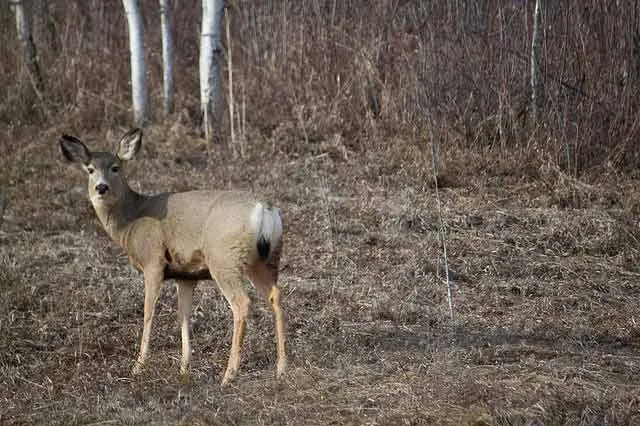
While bow hunting elk in Cimarron County, Chandler Henderson took advantage of a once-in-a-lifetime opportunity and bagged a record-breaking buck. With a final score of 191 7/8 inches, he now holds the all-time Cy Curtis record for a typical mule deer taken in Oklahoma.
Henderson’s wife, Brooke, spotted the big buck first. Henderson drew back his bow and let an arrow fly. Henderson knew he had just harvested a large mule deer, but a state-record mule deer was “out of the question,” he said.
After a week, Henderson’s curiosity got the best of him. He decided to green-score the antlers on the Boone and Crockett website to estimate what the deer would score. Realizing he might have a state-record mule deer, Henderson contacted official scorer, Weston Storer who is a biologist for the Oklahoma Department of Wildlife Conservation at Beaver River, Optima and Rita Blanca wildlife management areas. After a 60-day drying period required for all trophies, the mule deer was officially scored. It is required that all potential state-record trophies be scored by three certified Boone and Crockett scorers. The final score of 191 7/8 surpassed the previous Cy Curtis record by more than 11 inches. Henderson along with another hunter are the only two sportsmen who have taken a record Cy Curtis mule deer with archery equipment, in the typical and nontypical categories.
The Oklahoma Department of Wildlife Conservation established the Cy Curtis Awards Program in 1972 to recognize trophy game and hunters in Oklahoma. The program originally recognized only trophy white-tailed deer and mule deer. But in 2014, the Cy Curtis Awards Program was expanded to include trophy elk, pronghorns and black bears.
To get Henderson’s full story, click the video link below.
Oklahoma’s Top Five Typical Mule Deer
- Chandler Henderson 191 7/8 Bow 11/4/2014
- Curtis McBrien 180 1/8 Gun 11/19/2001
- Kirie Willimon 178 6/8 Primitive 10/27/1992
- Robert Crow 178 4/8 Gun 11/25/1985
- Jeremy Brobst 171 4/8 Gun 11/18/2000
Source: Weekly Wildlife News, Oklahoma Department of Wildlife Conservation
