Tuesday, February 3, 2026
Home Blog Page 4457

NO. 1 HCC WOMEN OPEN NJCAA TOURNAMENT WITH SOUTH GEORGIA TECH ON TUESDAY

0

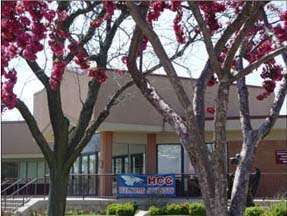
Hutchinson: The No. 1-ranked Hutchinson Community College women’s basketball team begins its run in the 2015 NJCAA Women’s Division I National Tournament on Tuesday against South Georgia Tech.

The second-round matchup begins at 2 p.m. Salina’s Bicentennial Center. The game will be broadcast live on Blue Dragon flagship station KHUT-FM (102.9) and on sister stations KWBW-AM/FM (1450/98.5) beginning at 1:50 p.m. The game will also be streamed live by NJCAATV.com also beginning at 1:50 p.m.

The 33-0 Blue Dragons are the 2015 NJCAA Tournament’s No. 1 overall seed, the first time that Hutchinson has achieved that feat in women’s basketball. – See more at: http://www.bluedragonsports.com/news/101963#sthash.YYxeFHmi.dpuf

credit Hutchinson Community College

USDA Finalizes Procedures for Sorghum Referendum

0

The U.S. Department of Agriculture (USDA) is announcing procedures for the upcoming referendum regarding the continuation of the Sorghum Checkoff Program and is announcing the dates it will conduct the referendum.

The Sorghum Promotion, Research, and Information Order requires that a referendum be conducted no later than seven years after the start of assessments, which began on July 1, 2008. For the program to continue, a majority of those voting must favor the continuation of the order.

USDA will conduct the referendum beginning on March 23, 2015, through April 21, 2015, at county USDA Farm Service Agency (FSA) offices for producers and the Agricultural Marketing Service office for importers. Ballots may be obtained in person, by mail or facsimile at county FSA offices, or via the Internet.

Any eligible person engaged in the production or importation of sorghum from January 1, 2011, to December 31, 2014, is eligible to participate. Individuals are required to provide documentation such as a sales receipt or remittance form that shows they engaged in the production or importation of sorghum.

The Sorghum Checkoff Program, and its 13-member board, is authorized by the Commodity Promotion, Research, and Information Act of 1996. The Sorghum Checkoff is intended to be a national, coordinated, self-help marketing program designed to strengthen the position of sorghum in the marketplace, maintain and expand existing domestic and foreign markets and uses for sorghum, and develop new markets and uses for sorghum.

The final procedures were published in the Nov. 18, 2010, Federal Register. The notice announcing the dates of the referendum was published in the Feb. 19, 2015, Federal Register.

For more information, contact Craig Shackelford, Marketing Specialist, Research and Promotion Division, Livestock, Poultry, and Seed Program, AMS, USDA, 22 Jamesport Lane, White, GA 30184; Telephone: (470) 315-4246; [email protected]. Procedures and additional information about the referendum can be found at: www.ams.usda.gov/SorghumReferendum.

KDA Establishes Quarantine Zones in Leavenworth and Wyandotte counties

0
CHRIS NEAL / THE CAPTIAL-JOURNAL

MANHATTAN, Kan. – In response to the confirmed positive case of Highly Pathogenic Avian Influenza in

Kansas, the Kansas Department of Agriculture (KDA) has established a quarantine zone in Leavenworth and

Wyandotte counties to respond quickly and decisively to eradicate the outbreak of HPAI.

The 10 kilometer control zone is bordered by the following roads:

 Woodend Road east to 142nd Street

 Northeast along a line to 118th Street and Interstate 70 intersection

 North to Gilman Road

 West to 219th Street

 South to Tonganoxie city limits

 Follow southeast along Tonganoxie Creek to Woodend Road

Locations not impacted by this control area include Bonner Springs, Lansing, Leavenworth and the western

half of Tonganoxie.

The transportation of all HPAI susceptible livestock, including live poultry and poultry products (including

eggs), into or out of the designated control zone within Leavenworth and Wyandotte counties in Kansas is

prohibited unless authorized by an official permit. Poultry and poultry products, including eggs, within the

control zone shall not be transported without first receiving an official permit from the Kansas Department of

Agriculture.

If you have questions regarding the quarantine area, visit www.agriculture.ks.gov/avianinfluenza to see a map

of the quarantined area.

Kansas Animal Health Commissioner Dr. Bill Brown encourages all poultry owners to closely monitor their

flocks and contact their local veterinarian immediately if birds appear infected. For a listing of symptoms of

HPAI, visit www.agriculture.ks.gov/avianinfluenza.

Please be vigilant about reporting signs of illness in your herd to your veterinarian immediately. Farmers and

ranchers can protect their flocks with good biosecurity practices including:

 Isolate new animals

 Move all livestock away from boundaries of your property

 Clean clothing and boots should be worn when contact with livestock is expected.

 Thoroughly clean and disinfect equipment and animal areas

 Monitor your animals for signs of the disease

 Abide by all movement restrictions

Other resources for bird owners include: USDA Biosecurity Guide for Poultry and Bird Owners –

www.aphis.usda.gov/publications/animal_health/2014/pub_bioguide_poultry_bird.pdf and USDA Biosecurity –

www.aphis.usda.gov/animal_health/birdbiosecurity/

map

CSP Farmers Have Until March 31 to Renew Contracts

0
Photo credit: Nicholas A. Tonelli

The U.S. Department of Agriculture’s Natural Resources Conservation Service (NRCS) is now accepting applications to re-enroll in the Conservation Stewardship Program (CSP) through March 31, 2015.  This renewal option is specifically for farmers and ranchers who enrolled in CSP initially in 2011.  Those 2011 enrollees have CSP contracts that expire at the end of 2015.

CSP is a comprehensive working lands conservation program that provides technical and financial assistance to farmers and ranchers to actively manage and maintain existing conservation systems and to implement additional conservation activities on land in production.  Through CSP, participants take steps to improve soil, water, air, and habitat quality, and can also address water quantity and energy conservation issues.

CSP contracts last for five years, at which time they are eligible for renewal.  There are approximately 9,600 farmers and ranchers with CSP contracts that will expire this year, totaling over 12.75 million acres that can be re-enrolled to preserve and expand upon critical environmental benefits

It Pays to Renew

It is optional to renew an expiring contract, and participants who do not re-enroll can always re-apply and compete for funding in future annual CSP signups.  However, there is significant benefit to renewing now: the process for renewing is non-competitive and much simpler than re-applying through the competitive process later, and participants will avoid any gaps in their CSP payments that would otherwise occur.

NRCS has already mailed letters to all CSP participants with contracts that are set to expire this year.  The producer must then sign up for the renewal offer by March 31, 2014.  Local NRCS offices will then follow up with the producer to discuss renewal criteria and new conservation options; the producer then can decide whether to sign up for another five year contract.

Renewal Criteria

Participants will need to meet additional renewal criteria.  Under the terms of the 2014 Farm Bill, CSP contract holders can renew their contracts provided they have met the terms of their initial contract; agree to adopt and continue to integrate conservation activities across the their entire operation; and agree to either meet the stewardship threshold of at least two additional priority resource concerns or exceed the stewardship threshold of at least two existing priority resource concerns by the end of the renewed contract period.

These terms are slightly different than the terms for renewals under the 2008 Farm Bill that were in effect at the time farmers and ranchers with contracts expiring this year signed-up, so it would be wise for producers interested in renewing to check in with their local NRCS office for precise information about how the 2014 Farm Bill renewal terms will work in practice.

The recently updated ATTRA publication: Federal Conservation Resources for Sustainable Farming and Ranching can also be useful for background on federal conservation programs.

In addition call the ATTRA toll free hot-line number at 1-800-346-9140 (English) and 1-800-411-3222 (Spanish) if you need any additional help or further information about accessing this program.

For more information on the program and the process for signing up, the National Sustainable Agriculture Coalition (NSAC) has released two free resources.  NSAC’s newly revised Information Alert includes not only sign-up details, but also a complete listing of all of the 119 conservation enhancements available to those considering a contract renewal.

The Information Alert lists these conservation activities in order of their conservation and environmental point values.  The higher the point value, the greater the expected environmental benefit and thus the greater weight they have in terms of both ranking the application among other CSP applications, and calculating the ultimate CSP financial assistance payment the producer will receive.

NSAC has also published an updated version of our Farmers’ Guide to the Conservation Stewardship Program.  Download the comprehensive guide at the NSAC website.

The renewal process should be fairly simple.  Producers with expiring contracts can contact their local NRCS office with any questions about the renewal process.

Traveling with children

0
Photo credit: photon_de

Angie Fletcher, Human Development Specialist, Southwest Region, University of Missouri Extension

All of us have heard the familiar phrase “Are we there yet?” from children who are bored from sitting for what they perceive as an endless amount of time in a vehicle, or are so excited about their destination they just can’t wait!

Parents often overlook travel time as an opportunity to interact with their child(ren). What better opportunity to spend some quality time? For most, it is a question of ideas for what to do with their children during drive time. With spring break upon us and summertime trips in the near future, here are some activities that can be fun for everyone when traveling with children.

  • Surprise packages: Prepare ahead with paper bags of items to be given out every 25, 50 or 75 miles as marked on a map with the location. It takes a little bit of prep to do this, but it really helps young children. In each bag put a wrapped item, usually a small toy. Then add various other things to each surprise package, like a juice box or a snack, stickers and a piece of paper, or something pertaining to the trip that you can talk about.
  • Aluminum foil modeling: Give everyone a sheet of aluminum foil. Have them mold it into anything they want: animal shapes, balls, jewelry, crowns, etc.
  • Pipe cleaners: Pack a bag of multi-colored pipe cleaners and let their imaginations run wild!
  • Cookie sheet magnet board: Use an old cookie sheet and a collection of ABC magnets. Children can work on putting the letters in order or identify beginning sounds.

For more suggestions, see the full version of this article at http://missourifamilies.org/features/parentingarticles/parenting31.htm