
Thursday, January 29, 2026
Home Blog Page 4512

USDA Seeks Grant Proposals to Increase Recreational Public Access on Private Agricultural, Forest Lands

0
usda

WASHINGTON, Feb. 23, 2015 – Agriculture Secretary Tom Vilsack today announced $20 million is being made available to improve wildlife habitat and enhance public access for recreational opportunities on privately held and operated farm, ranch and forest lands. Funding is available to state and tribal governments through the Voluntary Public Access and Habitat Incentive Program (VPA-HIP), authorized in the 2014 Farm Bill.

“USDA is harnessing the power of partnerships with state and tribal governments to ensure that our rural communities are able to sustain important recreational and economic opportunities,” said Vilsack. “Enhancing wildlife habitat and providing new opportunities for the public to hunt and fish will create economic activity, and also encourage more Americans to enjoy the outdoors,” said Vilsack.

According to a 2013 study commissioned by the National Fish and Wildlife Foundation, the outdoor recreation economy supports 6.1 million direct jobs, $80 billion in federal, state, and local tax revenue, and $646 billion in spending each year. Under VPA-HIP, state and tribal governments may apply for grants to encourage owners and operators of privately held farm, ranch or forest land to voluntarily open that land for public hunting, fishing and other wildlife-dependent recreation and to improve fish and wildlife habitat on that land. State and tribal governments may use VPA-HIP funds to create new public access programs, expand existing public access programs and to improve wildlife habitat on enrolled public access program lands.

Eligible governments may apply for VPA-HIP funds for proposed projects that can span up to three years. Award amounts range from $75,000 to $1 million per year. USDA’s 60-day application period will run from Feb. 23 through April 24, 2015. Eligible governments must complete the applications through Grants.gov. Funding is not directly awarded by USDA to individuals or groups. Since the reauthorization of VPA-HIP in the 2014 Farm Bill, the program has been administered through the Natural Resources Conservation Service (NRCS). USDA provides the funds directly to state and tribal governments and they, in turn, disburse the funds to private landowners.

Funding priority will be given to applications that meet the following criteria:

  • Increase private land acreage available for public use;
  • Offer a public access program that gains widespread acceptance among landowners;
  • Make special efforts to reach historically underserved or socially disadvantaged landowners;
  • Ensure appropriate wildlife habitat is located on enrolled land;
  • Strengthen existing wildlife habitat improvement efforts;
  • Follow NRCS conservation practice standards for VPA-HIP habitat improvement activities; and;
  • Inform the public about the locations of existing and new lands where public access is available.

Today’s announcement marks the second funding round. The first round of funding under the NRCS-administered VPA-HIP occurred in fiscal year 2014. USDA provided $20 million for access to approximately 2.5 million acres in nine states and one tribal nation and to help state and tribal governments advance recreational opportunities through wildlife habitat and public access improvements on private lands. More information on the fiscal year 2014 grantees can be viewed at VPA-HIP 2014 Funding Grantees.

For more information, see the notice on Grants.gov or the NRCS VPA-HIP website.

The 2014 Farm Bill builds on historic economic gains in rural America over the past five years, while achieving meaningful reform and billions of dollars in savings for taxpayers. Since enactment, USDA has made significant progress to implement each provision of this critical legislation, including providing disaster relief to farmers and ranchers; strengthening risk management tools; expanding access to rural credit; funding critical research; establishing innovative public-private conservation partnerships; developing new markets for rural-made products; and investing in infrastructure, housing and community facilities to help improve quality of life in rural America. For more information, visit http://www.usda.gov/farmbill.

Getting started saving

0
Photo courtesy of Getty Images

Joyce Cavanagh, Ph.D., former Consumer & Family Economics State Specialist, College of Human Environmental Sciences, University of Missouri Extension

Do you plan on saving a little bit from each paycheck but somehow at the end of the month you find there is nothing left over to save? Do you dream of owning a new car, a bigger house or taking that much needed vacation, but the funds just aren’t there? Perhaps you feel like you will never attain your financial goals. Following the tips below will help you begin a savings plan you can stick to and assist you in reaching your goals.

  1. Make a list…
  2. Determine an amount…
  3. Make saving easy for you. Here are some tips to help…
  4. Establish an emergency fund…

For the complete list with helpful tips, view the full version of this article at http://missourifamilies.org/features/financearticles/saving.htm

For more information about Missouri Saves Week, visit http://missourifamilies.org/mosaves/

Be safe when exercising outdoors in cold weather

0
Alfred Hermida

Tammy Roberts, Nutrition and Health Education Specialist, Bates County, University of Missouri Extension

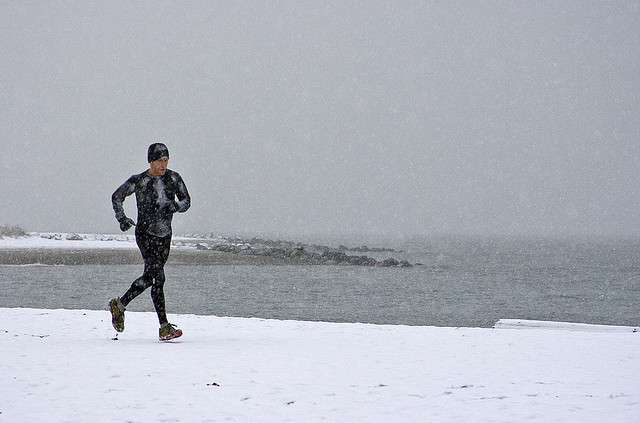
For many people, the cold winter weather is a reason not to exercise outside or not to exercise at all. However, it is possible to get a great workout outdoors as long as you exercise caution and dress properly.

Exercising in cold weather can put extra stress on the body. It is important to consult your physician if you have a medical condition that puts you at risk before implementing a new outdoor regimen.

The two conditions you have to worry about when exercising outdoors during winter months are frostbite and hypothermia. Frostbite is a condition that describes freezing body tissue. It occurs most often on fingers, toes, ears and face. Symptoms of frostbite include pain, numbness, tingling and burning of the affected site. Hypothermia occurs when the core body temperature drops to below 95 degrees. Symptoms include chills, fatigue, drowsiness, slurred speech, intense shivering and loss of coordination.

The right clothes are your first line of defense against these conditions…

From dressing in layers to stretching properly, get all of the tips you need for protecting yourself from the cold in the full version of this article at http://missourifamilies.org/features/nutritionarticles/nut384.htm

UV and You

0
Photo courtesy of Getty Images

Protecting your peepers from the sun’s harmful rays


(Family Features) Most people aren’t aware that the sun can do damage to their eyes when they are unprotected from ultraviolet (UV) rays.


Ultraviolet radiation is invisible to the human eye and damage is cumulative over time, so it’s imperative for everyone – from young kids to grandparents – to take the necessary steps to protect their eyes. Wearing sunglasses is an easy way to shield the eyes while outdoors, but it’s important to look beyond the choices in frames and find sunglasses with lenses that offer the best UV protection.


E-SPF®, or Eye Sun Protection Factor, is a global index created by Essilor International that rates the overall UV protection clear and sunglass lenses provide for the eyes versus going without eyewear.


Varied degrees of protection

Lenses with an E-SPF index of 50+ means your eyes are 50 times more protected than they are without wearing lenses at all. The index ranges from zero to 25 for clear corrective lenses and from zero to 50+ for polarized sunglass lenses.


Finding the right shades

To better protect your eyes from harmful UV rays outdoors look for sunglasses that offer the following:

  • Lenses with an E-SPF index of 50+
  • Large, close-fitting wrap-around frames to reduce exposure to rays coming from around the lenses
  • Polarized lenses – adds protection by reducing glare reflecting off of water, asphalt, windows and snow


Many people are not aware they can also get their eyewear prescription in sun lenses, and a majority of people don’t know there are options for lenses beyond the ones already in the frame. Xperio UV™ superior polarized lenses provide users with comprehensive UV protection on both the front and backside of the lenses and reduce the amount of glare from reflective surfaces. Xperio UV lenses have an E-SPF index rating of 50+ and deliver maximum scratch resistance and cleanability.


From everyday activities to outdoor sports and recreation, your eyes deserve protection from harmful sun exposure. To learn more about protective eyewear for any season, including Xperio UV polarized sunglasses, visit www.xperiouv.com.


*These materials were provided by Essilor of America

Source: Essilor of America


Farm-Fresh Food Delivered Directly To Your Table

0

farmers markets(NAPSI)—American farmers are so efficient that even though they now comprise just 2 percent of the workforce, their efforts and advanced agricultural methods mean each can feed more than 150 people with one-third of their production exported to other countries.

The Problem

While all that modern farm technology lets most Americans live in a land of great abundance, unfortunately, it also means many smaller, family-owned farms are displaced by agricultural corporations. It can also put a considerable distance between consumers and the soil in which their food is grown.

An Answer

The good news is that in response, a strong grassroots movement encouraging individuals to “eat local” and thereby support small family farms has emerged and gained significant momentum nationwide. This has sparked a farmers market phenomenon sweeping the country.

The Internet is adding efficiency and increasing reach for that movement: One of the best efforts at aggregating and selling the offerings of nearby farms is being offered by online retailer Overstock.com. “There is no profession as noble and yet as at risk of extinction as that of the family farmer,” said Overstock.com CEO Patrick M. Byrne. In many communities, Overstock.com’s Farmers Market is the best connection people have to the food grown closest to them.

At the Overstock.com Farmers Market, users can search for and select from a broad range of locally grown artisan food products in much the same way one uses the site to shop for furniture or jewelry. Farm-fresh home delivery is free and speedy. Farmers are delivering the produce directly to the consumers, thereby ensuring the freshest, most nutritional food arrives on their doorstep. There are options for both single orders and recurring deliveries. Fresh produce, meat, eggs and bread can arrive on your doorstep every week, just when you need them.

What’s more, the compelling stories of many of the farmers themselves are told on the site, allowing visitors to feel a true connection to the people, as well as the products sold there. A range of recipes are featured for simple yet tempting comfort foods, made with the fresh ingredients purchased from Overstock.com.

Get More

In addition to a farmers market, the website’s Main Street Revolution store does the same thing for items crafted in the U.S.A., while the company’s fair trade division, known as Worldstock, sells the handcrafted products of artisans worldwide. There’s even a free pet adoption service available to accommodate visitors.

Learn More

For further facts and to access Overstock.com’s Farmers Market, go to www.overstock.com/farmers-market or from the Overst