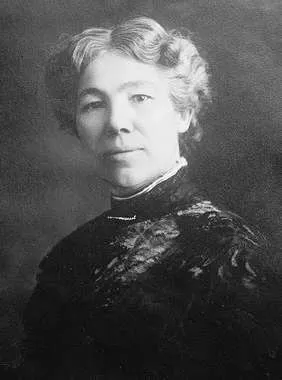
Most of the readers of this column are probably aware that the writer recently made a brief sashay in politics. As this is written ballots over the state are being counted and in a few hours the suspense will be over, the victor will be applauded.
It was a varied and interesting experience to sit in the state headquarters and assist in a statewide campaign. To sleep until 7 or 7:30 o’clock in the morning. To eat three meals each day without having one thing to do with their preparation, never have to wash a dish, although every day the help wanted columns in the daily papers advertised for dishwashers and waitresses. To have a hot bath every day. Never once did I make my bed.
For the first time in my life I had a secretary and dictated letters. She was a kindly, patient person and usually put in commas and periods where they were needed. She kept a dictionary at her elbow and we both used it frequently.
On the other hand I saw the sun rise only once while I was away. That was one morning when it was necessary to catch an early morning train. One could tell that the sun was shining by the reflection on the buildings across the street. Not until midday could it be seen in the little slice of sky visible from Kansas Avenue. Only once were my feet set upon the ground. That was when friends took me to the country for dinner.
I was never more chilled than when the first cold spell of the season come along and the hotel furnace was not in working order. Repairs had been ordered for weeks. When they came there was no plumber to put them in place. Everyone shivered and went to bed to keep warm. The first cold snap may arrive before the farm heating stove is set up and the stove pipe in place Yet one can always send the children to gather a few chips from the wood yard or a basket of cobs from the pigpen and start the kitchen range. If the oven door is opened all the family can gather round and get warm. One doesn’t do that in a steam heated hotel room.
Every eating place which we patronized has curtailed its services in the past six weeks. This was due to the inability to get help. Food prices are higher than in small towns and of only mediocre quality. On one day not a needle could be purchased in Topeka. All stores have green and hence inefficient help. Customers are learning to buy what is on hand even though it may not be exactly what they want. Everyone seemed to have money in his or her pockets. However, one could observe the strained look on the face of more than one mother when the first of the month came and she was trying to stretch a pre-war salary check over bills incurred at War-time prices.
If any of you on the farm feel that town folk get all the breaks, I beg you to thank the kind Providence that you can see the sun rise and set, pictures every day that no artist can reproduce. You can tread the good earth and gather fresh warm eggs from the nests in the chicken house. You can bake nut-like home made bread which has a certain something no bakers’ products possess. By your own labors you can produce at least half of the family living. And above all you can breathe the fresh pure air that blows over these Kansas prairies.
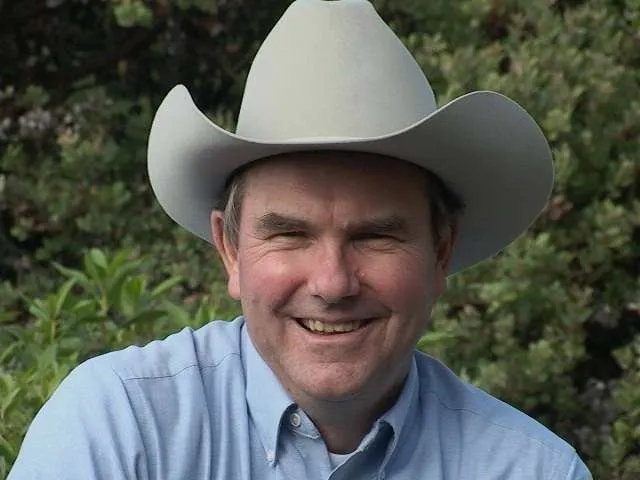
Those who study such things say that in the future people who work for a living can expect to change their career once every seven years. Notice I didn’t say change your job, I said change your career! It’s like a friend of mine who was a vice president of resource imaging, in other words he ran a copy machine. He thought he had a job for life but was put out of work by home printers and today he is transitioning into the booming field of pet therapy and canine hypnosis.
Evidently, if you want a regular paycheck in the future you are going to have to be trained to do more than one thing so that you have a career to fall back on. Just look at all those Congresspersons who voted for ObamaCare who you fired in the last election. They were only trained to do one thing, to live off graft and corruption, and now they have to find honest work. Some will continue to live off the government the same as before but I think most will put their training to work and become lobbyists, gigolos and prostitutes.
Another example is my friend George who owns a septic pumping company in our town. The bureaucrats are making us put in a sewer and there will no longer be any need for George or his septic pump trucks, and poor George is not trained to do anything else. It’s not like a 67 year old man with limited skills and an off-putting smell can go overnight from pumping septic tanks to being a computer programmer, web designer or art critic.
If the economists are right, you should get some education or training in an entirely different field than the one you are currently in. For example, if you are a rancher who gets hit with a seven year drouth or a foot and mouth epidemic you could take advantage of the situation by becoming a rawhide braider or an artist who paints cow skulls. If the eco-freaks have their way and folks stop eating meat you could become a vegetarian short order cook. If you starving as a bad horse trainer why not become a stock contractor and provide wild broncs for rodeos?
A veterinarian whose patients keep dying might want to have a side business as an on-the-farm butcher, tallow truck driver or owner of a backhoe service to get paid for burying the mistakes. A slow ambulance driver might want to buy a funeral home. Sheepmen might want to bone up on cotton farming or petroleum textile engineering in case the bottom drops out of the wool market. A horseshoer could become a pornographic metal artist by welding all the old horseshoes rattling around in the back of the truck into grotesque shapes. An aquatic farmer with no net income (pun intended) should consider the growing field of hemp farming.
Right now a lot of Doctors with big college loans are leaving the field as a result of ObamaCare. If they’re smart they’ll look into the more lucrative fields of grave digging and homeopathic medicine, which we’re likely to see a lot more of.
You never know what will put you out of work. Stock clerks and grocery cashiers are living on borrowed time as robots and self-service scanners are making them an endangered species. UPS and Fed Ex drivers are real busy now but in the future they might want to look into becoming drone pilots for Amazon.
As for myself, thanks to the Internet, my diminishing skills and eyesight, there’s not a more dead-end career than being a humorist when there’s nothing socially acceptable to laugh at any more. I’m considering becoming either a disco DJ, a street mime in San Francisco, a librarian, a World Book Encyclopedia door-to-door salesman, or a snowplow driver in Florida. (I hate cold weather). There’s also a help wanted ad on Craigslist that pays $100,000 a year for a social network conceptualizer. All I need to know now is what the heck is that?
If I can round up some Silicon Valley investors I’m also seriously considering franchising an idea I’ve kicked around for years: five-minute stomach pumping stations for vegetarians called Pale and Queasy R Us.
“Commodity price fluctuations offer selling opportunities for profit, and can at the opposite end of the spectrum cost producers the farm, so to speak, if not prepared.”
“Nobody knows
exactly what markets are going to do. Few people are more closely involved with commodity price projections and what affects changes than I am, but I don’t know for certain what’s going to happen anymore than anyone else,” emphatically stated Tom Leffler in his opening remarks during the recent Farm Profit Conference at Rossville.
However, the commodity broker and ag marketing risk management advisor from Augusta questioned nearly 200 farmers in attendance at the session coordinated and hosted by 580 WIBW: “Where ever these commodity prices are going, are you ready?”
In a power-point backed discussion, Leffler, representing his Leffler Commodities and Leffler Ag Consulting service businesses, evaluated: “The Markets: Which Way Will They Go?”
A daily market commentator on 580 WIBW primetime agriculture programs, Leffler, with a colored art piece, asked the crowd, “Are you painting a bullish picture, while actually looking at a bearish market?”
“Is ‘coulda,’ ‘woulda,’ ‘shoulda,” following seasonal highs, lows, dips and advances, with greed, fear, and hope, your way of marketing?” he queried the listeners.
“Really how important is marketing to you? Is it shooting for the highs, or selling at a profit? Do you have a marketing advisor, or do you think of that as an unnecessary expense?” Leffler continued inquisition of the group.
Then he pointed out that producers have the odds of 300 to one of picking the top of the market. “Being unhedged with some inputs bought is like the few seconds with a baby who has nothing on when changing a diaper: unprotected and risky,” Leffler showed a picture slide.
Diversification when investing $100,000 was shown to yield 34 percent more return in ten years, compared to investing the entire amount at 7 percent interest.
While many parts of the country including a large part of Kansas have had severe drought over the past several years, Kansas has had some relief, but it is still dry, according to the U.S. Drought Monitor of February 3, 2015.
With the exception of the northeast corner of the state, most of Kansas is “abnormally dry,” while the southwest border counties, southwest corner counties and south central Kansas counties are still in “moderate to severe drought.”
“Forecasts are for the drought to ‘persist or intensify’ in those drought regions of the state through the first quarter of the year,” Leffler pointed out.
All grain prices, hog prices and heating oil prices are down from a year ago, while cattle prices are higher than a year ago.
March Kansas City wheat was $5.61 a bushel, last Tuesday, compared to $6.63 a year earlier, and a record high cash market of $13.95 in February, 2008.
Corn on the March futures was $3.88 a bushel, last week, compared to $4.43 a year ago, and the record high cash, $8.49 in August, 2012.
Soybeans were $2.69 a bushel on the March futures last week, compared to $13.26, a year earlier, and the record $17.95 cash market in September, 2012.
April lean hogs averaged $66.57 per hundredweight last week, down sharply from $95.75 a year ago, and the high cash price of $133.80, last summer, July 2014.
July heating oil was $1.83 last week, down from $2.94 a year earlier, and the high of $4.31, in July 2008.
April live cattle were $153.77 per hundredweight last week, up from $140.17 a year earlier, but down from the cash high of $172.75, just three months ago, November, 2014.
March feeder cattle were $202.02 per hundredweight, last week, up from $167.90, a year ago, but well below the cash market of $245.75 just four months earlier, October, 2014.
The monthly U.S. dollar index is a weighted geometric mean measuring value of the United States dollar relative to other select currencies.
Affected by the U.S. economy, interest rates, the Euro currency of 19 member states of the European union, Greece, China, the Ukraine and the Middle East, according to Leffler, the monthly U.S. dollar index was 120 in 2001, dropped to about 73 in 2007, and is now 94.
The nations planted corn acres peaked at about 97 million acres in 2012, had dropped to 90.6 million last year, and is predicted at 89 million acres this year. Corn production last year was a record 14.2 billion bushels.
Thus, corn stocks at 1.827 billion bushels in this country are about the fourth highest on record, compared to about 2.10 billion bushels in 1992, and 2004, and just under 2 billion bushels in 2005. World corn stocks at 189 million metric tons (MMT), are still below peaks of nearly 200 MMT in the mid’80s, and about the same as the late ’90s.
U.S. soybean acres were an all-time high 83.7 million acres last year, and are expected to set another record at 86 million acres this year. Thus, barring unforeseeable weather situations, soybean production is forecast to surpass the record national production of 3.969 billion bushels last year.
Yearend national soybean stocks at 385 million bushels are the third highest on record, compared to nearly 400 million bushels in 2005, and about 575 million bushels in 2006.World soybean stocks at 89.26 MMT are an all-time high.
“Soybean production in Brazil, Argentina are expected to be at record levels, too,” Leffler pointed out.
Showing a yellowed Kansas City Star newspaper clipping from 1953, with the headline, “Prime Steers Hit $24,” Leffler emphatically stated, “Today, cattle prices are up 667 percent from1953.”
“Welcome to cattle futures, where the numbers don’t matter, and the market doesn’t care,” he evaluated recent prices.
“The USDA cattle report shows bigger inventories than traders expected. The numbers in every category are above year earlier inventories,” Leffler said.
Cattle profitability for cow-calf, stocker, feedlot and packers were all time high in 2014, compared to several years when feedlot operators and packers had losses.
Again emphasizing, he or nobody knows exactly what markets are going to do, the crop planting, production and stocks would indicate no increase in grain markets. Likewise, increased cattle inventories point to reduced prices at some point in the future.
“Would you like to keep your operation profitable as the commodity markets fluctuate?” Leffler asked.
He advised: “Know your cost of production, understand the use of futures and options, be able to comprehend your local current and historical basis, and then write, post and execute your marketing plan.”
However, Leffler admitted, “Futures trading involves risk of loss, and is not suitable for everyone.”
To be a disciplined marketer, and to use risk management most effectively, Leffler emphasized, “Do not dwell on past mistakes or decisions, but have a plan for ‘what if’ we are wrong. You must accept that markets are highly unpredictable.”
In summary, the commodity advisor demanded: “Marketing should be based upon a plan, not emotions.
“If you cannot handle your commodity marketing, then hire an advisor. It’ll be a return on your investment, and never an expense.
“You are here, and you have no one to blame but yourself. Today is a good day to have a great day,” Leffler concluded.
Jim Aylward, vice president of lending for Frontier Farm Credit headquartered in Manhattan, discussed “Financing In Changing Times” at the recent Farm Profit Conference hosted by 580 WIBW Radio at Rossville.
“Record prices, record profits, and the most lucrative times those in agriculture have ever seen.”
That’s been the headline farm story in recent times, peaking in 2013. But, the past year has seen changes.
Crop prices have declined, and cattle prices have fluctuated down before coming back up some, causing alarm among producers, and certainly their creditors.
While lower fuel prices have presented some relief, most other inputs for agriculture producers have remained at or near peak levels.
“The latest report shows that one third of the acres planted to corn and soybeans last year lost money. That’s a huge turnaround from 2013. How does that affect the future and those who loan money to farmers,” asked Kelly Lenz, 580 WIBW farm director as he introduced the lead speaker at a Farm Profit Conference in Rossville.
Jim Aylward, vice president of lending for Frontier Farm Credit headquartered in Manhattan, instantly acknowledged, “The landscape in agriculture is definitely changing.”
Nearly 200 farmers from eight counties were all ears intently concerned as Aylward continued in his power-point guided presentation: “Financing In Changing Times.”
There is considerable more commodity price volatility, as daily changes typically a few cents, now are dollars, specifically for livestock.
“Profit margins for both corn and soybeans have narrowed, as land prices have increased both to rent and own, while equipment investments are also the highest ever,” Aylward said.
Advantageous to many farm producers, there has been increased technology to help assure profitable production, but at the same time the government has increased regulations, generally adding burden back to the farmers.
A U.S. farm income graph showed net farm income at about $50 billion in the year 2000, down to about $40 billion in 2002, moving up sharply to about $90 billion in 2004, and back to about $60 billion in 2006.
Income was up and back down, during the next four years, until a notable climb started in 2009.
Net farm income hit about $120 billion in 2012, dropped slightly the next year, and then jumped to about $130 billion in 2013. “The scary thing is that farm income plummeted to about $100 billion in 2014,” Aylward evaluated the graph.
“CAP Rate” is calculated as the ratio between the net operating income produced by an asset, and the original capital cost (price paid to buy the asset), or alternatively its current market value.
A chart, shown by Aylward, indicated that “CAP Rates” in Jackson, Jefferson, Osage, Shawnee and Wabaunsee counties, which had the largest representation at the conference, have gone down in that past ten years. The five county average of 2.82, had deteriorated to 1.6, in 2014.
Average pasture values in Kansas peaked in the second quarter of 2013, at $2,415 an acre, with three sales represented in the report, but had dropped to $1,714, in 16 sales, by the second quarter of 2014, rising slightly by year’s end to $1,845, from three sales.
State pasture value average in the first quarter of 2011, was $1,438, from six sales, with lowest point on the graph, the third quarter of 2011, at $1,206 an acre, from 12 sales.
Sharper swings were revealed in Kansas’ average cropland values during the same period. Lowest average was recorded in the second quarter of 2011, at $1,887 an acre, for seven sales, with the highest average in the fourth quarter of 2013, at $3,113, from seven sales. The second quarter of 2014, had dropped to $2,359 an acre for six sales, the last recorded average on the chart.
Looking back over recent years, Aylward evaluated, “There has been record net income with extraordinary profit margins per acre, putting farmers in strong cash positions. So, they’ve upgraded equipment lines, and perhaps some farmers are over equipped, in an effort to defer income taxes.”
Likewise, farmers have prepaid long term loans, further attempting to defer taxes, and consequently they’ve chased land values upward.
Likely, certain farmers have made errors in their financial management during the lucrative times, according to the speaker.
He listed several possible errors: purchasing machinery for tax reasons only, buying the equipment at zero percent interest without notifying the lender, purchasing land out of cash flow and working capital, and financing long term assets out of short term operating money.
“There has sometimes been an undisciplined pursuit of more,” Aylward said.
Always concerned about paying taxes, certain farmers have wrongly deferred maintenance and proactive livestock and crop management in down cycles.
Being a career specialist in agriculture lending, Aylward insisted, “We know farmers who have used more than three different sources of credit, sometimes selecting a lender on interest rate only, and not communicating with their lenders during both the good times and bad. These could all be serious financial errors in farm management.”
Admitting there have been increased family living costs, the speaker insinuated that as income on farm incomes went up, there was more spent on luxury living.
Advising farmers not to commingle living and business expenses, Aylward said, “Reducing excessive family living withdraws from the business can improve the margin.”
In making farm loans, Frontier Farm Credit considers the “Five Cs” of potential borrowers: “character, capital, capacity, collateral and conditions.”
“In addition, lenders will utilize your credit bureau reports as a verification of financial statements and repayment history,” Aylward said.
The “ultimate question,” he asked, “How do you position your operation to withstand the challenges and changes facing us today, and yet take advantage of the opportunities that exist long term?”
According to the speaker, “It’s all about strategic thinking, planning and positioning.”
A “strategic approach” has three steps: efficiency, working capital and management of marketing and risk.
Looking forward this year, Aylward advised, “Calculate realistic crop production breakeven levels, then develop a crop marketing plan with realistic price expectations, while carefully analyzing choices for the new farm program, and utilizing a sound crop insurance strategy.”
He recommended paying attention to cash rental rates and land costs. “Buying farm land is a critical decision,” Aylward warned.
Farmers should still look for ways to reduce production and overhead expenses, and be cautious of machinery and facility investments, especially for non-farm business.
“Always keep the current cash position of the farm business strong, be careful about prepaying long term debt, and don’t forget about family living and non-farm expenditures,” Aylward emphasized.
Most important to the speaker: “Communicate with your ag lender.”
“It’s essential for farmers to think beyond the moment. A key to managing cycles is a balance; dealing with the current situation, with thinking, planning and deploying resources today for tomorrow’s reality and opportunities.”
When to “buy or not to buy” is the question, Aylward posed three more questions: “How long will you own it? Can you afford it? Do you have adequate risk bearing capacity, the working capital, for the low part of the cycle?”
Interest costs have been record low, but what might be considered a small increase can be a significant expense on a land loan. If a farmer has purchased a quarter section of land for $3,000 an acre, creating a debt of $480,000, cost for a loan borrowed at 5 percent interest would be $90 per acre. The acre cost would jump to $126 for a loan at 7 percent interest.
Considering financial strategies for the changing times in agriculture, Aylward said, “This is not an environment to be highly leveraged. It’s important for farmers to thoughtfully manage how debts are structured.”
He suggested farm borrowers “migrate towards an accounting system capable of tracking accrual earnings.”
Insisting that interest rates are “possibly the opportunity of a lifetime,” Aylward urged: “Fix long term rates.”
In order to build and maintain working capital, Aylward said, “ Farmers should consider the cycle you’re in, and the needs of your business for the next ten years.”
“There is a short term cost to holding liquidity, but will the long term gain more than off-set that?” he asked.
A chart showed long term interest rates back to 1790, when the cost was 7 percent. Rate was 11.5 percent in 1842, dropped to 3.71 percent in 1900, and a low of 2.09 percent in 1945.
Highest record interest rate was 14.14 percent in 1981, down to 2.87 percent in 2008, and near that level since then, and at present. Wars, economic depressions, and world situations have notably influenced interest rate variations though history.
Summarizing his thoughts on profitability in agriculture production for the future Aylward said, “Maintain a competitive position by being a low cost producer in your enterprise, while migrating towards an accounting system capable of tracking accrual earnings, to derive your cost per unit, and breakeven.”
Farmers can management risk by utilizing crop insurance, options for selling production or purchasing inputs and locking in low interest rates.
“Maintain a strong financial position with maximum risk bearing capacity using working capital as the first shock absorber. Be careful prepaying long term debt, know your cash flow and breakeven. This is not an environment to be highly leveraged in,” Aylward reiterated.
“We hope you position yourself for success in 2015, and that you are in control,” he concluded.
The Barton Community College softball team kept its unblemished record intact Saturday picking up a doubleheader sweep at Allen Community College. Primed to suffer its first loss trailing 7-3 into the sixth, the Lady Cougars rallied to tie then tacked on two more in the seventh to win 9-7. Barton left little doubt in game two racing out to 5-0 lead behind a third inning grand slam in winning 10-4. Having one of the best starts in Barton softball history, the Lady Cougars improve to 6-0 on the season while giving Allen two losses to begin the 2015 campaign.
With things not going the way of the Lady Cougars in the first, Briana Ward gave Barton new life leading off the sixth with her first collegiate homerun as the sophomore from Topeka cut the deficit to three. Leadoff hitter and fellow sophomore Bailey Hensley cut it to two with her third hit of the game driving home McKenna Mauler with a triple to right center. Following a Jenna Hosey sacrifice fly to center scoring Hensley, Kylie Everill and Holly Posegate each came through with singles. Pinch hitter Braydee Bakovich beat out an infield hit which scored Everill and the Lady Cougars had tied it up.
Back to leadoff another Barton inning, Ward blasted her second homerun over the right field fence putting the Lady Cougars up by one. Two batters later Hensley knocked her third homerun of the season with a line drive over the right field fence to complete her 4-for-5 day at the plate and give Barton an insurance run.
Everill, who would go the distance to earn her third victory of the season, didn’t need much insurance settling in to mow down Allen in the sixth and seventh to secure Barton’s fifth win to start the season.
Ward kept her solid day at the plate going in the second game of the doubleheader, moving up to the two hole and delivering a one out single. Two batters later Ward came around to score on an error by the Allen shortstop.
Heading into the third with the one run lead, Hensley and Ward led off the inning with walks followed by Erika Harper’s single to right in loading the bases. Everill came through to break open the game delivering her third homerun of the season and eleventh RBI with a bases clearing blast to left center.
Allen managed a single run in the home half of the third but Barton increased the gap in the fifth. Posegate got things going with an RBI single then Mauler delivered the big hit with a two-RBI double to right center increasing the lead out to 8-1 after five innings.
Caitlin Garcia gunning out an attempted stolen base and Posegate controlling the bats with two strikeouts, Barton looked to put the game away needing another run in the top of the sixth. Ward again reached base via a walk and Harper delivered the big hit sending a gapper to right center easily scoring Ward.
Needing three outs to secure its third run-rule victory in six games, Barton couldn’t hold the lead as Allen scrapped out a couple of infield hits and were aided by an error to extend the game pushing across one run.
The margin went back to eight in the Lady Cougars top of the seventh as Bakovich reached on error, stole second base, then scored on the second of Allen’s errors in the inning trying to field Hosey’s infield hit. A two-run homerun in the home half did little to dampen the party as Posegate won her second of the season with the 10-4 victory.