
Monday, January 26, 2026
Home Blog Page 4564

Growers statewide to share on-farm research

0
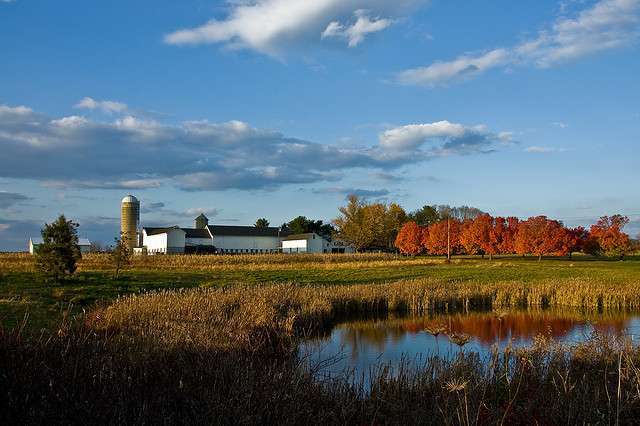
Photo credit: Nathan Siemers

Lincoln, Neb., Jan. 27, 2015 Farm operators and agronomists from across the state are invited to attend the Nebraska On-Farm Research Network research update program Feb. 13 at the Hall County Extension Office located on the College Park Campus in Grand Island, Feb. 16 at the Lifelong Learning Center located on the Northeast Community College Campus in Norfolk, or Feb. 17 at the University of Nebraska’s Agricultural Research and Development Center (ARDC) near Mead.

Registration is at 9:00 a.m. and the program is from 9:30 a.m.-3:30 p.m. CDT at all locations. Producers will obtain valuable crop production-related information from on-farm research projects conducted on Nebraska farms by Nebraska farmers in partnership with University of Nebraska faculty.

The Nebraska On-Farm Research Network is a statewide, on-farm research program that addresses critical farmer production, profitability and natural resources questions. Growers take an active role in the on-farm research project sponsored by Nebraska Extension in partnership with the Nebraska Corn Growers Association, the Nebraska Corn Board and the Nebraska Soybean Board.

These February programs will provide an opportunity to hear growers who conducted on-farm research share their results from the 2014 growing season. Field length replicated treatment comparisons were completed in growers’ fields, using their equipment.

Five Certified Crop Advisor Credits are applied for and pending upon approval.

Preregistration is requested for meal planning purposes. Call (402)624-8000 or e-mail [email protected] to register for any of the three sites. To learn more about the Nebraska On-Farm Research Network and how to participate, visit http://cropwatch.unl.edu/farmresearch.


# # #


Source: Keith Glewen, extension educator, Nebraska Extension, 402-624-8030, [email protected]
K-State Presents Youth Animal Science Learning Opportunity

0
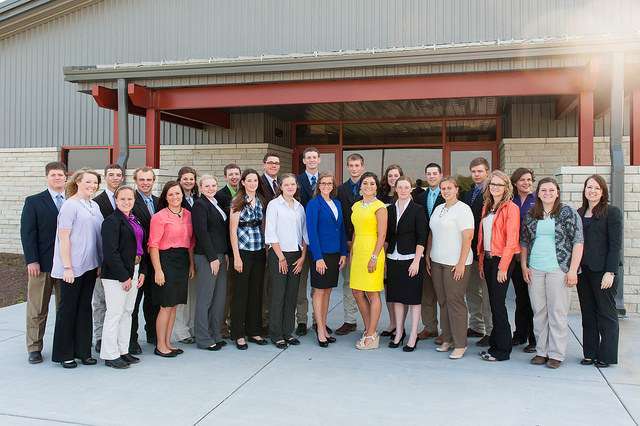
High school students gather for the 2014 Kansas State University Animal Sciences Leadership Academy.

High school students can apply now for the Kansas State University Animal Sciences Leadership Academy’s 2015 class.

High school students gather for the 2014 Kansas State University Animal Sciences Leadership Academy.

MANHATTAN, Kan. – Students from across the country with an interest in the livestock industry and related careers can apply now for the Kansas State University Animal Sciences Leadership Academy. The academy is an intensive four-day educational experience designed to enhance the leadership skills and animal science knowledge of students in ninth through 12th grades.

Hosted by the K-State Department of Animal Sciences and Industry and sponsored by the Livestock and Meat Industry Council, the academy’s goal is to develop young leaders within the livestock industry and prepare them for a successful future in this field.

“I highly recommend this experience to anyone,” said 2014 participant Brooke Jensen of Courtland, Kansas. “It opened my eyes to different aspects of the industry and caused me to think a lot about what I could do with my future.”

“We are pleased to announce that we will be expanding the program and offering two sessions in 2015,” said Ken Odde, head of the K-State Department of Animal Sciences and Industry.

Sessions will take place June 10-13 and June 17-20 in Manhattan. Students may apply for one or both dates as their schedule allows. Applications are due April 1, 2015, and can be found at http://www.YouthLivestock.KSU.edu.

The program’s itinerary will feature interactive workshops, tours and faculty mentor time with animal science professors. Industry leaders will also join the participants frequently to share their knowledge and expertise. Throughout the week, participants will work in teams to evaluate current events within the animal science industry and educate others. This experience will culminate with team presentations and a closing reception on Saturday morning.

Only 20 students will be accepted for each session to ensure individualized attention from counselors, professors and industry leaders. Participants will stay on campus in university housing with program staff for the duration of the event. Transportation to and from the event is the responsibility of the participant, along with a $50 deposit to reserve his or her space. The Livestock and Meat Industry Council generously provides all other sponsorships. Please contact academy director Sharon Breiner with questions at [email protected]or 785-532-6533.

Spider plant

0
Photo credit: Kathryn Rotondo

By: Scott Eckert, County Extension Agent, Horticulture

One of the most popular and durable houseplants is the unique Spider Plant.  The botanical name is Chlorophytum comosum, however it is easier to grow and enjoy than that name sounds.

Spider or Airplane Plants have either one of three leaf color patterns: solid green leaves, green edges with a white variegated stripe down the center of the leaf blade or leaves with white edges and a green stripe down the center.
Basics:  This easy to grow plant is more tolerant of extreme conditions than other houseplants, but it still has its climate preferences. Spider Plant thrives in cool to average home temperatures and partially dry to dry soil. Bright indirect light is best. Direct sunlight may cause leaf tip burn. Fertilizer may be applied monthly from March through September. A professional potting media containing sphagnum peat moss and little to no perlite is best.

Spider Plants store food reserves in adapted structures on the plants roots. These “swollen roots can actually push the plant up and out or even break the pot. Avoid over fertilizing to minimize this growth characteristic. Spider Plants are easy to propagate. Simply cut off one
of the “spiders” or plantlets and place in a pot. You may need to pin it down to the surface of the potting media to hold it in place until the roots grow and anchor it. A paper clip bent into an elongated U shape does the trick. Spider Plants are photoperiodic, that is they respond to long
uninterrupted periods of darkness (short day, long nights) by initiating flowering. Production of “spiders” follows flowering. This day length occurs naturally in the fall of each year. However, if you place your plant in a room where you have the lights on each evening, and artificially create a longer day, then they may not flower and you will have fewer spiders.

Women in agriculture conference to celebrate 30 years of programming

0

LINCOLN, Neb., Jan. 27, 2015 — Nebraska women will learn how to plan and make better business decisions for their farms and ranches, their communities, their families and themselves at the 30th Women in Agriculture Conference, the longest-running women’s conference of its kind in the country, Feb 26-27 at the Kearney Holiday Inn.

The theme of this year’s conference is “Our Heritage, Our Present and Our Future,” and it features a variety of workshops, “funshops” and speakers, including Rebecca Long-Chaney of Elwood, NE and Celeste Settrini from Salinas, CA.

Long-Chaney will be the keynote speaker Thursday morning with her talk, “Dare to Risk Life Change,” about her life-changing adventure working in the Australian Outback. Settrini will be the capstone lunchtime speaker on Friday as she presents “Channeling Your Inner Rock-Star!” a fun and humorous look at how to unleash that inner voice for agriculture. The Nebraska WIA Conference is celebrating its 30th anniversary of women’s agriculture programming in the state.

Also on Thursday will be Madeline Schultz from Iowa State University, the National Annie’s Program Leader, who will fill participants in on happenings in this exciting program and how they can work to bring this program to their county. The day will conclude with a celebration in the evening of the Women in Agriculture’s history and exciting future.

On Friday, the morning speaker will be Carla McCullough from the Department of Environmental Quality, who will present a department water division update. She will look at a few of the many programs DEQ monitors and some of the changes that will impact producers in 2015.

In between speakers, conference-goers can choose from 32 concurrent workshops spread over five sessions during the event. Topics include crop and livestock marketing, financial planning, estate planning, farm bill updates, crop and forage insurance, agronomy, beef nutrition, social media and apps, hydrology in Nebraska, GMO’s, community entrepreneurship, disaster preparation and Alzheimer’s Disease.

Thursday evening includes funshops for Twitter, Zumba and a demonstration from the Nebraska Beef Council.

Those interested can register online to wia.unl.edu where there is a link to the conference registration site, call 402-472-9053, or mail a completed registration form to UNL Marketplace, P.O. Box 830705, Lincoln NE 68583-0705. For more detailed information about Women in Agriculture and for a conference registration book, visit wia.unl.edu.

Early-bird registration fee is $110 for those registering by Feb. 13. Beginning Feb. 14, the fee is $130. Fee includes workshop materials, registration and all meals and breaks.

The conference is sponsored by the Institute of Agriculture and Natural Resources, Nebraska Extension and the Department of Agricultural Economics as well as Farm Credit Services of America, Reinke Irrigation, USDA Risk Management Agency and the Nebraska Department of Environmental Quality.

Lodging is available at the Kearney Holiday Inn, 110 2nd Ave. by calling 308-237-5971.

South Hutchinson City Calendar

0