Saturday, March 28, 2026
Home Blog Page 14

Defining cow efficiency

0

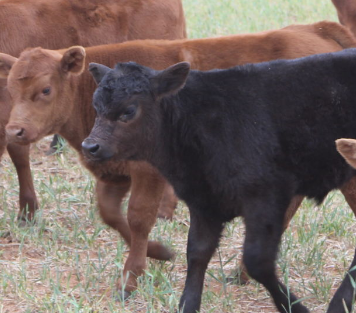
When it comes to cow efficiency, beef producers often focus on outputs like weaning weights and pregnancy rates. K-State beef cattle experts recently discussed which performance metrics really matter on a recent Beef Cattle Institute Cattle Chat podcast episode.

Researchers defined cow efficiency as the relationship between feed intake and pounds of calf weaned per cow exposed, a metric that directly affects profitability. However, beef cattle nutritionist Phillip Lancaster suggested accurately measuring that relationship remains a challenge — especially when forage intake is involved.

“We as researchers need to work on these math equations to make them more accurate for the type of cows we have today,” K-State veterinarian Bob Larson said.

“We want to get to the point where we can measure efficiency better, but it is currently impossible to accurately measure forage intake,” Lancaster said.

Without precise intake data, researchers rely on models and indicators to evaluate how cows convert available resources into reproductive and growth outcomes.

Despite those limitations, the discussion reinforced several core principles producers can apply in their operations. The team stressed that efficiency is strongly tied to adequate nutrition, sound animal husbandry and maintaining proper body condition, particularly heading into calving.

“Sometimes the math clearly shows how thin cows going into the calving season can affect fertility and overall efficiency,” Larson said. Poor body condition at calving often results in delayed rebreeding, fewer pounds weaned and higher costs per cow — all of which reduce system efficiency.

While research continues to refine efficiency models, producers can protect herd performance by focusing on fundamentals: matching cow size to the environment, ensuring nutritional needs are met and managing body condition before calving begins.

To learn more about managing body conditioning for cows or learn more from the beef cattle experts, check out the BCI Cattle Chat podcast. For questions, reach out on social media or email to [email protected].

Grazing during spring green-up

0

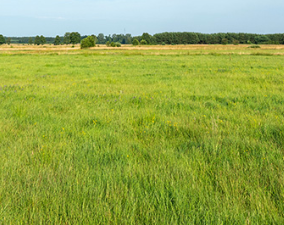
Seeing the bright green new growth pop up in our pastures signals the end of winter and the transition into spring. As that short green carpet starts to come up, cattle start chasing that short growth and may turn their noses up to hay they were previously eating well.

However, allowing cattle to nip off this short regrowth can slow down the pasture growth moving into the spring. Research at the U.S. Dairy Forage Research Center in 2011 suggests that 500 pounds of forage growth per acre is lost when grass is grazed while still short in the spring.

How short should we graze pastures?

The type of grass in your pasture will determine how short it should be grazed. When grazing most grasses like fescue, orchard grass, Bermuda, timothy and crabgrass, you should leave 3 inches or more so the plant has enough leaf material to regrow in a timely manner. Grazing below 3 inches leads to slower regrowth and potential for root loss under the soil. If grazed short repeatedly, producers can start to see thinning forage stands and more weed encroachment in those pastures.

Where I am in Missouri, most cattle producers are grazing fescue. In addition to plant health concerns, the ergovaline in fescue constricts blood vessels and causes symptoms like heat stress, poor average daily gains, and loss of tail switches, ear-tips, or gangrene of feet. The ergovaline is concentrated in the bottom couple inches of the plant, so maintaining a grazing height of 3 inches or higher limits the ergovaline that cattle consume and reduces some of those animal health concerns.

Many livestock producers have incorporated native warm-season grasses like big bluestem, little bluestem, Indian grass and gama grass into their grazing systems. Those species have a taller growing point and should have 12 inches or higher left behind to regrow.

How do we avoid overgrazing at the beginning of spring?

Using a sacrifice lot or pasture is an effective way to minimize overgrazing on most of your pastures. Choose a pasture that may be weedy or need to be renovated and congregate your herd there while you feed hay during the winter. This allows you to keep the herd off the rest of the early grass growth until the pastures have grown to at least 6 inches.

Unrolling hay bales or moving hay rings across the sacrifice pasture helps to improve soil fertility by distributing manure and organic matter from wasted hay. Each winter, a new sacrifice pasture can be used to incrementally improve your pastures or you can have a designated sacrifice area for convenience if mud is not a major concern in your area.

What are the ultimate goals?

As spring comes and grass starts to green up, the main consideration is to limit your herd from setting back the pastures for the rest of the growing season by nipping off all the short growth. Using a sacrifice pasture and stored feed and hay lets you protect the rest of your pastures and make soil improvements over time.

Elizabeth Picking is a field specialist in livestock for University of Missouri Extension in Howell County.

Insect-based immunization research shields poultry from avian influenza

0

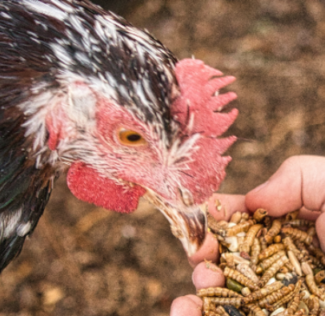
New research at Kansas State University aims to tackle one of the most significant threats to global animal health and food security — highly pathogenic avian influenza, or HPAI — by using mealworms, a supplement of poultry feed, as a vaccine-delivery method.

A multidisciplinary research team from the College of Veterinary Medicine and the Department of Entomology is developing the unique vaccination strategy to help protect the nation’s poultry supply, where the disease moves with devastating speed.

Researchers respond to devastating poultry disease

“In a typical poultry house, the HPAI virus can kill nearly an entire flock within 48 hours,” said Laura Miller, associate professor of veterinary virology, immunology and genomics.

Kansas has experienced this impact firsthand. More than 413,000 birds have been affected statewide since late 2025, including roughly 360,000 birds from a single commercial table-egg pullet operation in Pottawatomie County.

As the principal investigator on the new research project, Miller said federal and state regulations require the immediate depopulation of infected flocks to prevent further spread. In response, the Secretary of Agriculture, through USDA’s Animal and Plant Health Inspection Service, or APHIS, has allocated $100 million to fund innovative projects advancing prevention, therapeutics, vaccine development and other mitigation strategies.

In a highly competitive process, APHIS received 417 proposals totaling more than $793 million in funding requests. Miller’s project, “Insects for Antigen Production and Delivery: A Novel Oral Vaccination Platform for Highly Pathogenic Avian Influenza in Poultry,” was awarded $1,999,946.

Co-investigators include K-State colleagues Erin Schirtzinger, research assistant professor, Santosh Dhakal, assistant professor in diagnostic medicine and pathobiology, and Brenda Oppert, adjunct professor in entomology and the Insect Farming Initiative; and Marce Lorenzen, professor in entomology and plant pathology at North Carolina State University. The grant also includes funding for student training.

Mealworms as medicine

“Our oral, insect-based vaccine can be delivered as a feed supplement, allowing a producer to protect thousands of birds quickly without the stress of manual handling,” Miller said. “Mealworms, a natural component of poultry diets, offer significant nutritional benefits while serving as efficient biological factories for vaccine antigens.”

The research aligns closely with Oppert’s work with K-State’s Insect Farming Initiative, which aims to promote insect farming, raising and breeding insects to support other agrifood systems, through research and outreach. Oppert serves on the initiative’s core support team.

“Developing insects for agricultural applications like this research is a major focus of the Insect Farming Initiative and will have implications for the prevention and treatment of other animal diseases through farmed insects,” Oppert said.

Collaboration lends agility to avian influenza research

Speed and adaptability are central to the approach. Miller said that by using gene-editing, the team can “update” the vaccine within weeks to match new circulating strains of HPAI.

“This is an important advantage as HPAI continues to evolve along migratory routes like the Central Flyway, a major migratory route for wild waterfowl that can carry the virus without appearing ill,” Miller said. “Traditional egg-based vaccine systems often require months to adjust, leaving producers vulnerable. Our platform is being designed to be compliant with the Differentiating Infected from Vaccinated Animals protocol, enabling surveillance systems that maintain export eligibility during vaccination campaigns.”

This work is made possible due to K-State’s unique infrastructure and collaboration with NC State. Insect gene editing at NC State will be validated by the Insect Farming Initiative in the entomology department’s Integrated Molecular Entomology Core laboratory, while immune response and vaccine validation are led by the Department of Diagnostic Medicine/Pathobiology and the Kansas Veterinary Diagnostic Laboratory.

“I believe advancements in CRISPR-mediated genome editing will enable my lab to turn a common beetle into a powerful vaccine for combating bird flu,” Lorenzen said.

High-containment H5N1 challenge studies will be conducted at K-State’s Biosecurity Research Institute, or BRI, one of the few facilities in the United States with Biosafety Level-3 Ag capabilities.

Avian influenza research protects consumers, informs tomorrow’s biosecurity leaders

Beyond protecting flocks, the research has implications for consumers and public health.

Preventing widespread poultry losses can help stabilize egg and poultry prices, while reducing viral circulation in animals lowers the risk of spillover. The CDC continues to report low risk to the general public while monitoring cases.

The grant also provides hands-on training for undergraduate, graduate and veterinary students.

“We are training students on the tools of the future — CRISPR and BSL-3 biosecurity — while simultaneously building an industrial insect-farming framework,” Miller said. “We are preparing graduates for high-demand careers in biosecurity and animal health.”

JOE MONTGOMERY and CRYSTAL LY
K-State News and Communications

Hayden Equipment Auctions

0

Chris Ostmeyer, Kechi, Kansas, Receives Company’s Top Real Estate Award

0

Farmers National Company, the nation’s leading farm and ranch management and brokerage company, is pleased to announce that Chris Ostmeyer was recently presented with the Farmers National Company President’s Circle Award for his outstanding efforts in real estate sales.

Chris Ostmeyer, Accredited Farm Manager (AFM) and real estate sales agent with Farmers National Company, received the company’s top award for real estate sales in 2025 for the second straight year.

He began working with Farmers National Company in 2006.

Chris can be contacted at (316) 788-4240 or by email at [email protected].

Employee-owned Farmers National Company is the nation’s leading landowner services provider.

Farmers National Company manages nearly 5,000 farms and ranches in 30 states comprising more than 2 million acres. Over the last five years, Farmers National Company has sold 3,700 properties (1,950 at auction) and more than $3.25 billion of real estate. Additional services provided by the company include energy management, appraisals, insurance, hunting lease management, forest management, FNC Securities, consultations, and collateral inspections. For more information on our company and the services provided, visit www.FarmersNational.com.