Saturday, March 28, 2026
Home Blog Page 15

What Kansas Families May Be Overlooking About Wasp Behavior

0

Kansas families usually notice wasps at the worst possible moment.

A child runs barefoot across the lawn. A mower passes too close to a fence line. A porch light flicks on at dusk and suddenly several striped insects begin circling the bulb. The reaction is immediate — step back, swat, retreat indoors.

But what Kansas families may be overlooking about wasp behavior is that most stinging encounters follow predictable environmental triggers. Wasps are not randomly aggressive. They respond to territory, food signals, seasonal shifts, and structural conditions that many homeowners don’t even realize they are creating.

Understanding how wasps behave in Kansas — especially through the long summer heat and into late fall — changes how families respond.

Because most problems begin long before the first sting.

The Wasps Most Common in Kansas

Kansas landscapes support several wasp species, but backyard conflicts most often involve yellowjackets, paper wasps, and bald-faced hornets. Mud daubers are also widespread, though their behavior differs significantly and they rarely cause defensive incidents.

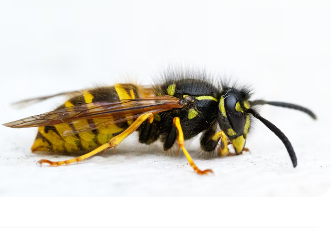
Yellowjackets are the most problematic for families. Compact and black-and-yellow striped, they are often mistaken for bees. Unlike honeybees, however, yellowjackets can sting repeatedly and defend nests aggressively. Many Kansas yellowjackets build underground colonies inside abandoned rodent burrows, landscape voids, or occasionally wall cavities. Because the entrance hole may be small and subtle, these nests frequently go unnoticed until disturbed.

Why Wasps Seem More Aggressive in Late Summer

Many Kansas families describe a noticeable shift in wasp behavior between early summer and late August. What feels like sudden aggression is actually a biological transition.

In spring and early summer, colonies are expanding. Worker wasps collect protein sources — caterpillars, beetle larvae, grasshoppers — to feed developing larvae. The colony’s priority is growth. Human interaction remains minimal unless a nest is directly disturbed.

By late summer, colony size peaks. At the same time, larval production declines. Fewer larvae means fewer mouths requiring protein. Adult workers shift their focus toward carbohydrates and sugars to sustain themselves.

This is when soda cans, fruit bowls, compost bins, and outdoor barbecues become magnets. The increased scavenging behavior is not heightened hostility. It is nutritional necessity.

Late summer wasps are driven by sugar.

That shift changes where and how families encounter them.

The Kansas Climate Factor

Kansas weather patterns strongly influence wasp visibility. Summers are often hot and dry, punctuated by powerful thunderstorms and wind events.

Extended heat drives wasps toward shaded areas and accessible water sources. Covered porches, shaded decks, garden irrigation systems, and pet water bowls become hydration points. During drought conditions, natural nectar sources decline, intensifying foraging around human food and moisture.

Vibration is interpreted as a threat to the colony. Guard wasps respond instantly. Multiple workers may emerge within seconds, resulting in clustered stings.

This reaction is defensive, not predatory. Wasps are not chasing randomly across the yard. They are driving a perceived threat away from the nest entrance.

Underground colonies remain invisible until activated.

That invisibility creates surprise.

Why Paper Wasps Choose Homes

Paper wasps prefer elevated, sheltered sites protected from direct rainfall and wind. Kansas homes provide ideal architecture for this preference.

Roof overhangs offer dry shelter. Porch ceilings provide flat surfaces for attachment. Deck beams and shed interiors create shaded microclimates.

Early spring is when solitary queens establish small starter nests. At that stage, nests may contain only a handful of cells. Removal at this stage dramatically reduces later colony growth.

By mid-summer, nests may support dozens of workers. Defensive response increases as colony size expands.

The structure becomes territory.

And territory triggers defense.

The Role of Scent and Food Signals

Wasps rely heavily on chemical cues to locate food. Sugary residue on outdoor tables, fallen fruit beneath trees, unsealed trash bins, and pet food bowls emit volatile compounds detectable from significant distances.

Late-season colonies, driven by carbohydrate demand, intensify their search patterns. Kansas families often focus on visible nests but overlook attractant management.

Cleaning outdoor surfaces, sealing garbage lids tightly, and harvesting fallen fruit reduce foraging traffic substantially.

Flight patterns follow scent gradients.

Control scent, and movement shifts.

Why Porch Lights Attract Nighttime Activity

Although wasps are primarily active during daylight hours, porch lights can create indirect attraction zones. Light draws flying insects such as moths and beetles. Predatory wasps may linger in early evening near these concentrated prey areas.

This behavior can create the illusion of nighttime swarming. In reality, wasps are exploiting prey clustering.

Turning off unnecessary exterior lighting or using warmer spectrum bulbs may reduce insect concentration, indirectly reducing wasp presence.

Light itself is not the lure.

Food is.

Defensive Behavior vs. Foraging Behavior

One of the most important distinctions Kansas families overlook is the difference between foraging and defense.

Foraging wasps move deliberately, inspecting surfaces and food sources. They rarely show interest in humans unless directly threatened or if food is involved.

Defensive wasps behave differently. When nests are disturbed by vibration or proximity, guard workers launch rapid, coordinated responses. Movement becomes erratic and persistent until the perceived threat retreats.

Recognizing context changes reaction. Calmly stepping away from a foraging wasp often resolves the encounter. Approaching a nest requires caution and distance.

Behavior is situational.

Why Wasps Persist Year After Year

Most social wasp colonies die off in late fall. Workers perish as temperatures decline. Only fertilized queens survive winter, seeking shelter beneath bark, inside attic voids, or within protected crevices.

In spring, those queens establish new nests independently. If a property consistently offers shelter, food, and structural protection, it becomes an attractive annual nesting zone.

This pattern explains why some Kansas homes experience recurring issues. The habitat remains favorable.

The cycle repeats.

Are Wasps Beneficial?

Despite their defensive reputation, wasps play valuable ecological roles. They consume large numbers of pest insects that damage crops and gardens. Paper wasps help control caterpillar populations. Yellowjackets scavenge carrion, contributing to organic decomposition.

Their presence in natural settings supports ecosystem balance.

Conflict arises primarily when nesting sites overlap with high human activity zones.

Awareness allows selective management rather than blanket elimination.

When Should Families Be Concerned?

Concern becomes necessary when nests are located near high-traffic areas — entry doors, playground equipment, frequently used decks, or interior wall cavities.

Consistent traffic entering and exiting a single structural gap suggests an established nest. Large aerial nests should not be approached casually.

Attempting to treat active nests without protective equipment increases sting risk significantly.

Early identification simplifies intervention.

Why DIY Sprays Sometimes Fail

Aerosol sprays can eliminate exposed paper wasp nests when applied correctly at night. However, concealed nests inside walls or underground often require more targeted approaches.

Incomplete treatment may drive wasps to create alternate exit points, increasing indoor encounters.

Professional services can locate hidden colonies and apply appropriate materials safely.

Placement determines outcome.

Kansas Storms and Nest Damage

Kansas thunderstorms are intense and frequent. High winds may partially detach aerial nests, creating instability. Damaged colonies often exhibit heightened defensiveness during repair.

Fallen nests on the ground can still contain live workers. Curious pets or children may encounter these inadvertently.

Post-storm yard inspections reduce unexpected contact.

Weather influences behavior in subtle but significant ways.

Preventing Wasp Conflict on Kansas Properties

Prevention is primarily environmental.

Seal cracks in siding and soffits. Repair damaged screens. Keep vegetation trimmed away from structures. Secure trash lids tightly. Avoid leaving sugary drinks or uncovered food outdoors.

Inspect eaves and sheltered corners in early spring for small starter nests.

Removing nests early is easier and safer than addressing mature colonies.

Observation reduces escalation.

Allergy Awareness

While most stings result in temporary pain and swelling, severe allergic reactions can occur. Families with known allergies should carry prescribed emergency medication and communicate nest locations to household members.

Preparedness reduces panic.

Clear outdoor awareness reduces risk.

Why Wasps Seem to “Chase”

The perception that wasps chase long distances usually stems from defensive pursuit near nests. Guard wasps may follow a perceived threat for several yards to ensure distance from the colony.

Once the threat retreats sufficiently, pursuit stops.

Once the threat retreats sufficiently, pursuit stops.

They defend territory.

They do not pursue humans as prey.

Fall Decline and Seasonal End

As Kansas temperatures drop in late October and November, worker populations collapse. Abandoned nests remain attached to structures but become inactive.

Queens disperse to overwintering shelters. Activity declines rapidly.

The apparent disappearance is seasonal.

The pattern resumes each spring.

FAQs About Wasp Behavior in Kansas

Why are wasps worse in late summer?

Colonies peak in size and shift toward sugar-seeking behavior.

Do wasps reuse old nests?

Most species build new nests each spring.

Are ground nests more dangerous?

They can trigger defensive swarms if disturbed.

Why do wasps hover near my food?

They are seeking sugar sources.

Should I remove a small nest myself?

Early, small nests can sometimes be removed cautiously at night, but safety matters.

Are mud daubers aggressive?

No, they are solitary and rarely sting.

Do cold winters eliminate wasps?

Workers die, but queens overwinter and restart colonies.

Why do they appear after storms?

Storms can displace nests and increase defensive behavior temporarily.

Final Thoughts

Wasp behavior in Kansas is not random aggression.

It is biology shaped by heat, food availability, territory defense, and seasonal timing.

What Kansas families may be overlooking about wasp behavior is that most stings and swarms are preventable when nesting sites and attractants are managed early.

Observe in spring.

Control attractants in summer.

Avoid disturbance in late season.

Because wasps are not targeting families.

They are defending colonies and seeking food — following patterns that repeat every year across Kansas landscapes.
USDA staff cuts hit farmers hard

0

The U.S. Department of Agriculture saw some of the largest workforce reductions of any federal department as the Trump administration set out to downsize the government over the past year.

More than 24,000 people left the USDA since President Donald Trump took office last January, according to U.S. Office of Personnel Management data.

The department saw a nearly 27% reduction in its workforce from September 2024 to December 2025, according to data that’s presented by fiscal year.

The lost staffing means farmers are waiting longer for help applying for financial assistance or special project funds, said Nick Levendofsky, executive director of the Kansas Farmers Union.

“If you don’t have the folks that are there to do the work that’s needed to be done — whether that’s paperwork or following up with farmers on a project that they are wanting to do — then where do those farmers go for those services?” Levendofsky said.

Nationwide — and across the Great Plains and Midwest — the Forest Service, Natural Resources Conservation Service, Agricultural Research Service and Animal and Plant Health Inspection Service lost the most employees since September 2024, according to the federal data.

The National Agricultural Statistics Service, which collects and publishes data on livestock and crop production, lost 37% of its staff — the largest percentage of any agency.

And the Food and Nutrition Service — which operates food benefits including the Supplemental Nutrition Assistance Program and the Women, Infants and Children’s program — saw a 31% reduction from about 1,750 employees to 1,200.

Across the board, all USDA agencies saw between an 11% and 37% staff reduction.

More than 20,000 employees left the USDA between Jan. 12, 2025 and June 14, 2025, according to a recent USDA report. Almost three-quarters of those employees took a Deferred Resignation Program agreement, allowing them to voluntarily resign and take paid leave for several months.

The resignation agreements were introduced under the Trump administration’s Department of Government Efficiency, or DOGE, initiative, which sought to decrease the size of the federal workforce and find cost savings. Most employees that accepted an agreement did so between February and April 2025.

State by state

Staffing cuts hit some states more than others. Maryland lost the highest percentage of USDA staff since September 2024, while South Carolina lost the least.

In the central U.S., Kansas lost 32% of its USDA staff. That’s more than 500 positions, and the largest percentage in the region.

Levendofsky with the Kansas Farmers Union said farmers had been struggling with an understaffed USDA since the Obama administration. The Biden administration hired new staff members, but many of those newer positions were removed through DOGE initiatives.

“We’re behind where we even were before all of these challenges,” he said. “It’s like a two steps forward, three steps back problem.”

The USDA Farm Service Agency provides financial assistance to farmers. Their staff helps farmers sign up for federal programs, disaster relief, crop insurance or low-interest loans.

In just over a year, Kansas lost about a quarter of its FSA staff, according to the federal data. Levendofsky said the loss of the agency’s staff leaves struggling farmers waiting for assistance.

“If a county’s already dealing with fewer staff than they had to begin with, or if there’s a challenge there somewhere that they can’t overcome, then it’s hard for them to even offer up what little staff they do have,” Levendofsky said. “Because the work just keeps stacking up, and you can’t pile any more on without burnout.”

Levendofsky said American farmers are in “the worst financial setting” they’ve been in since the 1980s farm crisis, as they deal with tight margins, an ongoing trade war and more frequent extreme weather. He said many farmers have limited options when it comes to financial assistance.

“A lot of banks are not willing to put up the money to do this unless they know you’ve got good collateral,” Levendofsky said. “They’re not going to put out the risk right now. The federal government can, and the federal government has — and should — do that when they are able.”

Texas lost 21% of USDA staff — including 248 employees at the Animal and Plant Health Inspection Service.

Dale Murden is the president of Texas Citrus Mutual, a trade association made up of the state’s citrus growers. Murden said there are over 50 varieties of vegetables grown in Texas, and about 15 million cartons of grapefruits and oranges are produced per year. All that produce needs to be inspected and tested for disease by APHIS.

“We live right on the Rio Grande River, so there’s an imaginary wall down there that does not prevent pests and diseases coming up from Mexico and further into South America,” Murden said. “So, APHIS is extremely important to our operations in citrus.”

APHIS helps manage and test for disease in crops, plants, livestock and wildlife. Murden said that could spell trouble when disease or pests – like the reemerging threat of the New World screwworm — strike.

“We want to make sure that those (agencies) aren’t harmed,” Murden said. “Anything along this Rio Grande river and border, any cut there would be harmful — very harmful.”

Compared to farmers producing U.S. staple crops like corn, wheat and soybeans, Murden said fruit and vegetable producers don’t rely on financial assistance from the USDA as much. But when disaster strikes, he said it’s difficult for the farmers in his area to receive assistance due to low staffing levels.

The cost of conservation

Farm advocates worry low staffing will also make it harder for farmers to take on expensive conservation projects.

The Natural Resources Conservation Service provides payment assistance for projects that would otherwise require large, up-front investments. It’s the USDA’s second largest agency, behind the Forest Service.

NRCS lost about 2,400 staff members, or 21% of staff nationwide, since late 2024.

Kalee Olson, the senior policy manager at the nonprofit Center for Rural Affairs, said the NRCS was hit hard in Nebraska. There, the NRCS lost about a quarter of its staff — nearly 100 people.

“I think what is important to reflect on with that number specifically is that it doesn’t just include staff in our state office, but it included staff in our local county offices, and those are the folks who work directly with producers on a day to day basis,” Olson said.

NRCS staff provide valuable technical knowledge to farmers on how to accomplish a farm’s conservation goals, Olson said. She worries farmers and producers, who often rely on seasonal cycles of decision-making, may not be able to wait around for NRCS assistance.

KDOC, BLM extend Wild Horse Program at HCF

0

The Kansas Department of Corrections and the Bureau of Land Management have agreed to extend the Wild Horse and Burro Program at the Hutchinson Correctional Facility, keeping the long-running initiative in operation through May 31, 2026.

The agreement prevents the immediate closure of the program, which has operated at the facility for more than 25 years. State and federal officials said the extension will allow both agencies additional time to negotiate a long-term contract aimed at securing the program’s future.

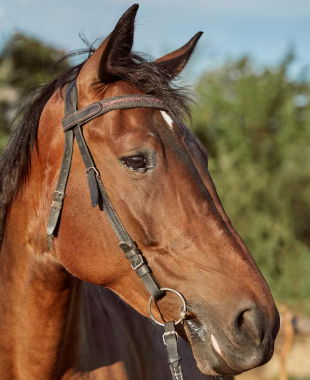
Under the extension, approximately 300 wild horses and burros will remain at the Hutchinson facility rather than being relocated to long-term holding facilities. The animals will continue to be cared for by trained handlers participating in the program.

Officials said the decision also preserves the specialized roles of resident horse handlers at the correctional facility. Participants gain vocational training in horse care, handling and training, skills that can help support employment opportunities after release.

The program’s continuation also ensures ongoing training for the animals as part of the Bureau of Land Management’s national Wild Horse and Burro adoption efforts. Horses trained at the Hutchinson facility receive halter and saddle training, making them more suitable for adoption by private owners.

Since its launch in 2001 at the Hutchinson Correctional Facility, the program has served both animal welfare and rehabilitation goals. In addition to preparing wild horses for adoption, the program provides incarcerated participants with opportunities for personal development, responsibility and job-related skills aimed at supporting successful reentry into society.

Officials from both agencies said the extension provides time to work toward a sustainable funding and operational model that would allow the program to continue long term.


Make a plan for preserving foods before you plant this spring

0
K-State food scientist shares resources to estimate garden yields.

There are numerous options for gardeners to consider when planting fruits and vegetables in their spring gardens.

But Kansas State University food scientist Karen Blakeslee suggests making a plan prior to planting that takes into account how much of the crop you plan to eat fresh, and how much you may want to preserve for later use.

“If you plant a large garden,” Blakeslee said, “this will determine how much you preserve and how much you may have to give to family and friends.”

Popular garden produce in Kansas includes tomatoes, green beans and cucumbers made for pickles. “But there are many other fruits and vegetables that can be preserved by canning, freezing or dehydrating,” she said.

Blakeslee said K-State’s Vegetable Garden Planting Guide provides predicted yields for many vegetables per 100 feet of land, as well as planting guidance, and a calendar that indicates when to expect a harvest.

“For example,” she said, “100 feet of green beans should yield 120 pounds of beans. The yield can also be calculated per person. For green beans, it’s 15-16 feet of planting per person.”

To estimate the yield of green beans for canning, Blakeslee added that one bushel is about 28 to 30 pounds of green beans which will make about 15-16 quarts of canned beans. She said a good source for estimating yields is available in a publication from the University of Georgia, Weights and Processed Yields of Fruits and Vegetables, which is available online.

For further safety, “select a garden site that will help reduce the risk of unforeseen problems, such as flooding, animal crossings, chemicals, soil contaminants and runoff,” Blakeslee said.

Other tips:

  • Use potable water to apply to plants.
  • Avoid using raised-bed materials, such as pressure-treated wood, old tires, single use plastics or old railroad ties.
  • Personal hygiene is essential when handling edible produce to reduce cross contamination.
  • Maintain gardening equipment and clean tools to reduce contamination.
  • If using compost, it must reach a minimum temperature of 131 degrees Fahrenheit for at least three consecutive days to kill pathogens that may be present

“And while you plan your garden, now is a good time to inventory the equipment and other supplies needed for preserving food,” Blakeslee said. “Gather recipes from sources that have been researched for the best and safest results.”

Information on safely preserving foods is available online from the K-State Rapid Response Center for Food Science, www.rrc.k-state.edu/preservation.

More food safety information related to gardening is available in a publication available online from the K-State Extension bookstore, titled Garden to Plate: Food Safety for School and Community Gardens.

M. Hinton-KS | Iowa Tractor Story

0

Good morning, Friends – Sharing this heartwarming IA-KS Tractor story with you to start your Monday.

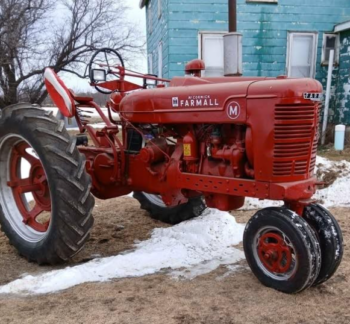
Tonya bought me the attached Farmall M tractor yesterday (Sunday) for my 60th birthday.
It’s a 12-volt system with an alternator, and all the lights are in working order. The tractor is located in Aplington, Iowa. Tonya found it online for sale yesterday a.m., and we secured the purchase just in time—a growing list of collectors were competing to buy it.
This is a deeply personal and meaningful acquisition for many reasons. 
The tractor is owned by the same farmer whom I purchased my Farmall H from 15 years ago—the one I wrote a three-page contract for and later mentioned in my National Ag Hall of Fame induction speech. We sadly sold the H in Minnesota 10-12 years ago due to our relocation and other circumstances at the time. When we originally bought the H, the family sold it to us, to help buy feed for the quarter horses they were raising.
We learned yesterday that they are selling the M to help cover funeral expenses for the farmer’s wife, someone we have stayed in touch with over all these years. She underwent heart surgery late last year and shared her daughters’ contact information with us beforehand so they could update us on her recovery. Sadly, she passed away approximately four days after the surgery.
This truly is a family tractor in every sense of the word.
Now the next step is finding a hauler.
Michael Hinton | Founder, Antique Tractor Preservation Day