Tuesday, January 13, 2026
Home Blog Page 25

K-State research team studying ways to find value in wastewater

0
Agricultural economist details the university’s efforts to conserve the Ogallala Aquifer by finding value in every drop.

Kansas State University researchers are leading an innovative effort to turn livestock wastewater into a reusable resource in a project that helps to conserve the Ogallala Aquifer and strengthen sustainability across the High Plains.

The four-year, $6 million project, led by Prathap Parameswaran, an associate professor in K-State’s Carl R. Ice College of Engineering, brings together engineering, agricultural economics and social science experts from K-State, the University of Nebraska-Lincoln, Oklahoma State University and Seward County Community College.

At the center of the work is an anaerobic membrane bioreactor that treats wastewater from livestock operations so that it can be reused, while also recovering nutrients and generating biogas for on-farm energy.

“The crux of what we’re doing is about water access,” said Joe Parcell, professor of agricultural economics at K-State. “We’re creating a process to polish and clean water up enough so that it can be reused in the livestock system. At the same time, we’re also pulling in those carbon and nutrient elements to try and add value so it becomes more widely adopted.”

On a recent episode of Agriculture Today, a podcast produced by K-State Extension, Parcell explained that adding value to wastewater is key to making the technology feasible for producers.

“We’re working on the ability to add value to wastewater,” he said. “When producers see the economic and environmental benefits, they’re more likely to adopt and integrate it into their operations.”

The project aims to reduce freshwater use, manage waste more efficiently, and create new incentives for livestock producers to invest in sustainable technology.

“Part of the adoption equation is where you are at, and how far do you have to pump water now? What are the policies and incentives going to be?” Parcell said. “We’ve seen incentives to install these types of facilities in the past. What will they look like in the future?”

By capturing nutrients and reusing treated water, livestock operations could improve efficiency, reduce costs, and contribute to long-term aquifer protection. Parcell said that collaboration between researchers, producers, and policymakers will be critical to ensure that conservation practices are practical and economically sound.

“At the end of the day, it’s about finding that balance between sustainability and profitability,” he said. “If we can help producers make decisions that benefit both, we can make a real impact on how water is managed across the region.”
Kansas Grasslands Survey Now Open

0

The Kansas Department of Agriculture is seeking input from ranchers and landowners regarding how to keep grasslands in healthy working condition. This information will be used in a report that will bring attention to the importance of grasslands for the state’s agricultural economy, as well as grasslands’ many ecological benefits. A new online survey is aimed at ranchers, landowners, and others with an active working knowledge of the use of grasslands.

Grasslands make up more than 15 million acres of agricultural land in Kansas, and in addition to other benefits, these grasslands serve a critical role as grazing land for cattle. As the state’s largest agricultural industry, the beef industry provides income and economic prosperity to thousands of Kansas ranchers, businesses, and workers throughout the state.

KDA has been working in partnership with the Kansas Association of Conservation Districts, with the support of the Natural Resources Conservation Service, on a joint project to determine immediate next steps to encourage and support efforts to assist Kansans in the conservation of their working grasslands. The project will result in a report that will be communicated out to stakeholders, the public, and legislators in early 2026.

The report will include information to help educate a broad audience about the importance of working grasslands, as well as action steps that could be taken to improve and conserve working grasslands for future generations. The survey is an important component of the project’s goal of engaging with ranchers from across Kansas, and it builds on numerous conversations with ranchers and stakeholders over the past several years.

Find the survey and other materials related to the Kansas Grasslands project at www.agriculture.ks.gov/grasslands. The survey will be open through Friday, December 5.

Christmas horse parade because of equine herpesvirus outbreak

0
The Lawrence Old-Fashioned Christmas Parade normally features dozens of human and horse participants from across the region. The Dec. 6 event is now canceled because of the virus outbreak affecting eight states.

Organizers of the 2025 Lawrence Old-Fashioned Christmas Parade canceled the event Tuesday because of a horse virus outbreak affecting multiple states.

The event, scheduled for Dec. 6, has been a Lawrence tradition for more than 30 years. Event organizers estimate it typically draws tens of thousands of people to the city.

The parade normally travels through downtown Lawrence and features horses dressed in holiday attire provided by dozens of participants. The 2023 lineup listed almost 50 participants with horses from as far away as Iowa and Nebraska.

Organizers said they canceled the event because of an ongoing equine herpesvirus outbreak currently detected in eight states, including Colorado and Oklahoma.

“The health and safety of the horses and our community come first, always,” said Marty Kennedy, president of the Lawrence Old-Fashioned Christmas Parade. “Canceling this year’s parade was an extremely difficult decision, but it is the responsible one.”

The virus is not a threat to humans but spreads easily among horses.

Equine herpesvirus causes respiratory illness and pregnancy losses, and can in rare cases cause neurological disease. More severe cases affect coordination and cause difficulty walking, according to the University of Missouri.

Stephen Koranda is the managing editor for the Kansas News Service. You can email him at stephenkoranda (at) kcur (dot) org.

The Kansas News Service is a collaboration of KCUR, Kansas Public Radio, KMUW and High Plains Public Radio focused on health, the social determinants of health and their connection to public policy. 

Just a Little Light: H. Ray, Tom, Dick, and Harry’s Daddy

0

JUST A LITTLE LIGHT


By Dawn Phelps   

Ray, Tom, Dick, and Harry’s Daddy


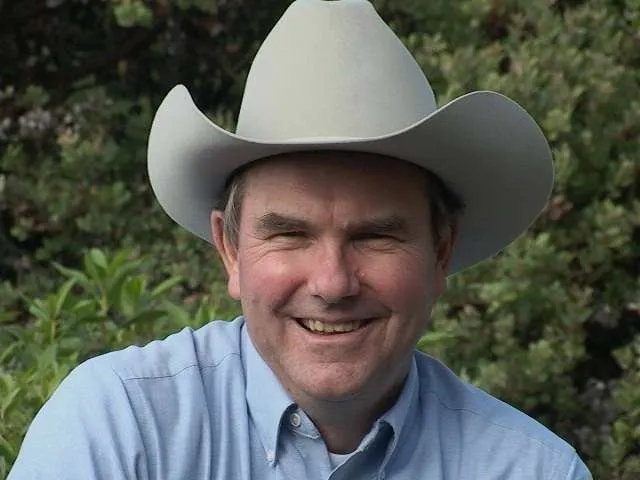
If you have been around Miltonvale for a few years, you may remember Tom’s daddy, H. Ray Phelps.  He is the father of Tom (Thomas), Dick (Richard), and Harry—I’m married to Tom. 


Ray and Wilburma, Tom’s parents, had quite a sense of humor to give Miltonvale their own Tom, Dick, and Harry—not many towns can boast that!  The brothers get together in the morning for coffee and the afternoons for tea.  I have occasionally joined them for tea and listened to them tell family stories, and we laugh.  


You probably remember that Ray had a sense of humor.  He was always laughing about something, and he had a big, kind heart.  It was his practice to make sure that preachers in Miltonvale had a topcoat to wear to the cemetery for graveside services in the winter.  Ray gave my late husband Ralph Thorn one of those coats.  


Ray was a man who could work half of the night but did not like to get up early in the morning.  He was also a man who made some memorable statements and left some humorous stories behind.  (I’ll tell you his whistle story later in this article.)


One of his statements: “Once a man, twice a child.”  As a funeral director he knew the reality of going to hospitals and nursing homes after someone died and finding that the older person had to wear adult diapers.  Thus, “once a man, twice a child.”


  1. Ray was in a nursing home in Minneapolis for a while before he died.  The boys told the story of a time that Ray mistakenly crawled into an empty bed across the hall from his room.  When a caregiver reminded Ray that he was not in his own room, that his bed was across the hall, Ray replied, “Well, he wasn’t using it!”—a true statement.


If you have driven through Miltonvale before special events like the Lion’s Club pancake feed, you know about a metal sign that is placed in the middle of the street at Starr and Spruce to let people know about an event.


One Memorial Day, Ray and Wilburma were driving downtown Miltonvale for a veteran’s dinner at the hall a block east of the bank—the lumberyard owns the building now.  There was a sign in the middle of the streets, and Ray hit the sign hard with his car, knocking the sign onto the curb.


Wilburma told him, “Ray, you hit that sign!” to which he replied, “They shouldn’t have a sign there anyway.”  


Tom told me of a time when Ray and Wilburma were on Highway 24 and Ray was driving fast.  They met a cop and when Ray saw that the cop was turning around to follow him, Ray hit the gas and sped up a bit.  Wilburma had to talk him into slowing down.  The cop caught up with him and pulled him over.


After looking at his driver’s license, the cop said, “Mr. Phelps, I’m going to have to give you a ticket.”


Ray answered, “Well, you better.  You pulled me over.”


Another time when H. Ray was driving, he was stopped for not having a sticker on his car tag.  Ray told the cop, “It’s right here in the glove box.  You can put it in for me,” and the cop did.


Now for a story about a little red whistle.  When Ray turned 80, he decided that older folks don’t get enough attention.  So, he bought himself a red whistle to blow when he was out somewhere and needed some help, and he used it!


Once Ray was in a restaurant and needed more coffee.  The waitress was busy talking to a young man who was probably her boyfriend.  After waiting a bit, Ray blew his whistle, and he immediately got her attention.  She came to his table, poured him some coffee, and told him, “If you need something, I’ll get it for you.  Just please don’t blow that whistle again!”  


Tom said that once when Ray was in Penny’s, no one would wait on him, so he blew his whistle and got some action there too.  Tom is not sure if he took the whistle to the nursing home with him or not—we’ll never know.  If he did, I’m sure he probably got what he needed.


So that’s my H. Ray story, including the story of the red whistle and more.  Have a great week!


[email protected]


Bovine Bill of Rights

0
lee pitts

Just as Thomas Jefferson is remembered as the author of the Declaration of Independence and James Madison as the principal author of the Constitution, so too will I be remembered for The Bovine Bill of Rights.

Article X: Beef animals not retained for breeding shall have the right to be placed in feedlots where they will be served breakfast in bed every morning and fed supper after their afternoon nap. They have the right to gobble down as much tasty feed as they desire of a delicious and expensive ration consisting of mouthwatering grains, appetizing roughage and sugary molasses for dessert. And all without having to worry about being bullied and made fun of by their fellow bovines for their obesity.

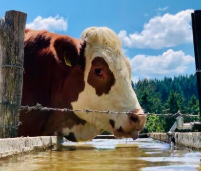
Article IX: Cattle shall have the right to clean water and tight fences to prevent having to intermingle with the neighbor’s inferior mongrels.

Article VIII: Bovines shall have the right to be transported in a well ventilated trailer free from any off-putting fragrance from leftover swine or sheep dung. They have the right to be transported to their new destination as quickly as possible without speed governors or being stopped by over-zealous highway patrolman or delayed by over-eager scale masters.

Article VII: At a branding and periodically through the year cattle have the right to be injected with pricey pharmaceuticals to keep them healthy and alive. Bovines also have the right to be branded so that after blizzards, floods or fires they can be sorted and returned home. They also have the right to wear ear tags to ward off flies and to provide additional information such as their sire. Cattle shall have the option to wear electronic ear tags but only if their caretaker deems them necessary.

Article VI: During a three day snow storm cattle have the right to be kept alive by ranchers wearing five layers of clothing and with icicles hanging from their mustaches bringing them life-giving hay in the blinding snow.

Article V: Cattle have the right to a painless death, free from worry about ignorant politicians and urban bureaucrats turning wolves and grizzly bears loose in cattle country to devour their calves and rip them apart limb by limb. Unlike humans who may suffer through chronic pain or depression and end up in old geezer rest homes and concentration camps for dementia patients, market-ready cattle also have the right to a painless death, something their human caregivers will never get to experience.

Article IV: Cows shall have the right to sex and to be bred by the best bulls the rancher can afford. The rancher shall do everything in his or her power to provide bulls that are worthy of their cows. Cows and heifers shall also have the right to raise their offspring without any interference from deadbeat dads.

Article III: Cows shall also have the right to be aided in a difficult birth even if it means acquiring the expensive services of a qualified veterinarian to perform a Caesarean section.

Article II: Orphan calves shall have the right to be warmed up in a bathtub full of hot water and then laid on the carper in front of a fire in the fireplace. They shall also have the right to be bottle fed every four hours around the clock. When older they have the right to be joined by their fellow orphaned calves at a calf ranch and bottle fed twice a day and supplemented with grain and roughage without having to worry about wolves or where their next meal will come from.

Article I: Bovines have the right to be cooked and eaten by humans providing people with the necessary ingredients required for life. This time honored meat-eating custom by people goes back three million years and makes it possible for humans to continue the practice of raising cattle, thereby giving the bovines a wonderful life they probably wouldn’t have had otherwise.