Tuesday, March 31, 2026
Home Blog Page 24

A Kansas wildfire caused several towns to evacuate and impacted air quality across the state

0
Western Kansas was scorched by wildfires spread out over several counties. While local and state fire agencies contain them, ranchers and small towns move to recovering.

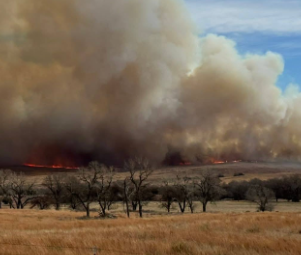
LIBERAL, Kansas — Wildfire season is in full swing, with several fires ripping through parts of western Kansas this week.

The most damaging fires started in the Oklahoma panhandle and then moved north into Kansas. While most of the fires are now in control, it leaves the towns, ranchers and firefighters on high alert.

“It got real close by about two miles. It was just south of us,” said Bill Shaw, a feedyard owner near Ashland, Kansas.

It was the first major fire of the season. The dry vegetation and heavy winds makes wildfires more common this time of year.

The fires spread rapidly thanks to 60 mph wind gusts that helped it move along, threatening multiple towns stretching across several counties from Stevens to Harper.

The southwest Kansas towns of Englewood and Ashland had to evacuate as the miles-wide “Ranger Road” fire spread toward them. Residents in the northwest Kansas town of Herndon also had to evacuate.

An Oklahoma town, Tyrone, had to evacuate to Liberal, Kansas, in Seward County, where the county’s fire department was actively trying to contain multiple fires.

Shaw’s feedlot sits between Englewood and Ashland, but avoided any direct damage. He’s now trying to help neighboring cattle ranchers who weren’t as lucky.

“People are donating hay, and we’re trying to get cattle rounded up, the ones that are alive, and make sure they have feed and water,” Shaw said.

Most of the wildfires burned rangeland used for cattle, and some lost cattle and calves. And for cattle ranchers, dead cattle are costly because of high beef prices.

“Cattle are worth a lot of money right now,” Shaw said. “You could be looking at up to $3,000 per head of cattle right now.”

Shaw said the Ashland Community Foundation was organizing donations and cattle feed.

The fire across Stevens and Seward County is almost 100% contained according to the Kansas Forest Service.

Bill Waln, the State Fire Management Officer, said the fire in Clarke and Comanche Counties was still burning as of Thursday morning.

Waln estimates over 230,000 acres have burned in that fire. The Kansas Forest Service has assisted the rural counties to contain some of the burns.

According to the National Fire Protection Association, most rural counties are served by volunteer fire protection. Waln said that the number of volunteers has decreased over the last 25 years.

“The guys are tired. They have been fighting these fires for 24 to 48 hours nonstop. That’s the benefit of us bringing outside sources to help them out and give those guys a break,” Waln said.

Waln said the collaboration between the Oklahoma Forestry Service and the Kansas Forest Service will end Friday. His focus is shifting towards the increased fire danger in south central and southeast Kansas in the coming days.

He’s urging people to monitor their brush piles, avoid controlled burns and cut off any mechanical equipment that could drag along the road off of trucks or tractors and cause sparks.

“We know the vast majority of wildfires in Kansas are caused by human activity,” Waln said. “Anything we can do as individuals to prevent a fire, that just takes so much stress off of our local fire departments and our first responders.”

Calen Moore covers western Kansas for High Plains Public Radio and the Kansas News Service. You can email him at [email protected].

How to incorporate native plants in the

0

Restoring biodiversity in a home garden or any area can be done by incorporating native plants, said Kansas State University horticulture expert Matt McKernan.

“Native plants promote biodiversity by providing food and housing for wildlife that are indigenous to the area,” McKernan said. “At the same time native plants can also limit the amount of maintenance needed in our garden, creating a win-win scenario.”

Native plants are adapted to a specific area, according to McKernan. A native landscape has balance between the animals and plants, enabling them to co-exist. Once established, native plants often require less supplemental water, fertilizer, pest management and overall maintenance than non-natives.

“Less human interference equals greater biodiversity,” McKernan said. “Native habitats are beneficial as a food source for wildlife.”

Some species of wildlife are non-specific in the types of plants they prefer, while others require certain types of plants.

“Incorporating a variety of native plants will encourage more diversity of wildlife to your landscape,” McKernan said.

Native plants to consider for a landscape include Bee Balm, Witch Hazel, False Indigo and Serviceberry.

“Bee balm grows 2-3 feet tall and wide,” McKernan said. “The tubular-shaped pink and purple blooms appear in June through August attracting bees, hummingbirds and butterflies.” The leaves have also been used for herbal teas.

Witch Hazel grows best in the fall and winter, blooming yellow flowers that are great for feeding bees at a time when most other plants are dormant, McKernan added.

“This large shrub can reach 15-20 feet and prefers a moist, shaded location,” he said.

False indigo is a perennial that reaches more than three feet in height and width.

“It prefers full sun and is a nitrogen fixer. The lovely summer blooms are inviting to butterflies and bees,” McKernan said.

Serviceberry is native to eastern Kansas and produces fruit that resembles the taste of blueberries in mid-summer.

McKernan suggests the following tips when adding native plants to a garden:

  • Choose plants that naturally grow in the habitats available in your landscape, considering shade, wind, slope, and more.
  • Use the local native plant organizations for region-specific advice.
  • Purchase native plants locally from a reputable source.
  • Manage the native landscape with as little interference as possible, including no fertilizer or herbicides.

“There is no need to remove exotic or alien plants from the landscape unless they are problematic to the goals of the area,” McKernan said. “There is certainly room for introduced plants that bring you joy alongside regional natives.”

McKernan and his colleagues in K-State’s Department of Horticulture and Natural Resources produce a weekly Horticulture Newsletter with tips for maintaining home landscapes and gardens.

Interested persons can subscribe to the newsletter, as well as send their garden and yard-related questions to [email protected], or contact your local K-State Extension office.

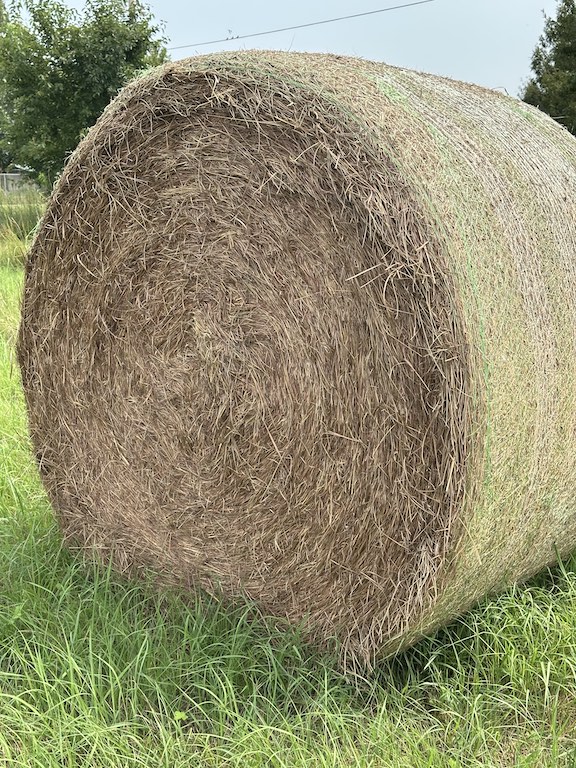
High quality hay after calving a must

0

Good cow nutrition is crucial following calving to get cows rebred. Let’s look at the reason for using our top tier hay after calves hit the ground.

Because cows experience a lot of stress after calving, they need good feed. Not only is the cow producing milk for her calf, she is also preparing her reproductive system to rebreed. As a result, nutrient demands are high. Energy requirements increase about 30% and protein needs nearly double after calving. Underfeeding reduces the amount of milk a cow provides her calf, and it can delay or even prevent rebreeding. If it gets cold, wet, or icy again, nutrient demands can sky-rocket.

If animals can get to them, winter grass, corn stalks, and other crop residues are low quality right now as these feeds have weathered and are well picked over. It is critical that the hay or silage you feed will provide the extra nutrients your cows need.

Because of this, not just any hay or silage will do. Your cow needs 10 to 12% crude protein and 60 to 65% total digestible nutrients in her total diet.  If she is grazing poor quality feeds or eating grass hay, your other forages and supplements must make up any deficiencies.

Make sure your forage has adequate nutrients; if you haven’t done so yet, get it tested now for protein and energy content. Compare this to the nutrient requirements of your cows. Then feed your cows a ration that will meet their requirements. Use supplements if needed. But don’t overfeed, either. That is wasteful and expensive.

Calving and the months after are a stressful time for cows. If we underfeed, it can delay rebreeding and slow down calf growth. Use your best quality forages with any needed supplements to provide adequate nutrition. By meeting nutrient requirements, your cows will milk well, rebreed on time and produce healthy calves year after year.

Ben Beckman is an Extension educator with the University of Nebraska-Lincoln.

Value-Added Producer Grants help producers grow their bottom line

0
Photo credit: thskyt

A U.S. Department of Agriculture (USDA) program is helping producers turn raw commodities into value-added products, allowing more of the income to remain in rural communities.

The Value-Added Producer Grant (VAPG) program, administered by USDA Rural Development, supports agricultural producers, as well as farmer and rancher cooperatives, that want to start or expand value-added activities. Producers can apply for up to $50,000 in planning grants or up to $200,000 in working capital grants. Applications are due April 22.

Funds can be used to pay for eligible post-harvest operational costs directly related to the processing and/or marketing of the product, such as turning fruit into jam, milk into cheese, or finishing and processing beef cattle for direct-to-consumer sale.

Kyle and Morgan Lammers, owners of KL Beef Co. near Hartington, Nebraska, used a VAPG award to strengthen their direct-to-customer beef business by improving shipping and investing in professional marketing. What started as a way to add income to their cattle operation has grown into a thriving business that connects customers directly to Nebraska-raised beef.

VAPG can help address a common challenge for small family operations: finding time and resources for anything beyond the daily work of the farm. Planning grants can be used for feasibility studies or business and marketing plans. Working capital grants can support processing, packaging, advertising, and certain inventory or staffing costs.

The goal is simple: generate new products, open new markets, and increase producer income, while keeping more value in rural communities.

For more information and application assistance, contact your local USDA Rural Development office. A list of office locations can be found at rd.usda.gov.

By Val Ankeny, senior policy associate, Center for Rural Affairs

# # #

Established in 1973, the Center for Rural Affairs is a private, nonprofit organization working to strengthen small businesses, family farms and ranches, and rural communities through action oriented programs addressing social, economic, and environmental issues.

Unsubscribe from our emails

Kansas Forest Service wildfire update

0

Fires across Kansas remained active overnight. Firefighters worked through the night and are making steady progress on many incidents today.

In coordination with the Kansas Division of Emergency Management and the Office of the State Fire Marshal, additional resources from across the state have deployed and are supporting local responders. With continued elevated fire weather statewide, more firefighters are available and strategically staged for rapid response.

Winds have decreased enough to allow aviation resources to assist where needed. Kansas is coordinating aircraft with Oklahoma Forestry Services on the Ranger Road Fire.

At this time, all evacuation notices have been rescinded. Evacuations, if needed, will be coordinated through local emergency management agencies. Please make sure you are signed up for your county’s emergency alert text notifications so you can receive timely updates.

Fires with State Resources Assigned:

Stevens Fire (Seward Co. Fire)

Burned from Texas County, OK, into Seward County, KS. Located southwest of Liberal. Forward progress is currently stopped, and crews continue working to extinguish hot spots.

Andrew Lane Fire (Seward Co. Fire #2)

Located southeast of Liberal and remains active. Aviation resources are assisting firefighters on the ground. The Johnson County Task Force and Kansas Forest Service DFMO Williams are coordinating closely with local departments.

Tennis Fire (Garden City Fire)

Good progress continues. Kansas Forest Service DFMO Brad Ilonummi is transitioning to assist with other fires in the area. A state task force remains integrated with local firefighters.

Ranger Road Fire (Started in Beaver Co., OK)

Remains active. Resources have shifted to address a flare-up in Meade County. Coordination continues between Oklahoma and Kansas state resources. Additional task forces and single resources are arriving today and will assist local agencies through the night.

Thank you to all firefighters and emergency responders working tirelessly to protect our communities. Please stay aware of conditions and avoid any outdoor activities that could spark a fire.