Wednesday, February 4, 2026
Home Blog Page 297

Pruning Trees and Shrubs

0

Woody plants are actively building up their storage of sugars as they approach leaf drop. Pruning in the fall limits this process and reduces the amount of energy the plants have available through dormancy. Also, pruning now may encourage woody stems to
send out new growth that will be more susceptible to freeze damage during winter.

With the exception of removing dead or diseased branches, it is best to save pruning until after winter. For shrubs that bloom in spring, pruning in the fall can reduce flowering. Spring-flowering shrubs, such as forsythia, lilac, flowering quince, almond, beautybush, deutzia, pyracantha, mock orange, cotoneaster, weigela, viburnum and witch hazel should be pruned after they bloom.

Summer-blooming shrubs, such as hydrangea, rose of Sharon, butterfly bush and crepe
myrtle, can be pruned in early spring because the blooms establish on new growth. With
a few exceptions, most deciduous trees respond best to late winter/early spring pruning.
Proper timing of pruning allows trees to go into dormancy healthy, without increased
stress from pruning.

Fall is a Good Time for Soil Testing

0

Soil tests are useful tools to evaluate the pH and nutrients in the soil. A separate soil
test is needed for each area of the landscape that will be planted. For example, soil
from the lawn should be tested separately from soil in the garden.

Steps for Taking a Soil Sample:
• Identify six to ten spots within the area to be tested.
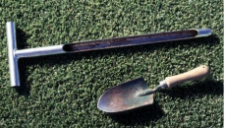
• Use a soil probe or shovel to collect soil 8-12 inches deep in each spot.
• Remove debris and combine all of the samples collected from this area in a bucket to
create a representative sample.
• Remove one pint of soil and place it in a container. A clean milk carton, resealable bag or similar container will work.
• Label the container with your name, address and information about what you
plan to grow in this area.

Your local agriculture or horticulture agent will either test the sample in the county soil
lab or send it to the K-State soil testing lab. Your agent will make recommendations
based on the results provided by the lab.

We recommend soil testing in the fall/winter before spring planting. This gives you time
to make plans for soil improvement and avoid delays from the soil test labs which tend
to be busier in spring.

Need help finding your Extension agent? Check out this map: https://www.ksre.kstate.edu/about/statewide-locations/

Clean up Iris Beds this Fall

0
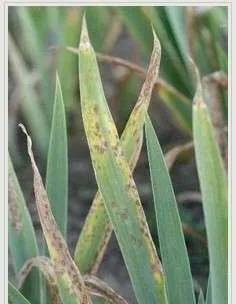
Photo courtesy: K-State Horticulture Newsletter

Removing debris from iris plantings is important to
help minimize problems. Iris borer eggs and iris leaf
spot survive in plant debris through the winter.

By removing debris from the garden, you are reducing
the spread of these problems the following growing
season.

Healthy iris leaves can be left intact; they do not
need to be cut back.

Coolest Thing Made In Kansas – 2024 People’s Choice Winner Announced

0

Wichita, KAN. – After six weeks of competition, the Kansas Manufacturing Council (KMC) on Wednesday announced the Atom Pop corn popper is the winner of the 2024 Coolest Thing Made In Kansas – People’s Choice .

“The KMC is excited to celebrate QuinCraft Production’s Atom Pop corn popper as the 2024 Coolest Thing Made in Kansas, said KMC Executive Director Brandie McPherson. “Thank you to everyone who nominated and voted for their favorite Kansas-made products. It once again has been a fun competition,”

McPherson said the KMC launched the Coolest Thing competition in 2020 to highlight the important role the manufacturing industry plays in the Kansas economy and as a way to promote the manufacturing industry and to raise awareness about the many cool products made in our state.

Presented by Forvis Mazars, the competition kicked off in August with 16 products in the bracket-style tournament. The products competed in two rounds of head-to-head match-ups with the product with the most votes moving to the next round. The final round put the final four Kansas-made products up against one another. The final four were:

  • Disc Tree Cutter by CVR Manufacturing, Galesburg.
  • Handy Hook Firefighter by Helten Panacea, LLC, Garden Plain.
  • Air Navigation Aid Systems by Indra Air Traffic, Inc., Overland Park.
  • Atom Pop Corn Popper by QuinCraft Production, Bushton.

Kansans cast nearly than 30,000 votes during the tournament and final round of voting.

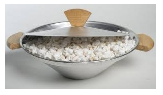
Manufactured in Bushton by QuinCraft Production, the Atom Pop is a stove top popcorn popper. It makes 2 1/2 quarts of popped corn.​​ The conical shape and aluminum bowl allow the popcorn to be popped without stirring or shaking.

Popped kernels are pushed up away from the heat and the aluminum dissipates the heat so the corn does not burn.​ It is as convenient as microwave popcorn and is healthier without the additives.

The winner of the 2024 Coolest Thing Made in Kansas – People’s Choice was announced during the KMC’s annual Kansas Manufacturing Summit held at the Hyatt Regency Hotel in Wichita.

There are nearly 2,500 manufacturers in Kansas, employing more than 160,000 people with an average annual compensation of $79,722. Manufacturing produces more than $26.7 billion in output annually, 15% of the total output in the state. Manufacturing helps drive the state’s economy with more than $9.93 billion in annual manufactured good exports to markets such as Canada, Mexico, and Japan.

Rural Kansas families invited to participate in virtual KU Medical Center study to promote healthy lifestyles

0
Rural Kansas families with elementary school-aged children have a free opportunity to get assistance adopting lifelong healthy habits via a new study led by the University of Kansas Medical Center.
Known as iAmHealthy Parents First, the study is the first randomized controlled trial in the world designed to examine the effectiveness of an integrated healthy lifestyle program for adults and children. It provides virtual coaching and education to parents and their elementary school children on nutrition, physical activity and behavioral skills for sustainable weight management.
“So many family health programs focus solely on children, but we know parents are tremendously influential role models,” said Christie Befort, Ph.D., professor of population health at KU School of Medicine and associate director of cancer prevention and control for The University of Kansas Cancer Center.
“By first equipping parents with skills for themselves and then transitioning to a family-based program, we aim to set the entire household up for success,” said Befort, who is co-principal investigator on the trial.
The program targets rural areas, which have higher rates of excess weight and more challenges in accessing healthy foods and physical activity programs than their urban counterparts and are thus at higher risk for cardiovascular disease, diabetes and various cancers. Investigators in the study have partnered with 16 school districts across the state to promote the program, including Ulysses USD 214; Girard USD 248; Renwick USD 267; Beloit USD 273; Nickerson/South Hutchinson USD 309; Onaga USD 322; Rock Creek USD 323; Phillipsburg USD 325; Jefferson West USD 340; South Gray Schools USD 371; Newton USD 373; Morris County USD 417; Skyline Schools USD 438; Rural Vista USD 481; Galena USD 499 and Oswego USD 504.
T
The nine-month program starts by offering parents healthy lifestyle education before involving children in joint sessions. All meetings are held virtually, making it accessible for busy rural families. Those who qualify and complete the program receive up to $225, plus two free fitness trackers and a smart scale to keep.
Mandy Fincham of Beloit recently completed the iAmHealthy Parents First program with her fifth-grade son, Wake. “The instructors were so supportive, and now having conversations about health is just part of our everyday life as a family,” she said.
To be eligible, families must have a parent who is interested in learning strategies for healthy nutrition and physical activity and a child of elementary-school age (from first through fifth grades) who. The parent and child also must have elevated weight status and commit to attending online meetings.
“Parents of young children have unique barriers during the phase of life when raising children and managing numerous activities are the primary driver of daily lifestyle routines,” said Befort. “But this phase of life is also a great opportunity to prioritize health lifestyles, rather than postponing that priority until the children are older. Preventing the onset of chronic disease for them and their children is the driving factor.”
Davis and Befort aim to enroll 300 rural Kansas families in the study. “Focusing on parents first provides a solid foundation for the whole family’s journey,” said Ann M. Davis, Ph.D., MPH, co-principal investigator for the study and director of the Center for Children’s Healthy Lifestyles & Nutrition at KU Medical Center and Children’s Mercy. “We’re excited to help more local families get on the path to better health.”
The study is funded by the National Institutes of Health. Enrollment is open now for the Fall 2024 program. Visit www.iAmHealthyParentsFirst.org or call/text (833) 544-7433 to learn more.
Anyone interested in signing up to participate in the iAmHealthy Parents First study should contact the study team by calling 913-588-2040, texting 833-544-7433 or sending an email to iAmHealthyParentsFirst@kumc.edu.
Photo: Mandy Fincham and her son, Wake, from Beloit, Kansas.