Tuesday, February 10, 2026
Home Blog Page 389

Danger near the bird feeder? K-State wildlife expert urges caution

0

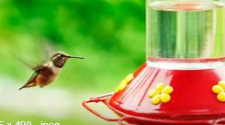
Bird feeders are a great way to enjoy nature without leaving your front porch, and many homeowners understand the joys of seeing multiple bird species frequent the feeders.

But Kansas State University wildlife specialist Drew Ricketts said bird feeders also can attract predators and other wildlife into your yard.

For example, racoons are seven times more likely to enter the yard and deer are two times more likely if you have a bird feeder.

“Carnivores, such as coyotes and red foxes and those sorts of critters, are at least one and a half times more likely to be in yards with bird feeders,” Ricketts said.

“Folks often times are inadvertently attracting critters to the yard, and that can cause problems that don’t have anything to do with the bird feeder. One of the things that I would suggest to those folks is to think about how they might be contributing to that situation by having food available in the yard.” Ricketts said.

At least once a year, Ricketts said he gets a call from people who are wanting to know how to get rid of a hawk that is hanging around their yard, preying on birds. He said there is nothing you can do because an increase in a prey species often leads to an increase in a predator species.

“Feeding birds is something people do for themselves and it might have unintended negative consequences.” Ricketts said.

According to Ricketts, bird feeders allow such predators as domesticated cats and hawks, to take advantage of the condensed hunting grounds around the feeder.

Even though we worry that birds are hungry during the winter, feeding birds may also have unintended consequences for the birds that are eating it.

According to Ricketts, birds don’t need to be fed in the winter. A study that looked at birds’ reproductive performance showed that birds being fed in the winter time hatched chicks that weighed less and had a lower survival rate than birds that did not have access to feeders.

Ricketts said concentrating birds in one area around a feeder can also be a hot spot for parasites and diseases. Two examples from scientific studies show an increase in diseases like avian pox and infections of lice and mites.

For those who want to keep birds coming around, Ricketts suggests washing bird feeders thoroughly every 24 hours with 10% bleach, and rinsing them well to remove the bleach odor.

More information on managing common wildlife animals in Kansas is available online from K-State Research and Extension.
Look for Bagworms NOW!

0

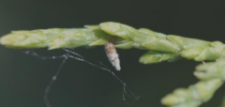
Bagworms are showing up. Though right now they are small and hard to see they are also
much easier to control. Bagworms overwinter as eggs inside the dead female’s bag. Larvae hatch and emerge from the bags mid to late-May in Kansas. The young larvae begin feeding on their host plants right away. It’s recommended to wait to spray for bagworms until mid-June to ensure most of the eggs have hatched.

Young bagworms look just like the adult version only much smaller. If you see empty
bags on your trees/shrubs, that is evidence of bagworms from the previous year and
there are likely young bagworms on the plant this year as well.

Insecticides commonly used for controlling bagworms include:

• Acephate (Orthene) Permethrin (38 Plus Turf, Termite & Ornamental Insect
Spray; Eight Vegetable, Fruit & Flower Concentrate; Garden and Farm Insect
Control)

• Bifenthrin (Bug Blaster II, Bug-B-Gon Max Lawn and Garden Insect Killer)

• Lambda-cyhalothrin (Spectracide Triazicide, Bonide Caterpillar Killer)

• Spinosad (Conserve; Natural Guard Spinosad; and Captain Jack’s Dead Bug
Brew). Spinosad is a very effective organic control for bagworms.

Thorough coverage of the plant material is essential for good control of bagworms
regardless of which product you choose.

Fertilizing Tomatoes

0

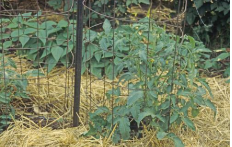
Too much nitrogen for tomato plants may result in
vigorous plant growth without much fruit. Plants
should be side-dressed with nitrogen three times
during the growing season.

The first application should be applied one to two
weeks prior to fruit ripening. Two weeks after
ripening, it’s time for the second application.

The third round of fertilizer should be applied one month after
the second. Basically, there should be one month of time between each application.

Common sources of nitrogen-only fertilizers include nitrate of soda, urea and
ammonium sulfate. Blood meal contains primarily nitrogen but has other elements as
well.

Apply one of the following fertilizers at the rate provided:
• Nitrate of soda (16-0-0): 2/3-pound (1.5 cups) fertilizer per 30 feet of row
• Blood meal (12-1.5-.6): 14 ounces (1.75 cups) fertilizer per 30 feet of row
• Urea (46-0-0): 4 ounces (1/2 cup) fertilizer per 30 feet of row
• Ammonium Sulfate (21-0-0): 0.5 pounds (1 cup) fertilizer per 30 feet of row

Alternatively, lawn fertilizer, free of weed killer/preventer, can be used at a rate of 1/3
pound (3/4 cup) fertilizer per 30 feet of row. Choose a fertilizer that is about 30%
nitrogen (the first number in the set of three).

Brown Patch on Tall Fescue

0

As summer weather sets, we are experiencing warmer nights and more humidity. These
conditions extend the amount of time grass blades stay wet making the lawn more
susceptible to the disease, brown patch.

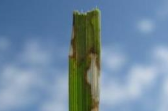
Brown patch is primarily a leaf pathogen, but with a severe
outbreak, the fungus can spread down into the crown and
cause plant death. However, depending on the weather,
typically the turfgrass recovers within two to three weeks.

Symptoms can be similar to those of drought, but look closer
at the grass plants around the edge of the symptomatic
area. If you notice tan spots with a dark halo similar to the
photo here you likely have brown patch.

Brown patch persists in the soil. It cannot be eliminated from a lawn, but is also not
carried from one lawn to another. You can, however, provide proper care to reduce your
lawn’s susceptibility to brown patch.

• Water in the early morning rather than the
evening and only as needed. This decreases the
number of hours the grass blades stay wet.

• Fertilize according to recommendations for your
lawn. Don’t fertilize when brown patch is active.

• When seeding, follow recommended rates.

• Grass growing beneath trees does not dry as
quickly. Use a mulch ring around trees so grass
isn’t growing beneath the canopy.

Fungicides can be effective to prevent brown patch though the most commonly used
products are expensive and typically only available in large quantities. Preventative
fungicides are recommended if you want a blemish-free lawn, beginning in mid-June
through August, but this does get expensive


Early June peas: A culinary delight from the garden

0

No other vegetable is as closely associated with a month of the year as is garden pea, and few things match the gastronomic appeal of fresh peas from the garden. The term “early June peas” often appears on labels to indicate they are young and still have a high sugar content, said University of Missouri Extension horticulturist David Trinklein. Peas are sweetest when they mature in cool weather, before too much of the sugar they contain converts into starch.

For the same reason, peas that mature in cool weather are tastier than those harvested after temperatures rise, so this cool-season vegetable needs to be planted early, Trinklein said.

“A problem in Missouri is we can quickly go from cool spring temperatures to warm summer weather in seemingly a matter of days,” he said. “Therefore, once the soil warms, the earlier peas are planted in the spring the better.”

People have cultivated peas for more than 5,000 years. In ancient times, peas were allowed to mature and were harvested as dry peas. Dry peas were cooked in water to form a soup or porridge. The English nursery rhyme “Pease Porridge Hot” refers to this custom.

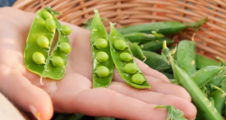
Today, the term pea refers to Pisum sativum, or garden pea, which is eaten when green and immature. Snap pea and sugar (snow) pea represent biotypes of the species whose entire pod can be consumed when harvested at an early stage of maturity.

Garden peas tolerate light frosts and can germinate in relatively cool soils. Peas prefer a well-drained garden loam with a pH between 6.0 and 6.5. Sow seeds directly in the soil about an inch deep and 2 inches apart in rows spaced 18-24 inches apart.

Fertilizer application should be based on soil tests. Apply before planting seeds. Like other legumes, peas (with the aid of symbiotic bacteria) can fix atmospheric nitrogen. However, if plants appear light green or yellow after pods begin to set, apply a side dressing of nitrogen. Peas prefer soil that is uniformly moist but not wet.

Several varieties of garden pea do well in Missouri, said Trinklein. Popular choices include Spring (57 days to harvest, 22 inches tall), Sparkle (60 days, 18 inches tall), Little Marvel (63 days, 18 inches tall), Lincoln (67 days, 30 inches tall), Green Arrow (68 days, 28 inches tall), Bolero (69 days, 28 inches tall) and Wando (70 days, 30 inches tall).

Taller varieties need 3 feet between rows and some method of trellising or support. Dwarf varieties can be sown closer together and normally do not need to be trellised.

Peas are relatively pest-free, but aphids, leafhoppers and seed corn maggots can cause problems, said Trinklein. Diseases that can be troublesome include fusarium wilt, powdery mildew, root rot and seed rot. Powdery mildew can be especially troublesome in poorly drained soil or during wet springs. Rotating planting location in the garden from year to year helps in managing diseases of peas.

Depending on cultivar, planting date and seasonal temperatures, peas usually are ready for harvest about the middle of June, said Trinklein. Harvest normally lasts about two weeks. Timing the harvest is critical for top eating quality. Pick the pods as soon as they have swollen (appear round). Peas allowed to mature on the plant too long tend to convert sugars to starch, making them less sweet.

Peas often get a bad rap for being somewhat high in calories because of their sugar and starch content. However, those calories do come with fringe benefits. One-half cup of cooked peas contains 67 calories, 2.4 grams dietary fiber, 4.3 grams protein, 12.5 grams carbohydrates, 478 IU vitamin A, 11.4 mg vitamin C, 50.7 micrograms folic acid, 1.2 mg iron, 217 mg potassium and 31 mg magnesium.

For those whose appetite for fresh peas was not satiated by the spring crop, you can plant again in late summer for fall peas, which mature during cooler weather and usually are exceptionally tasty.