Tuesday, February 10, 2026
Home Blog Page 390

Fertilizing Tomatoes

0

Too much nitrogen for tomato plants may result in
vigorous plant growth without much fruit. Plants
should be side-dressed with nitrogen three times
during the growing season.

The first application should be applied one to two
weeks prior to fruit ripening. Two weeks after
ripening, it’s time for the second application.

The third round of fertilizer should be applied one month after
the second. Basically, there should be one month of time between each application.

Common sources of nitrogen-only fertilizers include nitrate of soda, urea and
ammonium sulfate. Blood meal contains primarily nitrogen but has other elements as
well.

Apply one of the following fertilizers at the rate provided:
• Nitrate of soda (16-0-0): 2/3-pound (1.5 cups) fertilizer per 30 feet of row
• Blood meal (12-1.5-.6): 14 ounces (1.75 cups) fertilizer per 30 feet of row
• Urea (46-0-0): 4 ounces (1/2 cup) fertilizer per 30 feet of row
• Ammonium Sulfate (21-0-0): 0.5 pounds (1 cup) fertilizer per 30 feet of row

Alternatively, lawn fertilizer, free of weed killer/preventer, can be used at a rate of 1/3
pound (3/4 cup) fertilizer per 30 feet of row. Choose a fertilizer that is about 30%
nitrogen (the first number in the set of three).

Brown Patch on Tall Fescue

0

As summer weather sets, we are experiencing warmer nights and more humidity. These
conditions extend the amount of time grass blades stay wet making the lawn more
susceptible to the disease, brown patch.

Brown patch is primarily a leaf pathogen, but with a severe
outbreak, the fungus can spread down into the crown and
cause plant death. However, depending on the weather,
typically the turfgrass recovers within two to three weeks.

Symptoms can be similar to those of drought, but look closer
at the grass plants around the edge of the symptomatic
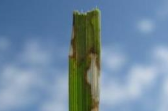
area. If you notice tan spots with a dark halo similar to the
photo here you likely have brown patch.

Brown patch persists in the soil. It cannot be eliminated from a lawn, but is also not
carried from one lawn to another. You can, however, provide proper care to reduce your
lawn’s susceptibility to brown patch.

• Water in the early morning rather than the
evening and only as needed. This decreases the
number of hours the grass blades stay wet.

• Fertilize according to recommendations for your
lawn. Don’t fertilize when brown patch is active.

• When seeding, follow recommended rates.

• Grass growing beneath trees does not dry as
quickly. Use a mulch ring around trees so grass
isn’t growing beneath the canopy.

Fungicides can be effective to prevent brown patch though the most commonly used
products are expensive and typically only available in large quantities. Preventative
fungicides are recommended if you want a blemish-free lawn, beginning in mid-June
through August, but this does get expensive


Early June peas: A culinary delight from the garden

0

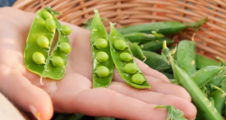
No other vegetable is as closely associated with a month of the year as is garden pea, and few things match the gastronomic appeal of fresh peas from the garden. The term “early June peas” often appears on labels to indicate they are young and still have a high sugar content, said University of Missouri Extension horticulturist David Trinklein. Peas are sweetest when they mature in cool weather, before too much of the sugar they contain converts into starch.

For the same reason, peas that mature in cool weather are tastier than those harvested after temperatures rise, so this cool-season vegetable needs to be planted early, Trinklein said.

“A problem in Missouri is we can quickly go from cool spring temperatures to warm summer weather in seemingly a matter of days,” he said. “Therefore, once the soil warms, the earlier peas are planted in the spring the better.”

People have cultivated peas for more than 5,000 years. In ancient times, peas were allowed to mature and were harvested as dry peas. Dry peas were cooked in water to form a soup or porridge. The English nursery rhyme “Pease Porridge Hot” refers to this custom.

Today, the term pea refers to Pisum sativum, or garden pea, which is eaten when green and immature. Snap pea and sugar (snow) pea represent biotypes of the species whose entire pod can be consumed when harvested at an early stage of maturity.

Garden peas tolerate light frosts and can germinate in relatively cool soils. Peas prefer a well-drained garden loam with a pH between 6.0 and 6.5. Sow seeds directly in the soil about an inch deep and 2 inches apart in rows spaced 18-24 inches apart.

Fertilizer application should be based on soil tests. Apply before planting seeds. Like other legumes, peas (with the aid of symbiotic bacteria) can fix atmospheric nitrogen. However, if plants appear light green or yellow after pods begin to set, apply a side dressing of nitrogen. Peas prefer soil that is uniformly moist but not wet.

Several varieties of garden pea do well in Missouri, said Trinklein. Popular choices include Spring (57 days to harvest, 22 inches tall), Sparkle (60 days, 18 inches tall), Little Marvel (63 days, 18 inches tall), Lincoln (67 days, 30 inches tall), Green Arrow (68 days, 28 inches tall), Bolero (69 days, 28 inches tall) and Wando (70 days, 30 inches tall).

Taller varieties need 3 feet between rows and some method of trellising or support. Dwarf varieties can be sown closer together and normally do not need to be trellised.

Peas are relatively pest-free, but aphids, leafhoppers and seed corn maggots can cause problems, said Trinklein. Diseases that can be troublesome include fusarium wilt, powdery mildew, root rot and seed rot. Powdery mildew can be especially troublesome in poorly drained soil or during wet springs. Rotating planting location in the garden from year to year helps in managing diseases of peas.

Depending on cultivar, planting date and seasonal temperatures, peas usually are ready for harvest about the middle of June, said Trinklein. Harvest normally lasts about two weeks. Timing the harvest is critical for top eating quality. Pick the pods as soon as they have swollen (appear round). Peas allowed to mature on the plant too long tend to convert sugars to starch, making them less sweet.

Peas often get a bad rap for being somewhat high in calories because of their sugar and starch content. However, those calories do come with fringe benefits. One-half cup of cooked peas contains 67 calories, 2.4 grams dietary fiber, 4.3 grams protein, 12.5 grams carbohydrates, 478 IU vitamin A, 11.4 mg vitamin C, 50.7 micrograms folic acid, 1.2 mg iron, 217 mg potassium and 31 mg magnesium.

For those whose appetite for fresh peas was not satiated by the spring crop, you can plant again in late summer for fall peas, which mature during cooler weather and usually are exceptionally tasty.

Making jelly? The pectin you use makes a difference

0

K-State food scientist says acid content may determine whether product gels properly.

Experienced jelly-makers will tell you one enduring fact: All pectin is not created equal.

The two types of pectin – liquid and dry – are safe for most people. Which one home cooks use, says Kansas State University food scientist Karen Blakeslee, depends on the recipe they’re following.

“Jam and jelly recipes will tell you which pectin to use,” said Blakeslee, who is coordinator of K-State’s Rapid Response Center for Food Science. “Both have equal success when ingredients are measured properly and you follow the recipe’s instructions.”

Pectins are a group of pectic polysaccharides, or long-chain carbohydrate molecules, and are key to helping jams and jellies to gel. Blakeslee said some fruits do not need added pectin, while others do. Liquid and dry pectin are not interchangeable in recipes.

“Dry pectin is usually made from citrus fruit; liquid pectin is made from apples,” Blakeslee said. “Those products have different natural pH values, or acid content.”

Citrus has a natural pH value of 2-3. Apples have a natural pH of 3-4.

“Pectin also has other types of acid added,” Blakeslee said. “So, this can affect the gelling properties of the jam or jelly if the balance between the acid, sugar, fruit and pectin is incorrect. Some recipes recommend adding extra lemon juice to help balance the mixture and improve gelling properties.”

Before using pectin to make jam or jelly, “pay attention to the (use-by) date on the package for best results,” Blakeslee said. “Old pectin can cause weak gel formation, resulting in a syrupy product. Powdered pectin can be stored in the freezer to extend its shelf life.”

To make jam or jelly with low- or no-sugar, Blakeslee urges home cooks to be sure to use the pectin and recipes designated for those products. This pectin is formulated to create a gel with a lower amount of sugar. Some artificial sweeteners, such as sucralose, can be used with this type of pectin. Do not lower the sugar content when using regular commercial pectin.

If jam or jelly doesn’t gel properly after canning, Blakeslee said it is still possible to re-make the product, depending on the type of pectin used. More information on doing this is available online from the National Center for Home Preservation.

But if the product still won’t gel, Blakeslee says, all is not lost: “Simply use it as a syrup for pancakes, waffles or ice cream,” she said.

Blakeslee publishes a monthly newsletter called You Asked It! that provides numerous tips on being safe and healthy. More information is also available from local extension offices in Kansas.

It’s almost canning season: Have you thought about chocolate?

0

K-State food scientist outlines safety considerations for preserving chocolate sauces.

Chocolate sauce is not the first product home cooks think of when they are canning summer foods.

And yet, what a delicious idea, says Kansas State University food scientist Karen Blakeslee.

“Chocolate sauce is a great homemade product to give as a gift, especially for the holidays,” said Blakeslee, who is also coordinator of K-State’s Rapid Response Center for Food Science. “It’s a fun option to make instead of traditional canned foods.”

Blakeslee seems to have no problem listing the many uses of canned chocolate sauce, including toppings for such simple desserts as ice cream, cheesecake and strawberries; or dressing up a plate with a drizzle of chocolate before serving a piece of cake or pie.

However, she cautions that canning chocolate sauce safely comes with some food safety risks.

“Chocolate sauces are low acid foods, which could be a risk for botulism food poisoning,” Blakeslee said. “There are no chocolate sauce recipes that have been tested for pressure canning.”

There are also very few recipes that have been tested to be water bath canned, she said. Those that are used often contain fruit or bottled lemon juice to raise the overall acidity of the canned product.

“These also contain unsweetened cocoa powder, which has a red-brown color,” Blakeslee said. “Recipes that list cocoa powder as an ingredient use unsweetened cocoa powder.”

She advised home canners against using Dutch-process or alkalized unsweetened cocoa powder because those products lower the overall acidity, leading to an unsafe product. Never substitute hot chocolate or cocoa mixes, chocolate syrups or chocolate bars.

A safe alternative to canning chocolate sauce is freezing, according to Blakeslee. The National Center for Home Preservation provides guidelines online for a freezer chocolate fudge sauce.

“Do not can any chocolate sauce recipes that contain dairy products,” Blakeslee said. “There are no safe methods or recipes to can any dairy products. These types of chocolate sauces are best stored in the refrigerator or freezer.”

Blakeslee publishes a monthly newsletter called You Asked It! that provides numerous tips on being safe and healthy. More information is also available from local extension offices in Kansas.