Saturday, February 14, 2026
Home Blog Page 428

Morris County 4-H Foundation Plans Banquet Meeting

0

Annual meeting and recognition banquet of the Morris County 4-H Foundation are planned Friday evening, April 26, according to Valerie Woodall, president.

At the Council Grove/Dunlap Methodist Church in Council Grove, a meal catered by the United Methodist Women is to begin at 6:30 p.m.

The program features presentations by Morris County 4-H club members who received top placings at the recent 4-H Club Day competitions.

Supporters of the Morris County 4-H Foundation are to be recognized for contributions to project work of county 4-H club members and county 4-H scholarships.

Trustees for the Morris County 4-H Foundation will be elected to three-year terms during the annual business session.

In addition to Woodall, other trustees serving on the board now are Rocky Beck, Frank Buchman, Clay Dalquest, Larry Landgren, Mason Lee, and Cynthia Schrader.

Banquet reservations are required and must be made to Cynthia Schrader, 785-499-2923, [email protected].

-30-

What’s In Your Pockets?

0
lee pitts

You can tell a lot about people by what’s in their pockets. You might find a horseshoe nail in a farrier’s pocket, a pipe that doesn’t smell like tobacco in a doper’s, a duck call in a hunter’s vest, throwing rocks in a juvenile delinquent’s and an assortment of buckles, snaps and latigo in the apron pocket of a saddle maker. The back-pocket-wallet of a Hell’s Angel will be hooked with a chain but it’s the plethora of unmarked thousand dollar bills in the pockets of a Congressman that ought to be more securely tied down. Easy come, easy go.

When I was flying all over the country my favorite way to pass the time was to sit next to the X ray machine where TSA employees asked flyers to empty their pockets. In small town airports like Redding and Redmond I took a seat on the other side of a glass wall and observed. It was like looking through people’s trash, only legal.

It would make a great TV show. Host Samuel L. Jackson would ask contestants, “What’s in your pockets?” And then a celebrity panel would then guess what they did for a living.

Ranchers were always easy to identify by the alfalfa leaves and stems that fell out of their pockets onto the conveyor belt. In the front pocket of their long sleeved shirt you’d find a file of auction market cards chronicling their livestock purchases dating back 17 years. There’d also be a stub pencil, tally book, reading glasses in a soft case, scraps of paper, toothpick, a four year old speeding ticket, Maalox or Tums, a blue scour bolus and nary a sign of coin or cash. All their liquid assets were tied up in cows. Surprisingly I rarely saw a rancher pull out a comb, probably because most ranchers, if they had any experience at all, had lost most of their hair.

It was easy to tell the ranchers from the cowboys because of what was NOT in the cowboy’s pockets. There’d be no keys because you don’t need a key to start a horse, they rarely owned a home and cowboys usually don’t need a key to access their gold, cash, or will in their safe deposit box because they don’t have any of those things. The only thing they owned that would set off the alarms would be a can of Copenhagen, a pair of wire cutters on their belt and a trophy buckle they won at a ranch rodeo for cow mugging. You’d also find a thick stack of lottery tickets which is the only way a cowboy is gonna get rich and buy his own spread.

I was always amazed at what people no longer carried. As a teenager I always had at least two necessities in the pockets of my jeans: a pocket watch with my name engraved on the back and a three-bladed Case knife, both of which were rights of passage when I was young. When the day came you bought your first knife you became a man. Now days, if you flash either of those things in an airport you’ll be body slammed to the ground by security cops and arrested for being a terrorist. They’d think your knife was a weapon and your pocket watch was some sort of timing device, which it really was. Fewer and fewer people carry or wear watches these days because they get the time, and everything else, from their smart phones.

If you observe a modern young person you’ll see they have more pockets than ever and their backpacks runneth over. In many respects they are like turtles in that they carry everything they own with them.

Besides watches and knives, another product category that must have taken a beating with the rise of smart phones is Cross pens. They used to be handed out by corporations to good customers or employees marking 30 years of service. Many a graduate was honored to receive a Cross matching gold filled pen and pencil set. Not any more though as cell phones, I Pads and laptops have rendered pens, pencils, and notepads redundant pieces of ancient technology. Although I’d like to see the technology buffs try to cut a steak at a bull sale barbecue with their smartphone, or castrate a bull calf with an I Pad.

Pathways to a Healthy Kansas, a Blue Cross and Blue Shield of Kansas initiative, grants $25,000 to the Reno County Farmers’ Market

0

The Reno County Producers Market, commonly referred to as the Reno County Farmers’ Market, received a check for $25,000 as part of the Pathways to a Healthy Kansas (Pathways) grant, a Blue Cross and Blue Shield of Kansas (BCBSKS) initiativeParticipating in the check presentation event were Pam Paulsen, K-State Research and Extension Reno County Horticulture Agent, left, Claudio Faundez, Group Sales Advisor, BCBSKS, Sparkle Faidley, Reno County Farmers’ Market Board of Directors President, Patrick Romm, Professional Relations, BCBSKS, and Candace Davidson, Reno County Health Department and Heal Reno County.

The Reno County Farmers’ Market signed a Memorandum of Understanding with K-State Research and Extension Reno County (KSRE) and Heal Reno County to expand the operations of the Farmers’ Market to provide greater access to affordable fresh and locally grown produce to the residents of Reno County.

The Reno County Farmers’ Market was created in April of 1985 with the mission to provide a place where producers of fresh produce, baked goods, meat products, art and other handmade products could sell directly to consumers. The Reno County Farmers’ Market operates in a city-owned structure located at the southwest corner of Second Avenue and Washington Street. The Reno County Farmers’ Market operates Saturday mornings between 7:30 am and 12:30 pm from early May through the last Saturday in October and Wednesdays between 10 am and 1 pm from June through the last Wednesday in October.

The funds received from the Pathways grant will be used by the Reno County Farmers’ Market towards the operational and expansion costs to support the ability to accept these programs: Supplemental Nutrition Assistance Program-Electronic Benefit Transfer (SNAP-EBT), Double Up Food Bucks (DUFB) and Seniors Farmers Market Nutrition Program (SFMNP) benefits programs including the creation of a Market Ambassador position to help customers navigate those programs. Marketing and promotional events and outreach materials to promote the market especially to SNAP-EBT, DUFB and SFMNP recipients, low-income families, and underserved audiences. Adding family friendly entertainment and youth related activities to encourage residents with children to shop at the market. Educational materials and demonstrations to provide information on the selection, preparation and preservation of fresh fruits and vegetables from the market. Training new fresh fruit and vegetable vendors to increase their number at the market and development of a public survey to determine why residents are not shopping at the market and what measures can be taken to encourage more residents to do so.

Pathways to a Healthy Kansas is a community grant initiative launched by BCBSKS in 2016. It partners with community coalitions like Heal Reno County to improve active living, healthy eating, and commercial tobacco prevention across the state.

Feral hog toxicant approved in Texas and Oklahoma

0

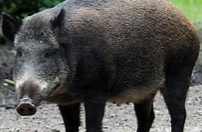
Feral hogs remain a plague to areas of Oklahoma and Texas and as their populations build, they continue to damage crops and spread disease to livestock. The removal methods such as traps and hunting are time-consuming and barely make a dent in a problem that is out of control. However, two Southern Plains states have approved a new method for feral hog removal that could be a step toward controlling wild hog populations.

Texas approved the use of Kaput Feral Hog Bait in February and it is now registered for use by licensed pesticide applicators for controlling feral hogs. Texas has a particularly large population of feral hogs and these invasive species have been found in nearly every county in the Lone Star State. U.S. Department of Agriculture indicates there is more than $200 million in damages in Texas each year to crop and livestock production due to feral pigs.

Oklahoma followed with their approval of the toxicant in April. The Oklahoma Cattlemen’s Association made an official request from the Oklahoma Department of Agriculture, Food and Forestry to accept the toxicant for use in feral hogs.

“Feral swine cause millions of dollars of damage to Oklahoma property through their destructive behaviors destroying range, pasture and hay lands,” the request stated. “OCA members share experiences of overnight loss of entire hay fields due the rooting behaviors of feral swine. Additionally, improved crops that could be used directly or harvested for forage are destroyed by feral swine.”

Kaput is a Warfarin-based anticoagulant, which stops blood clotting and leads to death. Unlike other toxicants, there is an antidote—Vitamin K1—for accidental poisoning of pets or wildl­ife. Kaput is designed to kill rats, mice, voles, moles, black-tailed prairie dogs, California ground squirrels, pocket gophers, fleas, ticks and feral hogs. Use of this rodenticide is expected to make more of an impact on the feral hog population than previous methods of removal.

Summer is coming: Remember your sunscreen

0

Summer is knocking on the door, which for many folks means picnics and swimming and gardening and other outdoor activities.

Summer also means sun. Lots and lots of sun.

Ashley Svaty, a family and consumer sciences specialist at K-State’s Northwest Research-Extension Center in Colby, said it’s “critically important that we think about protecting our skin’s health.”

“There is a statistic (from the American Academy of Dermatology) that it only takes one blistering sunburn during childhood or adolescence to nearly double a person’s chance of developing melanoma,” Svaty said. “So even when we’re younger, we have to be mindful of the sun’s rays, and as adults, we have to be role models and help protect those kids and babies.”

Researchers say that a little sun is good for the body and mind: 20 minutes of sunshine helps in producing vitamin D, supports bone health, relieves blood pressure and promotes good mental health.

But too much sun can lead to longer-term, negative health effects.

“We need to protect ourselves when outside,” Svaty said. “I understand if we work in a field, or those that have outdoor jobs. Seek shade as much as you can, but if you can’t find shade, wear a white brim hat and sunglasses to protect those eyes, and wear UPF (Ultraviolet Protection Factor) protective clothing.”

Another common term associated with sunscreen for the skin – SPF – stands for Sun Protection Factor. Sunscreens are sold with varying levels of SPF, but Svaty said the level that one buys – as long as it is 30 SPF or higher – is less important than routinely re-applying protection every two hours while outdoors.

“The big thing to remember is that you can get as high of an SPF as you want, but remembering to re-apply that every two hours is critically important,” Svaty said. “The majority of people don’t put enough sunscreen on the first time, and then they don’t re-apply later. SPF 30 or higher is fine, but remember to re-apply every two hours.”

Svaty noted a few extra things to keep in mind:

  • The type of sunscreen one uses – spray, lotion or other – doesn’t matter. It’s a personal preference.
  • Cover as much skin as possible when outside. SPF clothing is one good way to do this, while remaining comfortable.
  • Use sunscreen all year round. The sun’s reflection off snow in the winter can be equally damaging to skin.
  • Remember vulnerable spots when applying sunscreen, touch as top of head, tips of ears and back of neck.
  • Discard expired sunscreen and keep a fresh tube year-round.

More information on sun protection is available online from the American Academy of Dermatology and the American Cancer Society, or speak to a board certified dermatologist.