Thursday, February 19, 2026
Home Blog Page 500

Whimsical reminiscing

0
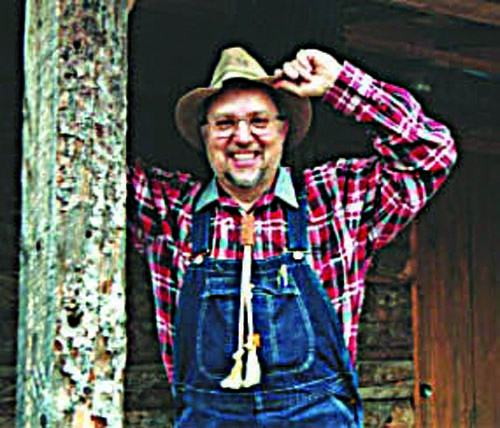
Thayne Cozart
Milo Yield


One of the obvious advantages of my living to an old age is that it provides me with a lot of life to look back on an reminisce about. And, at my age, I spend a good amount of time whimsically recalling happy events of my life.

Lately, I’ve been thinking about all the fun I had with my maternal grandmother, Ann. She wuz a fun-loving, outgoing, game-playing, creative, grandma who could pound a mean ragtime, honky-tonk piano — which she played by ear because she couldn’t read a note of music.

She knew by memory hundreds of songs. She wrote music and poetry, too. Perhaps that’s the genetic source of my penchant for wordsmithing. Grandma Ann traveled throughout the Midwest with a USO group entertaining military personnel at their home bases. She spent the latter years of her life living in Aldrich, Mo. She absolutely loved the Missouri Ozarks and wrote many-a-song and poem about the region and the people it.

I remember a portion of the words to one of her humorous songs about the Ozarks. She wrote it most likely during the 1960s. The title is: “Oh, For the Life in the Ozarks.”

Here is a portion of the words I can remember.


“Oh, for the life in the Ozarks

That’s where I want to be.

I’ll spend my life in the Ozarks,

‘Cause they’re like Heaven to me.


Folks cut enough wood in winter

To buy beans, tobacco and such.

They hunt and fish, whenever they wish,

And, their clothes don’t amount to much.

Their kids start smoking at the age of two,

They even have tobacco to chew.

And, their folks don’t care, ’cause this is true.

They did the same dang thing or two.”

(repeat chorus)

***

Grandma used to entertain her young grandkids by pounding on the piano and singing silly little kids songs to us. While I can hardly remember what I had for breakfast these days, I still remember the silly words to several of her grandkid songs. Here are the words to a little ditty about two billy goats.


“In the Blue Ridge Mountains of Virginia

There once lived two mountain goats.

One had swallowed a stick of dynamite,

Thinking it was Quaker Oats.


Now, nice Miss June and Billy very soon,

They began to fight.

But June didn’t know that Bill was loaded

‘Til she hit his dynamite.


Through the Blue Ridge Mountains of Virginia

Billy sailed through the lonesome pine.

His front legs came down in New York town

And New Orleans, it got his spine.


Nashville — it got the whiskers of Bill.

And his back legs are yet missing still.

Found his head in the mountains of Virginia

And his tail in a lonesome pine.”

***

Grandma and Grandpa were ranching in Fossil, Oregon, when my Mom wuz born. I’d bet this little song about Oregon originated during those years. Here are the words.


“Pat McCarty, hale and hearty,

Ranching in Oregon.

He heard a lot of “tawk”

About the great “New Yawk”


So, he left his farm where all was calm

And landed on Old Broadway.

He coaxed a pretty Mary.

They went into a swell cafe.


The waiter brought the card

And said, “What will you have to Pat?”

Pat looked at the prices

And, said, “I’ll take me hat.”


“Ere I go on, go-way, go which-a-go way

Go which-a-go way, go on.

I want to go back to Oregon.


Where you can buy the horses

Many a bale of hay

For what you have to pay

To feed a filly on Old Broadway.


I wanna go back to Oregon.”

***

That’s enuf whimsical nonsense for this week. Here are the words of wisdom: “My favorite childhood memory is my back not hurting.” Have a good ‘un.

‘Everything Horses’ Featured For EquiFest Of Kansas At Salina

0

For the Love of Horses
Frank J. Buchman
Columnist

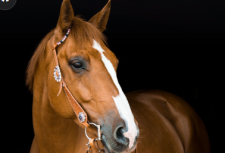
Calendar dates must be circled in red for the EquiFest of Kansas, March 14-17, at Salina.
That’s the announcement from Justine Staten, executive director of the Kansas Horse Council, producer of EquiFest.
The first EquiFest was at Wichita in 1998, then in Topeka starting in 2016, and Salina has hosted EquiFest since 2020.
“This year’s EquiFest is again four days at the Saline County Livestock Expo Center and Tony’s Pizza Events Center,” Staten said.
More than 15,000 people have annually attended EquiFest which serves as the Kansas Horse Council (KHC) primary fundraiser.
“The KHC provides the Kansas equine industry with leadership and direction through education, promotion, and public policy advocacy,” Staten said.
​“What makes EquiFest so special is the variety,” Staten emphasized. “There’ll be all breeds of horses and all disciplines represented throughout the competitions, demonstrations, and displayed exhibits.”
In addition, EquiFest features educational and informative workshops, world-renowned clinicians, music, poetry, history, and storytelling.
The horse trade show is open all four days featuring wall-to-wall vendors in multiple locations.
“They’ll offer something for everyone, clothing, accessories, saddles, tack, home décor, trucks, trailers, tractors, implements, and more,” Staten said.
Children are the future of every horse activity, so a special Kids’ Corral is again being developed encouraging youth involvement.
The EquiFest horse judging contest has been revamped this year with additional divisions to increase participation for impressive awards.
Everybody always asks: “What will there be to eat?” According to Staten, “If you like a variety of food, check out several food trucks and concessions on site. Again, there’s something for all tastes.”
Attendees at EquiFest will also once more have an opportunity to meander through the stall barn. “You can see up close anything from long-eared minis to gentle giants. Living history is on display at a military encampment,” Staten said.
Competitions include a barrel race, ranch rodeo, and breakaway roping.
Among clinicians are Guy McLean, Australian horseman; Jerry Diaz, family horsemanship; Patrick Sullivan, liberty horsemanship; Julie Goodnight, training resources; and Sally Batton, equestrian team coach.
Workshops throughout the four days are to feature Native American Traditions, riding exercises, Kansas horseback trails, and legendary horsemen panel.
A special feature is Celebrate EquiFest The World Of Horses on Thursday night, March 14.
Annual meeting of the Kansas Horse Council is Sunday morning, March 17, with a complimentary Chris Cakes breakfast for all. Cowboy church will follow.
A complete schedule of activities is available at www.equifestofks.com.

Weeds – Ready or Not, Here They Come

0

For the purpose of the Hort Newsletter a weed is defined as a plant growing somewhere it is not wanted. For many gardeners, weeds are the downfall. Weeds create competition for nutrients and water. They can also restrict growth of desired plants by competing for space. The frustration with weeds leads some gardeners to turn to chemicals or give up on a garden plot altogether. Understanding weeds may be helpful in your gardening efforts.

Just like our garden plants, weeds can be annuals, perennials or biennials. Annual weeds, including henbit and spurge, germinate each year and complete their life cycle in one growing season. Perennial weeds such as, clover and bindweed, live at least two years and often reproduce by seed with the help of wind, water, animals and other means of dispersal. We all know a child, or perhaps you were the child, who loves blowing dandelion heads and making wishes as the wind disperses the seeds. Perennial weeds can sometimes spread by cuttings of roots or other vegetative plant parts as well. This capability can make managing these weeds a challenge.

Preventing weeds is the best management strategy. This includes using practices such as keeping the soil covered with a cover crop or mulch to prevent germination. Using drip irrigation to direct water to the desired plants rather than watering the entire garden area can also prevent weeds from germinating. Other prevention strategies include minimizing tillage. Deep tilling the garden damages the soil structure and brings weed seeds to the surface where conditions for germination are right. Occultation is the use of black tarps over the ground to kill weeds with the help of the sun. Depending on the persistence of the weeds this can take a couple weeks to months for successful eradication.

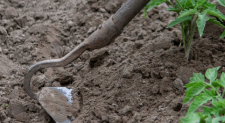
Weeds that have already established in a garden are often most effectively and safely removed by hand pulling. Though there are a couple of herbicides home gardeners can use there are consequences of using this method, including risk of damaging vegetable crops due to overspray. Cultivating the top one to two inches of soil can remove annual and young perennial weeds. If done on a regular basis this can effectively control their growth.

It is beneficial to knock out weeds before they are able to develop seeds to prevent reproduction. A single dandelion seed head has been reported to produce 150 to 200 seeds. (Something to remember next time you see the neighborhood child gathering stems in their yard!)

Integrated Pest Management (IPM) includes controlling weeds in the landscape. Using a variety of practices listed above will give the most effective management.

Caring for Spring-Flowering Bulbs

0
Photo credit: daryl_mitchell

March through April and sometimes May we will receive our delayed gratification from the bulbs planted last fall. Get the most out of this reward with the following tips:

  • Deadhead blooms as they fade to prevent seed development and allow bulbs to store more energy for future blooms.
  • Leaves should be left intact until they die back naturally. Cutting leaves back while still green halts energy production and limits energy stored in the bulbs.
  • Wait to transplant bulbs until after leaves have died back, if necessary.
  • If you’re noticing leaves emerging from the soil due to our warmer days lately don’t be too concerned. When freezing temps return the leaves may develop some brown tips but the plants should be fine. If buds emerge you can cover them gently with mulch.