Wednesday, February 25, 2026
Home Blog Page 580

Horticulture 2023 Newsletter #42

0
Photo courtesy: K-State Horticulture

https://hnr.k-state.edu/extension/info-center/newsletters/index.html


Blog Post: http://www.ksuhortnewsletter.org


Video of the Week: Cleaning Extends the Life of Garden Tools

https://kansashealthyyards.org/all-videos/video/cleaning-extends-the-life-of-garden-tools


UPCOMING EVENTS

Kansas Turf & Landscape Conference

The 73rd Annual Kansas Turf & Landscape Conference will be held on Wednesday, November 29 and Thursday, November 30 at the Hilton Garden Inn, Manhattan. The conference is an excellent way to learn about turf and landscape management, visit with old friends, network with new ones, and see all the latest products and supplies from local and national vendors.

The conference has been approved for commercial pesticide recertification hours:

1 Core hour

3A – 7 hours

3B – 7hours

GCSAA education points and International Society of Arboriculture CEUS will also be available by attending the conference.


For more information, go to https://www.kansasturfgrassfoundation.com/


REMINDERS

Plant garlic if you haven’t yet.
Remove dead annuals after killing frost.

FLOWERS

There is Still Time to Plant Spring-Flowering Bulbs

If you haven’t gotten bulbs in the ground yet, don’t despair. As long as the soil temperature stays above 40 degrees F roots still have time to develop. This means you should still have success if you plant bulbs into early November. Check soil temperature readings for the previous week at our Weather Data Library: http://mesonet.k-state.edu/agriculture/soiltemp/

Healthy bulbs should be large, firm and dormant. Do not choose bulbs that have sprouted. Bulbs need well-drained soil. Incorporate peat moss, well-rotted manure or compost into the soil to prepare for planting.

Test the soil for fertility and follow recommendations from the results. You may see high phosphorus levels if you test the soil in an area that is fertilized regularly. This can be problematic because phosphorus can hinder the uptake of other essential micronutrients. In these situations, use a fertilizer that is relatively high in nitrogen such as 29-5-4 or 27-3-3. Although these are lawn fertilizers, they are suitable for this purpose as long as they don’t have a weed preventer or killer incorporated. Apply at the rate of 2/3 pounds (3 cups) per 100 square feet.

Blood meal is an organic fertilizer that is low in phosphorus and can be applied at a rate of 2 pounds of 12-0-0 per 100 square feet (1 tsp per square foot). Cottonseed meal (6-0.4-1.5) can be applied at 3 pounds per 100 square feet (2 tsp/square foot) or soybean meal (7-2-1) can be applied at 3 pounds per 100 square feet (2 tsp/square foot).

If a soil test is not available use a balanced fertilizer such as 5-10-5 or 6-10-4 at a rate of 3 pounds (6 cups) per 100 square feet (2 tsp/square foot). Fertilizer supplements need to be thoroughly integrated with the soil prior to planting.

The depth bulbs should be planted is typically two to three times the size of the bulb. This varies depending on the species so check planting instructions for more accurate recommendations. (Cynthia Domenghini)


Perennial Garden Clean-up

As the first frosts of the season strike, perennials are showing signs of fall. Though we often think of fall as a time to clean up the garden and remove debris, leaving some plant material intact is okay. Ornamental grasses and herbaceous perennials can provide seasonal interest even in dormancy. Instead of removing the above-ground growth, allow the dried foliage to bring color and form to the otherwise barren winter landscape. Foliage can also provide some insulation against winter weather for the plant crown. Wildlife can benefit from seed heads left to develop on the plant as well.

Two caveats are herbaceous perennials that had disease and pest issues during the growing season and ornamental grasses growing near structures. Diseased or infested plant material can spread from year to year and dried grasses can present a fire hazard. In these situations, remove the above ground growth during fall clean-up. (Cynthia Domenghini)


ORNAMENTALS

Fall Colors of Trees

During the growing season leaves are making food for trees through photosynthesis. Chlorophyll found in the leaves captures the energy of the sun and gives trees their green pigment. As the amount of daylight decreases and the temperature drops heading into fall, chlorophyll production slows and the green color of leaves begins to fade. Xanthophylls and carotenes which are responsible for the orange and yellow pigment are always present in the leaves but only become visible as the green fades. Tannins are also present throughout the growing season and produce brown colors. Anthocyanins create red and purple pigments and are primarily produced during the fall.

The timing and intensity of the fall display varies based on types of trees and the environmental conditions. Different species will have differing levels of these pigments. Certain types of oaks and maples have brilliant fall foliage displays with varied colors while some trees will display primarily one color.

Temperature, soil moisture, rainfall and amount of sunlight impact the intensity and duration of the color. Warm, sunny days encourage photosynthesis which means sugar accumulation in the leaves. Cool nights slow respiration which helps conserve sugars. The combination of these factors results in a brilliant foliage display. Cloudy days and warm nights reduce sugar accumulation and consequently result in less vibrant leaf colors. Heavy rain, hot and dry summers, and frosts/freezes all have a negative effect on the vibrancy of fall colors and length of time they remain.

During this time, an abscission layer develops where the leaf petiole attaches to the branch. This barrier prevents sugars from being transported out of the leaf to the rest of the tree. Once the abscission layer is present, the leaf is ready to drop to the ground with the help of a windy gust or rainy day.

If you’ve noticed the fall display in your landscape changes from year to year pay attention to the weather patterns and this should give you an explanation as to why. (Cynthia Domenghini)


MISCELLANEOUS

Caring for Houseplants During the Winter Months

Houseplants require the most attention during the. During this time, they are growing more due to the additional energy generated from the increased number of daylight hours. This results in a need for more water and nutrients. As we head deeper into fall and approach winter, daylight hours decrease and plant growth does too. Consequently, the need for added nutrition and water decreases. Too much water can cause the soil to become waterlogged making it so the roots cannot take in oxygen. Pay attention to the plant needs and only water when necessary. Insert your finger about 1-inch deep into the potting soil. If the soil is dry, it is time to water. Excess fertilizer can burn plant roots. It is recommended to only fertilize sparingly in November and February (about ¼ the normal rate), and stop fertilizing altogether in December and January. (Cynthia Domenghini)


Preserving Garden Tools

Tools with wooden handles need protection from wear and tear. Store these tools in an area where they will not be exposed to poor weather conditions. This will help prevent splintering. Wooden handles that are becoming rough can be sanded lightly and coated with a light application of wood preservative, boiled linseed oil or polyurethane. After a few minutes wipe off the excess coating. Clean the dirt off the metal parts to prevent rust. Some quick maintenance will increase the life of your tools and save you money from having to replace them. (Cynthia Domenghini)


Harvesting and Curing Black Walnut

Black walnuts are ready for harvest when the hull is soft enough to be dented by your thumb or when they start falling from the tree. Walnuts must be hulled soon after harvest to avoid a stain leaching through to the meat of the nut. The stain discolors the meat and gives it an undesirable flavor.

Walnuts can be hulled several ways, but the easiest is to mow over them with the lawn tractor breaking the shell but not the nut. Wear gloves when handling black walnuts as the dye they contain is very difficult to remove and will tint anything it touches. Spread the hulled nuts onto the lawn or on a wire mesh and spray with water to wash them. Alternatively, you can soak them in a tub of water. To dry the nuts, spread them out in a cool, shady, dry location for about two weeks. (Cynthia Domenghini)


Contributors:

Cynthia Domenghini, Instructor & Horticulture Extension Specialist

Ward Upham, Extension Associate


Department of Horticulture and Natural Resources

1712 Claflin, 2021 Throckmorton

Manhattan, KS 66506

(785) 532-6173


For questions or further information, contact: [email protected], [email protected] OR [email protected]

This newsletter is also available on the World Wide Web at:

http://hnr.k-state.edu/extension/info-center/newsletters/index.html


The web version includes color images that illustrate subjects discussed. To subscribe to this newsletter electronically, send an e-mail message to [email protected], [email protected] or [email protected] listing your e-mail address in the message.


Brand names appearing in this newsletter are for product identification purposes only. No endorsement is intended, nor is criticism implied of similar products not mentioned.


K-State Research and Extension is committed to making its services, activities and programs accessible to all participants. If you have special requirements due to a physical, vision or hearing disability, or a dietary restriction please contact Extension Horticulture at (785) 532-6173.


Kansas State University Agricultural Experiment Station and Cooperative Extension Service K-State Research and Extension is an equal opportunity employer. Issued in furtherance of Cooperative Extension Work, Acts of May 8 and June 30, 1914, as amended. Kansas State University, County Extension Councils, and United States Department of Agriculture Cooperating, Ernie Minton, Dean.


A Healthy Lawn Adds Value to Your Home

0

The November fertilizer application on your cool season lawn is nearly upon us. A healthy lawn adds value to your home and improves the quality of the environment. Vigorously growing lawns filter out air pollution, slow movement of chemicals and fertilizers into surface water, prevent soil from washing away, and release life-sustaining oxygen. Most lawn grasses require some fertilizer every year to keep them strong and actively growing. Appropriate amounts help maintain turf vigor, but too much fertilizer can cause problems.


Lawn fertilizer contains three primary nutrients: nitrogen (N), phosphorus (P), and potassium (K). The three numbers on the label indicate the percentage of each found in the product. For example, 23–3–3 fertilizer contains 23 percent nitrogen, 3 percent phosphorus, and 3 percent potassium. Lawns generally require more nitrogen than phosphorus and potassium. The best way to determine what your lawn needs is to have the soil tested. Contact your local K-State Research and Extension office for information on submitting a soil sample.


Fescue and bluegrass lawns are best fertilized in September and November, with an optional application in May. Fertilize Bermudagrass and zoysiagrass between May and August, and buffalograss in June. Choose a slow-release nitrogen fertilizer for spring and early fall applications and a quick-release nitrogen fertilizer for late fall. Do not apply fertilizers that contain weed killers or insecticides unless they are needed.


Calibrate the spreader before use. When applying fertilizer, shut off the spreader when turning and before stopping. Turn it back on after you have resumed walking. Shut off the spreader when passing over pavement. Walk in straight lines and try not to overlap or skip areas.


Fill the spreader on a hard surface for easier cleanup. Fertilizer that falls onto sidewalks, driveways, and streets should be swept up and distributed over the lawn to keep it out of the water supply. Do not dump or wash excess fertilizer into storm drains or sewers.


After fertilizing, apply about a half-inch of water to move nutrients into the topsoil where they are more readily available to the grass. Do not apply fertilizer when heavy rain is expected. A drop spreader rather than a rotary spreader should be used when applying fertilizer near open water.


Remember that fescue and Bermudagrass are two different types of grasses that are not fertilized at the same time of year!

KU News: Dole fellow to discuss digital democracy; first dean candidate announced for School of Engineering

0


From the Office of Public Affairs | http://www.news.ku.edu

Headlines

Dole Institute of Politics visiting fellow will discuss 2024 elections, digital democracy

LAWRENCE — A visiting fellow with the Dole Institute of Politics and former public policy director at Facebook will discuss upcoming elections and how new technologies such as artificial intelligence may be used. Katie Harbath will present “Whirlwind: What to Expect for Digital Democracy in 2024” at 10 a.m. Nov. 9.


First dean candidate for School of Engineering to present Oct. 23

LAWRENCE — Mary Rezac will be the first candidate for the University of Kansas School of Engineering dean position to give a public presentation on her vision for the school. Rezac has served as the dean of Washington State University’s College of Engineering and Architecture since 2017 and previously worked at Kansas State University. Her presentation will take place at 1:30 p.m. Oct. 23 in the Beren Petroleum Conference Center, Slawson Hall G192. The event will also be livestreamed.


Full stories below.

————————————————————————

Contact: Maria Fisher, Dole Institute of Politics, 785-864-4900, [email protected]

Dole Institute of Politics visiting fellow will discuss 2024 elections, digital democracy

LAWRENCE – The Robert J. Dole Institute of Politics at the University of Kansas will host an opportunity to engage with Visiting Fellow Katie Harbath on the topics of technology and democracy. At 10 a.m. Nov. 9, Harbath will present “Whirlwind: What to Expect for Digital Democracy in 2024,” where she will discuss the influence of new technologies such as artificial intelligence, the implementation of new regulations and a breakdown of what to expect in the upcoming elections.

Harbath’s visit is the first as a result of the new partnership between the Dole Institute and the Bipartisan Policy Center to bring the nation’s top policy experts to campus to engage with students and the community.

Harbath is a global leader at the center of elections, democracy and technology. In her role as chief executive of Anchor Change, she helps clients navigate the complex and ever-changing landscape of tech policy. Harbath is also a senior adviser for technology and democracy at the International Republican Institute and serves as a fellow at the Bipartisan Policy Center, the Integrity Institute and as a nonresidential fellow at the Atlantic Council.

Previously, Harbath spent over 10 years as public policy director at Facebook, where she built and led global teams that managed elections and helped government and political figures use the social network to connect with their constituents. These teams developed and implemented policies and products that amplified transparency, integrity and participation in the digital space.

Harbath has a passion for democracy and uses her leadership position to empower citizens and strengthen institutions through technology. She further exemplifies this through her weekly newsletter on Substack, Anchor Change, and her podcast, “Impossible Tradeoffs.”

-30-

————————————————————————

The official university Twitter account has changed to @UnivOfKansas.

Refollow @KUNews for KU News Service stories, discoveries and experts.

————————————————————————

Contact: Savannah Rattanavong, Office of the Provost, 785-864-6402, [email protected], @KUProvost

First dean candidate for School of Engineering to present Oct. 23

LAWRENCE — Mary Rezac will be the first candidate for the University of Kansas School of Engineering dean position to give a public presentation on her vision for the school.

Her presentation will take place 1:30-2:30 p.m. Oct. 23 in the Beren Petroleum Conference Center, Slawson Hall G192. The event will also be livestreamed, and the passcode is 852037.

Rezac has served as the dean of Washington State University’s College of Engineering and Architecture since 2017.

The remaining three candidates will be announced approximately two days before their respective campus visits. Their public presentations are scheduled for the following times and locations:

· Candidate 2: 1:30-2:30 p.m. Oct. 25, Woodruff Auditorium at the Kansas Union

· Candidate 3: 1:30-2:30 p.m. Oct. 31, Beren Petroleum Conference Center, Slawson Hall G192

· Candidate 4: 9:30-10:30 am. Nov. 2, Burge Union Forum A

Members of the KU community are encouraged to attend each presentation and provide feedback to the search committee.

A candidate feedback survey will be open for two business days following the conclusion of each finalist’s visit. The survey and a recording of Rezac’s presentation will be available after the presentation on the search page until the survey closes.

Additional search information, including Rezac’s CV, is also available on the search page.

As dean of Washington State University’s College of Engineering and Architecture, Rezac oversees seven academic schools and multiple research centers, as well as the college’s more than $80 million budget. In this role, Rezac has managed the expansion of faculty research productivity, establishment of new undergraduate programs and implementation of programming focusing on retention and diversity of undergraduate students. Rezac has also led corporate and government relations on behalf of the college as well as developed strategies to fund a 10-year, $350 million capital building project.

Rezac previously worked at Kansas State University for 15 years in multiple positions, including interim associate vice president of research, co-director of the Center for Sustainable Energy and head of the Department of Chemical Engineering. She previously was a faculty member of Georgia Institute of Technology’s School of Chemical Engineering.

Rezac has served on a number of policymaking groups, including the Council for Chemical Research, the American Institute of Chemical Engineers and the National Research Council. Rezac holds multiple patents and has co-written more than 250 publications and presentations.

Rezac earned a bachelor’s degree in chemical engineering from Kansas State University and master’s and doctoral degrees in chemical engineering from University of Texas at Austin.

-30-

————————————————————————


KU News Service

1450 Jayhawk Blvd.

Lawrence KS 66045

Phone: 785-864-3256

Fax: 785-864-3339

[email protected]

http://www.news.ku.edu


Erinn Barcomb-Peterson, director of news and media relations, [email protected]


Today’s News is a free service from the Office of Public Affairs

If Only I’d Have Known

0
lee pitts
With the onset of old age come the regrets and remorse of how I should have lived my younger life if only I’d have known then what I know now.
Why didn’t anyone tell me that it would be the last time I gaped in wonder at the Grand Canyon, the mighty redwoods, the beauty of Lake Tahoe and the haunting Badlands. If only I’d have known it would be the last time I saw a show in Vegas, listened to the poets in Elko, rafted the Rogue or flew into Seattle  and Sydney, Australia,  on a sunlit day. I wish someone would have warned me that I’d never again experience enchanting New Mexico, the Alamo in San Antonio, the Lincoln Memorial, the village of Williamsburg and the music on Bourbon street. If I only knew I’d have lingered a little longer.
I would have said goodbye a little differently if I’d known it would be the last time to tell my mom I loved her, to give my horse Gentleman one last carrot and my dog Aussie a big old bone. I would have been with my Grandpa the day that he died instead of regretting it the rest of my life. I wish I would have asked Grandpa to teach me how to troll for fish and how to barbecue a steak. I should’ve paid more attention when Grandma tried to teach me how to play the piano. Who knew that I’d one day become a leatherworker and would have benefitted greatly by letting my mom teach me how to put in a zipper, construct a gusset and the proper maintenance of a sewing machine, after all, she kept us all fed by working 14 hours a day as a seamstress?
I wish I’d have made a list of all the books I ever read so that I’d never read the same book again. Life is too short to read the same book twice.
If only I’d have taken advantage of the opportunities given to me to learn how to operate a backhoe, truck crane, milling machine and lathe. Why didn’t I learn to speak Spanish better than I did after studying it for five years in school? I wish I’d have read more novels, fewer People magazines and definitely more directions. (Hey, what can I say, I’m a man.)
You may laugh but I wish I’d of raised a goat. Don’t get me wrong, I’m glad I raised sheep and cattle for a living, but I’ve always been curious about goats. It seems they have several advantages: you don’t have to sheer them, they aren’t the picky eaters that horses are and the kids are so darn cute.
Speaking of kids, had I known we couldn’t have any I’d have held more babies, been a 4H leader longer and read to more toddlers. I wish I’d have known how valuable our first cars would one day become then we might have hid them away for decades. And why didn’t I collect land instead of old and rusty horse bits?
Why didn’t someone tell me to always wear a leather jacket when arc welding, to never wear flip flops in the shop and the right way to sharpen a knife? I should have paid more attention in my one computer class in college. If only I’d have properly appreciated the eight hours of undisturbed sleep I used to get instead of having to get up at least twice during the night. If only I’d have known to always floss my teeth, eat fewer sweets, run more marathons and walk every day. I should have taken more adult education courses, paid more attention to pool sharks, learned all about diesels from Uncle Buddy, kept on tooling leather after a couple sessions in Cub Scouts and gone to auctioneering school. If only I’d have known I’d one day become a writer I’d have taken a typing class in high school instead of trigonometry. I’ve regretted not knowing enough about electricity. If I knew I’d one day become a cowboy I’d have fallen in love with horses a lot sooner.
If only I’d have known… I would have fished more, worried less, done more doodling and less dawdling.
Why didn’t anyone tell me these things?
Maybe they did and I just wasn’t listening.

Cost Share Assistance Available for Irrigation Technology

0

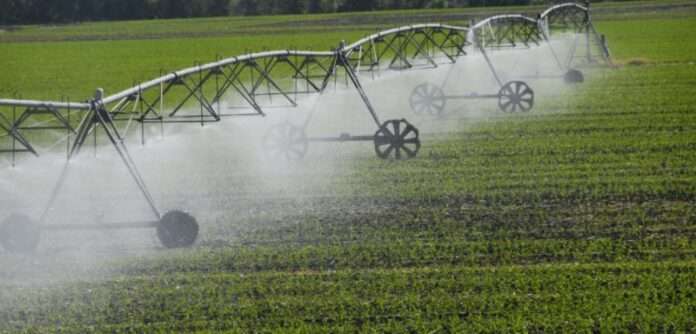
The Kansas Department of Agriculture Division of Conservation (KDA–DOC) is pleased to announce the availability of funds in the form of cost share assistance and incentive payments to assist landowners with irrigation efficiency technology. The funding is provided by KDA–DOC through appropriation from the State Water Plan Fund and the program is administered by Conservation Districts across the state.

This initiative is designed to promote irrigation efficiency by providing cost share assistance to landowners for automated mobile drip irrigation systems, autonomous pivot systems, water meter monitoring software subscriptions, bubbler nozzle packages, and remote monitoring systems (soil moisture probes included as part of system).

Eligible projects must be located within Kansas groundwater management districts 1 through 5. Applications are currently being accepted, and projects will be approved beginning on November 1, 2023, until all funds have been allocated. Equipment purchases and subscriptions made before application approval by KDA–DOC are not eligible for this initiative.

Applications for this irrigation technology cost share funding must be made through local Conservation Districts. For application assistance and details about funding eligibility, along with more information concerning other available services, please contact your local Conservation District office. A directory of Conservation Districts can be found at agriculture.ks.gov/ConservationDistricts.