
The IHSA (Intercollegiate Horse Show Association) Club at Kansas State University is sponsoring a regional horse show September 16-17 at Vermillion Valley Equestrian Center, Belvue, Kansas.
This will be the first show hosted by the Wildcats since the athletic department dissolved the equestrian team in 2014.
“We are excited to welcome students from 13 universities from the Midwest to this competition,” said Ann White, hunt seat (English) team coach.
“Entries are not yet complete, but we are expecting about 100 participants,” White commented.
Riders will draw a horse provided by the KSU host and enter the arena without any warmup. Classes start with introductory walk trot and go through advanced levels with jumping.
Last year, the KSU English team went undefeated in this region and advanced to zones and nationals.
“I am looking forward to another successful year. We have a lot of promising riders,” Coach White said.
“The mission of IHSA is to provide equestrian competition for all college and university students regardless of riding level, gender, race, sexual orientation, or financial status,” White explained. “The IHSA is dedicated to promoting sportsmanship, horsemanship, and academic excellence.”
With more than 60 members (and growing), the IHSA club at KSU has students who have never been around horses through those who have competed at a national level.
“Our club membership has the option to join the competition teams,” Coach White said. “But a student does not have to compete to be part of the club. Team members have more financial and time commitments.”
The club has educational seminars, clinics, guest speakers, social events, and fund raisers which involve equine as a focus.
“We also have a Western team coached by Sarah Mattocks. That competition offers introductory riding through advanced ranch riding,” White informed. Several students participate on both teams.
White and Mattocks volunteer their time to serve as team coaches and club advisors.
The KSU IHSA team is self-funded, and the students must pay for their ride times, White pointed out. Horses are provided by the Vermillion Valley Equine Center which is located 30 miles from campus.
“The team is lobbying that as Kansas State University expands their equine facilities and equine curriculum, they will provide support and opportunity for this club to exist on campus as the rodeo club does,” White said.
“The IHSA is a huge recruiting tool across the country and the team at KSU is hoping that the administration will take notice, consider them as such,” Coach White commented.
“It is really eye opening to travel all over the country to other schools and see the support of their equine activities and incorporation of their teams,” White observed. “While we are part of a big agricultural university with a well-known animal science department, our riders have to travel off campus and totally fund themselves.”
The IHSA club continues looking for fund raising opportunities and sponsorships.
Additional information about KSU’s IHSA team is available at ihsaatkansasstate.com, with more Intercollegiate Horse Show Association details at ihsainc.com.
Vermillion Valley Equine Center facts are at vermillionvalleyequine.com.
+++30+++
CUTLINES
Vermillion Valley Equine Center (VVEC) near Belvue will host a regional IHSA (Intercollegiate Horse Show Association) show September 16-17, sponsored by the IHSA Club at KSU.
The Intercollegiate Horse Show Association (IHSA) Hunt Seat Team at KSU has won regional championships the past four years.
Equestrian Club At Kansas State University Sponsoring Regional Intercollegiate Horse Show
Sittin’ Pretty
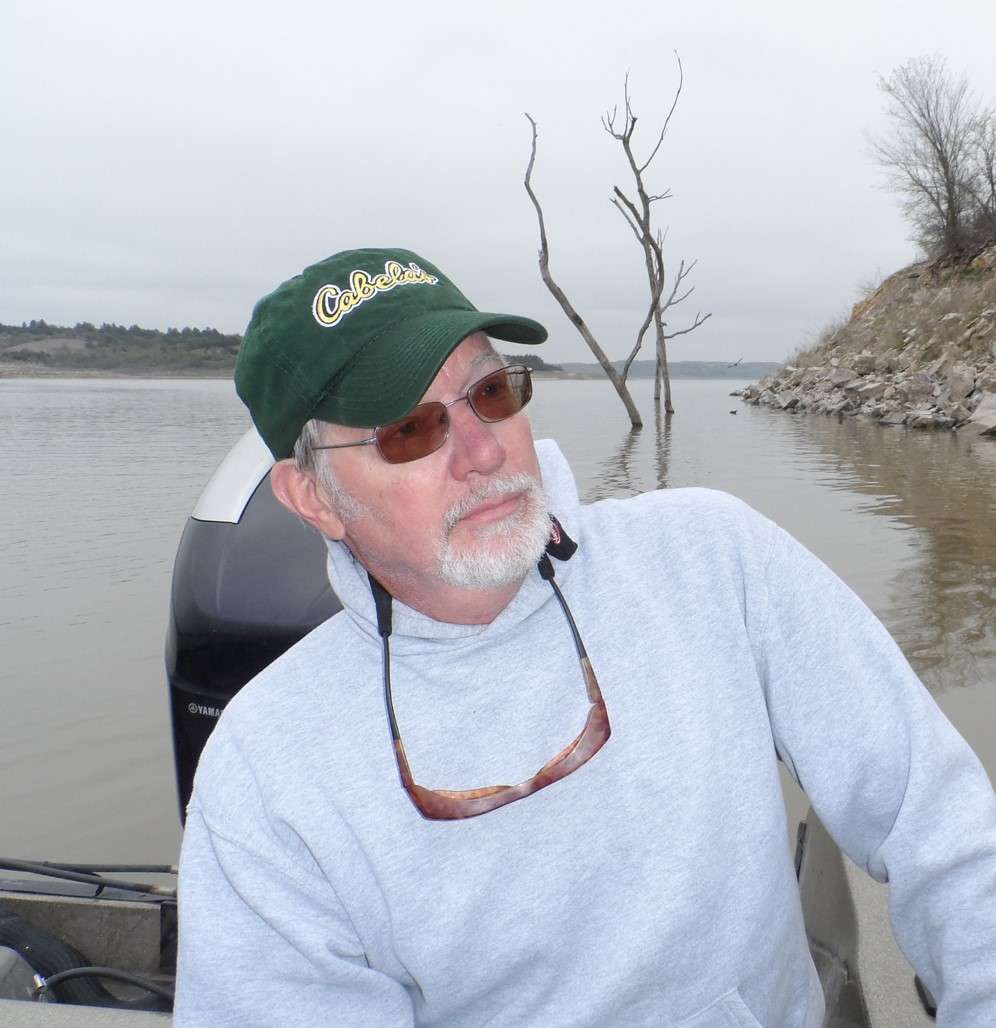
Jim Kammeyer remembers a dove hunt with his dad years ago when he was about fourteen. A small group of he and some friends on a father and son dove hunt had stopped along a pond to determine how to capture a dove someone had shot and dropped into the pond. A breeze was steadily blowing the downed bird out to sea where it would soon be lost if not retrieved. Jim says his dad Roger strode up to a small willow tree growing near the water’s edge and with a couple shots from his shotgun toppled the tree into the pond near the floating dove. He grasped the tree and raked the dead bird to the bank where it could be added to the harvest. The rest of the group was left thinking “Why didn’t we think of that?” and the other kids turned to Jim and said “Your dad is so cool.”
Roger Kammeyer has always been known as a tinkerer and a problem solver. He grew up near, and never left the small farming community of Concordia, Missouri where he had been a barber, then a sales rep for a food brokerage company and finally a life insurance salesman before retiring in 1999. In his early days as a barber Kammeyer could often be found building fishing rods or designing and building his own fishing lures between haircuts. He is thought to have possibly invented the first “buzz-bait” top water lure used to catch bass, though he never pursued a patent. The spinner blade on that lure was fashioned from an old lunch box Kammeyer had found while scrounging for treasures at the dump. Aptly named the Lunch Box, many feel the lure will still out-fish commercial buzz baits available today.
Years back I penned a column called Man’s Best Friend in which I extolled the virtues of the five-gallon bucket. To this day I’m convinced that no better and adaptable product than the five-gallon bucket has ever been invented. Whether used as a seat for deer hunting, turkey hunting, ice fishing, or picking vegetables from the garden, most garden projects and outdoor adventures somehow make use of man’s best friend, the five-gallon bucket. Sometime after his retirement, a friend gifted Roger Kammeyer with a wooden stool that sat on top of a five-gallon bucket and made it a nice rig to sit on when picking green beans. The seat of the stool was raised just enough higher than the lip of the bucket, leaving a handy opening to toss beans into the bucket below. The problem was it took two hands to carry the thing, one to carry the stool and the other to carry the bucket. Into Kammeyer’s shop it went, emerging later adapted so the stool fit upside down as a lid that snapped into the bucket, and the original Bucket Stool was born. Now made from durable plastic, the bucket stool sits on the bucket in four notches that allow it to spin silently around the bucket. With my 210-pound frame seated on one, it moved effortlessly and quietly around the top of the bucket, allowing me to face any direction I pleased. The Bucket Stool can then be turned upside down and snapped into the bucket to become a lid.
Roger got a patent on this invention, and built them in his garage for over ten years. Today the Kammeyer family’s business, RWK Solutions, LLC is located in Concordia, Missouri where the Kammeyers grew up and where they still live today. The Bucket Stools are manufactured there in Missouri too, in the good ol’ USA. Check out the stools on their website www.bucketstool.com and find them for sale on Amazon and at other retailers. Kammeyer says that thanks to his Bucket Stool, he can still tinker in his shop, work in his garden and shorten the life of many fish…Continue to Explore Kansas Outdoors!
Steve can be contacted by email at [email protected].
The Elevator Man
“ALS – Not Just Lou Gehrig’s Disease”

On July 4, 1939 Lou Gehrig said these famous words at Yankee Stadium, “For the past two weeks you have been reading about the bad break that I got. Yet today I consider myself the luckiest man on the face of the earth.” The bad break he was referring to was the diagnosis of a condition that would become synonymous with him – a neuromuscular condition called Amyotrophic Lateral Sclerosis (ALS). ALS is a disease which causes motor nerves in the brain and spinal cord to break down. This reduces the nerves ability to control muscle function leading the muscle to weaken, twitch, and waste away. As the disease progresses it slowly impairs the person’s ability to walk, talk, swallow, and breathe.
Lou Gehrig was only 36 years old when he was diagnosed at Mayo Clinic in Rochester, MN. However, it is more commonly diagnosed between the ages of 55 and 75. He lived less than two years after his diagnosis with ALS. Today the average life expectancy after diagnosis is two to five years, but some people with this disease can live much longer. The famous physicist, Steven Hawking, lived for more than 50 years after he was diagnosed with ALS.
The cause of ALS is still unknown. Almost all cases are considered sporadic, while only five to ten percent are thought to be inherited. One study suggested smoking may increase a person’s risk for developing ALS. Military veterans also have an increased risk of developing ALS compared to civilians. Currently there is no single test that can predict or diagnose ALS, it is based on symptoms and a multitude of tests. While there are treatments and medications that can slow the progression of the disease. There is no cure, but research is still ongoing.
Over eighty years later, the final words of Lou Gehrig’s speech still serve as inspiration. “So I close in saying that I may have had a tough break, but I have an awful lot to live for.” Major League Baseball holds “Lou Gehrig Day” every year on June 2nd. That day marks the anniversary of both when he became the starting first baseman for the New York Yankees and the day he passed away in 1941. On this day, Major League Baseball raises funds to help research ALS, to find better treatments and hopefully find a cure. Lou Gehrig’s optimism and tenacity in face of such a life changing diagnosis makes it no wonder most people know ALS as “Lou Gehrig’s Disease”.
Jill Kruse, D.O. is part of The Prairie Doc® team of physicians and currently practices as a hospitalist in Brookings, South Dakota. Follow The Prairie Doc® at www.prairiedoc.org and on Facebook and Instagram featuring On Call with the Prairie Doc®, a medical Q&A show providing health information based on science, built on trust, streaming live on Facebook most Thursdays at 7 p.m. central.
Wheat Scoop: Can you Scout the Wheat at the Kansas State Fair?

Contact: Marsha Boswell, [email protected]
For audio version, visit kswheat.com.
From bread-making demonstrations to virtual combine rides to wheat foods competitions, wheat is one of the core ingredients of Kansas State Fair traditions. Whether coming for carnival rides, concerts or contests, scout out everywhere wheat is featured at the fair, which runs this year from September 8 to 17.
Check Out Bread Baking Demonstrations & Contests
Cindy Falk, Kansas Wheat nutrition educator, gave her first Kansas State Fair presentation on “Neat Wheat Treats” as a spokesperson for the Kansas Wheat Commission 35 years ago on a similar state in the Pride of Kansas building. Falk will demonstrate the winning recipe from the 2023 National Festival of Breads. Join her on Wednesday, September 13, from 11-11:30 a.m. in the Domestic Arts building to learn how to make the Cheese Lover’s Barbecue Bread developed by Gloria Piantek West Lafayette, IN.
“The creative ingredient combinations, the circular twisted shape and the undeniable taste made this recipe rise to the top,” Falk said. “Join me to learn how to shape the dough and make this cheesy comfort food for your next tailgate party.”
Joining Falk, Wilma Olds from Wilson, will also demonstrate her submission for the 2023 National Festival of Breads – Nutty Peanut Butter Cinnamon Braids. Her recipe earned an honorable mention in the Go Nuts category. Stay for samples, recipes and a gift bag from the Kansas Wheat Commission, Home Baking Association and Red Star Yeast.
In addition to the formal demonstrations, the Kansas Wheat Commission is also sponsoring the open-class division – It’s All About Bread. The category includes entries of sourdough bread, holiday bread and whole wheat quick bread. Check out all the entries in this division in the Domestic Arts building.
Wheaties have collected the annual Kansas Wheat recipe book at the Kansas State Fair for decades. This year’s booklet features Piantek’s winning recipe and the other finalists from the 2023 National Festival of Breads. While the booklet will not be available at the fair, collectors and anyone interested in checking new, innovative recipes developed by the nation’s best amateur bakers can request a copy at kswheat.com/2023recipebook or check out the recipes online at nationalfestivalofbreads.com/recipes.
Find Farm Fun for Kansas Kids in Agriland
For more than 30 years, Kansas agricultural organizations have shared interactive, hands-on activities with the younger state fair attendees in Agriland in the Pride of Kansas building. The educational exhibit will be open for the length of the state fair. Stop by to take a ride in a virtual combine (our favorite), sift different types of grain between your fingers or milk a mechanical cow.
“Kansas Wheat is proud to help sponsor and work this hands-on educational exhibit,” Falk said. “Stop by the Pride of Kansas building to check out this farm-to-fork education for fair-goers.”
Teachers who visit Agriland can sign up for free lesson plans provided by the Kansas Foundation for Agriculture in the Classroom. These lesson plans connect classrooms to Kansas agriculture by learning more about food, fiber and fuel, why agriculture is so important to Kansas and the opportunities for careers in agriculture. Can’t make it to the state fair or Agriland? Check out KFAC’s virtual version at https://www.ksagclassroom.org/resource/agriland/.
Check out other Wheatie-favorite exhibits around the fair, including the market wheat show, 4-H Wheat Variety Plot Display Awards, Kansas wheat photography contest and wheat weavings. Make your plans to visit the Kansas State Fair at kansasstatefair.com.
###
Written by Julia Debes for Kansas Wheat
