Saturday, February 28, 2026
Home Blog Page 621

‘Old’ Farmer Gives Advice

0

When a farmer’s wife previously provided advice, a number of readers men and women nodded in general agreement.
It seems only fair to let the man of the farm share a lifetime of wisdom, give his two cents worth.
Again, unsolicited but received several times on the computer, here’s one “old” farmer’s tidbits for improved living:
Your fences need to be horse-high, pig-tight, and bull-strong.
Keep skunks and bankers at a distance.
Life is simpler when you plow around the stump.
A bumble bee is considerably faster than a John Deere tractor.
Words that soak into your ears are whispered… not yelled.
Meanness don’t jes’ happen overnight.
Forgive your enemies; it messes up their heads.
Do not corner something that you know is meaner than you.
It don’t take a very big person to carry a grudge.
You cannot unsay a cruel word.
Every path has a few puddles.
When you wallow with pigs, expect to get dirty.
The best sermons are lived, not preached.
Most of the stuff people worry about ain’t never gonna happen anyway.
Don’t judge folks by their relatives.
Remember that silence is sometimes the best answer.
Live a good, honorable life… Then when you get older and think back, you’ll enjoy it a second time.
Don’t interfere with somethin’ that ain’t bothering you none.
Timing has a lot to do with the outcome of a Rain dance.
If you find yourself in a hole, the first thing to do is stop diggin.’
Sometimes you get, and sometimes you get got.
The biggest troublemaker you’ll probably ever have to deal with, watches you from the mirror every mornin.’
Always drink upstream from the herd.
Good judgment comes from experience, and a lotta that comes from bad judgment.
Lettin’ the cat outta the bag is a whole lot easier than puttin’ it back in.
If you get to thinkin’ you’re a person of some influence, try orderin’ somebody else’s dog around.
Live simply. Love generously. Care deeply. Speak kindly. Leave the rest to God.
Don’t pick a fight with an old man. If he is too old to fight, he’ll just kill you.
Most times, it just gets down to common sense.
Reminded of Job 23:12: “I’ve obeyed every word he’s spoken, and not just obeyed his advice, I’ve treasured it.”
+++ALLELUIA+++
XVII–37–9-10–2023


Amplified speech

0
john marshal


Anyone out there remember the election year sound truck?
Before TV and Twitter-X became bludgeons of choice in American politics, we had the sound truck, grandpa of today’s cable shows.
In its day, which ended about 50 years ago, the sound truck – any vehicle with a loudspeaker – could be counted on at election time to roll through the streets squawking that we must vote for this candidate or that candidate.
Now we have the cable channels, howling left and bleating right, day-in and over night. And that’s in the off season, that blessed half year between 18-month campaign seasons. They have ramped up again. Nothing new will be said, but it will be said louder and longer.
During the sound truck days there at least were limits. As election day approached the commercials increased in frequency and decibels. The peace of autumn on a clear day, the quiet of classrooms, the solitude of parks, the sleep of babies, the purr of a city at work – all were innocent prey for the shrill bullhorn.
The sound truck had become an aggravation. A week or two of this was about all we could stand. The truck excited a normal human resentment against the whole principle of free speech. The rolling bullhorn, which was not free speech but amplified speech, was declared a nuisance in most places and banned. The common noise ordinance set a difference between plain speaking and loud speaking.
*
The theme of amplification lives strong as ever. Through technology, the sound truck is reincarnated as Twitter-X and the cable TV show. They are today’s public nuisance, the sharp elbows of political advertisements. They are the sound truck reincarnate, bringing us to the same familiar disturbance and the same shattered peace. They excite in us a contempt that we had once reserved for ads about erectile dysfunction. (And they bring a longing for old-fashioned journalism, its reality, its contrast with fiction.)
A lot of people these days are eager to throttle opinions they don’t admire. If they happens to ride hot on a volume of sound that is as insufferable as the message itself, the number of people who want to stifle both the sound and the idea are bound to increase.
The technology may change but the campaign season is upon us with its venom, its loud speech and long reach, ever amplifying the difference between ideas and noise.

Woodie Seat closed starting Monday

0

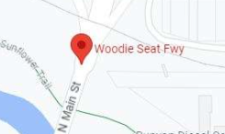
HUTCHINSON, Kan. —  According to a message provided to property owners in the area of the Woodie Seat Freeway, work on the first phase of the project, the phase that includes the County owned bridge over the Arkansas River and the City owned infrastructure located north of the bridge and south of Avenue C will begin on Monday.

The county project will resurface the bridge at a cost of $1.4 million. The city project will mill and overlay the road surface, replace stormwater drains and piping, replace guardrails, and remove the median at a cost of $2.2 million. This will result in the closure of the freeway from the Arkansas River Bridge to Avenue A from Sept. 18 to Dec. 22. There will also be a closure of the same section in the spring of 2024 for 30 to 60 days.

Traffic will be detoured to the Arkansas River Bridge located by the Carey Park entrance on Main Street. All reopening dates are contingent to project progression, which can be slowed by weather or other unforeseen delays.

If you have further questions, call Reno County Public Works Director Don Brittain at (620) 694-2976, you can also reach APAC at (620) 960-9609.

As reported on Hutch Post.

Kansas lawmakers didn’t protect ornate box turtles from poaching, but KDWP regulators will

0

After Kansas lawmakers failed to pass heightened protections for ornate box turtles, government regulators have taken action to protect the state reptile from poachers who would have them “exported into extinction.”

The Kansas Department of Wildlife and Parks Commission voted unanimously Thursday to approve the new regulations on possession limits for amphibians and reptiles.

“We wanted to basically develop some possession limits that would reduce take from the wild, make it a little easier for law enforcement during stops,” said Daren Riedle, a KDWP wildlife diversity coordinator, “but still provide educational opportunities for kids, for all of us, that grew up keeping a box turtle or a lizard or something, you know, still provide those educational opportunities, which are beneficial for those that grow up enjoying the outdoors.”

The old rules in KAR-115-20-2 allowed anyone to keep up to five individuals of any species of amphibian or reptile that is not threatened or endangered. The new rules imposes a maximum of five total amphibians per domicile and up to five reptiles with no more than two of any species per domicile.

House Bill 2479, which failed to pass the Legislature in 2022 but was part of the impetus behind pursuing regulatory change, would have banned anyone from capturing or possessing an ornate box turtle.

Riedle said a consensus was found after working through several drafts between ecological services, law enforcement and non-governmental organizations that provided environmental, conservation and agricultural input.

Preventing box turtles from being ‘exported into extinction’

Dan Riley, chief counsel at KDWP, told the Joint Committee on Administrative Rules and Regulations on July 10 that the regulation is a response to painted box turtles becoming the victims of an overseas pet industry.

“The intent was to limit the illegal trade so that box turtles aren’t basically exported into extinction by the pet trade, but still leave enough latitude in the language so that little kids that go to summer events could still have a turtle race,” Riley said. “We didn’t want to make it so that that the regulation became too heavy handed or create additional problems rather than dealing with the turtle export problem that it was intended to address.”

Rep. Bill Sutton, R-Gardner, said he had no issue with the regulation, but questioned whether it would solve the problem.

“It seems like this is a really tough one to enforce,” he said. “Just my way of thinking, it would be easier to stop it at the export step, rather than trying to police possession of turtles. That just seems really, really difficult to me.”

Riley said he did not have a good answer, though he believes the regulation “will have an impact.” Having a regulatory standard, along with education and public awareness, will help, he said. He also noted that export regulations are handled at the federal level.

“If somebody makes it their purpose and their mission to covertly ship painted box turtles out of Kansas, that’s going to become a bigger enforcement issue, obviously, but we’ve got an enforcement mechanism if it’s necessary,” he said. “So hopefully public awareness and just getting the word out that it’s detrimental to the species, it’s prohibited, don’t pick up turtles and then try to sell them to someone as a pet. So hopefully we’ll get a lot of benefit from that. And if we do need to do something further, then we’ll go back to the drawing board at that point.”

More:Poaching threatens the ornate box turtle, Kansas’ state reptile. Lawmakers are trying to help

Legislature failed to pass turtle protections backed by Topekans

KDWP Secretary Brad Loveless told lawmakers in a February 2022 hearing that he supported HB 2479 because the agency was concerned about population declines for the species. He acknowledged that regulations could be an alternate route of accomplishing the same goal.

The bill, which was introduced by 11 Democrats led by former Topeka Rep. Jim Gartner, never made it out of the House Agriculture Committee in the Republican-controlled Legislature.

Washburn University biology professor Benjamin Reed, who has studied the ornate box turtle for the past decade, told lawmakers at that hearing that poachers — who sometimes target research areas — are to blame for population declines.

Reed said turtles are important seed and spore dispersers, they prevent disease spread by eating carrion and they are important for pest and weed control, among other ecological roles. For ranchers, turtles are important for breaking down cow patties.

Topeka Zoo conservation and education director Dennis Dinwiddie said the species population has “experienced an alarming reduction.”

“Because box turtles have unique and colorful markings, they are collected from the wild and sold overseas through the illegal pet trade,” Dinwiddie testified. “We feel that poaching these turtles from the wild to send overseas has become the greatest threat they face. We feel it is the primary cause for their significant losses from the wild.”

As reported in the Topeka Capital Journal.

Stealing from grandkids piggy bank

0
andre-taissin

By Trent Loos
Guest Columnist

Every time you turn around people and organizations are spending money like crazy because, “they got a grant.” While some grants from nonprofits and foundations truly go to help where help is most needed and are generated by donations and fundraising efforts. My problem is with federal grants.
I can’t believe that people think taking every federal dollar you can get your hands on is a good idea. It is not free money.   It is our taxes, which just keep going up.
Meanwhile, since the federal government is already spending more than they take in, they are actually borrowing money to give out these “free” grants.
As of noon on Labor Day 2023, our United States National Debt was $32,834,887,240,906. Do you even know how much that is? It is nearly $33 trillion dollars and that amounts to $97,857 per citizen, which is a figure I think we can all get a better grasp of.  The U.S. debt that is held by foreign countries is over $7 trillion. What happens when these foreign countries want their money?
From solar farms to schools taking Emergency and Secondary School Emergency Relief Funds to carbon pipelines and wind turbines, nobody really wins except those with a finger in the kitty. The people getting stuck with the bill for this “free money” are your grandkids, your great-grandkids and many more generations to come. These governmental get-rich-schemes are benefiting foreign-owned wind turbine and solar companies that promise riches, in my opinion, and landowners still pay the taxes and take the pittance they are given.
If you think we aren’t giving away the inheritance of our offspring, then take a look at the amount of money being doled out in just a handful of these programs:
Subsidies from the government to Summit and Navigator carbon pipeline owners alone will be over $8 billion and the subsidy to the affiliated ethanol plants will be $7 billion.
ESSER funds taken from our grandkids and “given” to schools that now have their hands tied on how they can use the money will add up to $190 billion. Do some digging into the requirements for accepting these grants and you will be alarmed.
Billions of dollars are going into the pockets of wind and solar energy developers who are also gobbling up land to construct their “power supplies.” Even electric companies are getting money to support these projects.
While many consumers complain about subsidies to agriculture, which I personally do not approve of, those actually amount to less than 1% of the federal budget. Of the $198 billion U.S. Department of Agriculture budget, only $30 billion goes to farm payments while the balance provides Supplemental Nutrition Assistance Program aid and food services to low-income households.
The bottom line is this, stop taking the “free” government money from your grandkids. It doesn’t matter “if you don’t take it then someone else will,” let them. Stop thinking federal grants are “free money.” Our country wasn’t built on people getting something for nothing. If a new project or program needs a subsidy to keep standing, then it can’t stand on its own.
Trent Loos is a sixth generation United States farmer, host of the daily radio show, Loos Tales, and founder of Faces of Agriculture, a non-profit organization putting the human element back into the production of food. Get more information at www.LoosTales.com, or email Trent at [email protected].