Saturday, February 28, 2026
Home Blog Page 622

Don’t get scammed!

0

A K-State expert cautions consumers against scams

Scammers, it often seems, never rest.

Whether it be by phone, email or suspicious website, consumers face an onslaught of characters aiming to cash in on an easy buck, or even steal an identity.

But Kansas State University family finance specialist Elizabeth Kiss says knowing the tangles that scammers often use will help consumers stay safe.

“The Federal Trade Commission has a lot of great information for consumers about fraud and they highlight signs for things that might be a scam,” Kiss said.

Some of the common signs consumers should look for include:

The scammer pretends to be from an organization you might know.

Some examples include the Social Security Administration, the IRS or Medicare. Or, Kiss notes, the caller may represent themselves as being from a utility company or charity. “They have used technology to change their phone numbers,” Kiss said, “so it looks like what you’re seeing (on your phone).”

The scammer indicates there is a problem that needs your attention.

You might be told that you owe money or someone in your family had an emergency and need your assistance immediately. On a computer, you may get an urgent message about a virus infecting your files. Another form of scam indicates that you’ve won a prize and you must act immediately to claim it.

The scammer pressures you to act immediately.

Scammers don’t want you to have time to think; they want to get your attention now. There is an urgency to the claims the person is making, whether it’s by phone or computer.

As reported in the High Plains Journal.
Elm Leaf Beetle

0
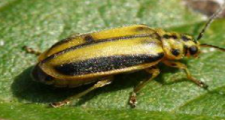
Description: Young larvae are dark-colored, hairy grubs. Older larvae are yellow with two long, dark stripes. Adult beetles have green and yellow stripes and are about 1/3-inch long.
Life Cycle: There are typically two generations of elm leaf beetles each year. They overwinter as adults and emerge from their protective shelters in early spring. As elm trees develop leaves the beetles move in and females begin laying eggs. Larvae hatch and spread throughout the tree to feed. Larvae reach maturity within four weeks and seek shelter to pupate. They may drop to the base of the tree or crawl within cracks of the bark to pupate. Adults emerge in about two weeks and relocate to the leaves to eat and mate giving rise to the second generation of larvae. This generation of adult beetles will wait to lay eggs until the spring.
Damage: Larvae cause most of the damage by skeletonizing leaves of elm trees, giving
preference to Siberian (Chinese) elms. Adult beetles chew holes through the leaves. Leaves that have been heavily damaged may turn brown and drop.
Control: For healthy trees, at this point in the season, elm leaf beetles and larvae tend not to cause significant damage so spraying is not recommended. If the larvae are active, they can be controlled with several insecticides. If they have already dropped to pupate spraying will be ineffective.
Larvae and adult sprays include: acephate (Acephate, Orthene), spinosad (Natural Guard
Spinosad, Conserve, Captain Jack’s Dead Bug Brew, Monterey Garden Insect Spray), lambda cyhalothrin (Scimitar, Spectracide Triazicide).
Cynthia Domenghini, Extension Agent

Garden Spiders

0
Though some consider spiders to be unwelcomed, they are a valuable resource for pest control.
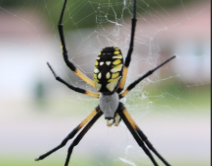
The yellow garden spider is commonly found in our Kansas gardens. The body is one-inch long and has yellow markings on the dark-colored abdomen. Legs of the garden spider are black with a yellow or reddish band.
The banded garden spider is similar in size with yellow and white bands marking the legs and abdomen. The legs have black and orange bands.
These two varieties of spiders are types of orb weavers and construct large, circular webs often in bushes, tall grasses and other areas with high insect populations. These spiders are not dangerous to humans and should be left alone to allow them to continue feeding on pests in the garden.
Cynthia Domenghini, Extension Agent

Ornamental Sweet Potatoes

0
Ornamental sweet potatoes are mostly valued for their attractive foliage as it drapes down the sides of containers and spreads over the ground within planters. As with other ornamental vegetable varieties, though ornamental sweet potatoes are edible, they are grown for their aesthetic value. Consequently, the flavor quality of ornamental varieties is often lacking. In the case of ornamental sweet potatoes, the tuberous roots are much more bitter than the edible counterpart. If you choose to consume them, follow the curing instructions in this newsletter.
Ornamental sweet potatoes can be overwintered by digging them just before the first frost and storing until it’s safe to plant in the spring. Remove the above ground growth and keep the roots in moist peat moss in a cool, dark room. Alternatively, the entire plant can be moved indoors and kept as a houseplant during the winter. Check the plant first for signs of disease or pests. Cut the vines back to about one-foot and carefully transplant into the desired container. Keep the plant in a space with plenty of natural light until warmer weather returns in the spring.
Cynthia Domenghini, Extension Agent