Saturday, February 28, 2026
Home Blog Page 626

Treasurer: Search for unclaimed property; enter to win $529 at Kansas State Fair

0

More than $500 million in unclaimed property and a chance to win $529 into a Learning Quest 529 education savings account will be offered at the State Treasurer’s Office booth at this year’s Kansas State Fair, according to State Treasurer Steven Johnson.

“We are excited to bring the State Treasurer’s Office to the Kansas State Fair once again this year,” Johnson said. “We invite all fair-goers to stop by our booth in the Meadowlark Building to search their name in our unclaimed property database, and enter our giveaway to win $529 into a Learning Quest 529 education savings account for themselves or a loved one.”

Johnson’s office administers the state’s unclaimed property program, which currently holds more than $500 million waiting to be claimed. One in 10 people is estimated to have unclaimed property, which could include unpaid life insurance benefits, forgotten bank accounts, and safe deposit boxes. Kansans can search the online database any time at https://KansasCash.ks.gov.

The State Fair also coincides with September’s recognition as College Savings Month. Johnson’s office will have information at the booth on the savings programs administered by his office, including the Learning Quest 529 plan, KIDS matching grant program, ABLE savings plan, Kansas ScholarShop, and First-Time Home Buyer Savings Accounts. Staff from Johnson’s office will be on hand to answer questions about these programs, and visitors to the booth will be invited to enter to win $529 towards a Learning Quest 529 account. More information on these programs is also available on the Treasurer’s website at https://KansasCash.ks.gov.

Determining how male behaviors, environment affect offspring in livestock

0

Lacey Luense, Ph.D., spent the first 10 years of her career using live animal models to understand the mechanisms of the sperm epigenome and its role in human disease and development. But now, she is taking her epigenetics research program in a new direction.

Luense is getting back to her first love—agriculture—as an assistant professor in the Texas A&M College of Agriculture and Life Sciences Department of Animal Science since August 2022.

“I grew up in northwest Iowa in a rural area, and my family owns a steakhouse,” she said. “All my friends lived on farms, and I was in 4-H, so I grew up in an agricultural background. I knew from an early age that I wanted to study genetics and always thought I would go through graduate school and return to Iowa to apply my understanding of epigenetics to agricultural questions.”

But her path took her in a different direction.

She earned her bachelor’s in biology at Augustana University in Sioux Falls, South Dakota, her master’s in genetics at Iowa State University and her doctorate in molecular and integrative physiology at the University of Kansas Medical Center.

She then spent the next 10 years, first as a postdoctoral fellow and then as a research associate at the University of Pennsylvania School of Medicine.

“I ended up working with mice, which is a great system to understand better the basic mechanisms of genetics and epigenetics,” Luense said. “But I wanted to come back to the initial drive that I had while in high school and college to bring this area of study back around to answer agricultural questions.

“Texas A&M is a wonderful place to do that type of research. Obviously, the animal science program in the College of Agriculture and Life Sciences is extraordinarily strong.”

The study of epigenetics identifies changes in gene function that are not due to mutations but rather how the DNA is packaged in the cell and turned on or off in the wrong conditions.

“This is often influenced by the environment, so things like diet, drugs, alcohol, heavy metals, toxicants,” she said. “All sorts of things can influence the epigenome or how our DNA is coiled in the cell and then turns genes on or off. And that all affects disease and development.”

For Luense, her research interest is with the germ line epigenome and how DNA in the sperm of cattle or humans, the paternal epigenome, can be influenced by the environment.

“We know the environment can affect the epigenome and absolutely alter how the DNA is packaged. I am extremely interested in using the basic mechanisms we are examining now and applying this knowledge to other questions such as climate change, drought, increasing temperatures or health.”

She said the current hot temperatures will continue to affect ranchers throughout the state, and her goal is to understand how these environmental stressors impact reproduction.

“These are problems Texans need to understand to help their production operations,” she said. “By understanding the basic mechanism, looking for biomarkers and understanding how this works, we can hopefully improve the fertility of bulls in the future.”

Luense said she is trying to understand how the environment can influence offspring or the early embryo. For instance, there are more long-term implications to look at, such as implantation – how does the paternal epigenetic regulate the embryo to allow it to grow normally in the uterus? Does it affect long-term health and development, and potential disease for the offspring, whether children or livestock?

Scientists have understood a mother’s influence on offspring but are becoming more aware of how epigenetics within sperm can have a strong influence. Luense is interested in a deeper understanding of how male epigenetics impact progeny.

She said one of the important things she is excited about at Texas A&M and in animal science is using these technologies and knowledge to look at larger animals.

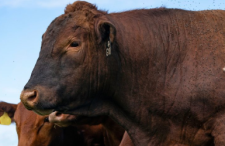
One of her first projects will look at the epigenome and sperm of cattle to understand fertility and how it relates to embryo development, long-term health and development of the offspring.

While she is now concentrating on livestock, Luense said an exciting avenue would be use her large animal research models to study human disease and development.

“I’m excited to have dual paths of translational value, to understand how the epigenome affects agricultural production and then utilize that for understanding human fertility and human development,” Luense said. “I would like to develop this into a research program where we can make impactful findings to multiple stakeholders on the animal production and human sides.”

She said there are similarities between bovine and human sperm and embryos, as well as more long-term development, and the discoveries in cattle can provide a better understanding of humans.

Luense will continue to use mice models in her research because they can help answer some questions quickly, but she hopes to answer more applied questions by studying cattle.

“It’s been a really nice opportunity to come full circle—my background, my training and then being able to come back and pull everything together in these different research areas,” Luense said. “We can study both agricultural questions, but then also gain an understanding of human health and disease.”

She has developed strong collaborative studies with experts at Texas A&M who have researched cattle, sheep and other animals within different production systems.

Luense is also passionate about developing the next generation of scientists as a mentor for students.

“That’s something I find really important, to mentor our students to become scientists, extension agents and teachers and to help them get the training and encouragement they need.”

As reported in the High Plains Journal.

KDA to Host 17th Annual Kansas Grape Stomp at the Kansas State Fair

0

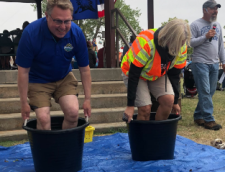
Feel the squish of the grapes in the time-honored tradition of grape stomping as you help celebrate the grape and farm winery industries in Kansas. The Kansas Department of Agriculture will host the 17th annual Kansas Grape Stomp on Saturday, September 9, at 1:00 p.m. in Gottschalk Park at the Kansas State Fair in Hutchinson.

Gather around the grape tubs to watch state and local leaders and others stomp grapes to salute the Kansas grape and farm winery industries. The competitive stomp-off will lead the event and an open stomp for all Kansas State Fair attendees will follow.

As of August 2023, there are 50 farm wineries throughout Kansas.

KDA is committed to advocating for and promoting the agriculture industry, the state’s largest industry, employer and economic contributor, and encourages all fairgoers to attend the grape stomp to have fun while learning about the grape and farm winery industries in Kansas.

For more information about the event please contact Robin Dolby, From the Land of Kansas marketing coordinator, at [email protected] or 785-564-6756.

As more Kansas students miss school, districts look for ways to entice them back to class

0
Missing school has become a crisis statewide. More than one in four Kansas students were chronically absent during the 2021-22 school year, which means they missed at least 10% of instruction time. That figure nearly doubled over the previous two years.

Three years after the pandemic sent most Kansas kids home to learn, schools have a vexing new challenge: getting them to come back to class.

Missing school has become a crisis statewide. More than one in four Kansas students were chronically absent during the 2021-22 school year, which means they missed at least 10% of instruction time. That figure nearly doubled over the previous two years.

State education leaders are still compiling data from last school year, but they expect the problem is getting worse.

“Definitely a dramatic uptick … which is not what anybody would want to see,” said Robyn Kelso, who monitors attendance for the Kansas Department of Education. “At the same time, I don’t know that I’m necessarily surprised.”

Many older students struggled with the transition to remote learning and then back to a normal school routine. Some saw their mental health suffer and lost the motivation to attend class.

With younger students, families are more likely to keep them home with minor cold or allergy symptoms, so the once rare sick day is becoming more commonplace.

“If our kids have the sniffles or a cough, there still is this idea out there of worry that it might spread,” said Laura Drouard, principal of Riverside Elementary School in Wichita. “We have a nurse who can check for temperatures and other concerns. So we hope the message is: If you’re not sick, be at school and create those consistent routines.”

Unlike truancy, which relates to unexcused absences, chronic absenteeism includes parent-excused absences such as those for sickness, medical appointments, family commitments and vacations.

But missing even occasional days can have a profound effect: A student who misses two days a month beginning in kindergarten will have missed the equivalent of an entire year of school by 12th grade.

“That’s a significant amount of time to … try and catch up,” Kelso said.

Research shows that kids who miss a lot of school in the early grades are more likely to not read on grade level by third grade. That increases their chances of falling behind in middle school and dropping out of high school.

Children living in poverty, students of color and those with disabilities are two to three times more likely to be chronically absent.

The Wichita school district recently hired EveryDay Labs, a California software and consulting company, to help crack down on absences at 13 schools. The company analyzes attendance data and alerts families with letters, emails and text messages — EveryDay Labs calls them “nudges” — when their child misses too much school.

The company compares a student’s attendance to his or her classmates’ at that particular school. It’s a concept gleaned from home energy reports that compare your energy usage to the folks down the street — a dose of peer pressure intended to change behavior.

“Parents have a lot of misconceptions about attendance,” said Emily Bailard, CEO of EveryDay Labs. “Most parents really don’t keep track of the number of days our children have missed school, and when asked to estimate, get it wrong by 2x.”

Parents also tend to downplay the effect of missed school time in the early grades, figuring a day here or there doesn’t matter for a kindergartner. But the consequences add up.

“I might notice that my fourth-grader is struggling in school … but I’m really unlikely to connect that to the fact that my child has also missed school a couple days a month,” Bailard said.

According to the Wichita school district’s absence calculator, a student who has missed two days this school year already is chronically absent.

Kansas Education Commissioner Randy Watson has called on schools statewide to make attendance a priority, encouraging them to reach out to families about why students are missing class, and to consider offering incentives for attendance.

No matter how great a teacher or curriculum might be, Watson said, schools can’t teach students who don’t show up.

“(If) you’re chronically absent, you’re missing critical instruction,” he said.

Suzanne Perez reports on education for KMUW in Wichita and the Kansas News Service. You can follow her on Twitter @SuzPerezICT.

The Kansas News Service is a collaboration of KMUW, KCUR, Kansas Public Radio and High Plains Public Radio focused on health, the social determinants of health and their connection to public policy. Here is a link to ksnewsservice.org.

First fully electric, autonomous tractor in the Midwest unveiled

0

The University of Missouri rolled out its first all-electric, autonomous tractor Tuesday, calling it a “revolutionary piece of technology” that could pioneer new agricultural practices and make farming more efficient and sustainable.

The Monarch MK-V tractor, bought with grant funding from the U.S. Department of Agriculture, is the Midwest’s first fully autonomous tractor, according to Christopher Daubert, dean of the MU College of Agriculture, Food, and Natural Resources. The tractor will be used for research by CAFNR, the MU College of Engineering, and MU Extension.

The MK-V runs solely on electricity and is equipped with cameras and sensors that allow it to be driven remotely. Its artificial intelligence capabilities are designed to collect data and analyze crop health, allowing the machine to align with future agricultural innovation.

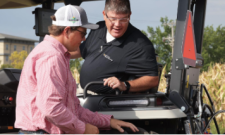
Kent Shannon, a CAFNR professor specializing in agricultural systems and technology, piloted the tractor for Tuesday’s demonstration. He said the MK-V was well-suited for smaller-scale farms, including his own.

“It provides some opportunities that a traditional tractor wouldn’t,” he said. “I can see me using this on a beef cattle farm at home.”

The tractor does come with a high price tag: A standard model starts at about $89,000, more than twice the price of a traditional tractor of the same size, Shannon said.

Even so, he emphasized that the total value of the tractor has yet to be fully understood, meaning that the price might actually be affordable given the advanced capabilities it offers.

“If I went to the local dealership, yeah, I’d find something a lot cheaper than this,” he said. “But if you think about agriculture as a whole, it’s not exorbitant.”

“You might even think it was more than $90,000 for a tractor like this,” he added. “You’ve got to think of all of the technologies on it — there’s no other tractor of this stature that has both electric and autonomy capability.”

Sazzad Rifat, a PhD student at MU studying biosystems engineering, said he looks forward to learning about the tractor’s autonomous driving features and its ability to maneuver around obstacles.

To better understand the MK-V’s technologies, university researchers are interested in exploring its ability to support farmers with disabilities.

Findings from this research, as well as information about the MK-V, will be shared with farmers through MU Extension’s AgrAbility program, which helps farmers with disabilities overcome challenges.

For Missouri’s small-scale farms, this tractor’s technological capability could be revolutionary, said Dan Downing, a water quality expert with MU Extension in a news release.

A more sophisticated hydraulic system and engine reduce emissions that may interfere with farm conditions, Downing said. The tractor also scores very well environmentally on air and water quality measurements.

Because of the nascency of this new technology, no state subsidies are yet available to help farmers pay for it, according to Teng Lim, a professor at MU Extension. There is, however, a “good chance” of future state support, he said.

This story originally appeared in the Columbia Missourian.