Sunday, March 1, 2026
Home Blog Page 634

Overseeding a Lawn

0

Tall fescue lawns that have become thin over the summer can be thickened up by overseeding during September. Start by mowing the grass short (1 to 1.5 inches) and removing the clippings. This will make it easier to achieve good seed-soil contact and increase the amount of light that will reach the young seedlings.

Good seed-soil contact is vital if the overseeding is to be successful. Excess thatch can prevent seed from reaching the soil and germinating. Normally we want 1/4 inch of thatch or less when overseeding. If the thatch layer is 3/4 inch or more, it is usually easiest to use a sod cutter to remove it and start over with a new lawn. A power rake can be used to reduce a thatch layer that is less than 3/4 inch but more than a quarter inch.

Once thatch is under control, the soil should be prepared for the seed. This can be done in various ways.   For small spots, a hand rake can be used to roughen up the soil before the seed is applied.

A verticut machine has solid vertical blades that can be set to cut furrows in the soil. It is best to go two different directions with the machine. A slit seeder is a verticut machine with a seed hopper added so the soil prep and seeding operation are combined. Another option is to use a core aerator.

 The core aerator will punch holes in the soil and deposit the soil cores on the surface of the ground. Each hole produces an excellent environment for seed germination and growth. Make three to four passes with the core aerator to ensure enough holes for the seed. Using a core aerator has the additional benefit of reducing the amount of watering needed to get the seed germinated and growing. Aeration also increases the water infiltration rate, decreases compaction, and increases the amount of oxygen in the soil.

Of the three methods, I prefer the slit seeder for obtaining good seed/soil contact.  However, if watering is difficult, core aeration may be a better option.  Regardless of method used, fertilizer should  be applied at the rate suggested by a soil test, or a starter fertilizer should be used at the rate suggested on the bag.

Ward Upham, Extension Agent

Fall Lawn Seeding Tips

0

The keys to successful lawn seeding are proper rates, even dispersal, good seed to soil contact, and proper watering. Evenness is best achieved by carefully calibrating the seeder or by adjusting the seeder to a low setting and making several passes to ensure even distribution. Seeding a little on the heavy side with close overlapping is better than missing areas altogether, especially for the bunch-type tall fescue, which does not spread.   Multiple seeder passes in opposite directions should help avoid this problem.

A more serious error in seeding is using the improper rate. For tall fescue, aim for 6 to 8 pounds of seed per 1,000 square feet for new areas and about half as much for overseeding or seeding areas in the shade.

Kentucky bluegrass has a much smaller seed so less is needed for establishment.  Use 2 to 3 pounds of seed per 1,000 square feet for a new lawn and half that for overseeding or shady areas.

Using too much seed results in a lawn more prone to disease and damage from stress. The best way to avoid such a mistake is to determine the square footage of the yard first, and then calculate the amount of seed. Using too little seed can also be detrimental and result in clumpy turf that is not as visually pleasing.

Establishing good seed to soil contact is essential for good germination rates. Slit seeders achieve good contact at the time of seeding by dropping seed directly behind the blade that slices a furrow into the soil. Packing wheels then follow to close the furrow. The same result can be accomplished by using a verticut before broadcasting the seed, and then verticutting in a different direction a second time.

Core aerators can also be used to seed grass. Go over an area at least three times in different directions, and then broadcast the seed. Germination will occur in the aeration holes. Because those holes stay moister than a traditional seedbed, this method requires less watering.

If the soil that has been worked by a rototiller, firm the soil with a roller or lawn tractor and  use light hand raking to mix the seed into the soil. A leaf rake often works better than a garden rake because it mixes seed more shallowly.

Water newly planted areas lightly, but often. Keep soil constantly moist but not waterlogged.  During hot days, a new lawn may need to be watered three times a day. If watered less, germination will be slowed. Cool, calm days may require watering only every couple of days. As the grass plants come up, gradually decrease watering to once a week if there is no rain. Let the plants tell you when to water. If you can push the blades down and they don’t spring back up quickly, the lawn needs water. Once seed sprouts, try to minimize traffic (foot, mower, dog, etc.) seeded areas receive until the seedlings are a little more robust and ready to be mowed. Begin mowing once seedlings reach 3 to 4 inches tall.

Ward Upham, Extension Agent


Frozen corn recall: Kroger, Food Lion, Signature Select vegetables recalled for listeria risk

0

Shop at Kroger or Food Lion? If you buy frozen veggies often, it may be time to check your fridge.

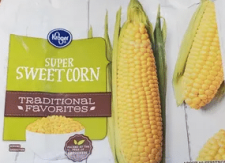
Twin City Food Inc. is voluntarily recalling some batches of frozen vegetables due to potentially deadly listeria poisoning.

According to a notice posted on the United States Federal Drug Administration website Monday, the Stanwood, Washington company said its “Not-Ready-To Eat” Individually Quick Frozen (IQF) Super Sweet Cut Corn and Mixed Vegetables in retail bags may be contaminated with the bacteria.

Listeria is an organism which can cause serious or fatal infections in children, the elderly, and others with weakened immune systems, the FDA reported.

Healthy people can also suffer symptoms including fever, headaches, nausea, stiffness, abdominal pain and diarrhea, and the infection can also cause miscarriages and stillbirths among pregnant women.

The affect brands are: Kroger, Food Lion and Signature Select.

The specific lot numbers and expiration dates of the affected bags of vegetables are listed by the FDA on its website here.

So far, no illness have been reported in connection to the recall.

People who bought the frozen vegetables are urged to not consume them and to throw them in the trash or return them to the store where they bought them for a refund.

Product Name UPC Lot and Best if Used By Date
FOOD LION Mixed Vegetables Carrots, Corn, Green
Beans & Peas, net wt. 16oz
35826005090 50183 BEST BY 18 JAN 2025 PROD OF USA
FOOD LION Super Sweet Cut Yellow Corn, net wt. 16oz. 35826079855 53072 BEST BY 03 NOV 2024 PROD OF USA
FOOD LION Super Sweet Cut Yellow Corn, net wt. 16oz. 35826079855 53622 BEST BY 28 DEC 2024 PROD OF USA
Kroger Mixed Vegetables Carrots, Super Sweet Corn,
Green Beans & Green Peas, net wt. 32 oz
11110865854 BEST IF USED BY FEB.2024 82352 SIDE ID,TIME
Kroger Mixed Vegetables Carrots, Super Sweet Corn,
Green Beans & Green Peas, net wt. 12 oz.
11110849625 53122 BEST IF USED BY MAY 2024 PROD OF USA
Kroger Mixed Vegetables Carrots, Super Sweet Corn,
Green Beans & Green Peas, net wt. 12 oz.
11110849625 53412 BEST IF USED BY JUN 2024 PROD OF USA
Kroger Mixed Vegetables Carrots, Super Sweet Corn,
Green Beans & Green Peas, net wt. 12 oz.
11110849625 53412 BEST IF USED BY JUN 2024 PROD OF USA
Kroger Mixed Vegetables Carrots, Super Sweet Corn,
Green Beans & Green Peas, net wt. 12 oz.
11110849625 BEST IF USED BY APR.2024 82942 SIDE ID, TIME
Kroger Mixed Vegetables Carrots, Super Sweet Corn,
Green Beans & Green Peas, net wt. 12 oz.
11110849625 BEST IF USED BY APR.2024 83012 SIDE ID, TIME
Kroger Super Sweet Corn, net wt. 32 oz. 11110865786 53052 BEST IF USED BY MAY 2024 PROD OF USA
Kroger Super Sweet Corn, net wt. 32 oz. 11110865786 53112 BEST BY MAY 2024 PROD OF USA
Kroger Super Sweet Corn, net wt. 32 oz. 11110865786 BEST IF USED BY APR.2024 82932 SIDE ID, TIME
Kroger Super Sweet Corn, net wt. 32 oz. 11110865786 BEST IF USED BY APR.2024 83012 SIDE ID, TIME
Kroger Super Sweet Corn, net wt. 12 oz. 11110849618 52842 BEST IF USED BY APR 2024 PROD OF USA
Kroger Super Sweet Corn, net wt. 12 oz. 11110849618 53042 BEST IF USED BY APR 2024 PROD OF USA
Kroger Super Sweet Corn, net wt. 12 oz. 11110849618 53272 BEST IF USED BY MAY 2024 PROD OF USA
Kroger Super Sweet Corn, net wt. 12 oz. 11110849618 53542 BEST IF USED BY JUN 2024 PROD OF USA
Kroger Super Sweet Corn, net wt. 12 oz. 11110849618 50043 BEST IF USED BY JUL 2024 PROD OF USA
Kroger Super Sweet Corn, net wt. 12 oz. 11110849618 50033 BEST IF USED BY JUL 2024 PROD OF USA
Kroger Super Sweet Corn, net wt. 12 oz. 11110849618 BEST IF USED BY FEB.2024 82352 SIDE ID,TIME
Kroger Super Sweet Corn, net wt. 12 oz. 11110849618 BEST IF USED BY APR.2024 82842 SIDE ID, TIME
Signature Select Golden Corn Super Sweet, net wt. 12oz 21130090655 BEST IF USED BY FEB.22.24 S5716 TIME,SIDE ID

Hightail Delivery credits Annie’s Project for helping business flourish

0

When she graduated from Iowa State University in 2020 with a degree in agricultural business, Natalie (Eick) Paino already knew quite a bit about running a business.

She grew up on her family’s dairy farm in northeast Iowa, just outside the town of Plainfield, where she and her family still farm today.

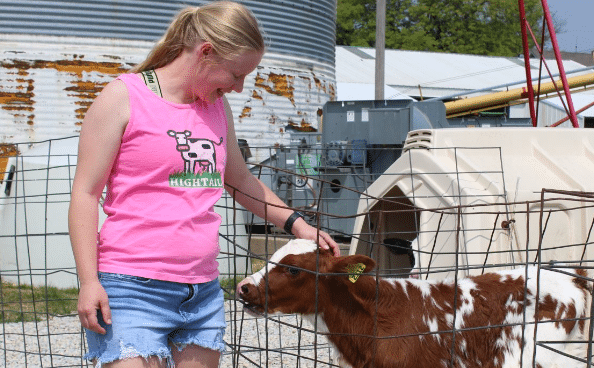
During her four years of study, she learned about the science of entrepreneurship, risk management, accounting and record keeping. By the start of her senior year, she had already started her own business, making and selling her own brand of ice cream under the name Hightail Delivery.

But even with all of her education and experience, Eick, 22, wanted to learn more and connect with people in the same shoes as she found herself.

The solution she found was Annie’s Project – an 18-hour farm business management course that empowers women in agriculture to be successful through education, networks and resources. The course covers farm finances, human resources, legal issues, marketing and agricultural production.

Paino completed Annie’s Project in 2022, just two years after she earned her college degree and three years after starting her own business.

“It was a great review and a great way to take some of those things I had learned at the university and actually apply them to the farm,” said Paino. “Sometimes those concepts seem pretty high-level and academic when you are a student, but then when you connect with people in the industry, it resonates and makes more sense.”

Paino’s ice cream business continues to grow and expand. It began inside an assisted-living facility where her late-grandmother was staying. There was a demand for good ice cream, and the facility offered her space to house and operate her processing equipment.

Today, she makes a dozen flavors of ice cream and she recently purchased dairy processing equipment, which will allow her to process her own ice cream and cheese curds on the farm in the near future.

Paino is adding value to her parent’s dairy farm. Together, Terry and Kelly Eick and their daughter produce ice cream, milk over 50 head of Holsteins at White Gold Dairy, and grow about 1,000 acres of crops.

The Annie’s Project that Paino completed in 2022 was actually her second experience with the program. In 2017, when she was still in high school, her mother, Kelly Eick, completed the program. The two rode together to many of the sessions, learning and discussing lessons along the way.

Kelly Eick said she took Annie’s because she wanted to know more about the business side of farming and to be prepared for the future.

“Annie’s gave me the kick-in-the-pants motivation to become more involved with the business of the farm and estate planning decisions,” said Kelly Eick. “It benefited Natalie and me both, my husband, Terry, and the whole farm.”

The Eicks’ experience has been replicated many times in the 20-year history of Annie’s, with women in agriculture  gaining new insight and knowledge that continues to improve their operations.

Alexis Stevens, a farm management specialist with the Farm Management Team at Iowa State, offered her first Annie’s Project in February and March of 2023. In her first offering, there were three mother-daughter pairs, and a wide range of agricultural backgrounds.

Stevens said she was nervous about offering Annie’s Project in the beginning, because of the amount of work it takes to line up speakers and secure an audience of participants. After about the second session, she could tell it was going to be a success.

“I was seeing the women building friendships and relationships and it was like 9 p.m. and no one wanted to go home,” said Stevens. “That’s when you know things are going well, when they’re having so much fun that they want to stay and talk with each other.”

The networking is a key part of what makes Annie’s work.

“I don’t think I could put a price tag on it,” said Stevens. “Annie’s and the time spent in the sessions opens the door to everything else for these women. Pretty soon they’re asking what else they can learn and then they’re inviting each other over to their own farms to learn different things. That is a million-dollar result.”

With 20 years of success, Annie’s Project is considered a core program for the 14-member Farm Management Team.

Chad Hart, professor of economics and state farm management team leader at Iowa State, said Annie’s Project has been successful because it reaches women in the way they learn best – through discussion and interactivity.

“With our female clientele, what we find and what science has shown us is that they’re searching for more group discussion, more interactivity, and also an audience that is concentrated on females,” said Hart. “What Annie’s did was force our team to think about the subjects we wanted to teach and come up with different educational tools and platforms to approach those same issues.”

Hart said the program continues to evolve as the needs and interests of women in agriculture evolve.

“This really is a client-driven program,” he said. “The participants make it easy on the planners because we don’t have to guess what they want – they tell us and we respond.”

The Eicks are a prime example. Not only has Natalie taken the program twice, but she later completed other extension programs for women, such as Boots in the Barn. She hopes to take the Women Managing Farmland and Women Marketing Grain farm management courses in the future.

Annie’s project helped Paino become more involved with the family farm. She developed a better understanding of how to work with people such as lenders, insurers and farm employees. She gained insights on the legal side of farming.

“My dad (Terry) is the leader of this farm, but my mother and I have a lot to do with what goes on every day,” said Paino. “Annie’s helped us to be more involved and more informed about the decisions we make.”

Annie’s Project is a women-centered program that reaches the whole family. “Many times, women go home and teach their husband something they learned in the class,” said Stevens. “The husbands benefit from that discussion and to be honest, the husbands sometimes learn things from their wives that they did not know before or would be embarrassed to admit they didn’t know.”

Hart said the participants “share outwardly and inwardly,” meaning they share what they learned with their friends and family, and in turn bring back to the class what they learned from their social circles.

“There is sort of an ebb-and-flow of sharing and discussion, and it’s fascinating to watch how that influences the breadth and depth of each session,” he said.

Oftentimes, the extension professionals who offer Annie’s Project find themselves learning new things, alongside the class participants.

Such was the case for Jade Schneider, the extension director for ISU Extension and Outreach in Delaware County. She first offered Annie’s Project in 2018 with Melissa O’Rourke, farm and agribusiness management specialist. This was about the same time that she and her husband, Logan, were returning to the farm.

“I knew that I wanted to do more women in ag programs myself, and the fact that I got to learn along with the participants was a real bonus,” said Schneider.

The response from the community was positive, and the county has since offered several extension programs for women in agriculture. Those include programs like Managing for Today and Tomorrow farm transition course, Women Managing Farmland, and Women Planning Ag Businesses. This summer Delaware County is offering Agronomy in the Field though the extension crops team.

“Offering Annie’s allowed us to gauge the interest level in other programs and respond accordingly,” Schneider said. “Annie’s provided us with a really good baseline to start with, and then we gained a huge following going forward.”

As reported in the High Plains Journal

Tarantulas on the march across Kansas grasslands? It’s just that time of year, experts say

0

The first official day of fall is less than a month away, and while you’re keeping an eye out for the leaves changing colors, you might also see something else — tarantulas.

Tarantulas will soon be seen walking through grasslands in Kansas looking for mates. While it may be referred to as a migration, the spiders are really just moving “across the road” to find females, according to state Department of Wildlife and Parks wildlife diversity coordinator Daren Riedle.

“The males kind of start going on a walkabout a little bit,” Riedle said. “Females tend to find a burrow that they lie in … the females are pretty much homebodies. But once the males reach sexual maturity, they will take off walking in search of females.”

Riedle said the tarantulas can be found in Kansas year-round, usually under rocks, fallen debris or trees. They will be more visible, however, when they search for mates during the late summer and early fall season. This will occur largely in southern Kansas.

“August through September, into early October, you will see the males cruising across the road,” he said.

While this may seem frightening, Rielde said you most likely won’t see huge numbers of the spiders on the move at once.

“You might see a dozen … just enough to really kind of say, ‘Oh, wow there’s a lot of spiders out today,’” he said. “As far as seeing huge numbers of them, I’ve never been that lucky, but when the weather is right [and] the conditions are right, there might be a few across the road.”

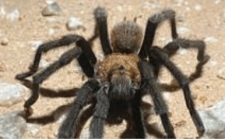
If you spot a tarantula in southern Kansas, it’ll be a Texas brown tarantula , scientific name aphonopelma hentzi.

Female Texas browns reach around 2 inches in size, while the males are usually a little smaller, measuring about 1.5 inches. These tarantulas feed off of insects they find while roaming in grasslands.

“For the most part, the group of tarantulas we see in the U.S. are pretty similar,” Riedle said. “Kind of a brownish …. to blackish color, the body tends to be more brown and the legs tends to be a lot darker.”

Texas brown tarantulas are venomous, but will only strike when provoked.

“The ones here, as far as humans go, at worse [the venom is] like a bee sting,” Riedle said.

Riedle said the Texas brown tarantula is the primary species found in Kansas. It can generally be found in states west of the Mississippi River , into New Mexico and Colorado, according to the Louisiana Department of Wildlife and Fisheries.

If you do come across a tarantula, don’t worry. They only strike when provoked, and their venom is similar to a bee sting.

If someone is extremely allergic, however, the bites can be serious. Healthline, an online medical community, reports the spot of a tarantula bite will become warm and red after striking. Other symptoms may not show up until later, but can include a rash, itching and swelling.

In severe cases, symptoms can include trouble breathing, rapid heart rate and eyelid puffiness. If you experience severe symptoms, contact a medical provider right away.

For non-severe spider bites, the Cleveland Clinic recommends you:

  • Wash the bite with warm water and soap
  • Ice the bite
  • Take over-the-counter medications, like ibuprofen

If the bite is more severe, Cleveland Clinic says to ask your doctor about getting a tetanus shot.