Sunday, March 1, 2026
Home Blog Page 633

Mourning a Loss in the Community

0

Lovina’s Amish Kitchen
Lovina Eitcher,
Old Order Amish
Cook, Wife &
Mother of Eight


Another week has gone by, and it’s already time to write another column. Last week was very hot and humid, making for some restless nights. This week, temperatures are cooler and even chilly in the early morning hours with the mercury dropping to 50 degrees. It makes for some nice sleeping with the coolness at night. Although this morning, I lit a gas light for heat after daughter Loretta and her little ones came. Baby Byron is doing well and is a little sweetie to cuddle with. Denzel is getting adjusted to having to share his parents with his little brother. 

Friday evening, our whole family, sister Emma and sons Jacob and Steven, nephew Benjamin and wife Crystal and son, all gathered at sister Verena’s. A lot of work was done around there for her. We all took supper along. Sister Emma brought a cake, and we had a belated birthday for Verena as well. Joe grilled chicken for supper too. Verena was so glad for everything that got accomplished. 

Saturday, we had a short visit from sister Liz, Levi, and daughter Suzanne. It was good to see Liz again. We hadn’t seen each other since daughter Susan and Ervin’s wedding nine months ago. They also stopped at daughter Loretta and Dustin’s house to see little Byron. Loretta and Suzanne are the same age.

We were shocked to hear the sad news of the accident that took the life of 22-year-old Harley. He was a special friend to my great niece Sarah. Sarah’s mother Elizabeth is the daughter of brother Albert and Sarah Irene. Harley was driving in his buggy along a highway when he was rear-ended by a car. He was taken to the hospital but died later on. Harley’s mother Mary Susan (husband Chris) was in my grade in school, and we were in the same church growing up. My heart aches for the family and Sarah to lose a loved one so early in life. Sarah showed us a card Harley had in his buggy and was found in the wreck that he had signed out to her. He left her a nice memory. May God help them through this difficult trial in life and comfort them as they mourn the death of their son, brother, and special friend.

Sisters Verena and Emma, Joe, and I traveled over two hours to attend the viewing on Sunday afternoon. We stopped in at sister Liz and Levi for a while. So Liz and I got to see each other again.  

Saturday evening, daughter Tim and Elizabeth and their four children, daughter Susan and Ervin and their five children, and Joe and I were supper guests at daughter Loretta and Dustin’s house. Son Benjamin came over for supper before he left for the community building where the youth gather on Saturday evenings. 

Sunday will be baptismal services for three young souls in our church district, including son Joseph, 21, and daughter Lovina, 19. As a parent, I am so thankful that they are taking this step in accepting Jesus Christ as their savior. May God always be their guide as they travel into the unknown future.

I need to hurry now as I’m going to town to get groceries. Tomorrow, the girls and I will have a cooking and baking day. I am in the process of making another cookbook, so the photographer will come to take pictures of the dishes we prepare. It’s always a lot of work but also enjoyable to have the girls here and work with them. This cookbook should be out next year sometime. 

Until next week… God bless!


Good Goulash

1 pound hamburger

1/2 onion, chopped

2 cups macaroni

1 quart tomato juice

1 pint marinara sauce

3/4 teaspoon salt

3/4 teaspoon chili powder

1/4 cup sugar

Brown the hamburger and onion in a skillet, then drain off excess fat. While the hamburger is browning, cook the macaroni in water for 10 minutes. Drain off liquid. Combine all ingredients with macaroni and simmer for 15 to 20 minutes. Serve over mashed potatoes. 


Lovina’s Amish Kitchen is written by Lovina Eicher, Old Order Amish writer, cook, wife, and mother of eight. Her newest cookbook, Amish Family Recipes, is available wherever books are sold. Readers can write to Eicher at Lovina’s Amish Kitchen, PO Box 234, Sturgis, MI 49091 (please include a self-addressed stamped envelope for a reply); or email [email protected] and your message will be passed on to her to read. She does not personally respond to emails.

Contact: [email protected]; 1-800-245-7894

USDA: Your Top Ten Labor Day Weekend Food Safety Tips

0

When you hit the road for that one last camping trip or beach day, bring food safety along to keep foodborne illness in the rearview mirror.

Here are your Top 10 Labor Day food safety tips for travelers:

  1. Pack perishable foods directly from the refrigerator or freezer into the cooler. Meat and poultry may be packed while they are still frozen.
  2. Use an appliance thermometer in your cooler to monitor that your food stays chilled at 40 F or below.
  3. Keep raw meat and poultry wrapped separately from cooked foods or foods meant to be eaten raw, such as fruits.
  4. For long trips, take two coolers — one for the day’s immediate food needs, such as lunch, drinks or snacks, and the other for perishable foods to be used later.
  5. When you arrive at your campsite, only consume bottled water or other canned or bottled drinks. Water in streams and rivers is untreated and not safe for drinking.
  6. Use hand sanitizer or disposable moist towelettes that contain at least 60 percent alcohol.
  7. Consider buying shelf-stable food to ensure food safety.
  8. When you arrive at the beach, partially bury your cooler in the sand, cover it with blankets and shade it with a beach umbrella.
  9. Don’t eat food that has been sitting out (especially in the sun) for more than 2 hours (1 hour when the temperature is above 90 F).
  10. Always follow your four food safety steps.

Have a food safety question? Contact the USDA Meat and Poultry Hotline at 1-888-MPHotline (1-888-674-6854) to talk to a food safety specialist or chat live at ask.usda.gov from 10 a.m. to 6 p.m. Eastern Time, Monday through Friday.

By Jesus Garcia, Public Affairs Specialist, Food Safety Education Staff

Is groundwater conservation bill a federal ‘buy and dry’ program? 

0

Mark Twain once famously said, “Whiskey is for drinking, water is for fighting over.” Recently, Reps. Yadira Caraveo, D-CO, and Jake LaTurner, R-KS, jointly introduced the bipartisan Voluntary Groundwater Conservation Act in the House of Representatives that should reduce fighting over water.

The goal, says the bill’s supporters, is for it to become part of the farm bill. U.S. Sens. Jerry Moran, R-KS, Michael Bennet, D-CO, and Martin Heinrich, D-NM, introduced the Voluntary Groundwater Conservation Act in the Senate earlier in July.

The act “gives farmers and ranchers the flexibility they need to protect groundwater sources while also keeping their agricultural lands in production under a new voluntary groundwater easement program at the United States Department of Agriculture’s Natural Resource Conservation Service within the Agricultural Conservation Easements Program,”according to statements by both members.

The Voluntary Groundwater Conservation Act would:  

  • Create a new Groundwater Conservation Easement Program at USDA to encourage voluntary, compensated reductions in groundwater consumption on agricultural land and advance local, regional, or state groundwater management goals;
  • Allow NRCS to reimburse transaction costs up to 5% of the federal share and requires an advance payment for limited resource producers to cover these costs;
  • Guarantee “long-term management flexibility for a producer to continue farming and choose how they reduce their water use, as long as they conserve the amount they’ve committed to reducing each year;”
  • Ensure that farmers are “fairly compensated using a payment based on the market value for the water right instead of a per acre payment;” and
  • Clarify that easement funds shall not be counted toward a farm’s adjusted gross income and that producers with an adjusted gross income of more than $900,000 are eligible for a waiver from the secretary of agriculture to participate in groundwater conservation easements.

The bill is supported by a number of farm and ag organizations, including the Colorado Farm Bureau. Zach Riley, executive director of the Colorado Livestock Association, said that while his group doesn’t officially oppose the bill, he is “wary of a federal pathway to potentially control [state-regulated] groundwater.”

Water use and transfer rights are largely regulated by the states, rather than the federal government. Unlike water quality, which is regulated by the federal Clean Water Act. Each state has a differently layered mix of water rights, using a variety of legal doctrines about water use. In Colorado water rights are like property rights that can be bought and sold. When water rights are sold and agriculture stops on the land it’s called Agricultural Water Transfer, more commonly known as “buy and dry.”

But according to its supporters, the bill is largely a fix of existing federal programs created in the last farm bill, a fix that benefits producers and gives them more flexibility. That bill—the 2018 Agriculture Improvement Act—authorized the secretary of agriculture to incentivize partnerships to conserve water, including making payments to producers to voluntarily curtail use of water rights.

Jesse Bradley, deputy director of natural resources for the Nebraska Department of Natural Resources, said he hasn’t seen the proposed bill and couldn’t comment on it directly. But he explained that under the USDA’s Conservation Reserve Enhancement Program, producers who participate are encouraged to let water-abated land return to grassland.

Under the proposed bill, landowners would be allowed to practice dryland production or grazing on the land, as long as they don’t use their water rights. “We [in Nebraska] have been having some of these conversations about water and land use with our counterparts in Colorado,” Bradley told High Plains Journal.

Bradley said the current approach to voluntarily curtailing water rights yokes together two distinct purposes: conserving water and restoring land to a “natural” state. But those two purposes need not always go together, and one doesn’t automatically imply the other.

The Inflation Reduction Act provides $4.6 billion to the Bureau of Reclamation—part of the Department of the Interior—designed in part to compensate water users who agree to water use reductions in voluntary water conservation agreements. That came on the heels of the Infrastructure Investment and Jobs Act’s $8.3 billion in emergency supplemental appropriations for reclamation, in equal installments from FY2022 to FY2026.

This funding is available to entities like cities, water districts and tribes within the 17 “reclamation states” named in the Reclamation Act of 1902 including Arizona, California, Colorado, Idaho, Kansas, Montana, Nebraska Nevada, New Mexico, North Dakota, Oklahoma, Oregon, South Dakota, Utah, Washington and Wyoming; parts of Texas were later added.

The Caraveo-LaTurner bill comes on the heels of the recently announced Colorado River water pact reported on by HPJ at bit.ly/45lOfJb. Under that deal, the Department of the Interior announced an agreement among seven Western states to voluntarily reduce their allocated water rights in exchange for short-term payments while infrastructure projects to address Colorado River shortages longer-term are being completed.

Payments to water users, including farmers, totaling about $1.2 billion, will come from the IRA, to be divided among water districts, cities and tribes that reduce their water usage. Arizona, California and New Mexico agreed to conserve at least an additional 3 million acre feet of Colorado River water in the lower basin by the end of calendar year 2026, with at least 1.5 MAF of that total being conserved by the end of calendar year 2024. That amount is about 13% of the three states’ total allotment.

In an era of climate volatility, droughts and increasing demand on aquifers, everyone agrees that voluntary conservation agreements have a big role to play in our water future. Making them easier and more attractive for farmers to participate in is a win for everyone. Whether or not they will be enough to preserve and sustain shrinking aquifers remains to be seen.

As reported in the High Plains Journal.

Preparing the Vegetable Garden for Next Year   

0

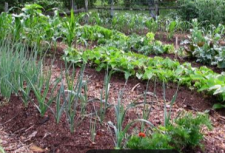
Put in the work now for a productive garden next year. Before removing plants, make a sketch of the vegetable layout. This will come in handy when you’re planning the layout for the next garden if you choose to rotate your crops.

Remove debris from plants that are done producing. Compost debris that is disease-free. For smaller gardens, manually remove weeds. Larger gardens may require tilling. If so, avoid tilling while the soil is saturated as this breaks down the structure.

A cover crop can be planted to return nutrients to the soil during this off season. Cover crops also reduce soil erosion and improve the quality of the soil. Small grains such as wheat should be seeded at 3/4 to 1 pound of seed per 1,000 square feet from mid-September to late October. Spring oats can also be seeded until mid-September but the rate should be 2 to 4 pounds per 1,000 square feet. Spring oats will die back in the winter and can be tilled under in the spring. Daikon radishes are another good cover crop because the large taproot penetrates the hardpan. After the radishes die back in the winter, the loosened soil is better able to retain water.

Hairy vetch, alfalfa and sweetclover are legumes which means they also fix nitrogen. Seed these cover crops at a rate of ¼ to ½ pound of seed per 1,000 square feet of garden. Hairy vetch and alfalfa can be seeded from mid-August to late September while sweetclover should be seeded only until early-September.

Cynthia Domenghini, Extention Agent

Power Raking and Core-Aeration  

0

September is the optimum time to power rake or core-aerate tall fescue and Kentucky bluegrass lawns. These grasses should be coming out of their summer doldrums and beginning to grow more vigorously. This is a good time to consider what we are trying to accomplish with these practices.

Power raking is primarily a thatch control operation. It can be excessively damaging to the turf if not done carefully. For lawns with one-half inch of thatch or less, I don’t recommend power raking but rather core aeration. For those who are unsure what thatch is, it is a springy layer of light-brown organic matter that resembles peat moss and is located above the soil but below the grass foliage. Power raking pulls up an incredible amount of material that then must be dealt with by composting or discarding.

 Core-aeration is a much better practice for most lawns. By removing cores of soil, core-aeration relieves compaction, hastens thatch decomposition, and improves water, nutrient, and oxygen movement into the soil profile. This operation should be performed when the soil is just moist enough so that it crumbles easily when worked between the fingers. Enough passes should be made so that the holes are spaced about 2 to 3 inches apart. Ideally, the holes should penetrate 2.5 to 3 inches deep. The cores can be left on the lawn to fall apart naturally (a process that usually takes two or three weeks, depending on soil-type), or they can be broken up with a power rake set just low enough to nick the cores, and then dragged with a section of chain-link fence or a steel doormat. The intermingling of soil and thatch is beneficial to the lawn.

Ward Upham, Extension Agent