Monday, March 2, 2026
Home Blog Page 647

Composting: Choosing a Bin

0

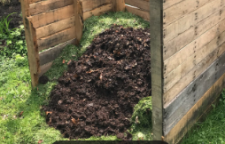
Composting within a bin is not a requirement for decomposition to occur. However, containing your compost piles in some manner serves several purposes including keeping a tidy appearance and expediting decomposition.

An ideal compost pile should be no larger than 3 ft x 3 ft x ft. This is a manageable size for turning by hand and reduces the likelihood of compaction. At this size the pile will generate enough heat to improve decomposition and kill off pests and weed seeds within the pile. Do not make the pile any larger than 5 ft x 5 ft x 5 ft.

Compost bins that facilitate regular turning can be purchased, but a more cost effective option is to build one. Compost bins can be built using a variety of materials including some that can be sourced free such as pallets. Here are plans for some do-it-yourself options https://extension.missouri.edu/publications/g6957

A common compost setup uses three bins to store materials throughout the stages. The first bin stores green material. The second bin holds the actively decomposing material and the third bin houses the finished compost that is ready to be used.

Here is a video to help with selecting the compost bin system that is right for you. https://kansashealthyyards.org/all-videos/video/composting-choosing-a-bin 

Cynthia Domenghini, Extension Agent
Pears

0

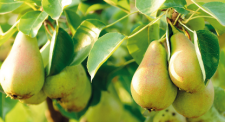
Pears are typically ready for harvest from now through October. Don’t wait until fully ripe to harvest though; pears left to ripen on the tree may develop a gritty texture. Harvesting at maturity but before peak ripeness along with a chilling period can bring out the sweet flavors we love from pears.

Pears that are ready for harvest change to a darker green color. Some varieties will have brown spots on the skin. These are the fruits’ “breathing pores” known as lenticels. The lenticels are white or greenish-white on immature pears and change to brown at maturity. The fruit will develop a waxy coating and will separate easily from the branch when twisted. Mature fruit should have a pear aroma.

When harvesting, carefully remove the fruit by lifting it at an angle and twisting. Avoid damaging the twig where it attaches as this could negatively impact fruit development next year.

Refrigerate newly harvested pears at 31 to 50 degrees F for two days to several weeks depending on the variety.

To complete ripening, remove pears from the cold storage and allow to sit at 60 to 65 degrees F for one to three weeks. Conditions that are too warm may cause the fruit to rot instead of ripening.

Cynthia Domenghini, Extension Agent
Keep heartworm prevention up, mosquitoes are around

0

Erica Miller, DVM with Apple Lane Animal Hospital is cautioning dog owners to continue to provide preventative care for heartworm disease.

“Last time we were in, we talked about, we’ve had three cases so far,” Miller said. “We’ve had another one since we were in last time. That’s only been two months ago. Mosquitoes are out. I get, a lot of the time, well, you know, my dog is inside the majority of the time. They only go out to go potty. I always say, you know, when we go outside, for me, it’s if I just go out to the garden or if I just walk out with my pets, the mosquitoes are on me. If they are on you, they are on your pets. They should be on that yearly heartworm preventative to protect them.”

It’s a real problem if the infection is allowed to grow.

“When a mosquito bites that is infected with heartworms, when they bite your pet,” Miller said. “Essentially, when they go to take a blood meal, some of those worns can wiggle down and go into the bloodstream. Once they are there, they swim around and then they make it to the heart. Once they make it to the heart, that’s where they turn into adults and they start reproducing. As they turn into adults, they get big and long, like spaghetti noodle size. The problem with that is, they are causing damage to the heart. Once the heart gets full of heartworms, they spill over into the lungs. Then we’re causing damage to the lungs.”

Heartworms can produce baby worms for up to seven years in a dog if left untreated.

“We can treat heartworms and we can get rid of them,” Miller said. “It’s more expensive than prevention, but the damage they have already caused to the heart and lungs, there’s no fixing that.”

If you suspect your pet is sick, call your vet immediately. For health-related questions, always consult your veterinarian.

As reported on Hutch Post.

Wood Chips as Mulch   

0

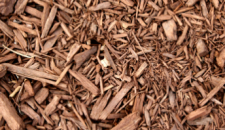
Mulching the landscape is a recommended practice to moderate soil temperature and moisture and prevent weeds. Wood chips created by tree trimming companies can be an inexpensive way to mulch around trees and shrubs in the landscape. Homeowners have some concerns about the effect green wood chips may have on their landscape plants.

Will using fresh wood chips as mulch deplete nitrogen from the soil? Microorganisms found in the soil break down organic matter using nitrogen from the soil. Wood chips are very low in nitrogen so more is pulled from the soil to break down the wood chips making the nitrogen less available for the desired plants. However, when used only on the surface as a mulch, this is not a concern. It is not recommended to incorporate fresh wood chips into the soil. Recognize the difference between mulch and compost.

Will wood chips from a diseased tree spread the disease into my landscape? The short answer is “it could.” However, if handled properly, the wood chips can be safely used in the landscape. If it is known that the wood chips are from a diseased tree, allow them time to dry out completely before spreading in the landscape. To be safe, avoid spreading the mulch around trees of the same species where the wood chips originated.

Will using wood chips near my home encourage termites? This can be a concern if the wood chips are mulched right up to the foundation of the house. Termites are light and heat sensitive and will not bother the chips themselves if they are 3 inches deep or less. Therefore, keep the depth of the mulch less than three-inches near the house and other buildings. Also, leave a bare area several inches wide next to the house so that any termite activity is noticeable.

Cynthia Domenghini, Extension Agent

United States cattle inventory down 3%

0

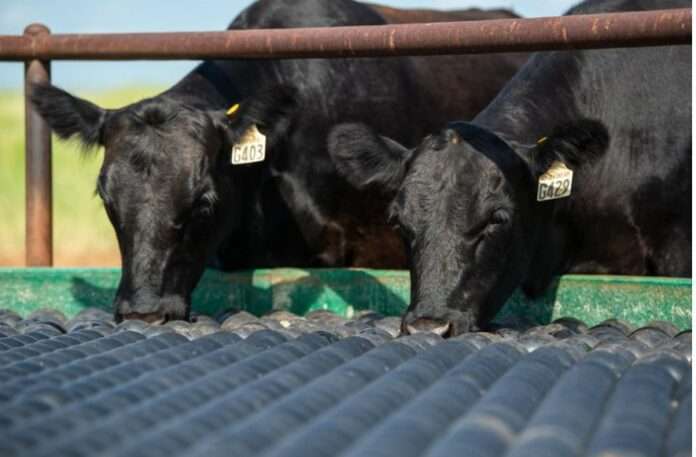
There were 95.9 million head of cattle and calves on United States farms as of July 1, 2023, according to the Cattle report published July 21 by the U.S. Department of Agriculture’s National Agricultural Statistics Service.

Other key findings in the report were:

• Of the 95.9 million head inventory, all cows and heifers that have calved totaled 38.8 million.

• There are 29.4 million beef cows in the U.S. as of July 1, 2023, down 3% from last year.

• The number of milk cows in the United States remained unchanged at 9.4 million.

• U.S. calf crop was estimated at 33.8 million head, down 2% from 2022.

• All cattle on feed were at 13.1 million head, down 2% from 2022.

To obtain an accurate measurement of the current state of the U.S. cattle industry, NASS surveyed roughly 15,600 operators across the nation during the first half of July. Surveyed producers were asked to report their cattle inventories as of July 1, 2023, and calf crop for the entire year of 2023 by internet, mail, telephone, or personal interview.

As reported in the High Plains Journal.