Tuesday, March 3, 2026
Home Blog Page 668

Summer fruits, vegetables boost opportunities for healthier eating

0

If there’s ever a time to buck American’s tendency to fall short on their consumption of fruits and vegetables, summer is it.

“Summer is the perfect time to think of new fruits and vegetables that we can incorporate into our meals,” said Ashley Svaty, K-State Research and Extension’s Northwest Area Family and Consumer Sciences specialist.

“Hopefully, you have a local farmers’ market you can go to, but if you don’t, produce at the grocery store is going to be cheaper now because it is more abundant.”

The U.S. Centers for Disease Control and other organizations have reported that barely 10% of Americans regularly meet the daily recommendation for eight servings of fruits and vegetables. Svaty said Kansans fall smack dab in that range—only 10% of residents eat enough fruit daily, and just 8% get enough vegetables.

As a guideline, the U.S. Department of Agriculture defines a serving as a full cup of raw vegetables or fruit; or a half-cup of cooked vegetables.

“I’m always looking for tips on how we can eat more fruits and vegetables, and I think it comes down to it needing to be easy, convenient and really fast to get to,” Svaty said. “And we need to make it a habit, so one habit I like to share is to keep a bowl of fresh fruit out so that you can see it when you walk into the kitchen. If you’re hungry for a snack… you’re probably going to grab that instead of looking into the cabinet for something a little less nutritious.”

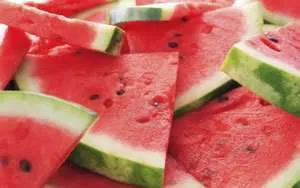
Svaty said summer selections provide many fun opportunities to incorporate fruits and vegetables into meals: Think skewers with fun fruit shapes including watermelon, grapes, blueberries, kiwi, cantaloupe or even grape tomatoes.

“I love anything on a skewer,” Svaty said. “And think of kids. They are going to have fun eating that compared to the same fruit or vegetable on a plate. Kids are going to eat more fruits and vegetables when they see you doing it. So be a role model to them.”

Summer dips—including yogurt—also helps to encourage adults and kids to eat various fruits and vegetables.

“You can also grill vegetables,” Svaty said. “Once our (home) garden takes off, we just have squash and zucchini coming out of our ears. So one of my favorite recipes is to throw squash and onion with herbs and spices into some oil on the grill. And you can do whatever vegetables you want…potatoes, asparagus, and many more.”

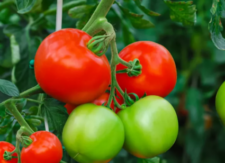
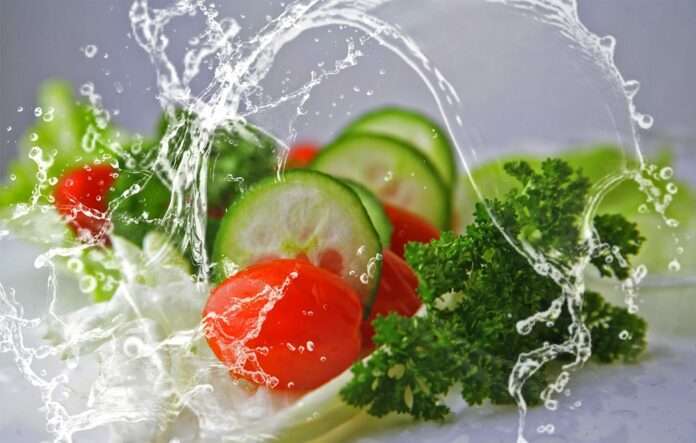
Other summer foods often found in greater quantity during the summer include lettuce, cucumbers, tomatoes and pickles. Many fruits and vegetables can be canned or frozen for use later on.

When grilling proteins, Svaty also recommends making extra food that can be eaten as leftovers. Reheat in the microwave so that the internal temperature reaches 165 degrees Fahrenheit. Doing so reduces the use of the oven, which keeps heat out of the house during hotter days.

If cooking indoors, she adds, “cook multiple meals in the oven, and cook in the morning when it’s cooler.”

Program Announced to Replace Stolen Food Assistance Benefits

0

In response to increased reports of Electronic Benefit Transfer (EBT) card thefts across the U.S., the Kansas Department for Children and Families (DCF) is accepting requests for replacement of the stolen Food Assistance (also known as SNAP) benefits.

“Access to healthy food is a key component of a family’s well-being,” said DCF Secretary Laura Howard. “This program will help Kansans whose benefits have been stolen recoup those resources, helping to ensure they can provide healthy, nutritious meals for their family members.”

There have been fewer than 20 reports of stolen benefits in Kansas. Nationally the numbers are higher, which prompted the signing of the Consolidated Appropriations Act of 2023 by President Joe Biden in December 2022. The act includes a provision for the replacement of stolen EBT benefits with federal funds.

Food Assistance benefits eligible for replacement include those stolen from card skimming, card cloning, and other types of fraudulent methods between Oct. 1, 2022, and Sept. 30, 2024. Cardholders have 45 calendar days from the day of the theft to make a report to DCF. If the incident occurred between Oct. 1, 2022, and July 12, 2023, a report must be made by Aug. 26, 2023.

  • Skimming – A method of obtaining personal data from EBT cards while they are used at an ATM machine or POS.
  • Cloning – A type of card theft in which the thief makes a digital copy of the card information using a concealed or disguised electronic scanner to create a new physical card.
  • Similar Fraudulent Events – Phishing or scamming attacks by criminals to obtain EBT card numbers to clone EBT cards or conduct online transactions.

If a Kansan believes their Food Assistance benefits have been stolen, they should contact DCF at 1-888-369-4777 or by calling the Fraud Hotline at 1-800-432-3913.

The USDA Food and Nutrition Services offers the following tips to prevent the theft of benefits through fraudulent activities.

  • Avoid simple PINs. Number combinations such as 1111, 1234, or 9876 may be easy for others to guess.
  • Keep your PIN and card number secret. Do not share your PIN or card number with anyone outside your household. Cover the keypad when you enter your PIN on a machine.
  • Beware of phishing. State agencies and EBT processors will never call or text to ask for your PIN or card number.
  • Change your PIN often. Change your PIN at least once a month, right before your benefit issuance date.
  • Check your EBT account regularly for unauthorized charges. If you see any, change your PIN right away to stop the thief from making new purchases. Report suspicious activity to your local SNAP office.


Green June Beetle

0

Description:  Green June beetle larvae are cream-colored grubs from ¼-inch to two-inches in length depending on the stage of molting. The adult beetle is almost one-inch long with a velvety-green, oval-shaped body. The edges of the body are orange-yellow and the wing covers are reddish-brown. The eggs are round and about 1/16-inch in diameter.

Life Cycle: There is one generation of green June beetles per year. The grubs that hatch from eggs in the fall overwinter in the soil in cases they create from the soil and a substance that excretes from their body. In the spring the grubs pupate and the adult beetles develop in two to three weeks. The beetles emerge from the soil in late June through July to mate. Females then lay eggs in clusters of 10 to 30 eggs. The eggs hatch within two weeks.

Damage: Larvae feed on decaying organic matter as well as roots. As the grubs tunnel below the ground they can cause damage to lawns by feeding on the roots as well as pushing soil up through the tunnel holes creating small mounds of dirt at the surface. Larvae may also feed on underground vegetables such as sweet potatoes and carrots. Adult beetles may skeletonize leaves primarily of fruit trees but also oaks and maples. They can also eat the fruit on the trees.

 Control: Many general-use insecticides, including carbaryl (Sevin dust) and malathion, may be used to discourage feeding. Follow insecticide label instructions for application rates and waiting period between application and harvest. For some crops carbaryl products have a longer waiting period than malathion and vise versa so choose your product accordingly.

Cynthia Domenghini, Extension Agent

Harvesting a Ripe Melon

0
photo courtesy: google images

Melons will have the highest sugar content if allowed to ripen fully on the vine.

When cantaloupes are ready for harvest they will easily separate from the vine. Put a little pressure on the fruit where the vine attaches. If ripe, the fruit will slip off the vine and you will see a dish-shaped depression on the fruit. Twisting the stem to force separation indicates the melon is not ready. Additionally, the skin of the melon should begin to show yellowing instead of solid green during immaturity. A ripe cantaloupe should have a musky fragrance and the end of the fruit opposite where the vine is attached should be soft. Cantaloupe can be stored in a refrigerator for two weeks.

 Watermelons display their readiness to harvest as the underside of the fruit changes from green-white to yellow. The glossy green that was once apparent on a majority of the fruit will also become more dull. The tendril attaching the fruit to the vine will turn black when the fruit reaches maturity. Separate the fruit from the vine by cutting the tendril leaving about two inches still attached to the fruit. Store freshly harvested watermelons at room temperature for one week or in 50-60 degrees F for two to three weeks.

 Honeydew melons do not easily pull away from the stem when ripe. Instead, rely on the change in color of the fruit from pale green to light yellow, the softening spot on the fruit opposite from where the vine attaches and the aroma coming from the fruit. Honeydews can be stored for two weeks at 50 degrees F.

Cynthia Domenghini, Extesnion Agent

Tomato Cracking

0

Tomatoes often have problems with cracking caused by pressure inside the fruit that is more than the skin can handle. Cracks are usually on the upper part of the fruit and can be concentric (in concentric circles around the stem) or radial (radiating downward from the stem). We don’t know everything about cracking but here is what we do know.

Tomatoes have a root system that is very dense and fibrous and is quite efficient in picking up water. Unfortunately, the root system can become unbalanced with the top of the plant. Early in the season it may be small in relation to the top growth resulting in blossom-end rot when the weather turns hot and dry. Later it may be so efficient that it provides too much water when we get rain or irrigate heavily after a dry spell. This quick influx of water can cause the tomato fruit to crack.  Therefore, even, consistent watering can help with cracking. Mulching will also help because it moderates moisture levels in the soil. However, you can do everything right and still have problems with cracking in some years.

We have evaluated varieties for cracking during our tomato trials at K-State. It takes several years worth of data to get a good feel for crack-resistant varieties but we have found some real differences. Some varieties crack under about any condition and others are much more resistant. The difference seems to be pliability of skin rather than thickness — the more pliable the skin the more resistance to cracking.

The old variety Jet Star has been the most crack resistant of any we have tested including the newer types. Unfortunately, Jet Star is an indeterminate variety that puts out rampant growth.

Newer varieties with more controlled growth are often more attractive to gardeners. Mountain Spring, Mountain Pride, Mountain Fresh, Floralina and Sun Leaper are smaller-vined types that have shown good resistance to cracking.

Ward Upham, Extension Agent