Tuesday, March 3, 2026
Home Blog Page 667

Tips for safe canning

0

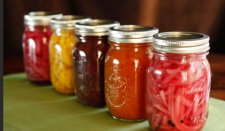
Now is the time to inspect canning equipment ahead of the summer season. There is nothing like the taste of fresh vegetables that come straight to the table from the garden, and often when there is a produce surplus folks turn to processing options such as freezing or canning to make it last throughout the year.

In anticipation of that summer season, food scientist Karen Blakeslee, who is also the coordinator of the Rapid Response Center for Food Science at Kansas State University, offers tips on how to have a successful canning experience.

“This is the time to make sure everything is working properly before you start canning,” Blakeslee said.

She said canning jars and rings can be reused if the jars are free of cracks and there is no rust on the rings. To keep damage from occurring, Blakeslee recommends hand-washing the rings to keep them from rusting prematurely. Lids, however, cannot be used more than once.

“Never reuse the lids; they are only to be used once because of the sealing compound gets indented and the lid will get bent when opening the jar,” Blakeslee said.

Along with checking the jars and rings, she also said it is important to inspect canners to make sure they are in working order. For example, with dial gauge canners, start by checking the valves and pressure gauge.

“You need to make sure the dial gauge is tested. That can be done through your local extension office,” Blakeslee said. We can only test four brands which include Presto, National, Maid of Honor and Magic Seal.

She also encourages people to check the seal between the pot and the lid, looking for cracks or dried rubber.

“If there are cracks in the seal, steam will leak out and the canner will never get to the proper pressure,” Blakeslee said. She added that the rubber plug can also wear out and will need to be replaced when it is damaged.

As far as preparing the food, Blakeslee recommends removing the peels to prevent unintended bacteria growth.

“When you can foods like potatoes and carrots, bacteria and dirt can get trapped in the cracks, so you will want to remove the peels before canning,” Blakeslee said. She adds that this is true of tomatoes, as well.

She encouraged people to follow tested canning recipes and not to improvise.

“There are a lot of tested recipes on our K-State Rapid Response Center website that would be good follow,” Blakeslee said.

After the jars have been processed, Blakeslee said they should be allowed to cool in an isolated area.

“I recommend putting a towel down on the counter with a cooling rack on top rather than putting the jars directly on the counter. Also, be sure to keep them away from drafts, so they are allowed to cool down naturally,” Blakeslee said.

Lastly, Blakeslee said to be sure to write the date that the food was canned on the lid before putting them into storage.

Blakeslee said: “It is important to put the date on the jars and try to use them within one year allowing you to rotate them out for the next year’s supply.”

Courtesey of Kansas State University Research and Extension
 

What does summer pneumonia look like in calves, and what to do about it?

0

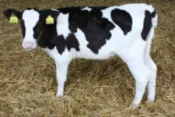
Though the stress of calving season is behind us, cattle producers have to stay vigilant, because things like nursing calf pneumonia and pinkeye can take a lot of the fun out of baseball games and county fairs. Let’s take a quick look at summer and nursing-calf pneumonia.

Beef producers normally spot this condition when they notice a listless calf with droopy ears and a high body temperature (fever). The calf may or may not cough or have visible difficulty breathing. Speak with your veterinarian if you have questions regarding how to best approach vaccinating calves as well as what you’ll want to use to treat summer pneumonia if you identify it in your calves. Treatment is usually effective with this condition when administered early in the course of the disease.

Cattle across Nebraska endured prolonged weather stress this past winter, and many cows appear to be thinner than usual, even in areas not affected by the historic and devastating winter weather. Due to the winter stress on cows we suspect a large percentage of calves received lower quality colostrum than usual this year, which may make them more likely to get sick, including with summer pneumonia. We’ve heard about lots of struggles with calf health across the state this spring, which means it will be especially important to keep very close tabs on calf health this summer, and if treatment is necessary, to intervene earlier rather than later.

If the calf dies, a veterinarian can generally diagnose this condition with a high level of certainty during a post-mortem exam. Having these calves posted by a veterinarian can also rule out other possibilities and allow the vet to recommend the ideal course of action for future cases. During the summer months it is very important to get any dead calf that will be presented for a post-mortem exam to the veterinarian as soon as possible, because the carcass will decompose rapidly in hot conditions, which may make it impossible for a vet to accurately diagnose.

A recent survey of veterinarians led by AR Woolums suggested that across the Plains states about one in five herds will have cases of summer pneumonia in a given year. In a related survey of beef producers by the same research group, the number of cases of summer pneumonia appeared to correlate with herds that had fought scours in the calves, had a calving season that lasted three months or longer, or that brought in orphan calves from other farms.

Dr. Richard Randle wrote a BeefWatch article, Summer Pneumonia in Beef Calves, in July of 2015. In it, he explained a case-control study in Nebraska, South Dakota and North Dakota beef herds to better identify risk factors for nursing calf pneumonia. The project was completed, and identified several risk factors for the condition, including increasing herd size, especially herds with 500 cows or more, intensive grazing, and estrus (heat) synchronization. It is thought that these practices increase the number of “effective contacts” between calves, meaning they have more chances to effectively spread bacteria and viruses to one another. These practices may carry significant benefits for the beef operation, but care must be taken to manage the associated risks.

As reported in the High Plains Journal

Gardening in a Heat Wave

0

The heat is on and some simple gardening practices can protect your plants from suffering. It is tempting to automatically water plants on hot afternoons, but this is not always what’s best. On average, vegetables gardens need about one-inch of water per week. During a heat wave (above 90 degrees F) it may be necessary to water daily or every other day. Before adding water to your garden insert your finger one to two inches into the soil and check for moisture. If the soil is wet, hold off watering.

In advance of a heat wave consider adding several inches of straw mulch around your plants. This will help reduce evaporation from the soil and will regulate the soil temperature keeping plant roots cooler.

Make sure the plants are well-watered prior to the heat wave. Water as early as possible in the morning to reduce the amount of evaporation and prevent plants from drying out. Drip irrigation is ideal, but regardless of the method, avoid watering the leaves. Keep the source of water as close to the soil as possible. If you’re using sprinklers, opt for the type that keep the water spray closer to the ground to minimize evaporation.

Cynthia Domenghini, Extension Agent

Budworms on Garden Plants

0

Description: Budworms can be brown, purple, red or green depending on the host plant it’s consuming. It has white stripes on the abdomen that run the length of the 1 ¾-inch body. There are hairs on the body as well. Adult moths are greenish-brown with a wingspan of about 1 ¼-inches.

Life Cycle: There are two generations of budworms each year with the second generation typically being the more destructive. They can overwinter as pupae several inches beneath the soil surface during mild winters outdoors or in container plants that are brought indoors as well as in the soil of protected patios.

Damage: Budworms are common on petunias, geraniums, nicotiana, roses and other ornamentals. The larvae bore a hole through the flower buds and feed on the petals. Buds may drop prematurely or, if not, the resulting bloom will show damage from the feeding. Larvae also drop black feces on the buds.

Control: Manual removal can be effective if plants are monitored regularly. Winters with temperatures that drop below 20 degrees F can kill overwintering pupae if they are not in protected environments.

 Chemical controls such as permethrin (Bonide Eight and Hi-Yield Lawn, Garden and Farm Insect Control), esfenvalerate (Asana, Bug Buster II), bifenthrin (Hi-Yield Bug Blaster Bifenthrin) or gamma-cyhalothrin (Spectracide Triazicide). Products with the organic active ingredient Spinosad (Natural Guard Spinosad, Captain Jack’s Dead Bug Brew, Monterey Garden Insect Spray) may also be effective.

Cynthia Domenghini, Extension Agent

Fall Gardening 

0

Probably the last thing most gardeners are thinking of now is planting vegetables. However, fall gardens will often produce higher quality, tastier cool-season crops as the vegetables mature during cooler, less stressful temperatures.

Plant slightly deeper than you would in the spring so the seed stays cooler and the soil around the seed stays moist longer. Plant more thickly and thin later. The plants may need to be protected from rabbits through the use of fencing.

Don’t worry about fertilizing before planting as there will be enough left over from the spring crops to provide for those grown in the fall.

            Following is a “calendar” of what to do when.

            Mid-July: Plant potatoes if you can find seed stock or have saved back seed potatoes.  Do not use freshly dug potatoes as they have a built-in dormancy that will prevent growth.  Also, grocery store potatoes are often treated so they don’t sprout.

Cabbage, broccoli, and cauliflower can be started from seed at this time.  Choose a protected place where the soil can be kept moist and rabbits will not bother them.  This will not be where they will grow the entire season but these crops will be transplanted about mid-August.

            Late July: Seed beets, carrots and beans.

            Late July to Early August: Seed spinach and long-season maturing lettuce.  Leaf lettuce will be seeded later.

            Second Week of August: Transplant cabbage, broccoli and cauliflower to their final location.

            Mid to Late August: Seed radishes and leaf lettuce.

No need to fertilize before planting.  Sidedress two weeks after transplanting or four weeks after sowing seed by applying 2 tablespoons of a 16-0-0 or 1 tablespoon of a 27-3-3, 30-3-4 fertilizer, or something similar per plant.  You may also use a liquid fertilizer such as Schultz, Peters, Miracle-Gro or Rapid Gro according to label directions.  It would be a good idea to wash off the leaves with clean water to prevent burn from the fertilizer.

Watering must occur more frequently because seed should not be allowed to dry out. Overhead watering often causes soil to crust, making it more difficult for young, tender plants to emerge.  Prevent this by applying a light sprinkling of peat moss, vermiculite or compost directly over the row after seeding. Even better, use a soaker hose or drip irrigation right next to the row to allow water to slowly seep into the ground.

 Ward Upham, Extension Agent