
This past week saw everyone and his or her dog enter the fray and melee to become the next U.S. president.
The list is long and varied: Biden, Kennedy, Williams, Trump, DeSantis, Haley, Ramaswamy, Scott, Pence, Hutchinson, Christy, Burgum, Elder, Johnson, and West. The beliefs of the bunch span the political spectrum from far left to far right with a big middle in-between.
When I looked at the field, I thought “why not?” I’ve got name recognition with a large, faithful following. I’m younger, and spryer (barely) than the oldest of the presidential contenders. I think I have an abundance of good ol’ country common sense.
And, most important for any politician, I can make promises I can’t keep as well as anyone.
So, with all those factors in mind, I am hereby launching the Milo Yield Common Sense Campaign for President of the United States.
In preparation for the upcoming political fray, I took 10 minutes to plan a winning platform for my campaign. Here it is:
1. A pot roast in every pot.
2. A blanket on every bed.
3. A roof over every head.
4. Fuel in every vehicle.
5. Fast internet speed for every purpose.
6. Universal affordable electronic entertainment.
7. A pill for every ailment.
8. Universal chug-hole-free roads.
9. Schools that teach reading, writing, mathematics, physical sciences, biological science, honest history, personal finances, civics, leadership and ethics.
10. And, last and most important, a job for everyone to earn for themselves the first nine items in my platform.
I promise to limit my campaign spending to “a free e-mail tree” with my readers emailing my platform to all their friends and requesting their friends to do the same. Within days everyone in the USA will know about my campaign.
I also promise to never allow a Political Action Committee (PAC) to raise money for me and speak for me.
I also promise to shun money from favor-grubbing special interests — lobbyists — looking to curry special favors from me. I will make public the names — and list of favors wanted and incentives offered to me — of all such lobbyists who approach me.
I think that’s enuf to get me over the top and into the Oval Office. My campaign should be fun and relaxing as I don’t plan on hitting the road or making public appearances. That’s a campaign strategy that’s not original with me.
***
It’s early summer and small churches throughout rural America are hosting Bible Schools for the church members’ kids.
To honor both teachers and students who attend bible schools, here’s a couple of funnies:
After providing her class with a detailed account of Jonah and the whale, the Sunday School teacher asked one of her students, “Now can you tell us what lesson that story teaches?”
To with the student promptly replied, “It teaches that you can’t keep a good man down.”
***
A 5-year-old returned home after his first day at Bible School. When his mother asked how his day had went, the youngster blurted, “I’m not going back. I can’t read. I can’t write. And the teacher won’t let me talk.”
***
A farmer teacher at summer Bible School was teaching about Noah’s Ark and about how two horses, two cows, two sheep, two pigs, and two chickens were all taken onto the Ark. He emphasized that all animals that boarded the Ark came in couples so they could be saved from the flood.
When he asks for a volunteer about the lesson to be learned from the Noah parable, one enthusiastic youngster waved her hand wildly and shouted out, “You have to be married to be saved.”
***
Here’s a non-Bible School funny: A farmer, ol’ Aiden Comfert, helped out a neighbor in financial trouble. In telling another neighbor about his financial assistance, Aiden noted, “He was so grateful, he told me, ‘I’ll never forget you.’”
“So, what happened,” the other neighbor asked?
Aiden grimaced and replied, “He spoke the truth. He never forgot my charity. Every time he gets into financial trouble, he calls for help.”
***
Words of wisdom for the week: If you make $50,000 a year and your wife makes nuthin’, she’s a dependent. But if she makes $50,000 a year and you make nothing, you’re a lazy bum. Have a good ‘un.
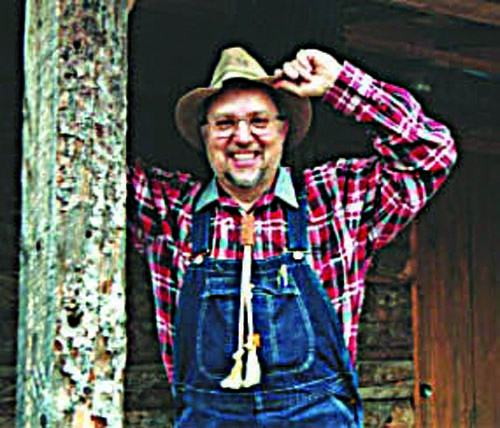
Milo For President
Charro Jerry Diaz Family With Andalusian Horses Entertaining At The Volland Store
Internationally acclaimed equestrian performers, Charro Jerry Diaz and family, will entertain at the Volland Store Saturday, July 8.
“They entertained here in 2019 and there have been requests for their return,” said Jerry and Patty Reece at the Volland Store.
With leadership of the Reece couple, the Volland Store is owned and operated by the Volland Foundation, a 501c3 nonprofit.
It serves as an anchor for the activities at Volland in Wabaunsee County.
Included are art exhibitions and community programming in the gallery. There are outdoor performances at “the Ruin,” artist residencies, and guest accommodations. A history, nature, and sculpture trail is open throughout the year from dawn to dusk.
The Volland Store opened in 1913 at Volland the railroad depot and became the cultural center of the ranching community. Today, the former general store has been re-purposed as an event center.
The upcoming program will include a flamenco concert by Ensemble Iberica who recently performed at Carnegie Hall. There will be an art exhibit by Guggenheim Fellow Philip Heying.
The evening will start with food trucks and mariachi music from Estrella Kansas City.
Inside the Volland gallery, photographs of the Flint Hills by Philip Heying will be on view. He was awarded a Guggenheim Fellowship in 2022, one of the art world’s most prestigious and coveted prizes.
At 7 o’clock, activities will shift to Volland’s horse arena where Charro Jerry Diaz and family will entertain. They will be showing their Andalusian horses, performing equestrian traditions of Mexico, Spain, and Portugal with color and romance. Dawn and Geff Dawson of Wabaunsee County will emcee the event.
Following the horse show, Ensemble Iberica will present a flamenco concert with special guest Melinda Hedgecorth. Musicians Beau Bledsoe, John Currey, and Rich Wheeler will showcase guitar, saxophone, and percussion in accompaniment.
The Volland Foundation receives support from the Kansas Creative Arts Industries Commission and the National Endowment for the Arts
Information is available at www.thevollandstore.com.
+++30+++
An Unexplainable Bull Loss
Mother Nature sometimes seems to be involved in certain incomprehensible circumstances.
Essential requirement of bull power for a cow-calf ranching operation has been discussed before. A bull must romance a cow so she’ll have a calf the rancher can sell to help pay bills.
It is a major ordeal in early May getting bulls breeding soundness verified and into pastures with selected cows. Sometimes two bulls are put with each cowherd as backup in case one doesn’t do what he’s supposed to accomplish.
Many problems with bulls can occur during a breeding season making it important to check them on a regular schedule. Sometimes bulls in the same pasture don’t like each other and will fight. They can injure each other and are not mating cows when they are skirmishing.
Leg injuries are common in bulls working in rough pasture terrain which often puts one out of commission. Reproductive organs can be hurt, sometimes severely, when the bull is taking care of business. This might be a temporary situation but is often permanent.
When a bull becomes incapable of servicing cows, it creates a major dilemma for the rancher.
Of course, when a bull is permanently unsound, he must be replaced which is a major expense. Despite guarantees seedstock merchandizers offer, still many of them do not cover certain situations which can arise.
Bulls in pastures are checked every few days including moving around checking for soundness and encouraging them to work.
One bull and another bull with a few cows in a small pasture were seen and doing fine early in the week. Then on regular inspection a couple of days later he was found deceased already partially decomposed by coyotes.
Close inspection of the carcass in a draw where the bull came to roll in softer soil offered no answers. There had been no lightning, no indication of a bull fight, it just didn’t seem to have any reasoning why.
Regardless, the bull was dead, incapable of servicing cows. Hopefully, the cows are already safe with calf, or the other bull will take over and make sure to get them settled. A new bull will be purchased.
It might seem unfair, but Mother Nature is getting the blame.
Reminded Job 21:12: “Their bulls breed with great vigor and their cows calve without fail.”
+++ALLELUIA+++
XVII–24–6-11-2023
Country medicine (1)
In the year after the Lincoln County Hospital opened in 1952, I went there to have my tonsils out. The world is a big place for a six-year-old, and for a moment the hospital operating room was its core, massive and green with a monstrous bright lamp.
Dr. Smith and Dr. Songer leaned over me, masked faces menacing, voices soft and reassuring. One of them held an ether mask. They said something. Blackness.
I awakened with a throat on fire. Pearl Jensen, in starched nurse’s white cap to toe, sat at my bedside. She was smoking a cigarette, her bottle of cola on a table near the ashtray. I’d never seen her in uniform. Before this, she had been “Mrs. Jensen” who lived across the street with Mr. Jensen.
I told her my throat hurt. She held the little kidney-shaped pan under my face while I was sick. Mrs. Jensen said it was okay, ether does that to a lot of people. In a short while, she said, I could have all the vanilla ice cream I wanted, any time I wanted.
I did.
Most of us youngsters in Lincoln had been born elsewhere, before Lincoln had a hospital. A lot of us had tonsils out in the new hospital.
*
The hospital was a fount of news. In a small town, people like to know about each other. When it came to the hospital, news traveled mostly on a current of concern with only brief gusts of nosiness.
The building itself could tell us who might be there, and why. The large frosted windows of the operating room and the delivery room faced the street. At night if the windows on the right were lighted, Mrs. so-and-so was having her baby. Bright windows on the left meant the operating room was busy and that someone was in trouble. Dr. Smith or Dr. Songer or both would be there.
Back then, a lot of uncomplicated surgery ‒ appendix, tonsils, hernia, cysts and so forth ‒ happened in that building. The serious cases went to Salina or Wichita.
Harold Smith and Herb Songer had offices in a small brick building near downtown. In the morning they had rounds at the hospital and made house calls ‒ doctor at bedside, the cold bell of a stethoscope, the medicinal scent of his open bag, the syringes and needles in separate shiny metal boxes. Little white vials of penicillin, tiny envelopes for pills, instructions scribbled on the outside.
In the afternoon, the doctors saw patients at the office. If the hospital called with an emergency they left quickly. Accidents happened on the farm, at the ball field, in the back yard, in the kitchen, on the sidewalk, on the highway.
*
Doctors in small towns were fixtures. They knew almost everyone and most of their pets. They had children who were playmates and classmates. They were part of us, and we trusted them to heal us. It was an era of the town doctor as community principal – healer, father confessor, therapist, life coach, minister to the sick and hypochondriac alike, one who saw all, heard all, and spoke none of it.
Herb Songer and Harold Smith lived long enough to see the changes from country doctor to family practice, the end of house calls and the beginning of family medicine as something special, if a bit less personal and more hurried.
What hasn’t changed are the bugs that strike, the bones that break, wounds that need healing, disease that needs attention. When things get complicated, there is telemedicine. Or a sub-specialist up the road.
Rural hospitals are now at risk. We have local clinics, if not enough of them, and nurse practitioners and physician assistants have come to help. A university school of (rural) medicine opened in Salina in 2012, a branch of the gargantuan KU complex in Kansas City.
The elevation of family medicine is remarkable and not without pain. The science and its applications have advanced in great leaps but for many, help now means a long trip. The population has shifted dramatically to cities, leaving health care stretched over vast stretches sparsely settled, their people older, and poorer, and many with little or no insurance.
Kansas, per-capita, leads the nation in the number of rural hospitals at risk. The Center for Healthcare Quality & Payment Reform, a non-profit think-tank, has found that more than 80 of Kansas’ 104 rural hospitals are deep in debt ‒ and more than half of them are at risk of closing.
Topeka shrugs.
(Next: Any hope?)
Info Meeting Explores Volunteer Opportunities with The Extension Master Gardener Program

WICHITA – If you love gardening, learning, sharing your knowledge with others, and volunteering in your community, the Sedgwick County Extension Master Gardener Volunteer Program may be for you! A new volunteer training class will be held in the fall of 2023, and anyone interested in applying for the program is encouraged to attend an informational meeting on Thursday, July 20th at 1:30 p.m. at the Sedgwick County Extension Center in 4-H Hall (7001 W. 21st St. North). The requirements and benefits of the program will be outlined, and current Master Gardeners will be on-hand to share their experiences as volunteers. Applications will be available at the event and are also available online.
“Our Sedgwick County Extension Master Gardener Volunteers are incredible people” says Matthew McKernan, Horticulture Agent for K-State Research & Extension – Sedgwick County, who oversees the program. “Our volunteers come from diverse backgrounds, with many interesting talents and skills, but together they share the common bonds of a love for gardening and a desire to help better the community.”
New recruits for the Sedgwick County Master Gardener Volunteer Program must be residents of Sedgwick County, and will participate in extensive horticultural training provided by K-State Research & Extension. The daytime training classes are held on Thursdays, September 7th through December 7th, with morning classes held in person at the Extension Education Center and afternoon classes held virtually on Zoom. Participation in both sessions is required. The cost for the class is $120.00 per person; need-based scholarships are available to defray part of the cost.
Sedgwick County Extension Master Gardener Volunteers devote a minimum of 48 hours of hands-on volunteer service in the community annually. “Together they do so much for our community, from collecting fresh produce for those in need, to supporting community gardens, providing gardening presentations, inspiring youth gardening, and so much more” McKernan says. Other potential volunteer activities include:
- Maintaining a Demonstration Garden and Arboretum
- Volunteering at gardening-themed workshops and special events
- Assisting with gardening projects in the community
- Conducting classroom presentations for youth
- Answering telephone, email, or walk-in clinic questions about gardening
- Speaking on gardening and horticulture topics to local organizations
Since 1987, 882 Sedgwick County residents have received Master Gardener training from K-State Research & Extension-Sedgwick County. In 2022, Sedgwick County Master Gardeners contributed over 21,978 hours of volunteer service and made over 88,589 contacts with the public through their events and workshops.
For more information, contact Matthew McKernan at (316) 660-0140 or [email protected], or visit: https://sedgwick.ksu.edu/mastergardener.
K-State Research and Extension is committed to providing equal opportunity for participation in all programs, services and activities. Program information may be available in languages other than English. Reasonable accommodations for persons with disabilities, including alternative means for communication (e.g., Braille, large print, audio tape, and American Sign Language) may be requested by contacting Matthew McKernan two weeks prior to the start of the event (July 6, 2023) at 316-660-0140 or [email protected]. Requests received after this date will be honored when it is feasible to do so. Language access services, such as interpretation or translation of vital information, will be provided free of charge to limited English proficient individuals upon request.
Kansas State University Agricultural Experiment Station and Cooperative Extension Service
K-State Research and Extension is an equal opportunity provider and employer
