Friday, March 6, 2026
Home Blog Page 700

Companion Planting Tomatoes and Other Gardening Tips

0
growth tomatoes

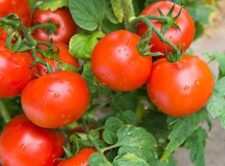
This year, I am determined to have a good tomato crop. I’ve got plans to learn how to can my vegetables properly and make some sauces and salsa to get us through the fall and winter. Pinterest research yielded plenty of results for a good tomato crop, along with asking experienced gardeners.

I discovered that there is a plethora of plants that make excellent companions for tomatoes.

  • Basil – For improved growth and flavor and repelling spider mites and aphids
  • Lettuce – Acts as a living mulch that doesn’t compete for the same nutrients; tomatoes provide shade, so lettuce has a cooler spot since it doesn’t like heat all that much.
  • Borage – I’ve never even heard of this herb, but it is supposed to provide similar benefits of basil.
  • Peppers – same plant family as tomatoes, so nutrients and care requirements are the same, saving you work and time.
  • Nasturtium – This flower works for several plants, but in regard to tomatoes, it acts as a trap crop for aphids and attracts beneficial insects for pollination.
  • Carrots – They will help loosen the soil around your tomato roots which will allow more water and nutrients in
  • And that’s just a small sampling for companions for tomatoes! There’s a flip side to this list of what shouldn’t be planted next to them either.

    Don’t plant nearby:

    • Potatoes
    • Cabbage, kale, cauliflower, or broccoli (all part of the same plant family)
    • Fennel
    • Corn – they share the same pests and will attract those pests if planted together.

    Another great tip I found and have implemented? Dropping a Tums calcium tablet in the hole before you plant, then after planting, sprinkling the soil with some Epsom salt.

    My tried-and-true method? Banana peel water. Soak a banana peel in a mason jar full of water overnight, water your plants with the water (after removing the banana peel) and watch them grow and flower! I’ve done this with all my house plants as well and have seen a huge improvement in plant health.

A ‘life-threatening’ shortage of cancer drugs has Kansas doctors rationing medications

0
Kansas health care providers are scrambling to respond to a global shortage of chemotherapy drugs.

For over a month, doctors at AdventHealth Shawnee Mission Cancer Center have struggled to get their hands on enough chemotherapy drugs to treat their patients.

First, their shipments of carboplatin — typically used to treat breast, ovarian and several other cancers — were delayed. They were able to switch some patients onto cisplatin, another platinum-based drug that’s similarly effective but can have more side effects.

Then, their cisplatin shipments stopped arriving on time.

To make dwindling supplies stretch longer, doctors began rounding patients’ doses down by as much as 10% — within professional guidelines — and began bracing for the need to take more drastic action if the shortage persists.

It’s part of a nationwide shortage of more than a dozen essential cancer drugs that’s forced Kansas health care providers to ration medication and consider delaying some treatments altogether.

“I lose sleep over this,” AdventHealth oncology pharmacist Kyla Bidne said. “This shortage is the worst that I remember — and I’ve been in practice for about 20 years now.”

At one point, supplies got so low that her team planned to move some patients to a different drug class entirely — only to walk in that morning and find a surprise shipment of the drug they needed.

“We really don’t know from day to day when we’re going to receive drugs, or if we’re going to receive drugs,” Bidne said. “We have to plan for the worst and hope for the best.”

The U.S. has long been susceptible to drug shortages, but they’re becoming more frequent and lasting longer. New drug shortages increased by nearly 30% between 2021 and 2022 according to a U.S. Senate committee report that described the issue as a national security risk.

Drug supply chains offer little transparency about what is driving a particular shortage or how long it might last. That, in turn, makes it harder for government officials to respond.

The causes range from supply chain disruptions to quality issues, to outsized reliance on overseas manufacturers, to export restrictions in origin countries and fluctuations in demand. The pandemic exacerbated existing supply chain vulnerabilities, triggering global shortages.

But the cancer drug shortages — which have jeopardized treatment for a wide range of adult and pediatric patients — are particularly problematic because getting timely treatment can mean the difference between life and death.

“In some cases, there is not a good alternative drug that has the same effectiveness,” said Dr. Lisa Holle, a clinical professor at the University of Connecticut School of Pharmacy. “So it can be extremely detrimental and potentially life-threatening.”

Testicular cancer, for instance, is usually curable even when it’s caught at advanced stages — with cisplatin. Not being able to access the drug, she said, might put a cure out of reach for some patients.

Kansas doctors worry they could soon have to make wrenching choices about which patients to prioritize for treatment.

“That is a terrible decision,” said Dr. Verda Hicks, president of the American College of Obstetricians and Gynecologists and a Leawood, Kansas,-based gynecological oncologist. “It’s very hard to place value on someone’s life.”

Small hospitals often feel the squeeze first because larger cancer centers usually have more reserve stock to fall back on and have more buying power when they’re purchasing a limited quantity of drugs from wholesalers.

“It’s hard to predict when an institution or a patient will be affected,” Holle said. “Every day, the situation is changing because of a multitude of factors.”

Last week, the U.S. Food and Drug Administration announced efforts to mitigate the shortage, including working with a currently unapproved Chinese pharmaceutical company to temporarily import more cisplatin. The agency indicated it’s also exploring options for importing more carboplatin.

But it’s uncertain how immediate the relief will be — and how many patients will be impacted before the problems are resolved.

“Everybody’s very concerned about this,” Holle said. “It’s not clear what sorts of legislative changes can make these shortages go away long-term. But we have to start thinking about how we can handle these sorts of things.”

Rose Conlon reports on health for KMUW and the Kansas News Service.

 

Subcommittee reviews animal ag stakeholder priorities

0
Photo credit: U.S. Department of Agriculture

The U.S. House Committee on Agriculture, subcommittee on livestock, dairy and poultry recently held a review of animal agriculture stakeholder priorities.

Those testifying included: Todd Wilkinson, president, National Cattlemen’s Beef Association; Scott Hays, president, National Pork Producers Association; John Zimmerman, vice chairman, National Turkey Federation; Bryan Burns, vice president and associate general counsel, North American Meat Institute; Laurie Hubbard, region I director, American Sheep Industry Association; and Kelsey Scott, director of programs, Intertribal Agriculture Council.

heir comments were prefaced by full House Agriculture Committee Chairman GT Thompson, of Pennsylvania, and subcommittee Chairman Tracey Mann, of Kansas, who noted the importance of the livestock sector in preparation of the upcoming farm bill.

Cattle industry recovery is bittersweet

Wilkinson said the state of the cattle industry has greatly improved, with significantly increased prices in a relatively short period of time.

“Just last month, we set a record high spot futures price for live cattle, with the April 2023 contract hitting $175.50 per hundredweight,” he said. “For context, when I last testified on Oct. 7, 2021, spot live cattle closed the day at $125.27.”

While drastically improved pricing for cattle occurred over the last two years, the recovery has been bittersweet for some.

The cattle herd is at about 89.27 million head, the lowest inventory in 61 years.

“Make no mistake, even amid a recovering market, cattle producers still face a myriad of challenges,” Wilkinson said. “I would be remiss if I did not underscore that the entirety of the price improvement we are currently seeing has occurred without the enactment of market-altering legislation.”

Pork industry in a pinch

Hays said the U.S. pork industry serves as a major contributor to both the agricultural and overall economy in this country. In 2021, more than 140 million hogs with a value at $28 billion, supported more than 610,000 jobs—all while supplying consumers with safely and humanely raised nutritional products. The U.S. is also a global supplier of pork, with exports accounting for nearly a quarter of annual pork production and supporting more than 155,000 U.S. jobs.

However, times remain challenging for U.S. pork producers as they lose on average $40 per head for hogs marketed. Most current markets are within ranges typically seen at this point in the marketing year, but Hays said input costs have risen by nearly 50% in the past year.

“This is putting a pinch on the pork industry and will lead to greater consolidation as producers may be forced to exit the industry due to this economic reality,” he said. “This only adds to the uncertainty that exists with the credit market and the presence of African swine fever in the western hemisphere.”

Hays, along with many other pork producers, was very disappointed with California’s Proposition 12 recently.

“The implications of the decision will go far beyond the farm. With higher costs and fewer choices, every American will be impacted by this decision,” he said.

Turkey producers working through HPAI

Zimmerman, a second-generation turkey grower from Minnesota, raises about 100,000 turkeys annually, producing 4 million pounds of turkey meat each year. In 2022 there were more than 216 million turkeys raised in the United States and data suggests turkey meat production will exceed last year’s 5.2 billion pounds.

“As the industry continues to work through challenges and ultimately recover from the current highly pathogenic avian influenza outbreak, we are also working to find more ways to remain competitive and meet consumer demands in a crowded protein field,” he said.

HPAI has dealt the turkey industry a severe blow, history indicates resilience and Zimmerman sees growth in the near future. But disease isn’t the only challenge they face.

“We need common-sense policies from our leaders in Washington that protect food safety, animal welfare and the environment without undermining our ability to produce safe, wholesome and nutritious products affordable to Americans of all income levels,” he said.

Meat processors face a volatile industry

The North American Meat Institute is the nation’s largest and oldest trade association representing packers and processors of beef, pork, lamb, veal, poultry, and processed meat products. Burns said the most recent data from the U.S. Census Bureau reported that it is a $266.99 billion industry employing 526,849 people directly.

“Meat packers and processors compete, sometimes struggle, and mostly thrive in a volatile industry,” he said.

Burns is concerned about the challenges facing the pork and hog sectors with the uncertainty surrounding California’s Prop 12 and what it means for the industry.

“The Prop 12 decision will embolden anti-animal agriculture groups to pursue ballot measures in other states and localities,” Burns said. “The decision opens the door to chaos in interstate commerce through state-by-state trade barriers, not just for meat and poultry products, but for any agricultural or manufactured products not meeting standards set by another state. No industry can operate when facing 50 different standards.”

American lamb industry seeks non-traditional markets

American lamb and those in the wool industry are facing similar challenges as other sectors, but Hubbard said price inflation, labor challenges, lamb imports, and wool businesses are the most concerning.

Hubbard said non-traditional or ethnic markets—those who want smaller carcasses—have grown and cultural preferences are creating new opportunities.

“The pandemic led to the loss of a major lamb processor in 2020, yet smaller processors are emerging and being embraced by a society seeking a more local supply structure,” she said. The wool industry felt the effects of the pandemic as international markets were closed to U.S.-produced wool that usually sees exports of 67%.

Intertribal council looks to stewardship

Home for Scott is on the Cheyenne River Sioux Indian Reservation, located in the Northern Great Plains of South Dakota. the vast landscape is now home to 5.3% of the United States’ beef cow inventory—the fifth highest in the country.

“Our family operation allows us the privilege to engage with local consumers amidst a USDA-defined ‘food desert,’” Scott said. “Our unofficial ranch motto is “to be good stewards of the land and our community.”

She’s a fourth-generation rancher on lands that include her great-grandfather’s original allotment on the Cheyenne River Sioux Reservation. For her, land stewardship and animal husbandry have been ingrained since birth.

Scott worries for the family operations who are the last to receive any sort of relief when events like the pandemic occur.

“If members of Congress want to meaningfully and adequately represent constituents who have family operations in their districts, all while addressing the consolidation and homogenization of our food system, then I would encourage Congress to prioritize the design of a solutions toolbox tailored also to the needs of smaller family operations,” Scott said.

As reported in the High Plains Journal

Morning Glory: Misunderstood and Under Appreciated

0

“Guilt by association,” is an often-used phase to describe a situation where something is “guilty” because of its association or resemblance to something considered to be bad. For example, for centuries people thought tomato to be poisonous primarily because it is a member of a plant family that contains some very poisonous species. Likewise, morning glory is considered by many to be a weedy plant, since it shares a common name with some plant species that are very difficult to control. As a result, gardeners are reluctant to plant it which is unfortunate, since properly located it can be a very attractive, useful plant.

If a bare fence, empty trellis, or unpleasant view in your landscape seems to need attention, morning glory (or one of its close relatives) might be a solution to the problem. June is not too late to plant morning glory seeds that should develop into a living summer screen. Seeds germinate quickly in warm soils and, with adequate moisture and fertility, plants can cover a trellis sufficiently in about six weeks. This still allows plenty of time for enjoyment before frost.

Morning glory is the common name applied to more than 1000 species of flowering plants belonging to the Convolvulaceae plant family. Ipomoea, the largest and most well-known genus in the family, contains some very attractive species such as Ipomoea purpurea. The latter is just one of several species in the genus that carries the common name of morning glory. The genus name comes from the Greek words ips meaning “worm” and homoios which means “resembling,” and probably makes reference to the twining (worm-like) growth habit of members of this genus.

It should be noted that several troublesome weeds collectively referred to as bindweeds (Convolvulus arvensis and Calystegia sepium) share the common name of “morning glory,” but are very different plants. Bindweed (a perennial) bears leaves are lanceolate-shaped and smaller than the leaves morning glory. In contrast, morning glory is an annual flowering plant whose leaves are large and heart shaped.

Morning glory plants are vigorous, twining vines. Therefore, in order to climb, the fence or trellis on which they are allowed to grow must be made from materials thin enough for the vines to wrap themselves around. If they are planted next to a board fence or wall, wire or string must be stretched vertically to help the plant move upward. Additionally, morning glories need plenty of bright light. In shady locations they tend to become weak, grow slowly, and do not provide a full, attractive cover.

Look for Bagworms Now 

0

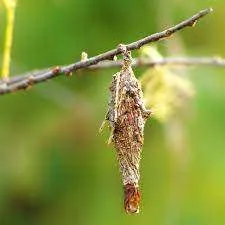
Bagworms have been sighted already even though most homeowners don’t call looking for help with controlling them until late-July into early-August. That’s because right now they are small and hard to see. However, they are also much easier to control at this size.

Bagworms overwinter as eggs inside the dead female’s bag. Larvae hatch and emerge from the bags mid to late-May in Kansas. The young larvae begin feeding on their host plants right away. It’s recommended to wait to spray for bagworms until mid-June to ensure most of the eggs have hatched. Young bagworms look just like the adult version only much smaller. If you see the empty bags as evidence of bagworms from the previous year on a plant, there are likely young bagworms on the plant this year as well.

Insecticides commonly used for controlling bagworms include:

            Acephate (Orthene)

            Permethrin (38 Plus Turf, Termite & Ornamental Insect Spray; Eight Vegetable, Fruit & Flower Concentrate; Garden and Farm Insect Control)

            Bifenthrin (Bug Blaster II, Bug-B-Gon Max Lawn and Garden Insect Killer)

            Lambda-cyhalothrin (Spectracide Triazicide, Bonide Caterpillar Killer)

            Spinosad (Conserve; Natural Guard Spinosad; and Captain Jack’s Dead Bug Brew).

            Spinosad is a very effective organic control for bagworms. Thorough coverage of the plant material is essential for good control of bagworms regardless of which product you choose.

Cynthia Domenghini, Extension Agent