Saturday, March 7, 2026
Home Blog Page 713

NBAF is open, but livestock disease research won’t start for a year. Here’s what to know.

0

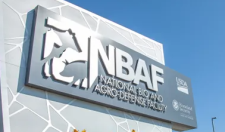
The National Bio & Agro Defense Facility sign shows a cow, a pig and a sheep, which are the primary livestock that will be used in disease researh at the new labe NBAF in Manhatttan. After well over a decade of politics, applications, funding debates and construction, the National Bio and Agro-Defense Facility is officially open.

But the federal government’s newest biosecurity laboratories in Manhattan are still likely more than a year away from performing the animal health research they were designed for.

Dignitaries celebrated NBAF’s opening in the animal health corridor with a ribbon cutting ceremony on Wednesday.

Officials provided area media with a tour of the labs last week, highlighting safety precautions, but photos and detailed notes were strictly prohibited in the interest of security.

The lab’s mission is to protect American agriculture, farmers and citizens against animal diseases that threaten the food supply, agricultural economy and public health.

That means working with newer diseases and ones that can spread from livestock to humans. Experts study to prevent, surveil, diagnose and respond to diseases, including managing vaccine banks and developing new vaccines and antivirals.

While work is happening at NBAF, they are not yet performing research in the labs.

Staff are doing various compliance and regulatory work, inspections, developing and testing protocols and standard operating procedures, preparing equipment and training before working with any pathogens.

“They will check all the systems according to the international standards and national standards,” Alfonso Clavijo, the NBAF director, said of the inspections. “And only after we have that approval will we be able to actually do any work. We expect that by late 2024, we should be able to have that approval.”

Officials characterized NBAF scientists as being at the crawling stage before learning to walk, jog and run. Once they design the procedures, they will be tested on clean animals before animals with less risky pathogens, then animals with riskier zoonotic diseases and finally the most risky zoonotic diseases the BSL-4 lab is designed to handle.

“Safety and security is the primary goal,” said Ken Burton, the NBAF deputy director. “And we don’t do anything to move into science until we feel that everything is safe and secure to be able to do that.”

How are the pathogens getting to Manhattan?

The pathogens have not yet been moved from Plum Island to NBAF.

“What I can share is that very experienced federal partners are going to be handling the transfer of the scientific materials,” said Katie Pawlosky, the NBAF communications director. “No animals, no equipment, will transfer.

“As far as timeline, I don’t know that we have that information yet. We’re still working through our science preparatory phase. We won’t be able to begin any of that until we’re ready, but it will be a phased process done very safely and securely. But for the safety and security of the process, we can’t really disclose details.”
Kansas regulators sign off on major transmission line, despite concerns on land impacts

0

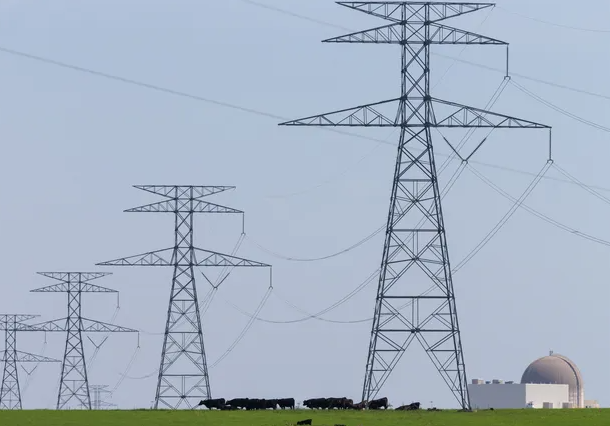
State regulators gave final approval on a controversial transmission line that would span five eastern and southeastern Kansas counties, with critics worried it will unduly impact landowners in the project’s path.

The move would allow construction to proceed, though it is possible that the decision will be challenged in court. A related move to grant NextEra Energy, a Florida-based firm, utility status in Kansas is currently being litigated in Crawford County District Court.

The proposed route would slice through Coffey, Anderson, Allen, Bourbon and Crawford counties, connecting Wolf Creek nuclear power plant near Burlington to the Blackberry Substation across the border in Missouri.

NextEra was allowed eminent domain authority when it was deemed to be a utility last year but has not been able to use it until the siting and route for the project was approved by the Kansas Corporation Commission.

But the idea gained pushback from some area landowners, who argued the proposed route had an overly burdensome impact on their livelihoods and that the environmental impact of the plan had not been properly evaluated.

“The location of NextEra’s proposed line is unreasonable because it adversely impacts my family and I personally and negatively impacts landowners generally,” Rochelle McGee Smart, an Anderson County landowner, said in testimony submitted to the KCC.

Other critics say the project, developed at the behest of the regional power grid that includes Kansas, would have the benefit of shipping electricity generated in Kansas out-of-state, with marginal benefits to residents.

KCC Commissioner Andrew French rejected that analysis, arguing the project would deliver lower utility rates for in-state residents. Moreover, he maintained that the costs of the project would be born across the members of the regional grid, called the Southwest Power Pool.

“If Kansas were to effectively veto or reject this line, we’d be making a pretty unbelievable choice,” French said. “We’d be signaling that we are happy to pay for infrastructure in other states but when projects come along for us that other states will help pay for, we will pass on those.”

Commission chair Susan Duffy said she felt the move would improve the state’s energy reliability by improving its connections with nearby states. This is especially relevant, she said, as the state enters what is projected to be an abnormally warm summer.

“We can’t build this fast enough,” Duffy said.

One commissioner dissented, pointing to route next to Evergy lines

But the commission’s third member, Dwight Keen, dissented from the move, pointing to what he believed to be a series of flaws with the planned route.

Most notably, he said the route would, for roughly a quarter of its length, involve the project running alongside an existing transmission line held by Evergy, the electric utility that operates Wolf Creek.

Such a move, he said, was wasteful and would potentially irreparably damage the land for future use, though NextEra argued a move to share infrastructure with Evergy was unworkable.

Professional Rodeo Loses One Of Its Most Colorful, Renowned All-Around Champions

0
Frank J Buchman
Frank Buchman

Larry Mahan, 79, eight-time world champion rodeo cowboy, died May 7, 2023, at his home in Valley View, Texas.
Bucking his way into American stardom, Mahan starred in an Oscar-winning documentary. He endorsed his own line of Western wear and appeared on “The Tonight Show” with Johnny Carson.
Bobby Steiner, rodeo cowboy and close friend, confirmed Mahan’s death from bone cancer.
More than any cowboy before or since, Mahan’s fame transcended the geography and conventions of traditional rodeo, Steiner said.
He grew his hair long, wore bright-colored shirts, psychedelic chaps, and piloted his own Cessna airplanes to competitions. Sportswriters likened his fame to Elvis Presley’s and his achievements to Hank Aaron’s.
“Even for people who didn’t know what rodeo was or anything about cowboys, Larry was interesting. He just carried himself like a real successful cat,” Steiner said. “The smile, the gleam, the sparkle he had, he was just the whole deal. Larry Mahan made rodeo cowboys cool.”
Mahan attributed his success to entering as many rodeos as he could, typically 90 a year. He learned to fly and bought his own plane, which allowed him to compete in several competitions per weekend.
Unlike some other cowboys, Mahan avoided saloons. He stayed at Howard Johnson motels because he liked ice cream.
Mahan was a bull savant, keeping notes on their mannerisms and tendencies. He both respected and feared them.
“Bulls are the meanest, rankest creatures on earth,” Mahan said. “Horses don’t try to step on you when they throw you off. Bulls love to step on you or whip your face into the back of their skull, break your nose.”
To hang on, “You have to transform yourself into some kind of a small beast,” Mahan said. “In my opinion, the three riding events fall into the category of extreme sport.
“That seemed to create a lot of interest in the sports media world. Suddenly, I was being interviewed on the right and the left and underneath and on top. So, I had to step up to the plate.”
Born in Brooks, Oregon, on November 21, 1943, Larry Edward Mahan grew up on his family’s farm. His parents bought him his first horse when he was seven years old. “I fell in love horses and riding,” he said.
In 1957, Mahan entered his first rodeo and won a buckle now displayed at the Pro Rodeo Hall of Fame in Colorado. After graduating from high school, he moved to Arizona, hoping to join a college rodeo team. But tuition was too expensive, so he went on the rodeo circuit.
By his early 20s, Mahan was a champion and a star of the sport. His specialties included saddle bronc riding, bareback riding, and bull riding. In 1965 and 1967, Mahan was the world bull riding champion.
He won his first of five consecutive world all-around champion titles in 1965. After several difficult years, Mahan came back to win the all-around champion title again in 1973. That competition was featured in the “The Great American Cowboy,” which won the Academy Award for best documentary feature.
His rodeo stardom helped popularize the sport with a mainstream audience.
Mahan retired from rodeo in 1977, but he remained involved in the sport. “The ground got too hard. It used to be much softer,” Mahan said.
During his rodeo career, Mahan broke a leg, a foot, his jaw, and several vertebrae. “And my heart has been broken 17 times,” he said.
He hosted “Equestrian Nation” on RFD-TV and was briefly a rodeo color commentator.
His line of Western wear included popular boots and hats. Mahan appeared in movies, including “The Good Old Boys” and “Six Pack Annie,” and he recorded a country music album.
In 1979, Mahan was inducted into the Pro Rodeo Hall of Fame in its inaugural class.
In recent years, Mahan has continued breeding, training, and showing performance Quarter Horses.
“It’s pretty amazing all the ups and downs life has for a person,” Mahan said. “But the only thing we have control over is our choices. Maybe some could have been better choices. But all of them, the good ones, the bad ones, are what got us where we are today.
“Do I feel like I’m deserving of all the things God’s made available to me? No.
“But I’ve sure learned to appreciate it. And that’s a different take I have now than when I was rodeoing. That’s a very important part of this journey, to know where we are now and enjoy the moment,” Mahan analyzed.
+++30+++

May Is Beef Month

0

“Beef. It’s What’s For Dinner” is recognized by more than 88 percent of Americans.
The advertising slogan was made famous by actor Sam Elliott to promote the consumption of beef.
Launched in 1992 by the National Livestock and Meat Board, the advertising campaign is funded by the Beef Checkoff Program.
May is National Beef Month and Kansas Governor Laura Kelly made a special proclamation recognizing the industry.
Still, many don’t realize cattle’s impact on the economy while controversy often continues about the nutritional attributes of beef.
Cattle generate more than $9.85 billion in cash receipts annually representing 46 percent of the Kansas agricultural cash income.
Kansas ranked third nationally with 6.25 million cattle on about 26,740 farms, ranches, and feedlots as of January 1, 2023. That’s more than twice the state’s human population of nearly 3 million.
Beef cattle farming and ranching has a direct output of about $6.3 billion and employs nearly 34,130 Kansans.
Ranked sixth nationally in beef cow numbers as of January 1, 2023, Kansas has 1.32 million head. There are 6.9 million cattle processed annually in the state, ranking second nationwide.
Kansas ranks second in fed cattle marketed with 5.41 million, representing 24 percent of all cattle fed in the United States
Meat packing and prepared meat products manufacturing make up the largest share of Kansas’ food processing industry.
Responsible for about $12.9 billion in economic activity, this industry provides employment for more than 31,440 people in Kansas.
Beef valued at $1.4 billion represents about 5.6 billion pounds of the total red meat production.
The United States is the world’s largest producer and the second-largest consumer of beef in the world. Americans eat an average of 55 pounds of beef per year.
Noteworthy, Kansas has 45.7 million acres of farm ground, and cattle efficiently utilize grass growing on the 15.5 million acres of Kansas pastureland. Cattle turn these resources into human food sources high in protein and nutrients.
Beef is an important source of nutrients that are vital for supporting people’s good health. It is especially high in protein, Vitamin B12, zinc, iron, phosphorus, and selenium.
Other foods, medicines, and soaps contain many derivative products that rely upon the beef industry.
Reminded of Isaiah 25:6: “The Lord Almighty will spread a wondrous feast for everyone around the world with choice beef.”
+++ALLELUIA+++
XVII–22–5-28-2023

Sausage, Potato and Spinach Soup

0

Last week I was afraid I would not find my recipe sketch for this week’s column. I am quite happy to note I found it while cleaning the kitchen. There it was in all its’ glory written on the back of an envelope. Unfortunately it has been my habit to pen recipes on the nearest thing there is to write upon, it’s become my ‘M-O’. I’ve even made endeavors at work to break this nasty habit by using a steno pad. Is it working? Sometimes yes, and sometimes no.

Last week a couple of my papers didn’t receive the column, for this I do apologize. It is not me this time, it’s the computer. Every so often it will lose things out there in computer space. I go back and see I’ve sent them, but somehow in transition they don’t all arrive.

Let’s talk about the soup. I tried to be very specific as I set the recipe for you, keeping several suggestions and comments, in order to have a great outcome. Evidently this soup dish does have an origination in Italy. After I wrote the recipe I went back on line and reviewed several versions. Some may compare it to one of the soups served at Olive Garden. I don’t see much resemblance, but I can see where the idea might surface. Spinach could fade away and you could use turnip greens, some might even go as far as to implement kale. Certainly not my choice, but it’s a possibility. I would not switch out the potato to something different. The reds with the skins on add their own specific flavor. No one complained over the 2 types of onions being used. The green onions at the end could actually be removed and used as a garnish instead. The choice of cheese, well, I would stick with a creamy white cheese and not detour to a yellow cheese. Gruyere or Havarti could be interesting, even an old-fashioned farmer’s cheese would melt nicely, and enhance without take-over.

The soup ends up being nice and thick and it should yield enough for 6 persons and then some.
I would estimate there was about a full gallon plus.

Next week I will run the new asparagus bacon spread for you. So if you’re going to town and want to try it next weekend be sure and place bacon, green onion, cream cheese and asparagus on the grocery list. The other ingredients most cooks will have already.

I’m preparing for a little road trip to celebrate my birthday and Mother’s Day with family up in Cameron, Missouri. We are having a bonfire as long as the rain stays at bay. I can hardly wait, camping and cookouts are like one of my favorite things ever! Not to mention having family around.

Let’s enjoy the week and keep extra stress and worry at a distance. Simply yours, The Covered Dish.

Sausage, Potato & Spinach Soup

1 pound regular or spicy pork or Italian sausage
1 medium, onion, chopped small
5-6 medium/large red potatoes, skins left on, small cubes
7 cups salt-free chicken stock
1 teaspoon salt
1 teaspoon black pepper
1 tablespoon celery flakes
1 teaspoon ground savory*
1/2 teaspoon sage
5-6 green onions, chopped
6-8 ounces smoked Gouda cheese
1 cup heavy cream
Around 15 ounces finely chopped spinach, stems removed
1/2-1 cup chopped cooked bacon

In a large Dutch oven cook sausage and onion together, mincing meat well.
Add potatoes and stock cooking until tender, following with all spices. Add the remaining 5 ingredients: (Be cautious adding cream if the stock pot is too hot, may need to cool a bit first.) green onion, cheese, heavy cream, spinach and bacon. Cook until heated thoroughly and soup is smooth. Use a medium heat for cooking the soup. I liked the green onions at the very end because they were not cooked all the way through. Do not leave the spinach too big, definitely chop it down. When you take a bite, you will not like the look of a big piece of spinach hanging from the spoon. (How do I know, because I got most of mine chopped small, but a few pieces were still too big).

You can purchase ‘savory’ at most spice shops, I have not found it ‘yet’ in regular grocery stores. (Keep in mind I do not live in a big city!)

*Savory Spice: Used as a good substitute for sage. It is a form of a mint, mostly grown in Northern & Southern Europe. It adds peppery notes similar to thyme. Guides tell us to switch savory for thyme ‘equally’. I disagree, if I were substituting I would first use only a 1/2 teaspoon of thyme and then sample.