
“Most jobs require extra workers to get the task completed more efficiently.”
That was proven when the spring going-to-grass crew arrived at dawn.
Ranch yard and country road were overflowing with pickups and trailers. Four handfuls of men, women, and the younger generation had a dozen horses and a half dozen mechanical carts.
Gate to the pasture was opened as workers sifted through spreading to the West where black cattle speckled the skyline.
Ranch manager’s orders were direct to his helpers gathering a large herd of momma cows with their spring calves. Within a short while, cattle were coming from every direction as the herd started accumulating.
The morning was a bit cool with horses acting frisky, prancing about, and throwing heads into the air. Just when most of the cattle were topping the ridge, one big mare started pitching.
Bets of observing coworkers were on the rider who gave it all before landing in a heap unhurt. Another rider returned the ornery mount as the worker bounced back in the saddle for the day’s work ahead.
It wasn’t long until the cows and tagalongs went into the barnyard corrals. Fun work was completed with only one mishap as every crew member took their special position.
Babies were separated from mommas and went down the lane through the chute first. Three younger cowboys were in charge of making sure one was always ready when the old timers called for it.
A calf cradle makes work easier than decades earlier when calves were roped, snubbed, and hand thrown to the ground. All calves have been ear tagged upon birth with left ear tag signifying heifer and right a bull.
All calves receive pesticide pour-on, insecticide tag, no less than two vaccinations, and bulls are made into steers. Calves are moved into one of six pens according to which pasture they’ll be spending the summer.
Shortly after noon, the crew stopped for a quick dinner and was soon at it moving cows through the chute. Each one got pesticide dope and vaccinations before sorted into the pen where her baby was waiting.
Just before dark, the herd had been redistributed to their specific pastures. The helpers slept well that night.
Reminded of Proverbs 22:29: “Skilled helpers are always in demand and don’t take a backseat to anyone.”
+++ALLELUIA+++
XVII–20–5-14-2023
Thankful For ‘The Help’

Richest Women’s-Only Week Of Western Sports Competition During Professional Bull Riders World Finals In Fort Worth
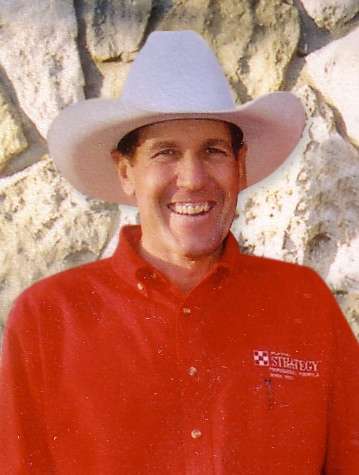
The inaugural Women’s’ Rodeo World Championship Week is May 12-21 in Fort Worth, Texas.
It is slated to pay $1.145 million affording more than 800 women’s competitors the chance to compete for life-changing payouts.
The Women’s Rodeo World Championship Week will feature three marquee events. Included are the Women’s Rodeo World Championship (WRWC), a National Barrel Horse Association (NBHA) one-day event, and The Cowgirl Gathering.
Events will be at Cowtown Coliseum, the American Paint Horse Association (APHA)) headquarters, RFD-TV Studios, and Mule Alley.
“Merging of forces with the APHA establishes a historic week for female competitors,” said WRWC Commissioner Linsay Sumpter. “Together, we will elevate the sport as we share the vision for future growth and opportunities for women in rodeo.”
“The Cowgirl Gathering has become a pinnacle event,” said Steven Hayes of Marked For Greatness Properties.
“We paid out more than $300,000 to cowgirls across three disciplines in 2022,” Hayes said. “We have created an expansive community of Western female leaders through our Essence Exchange platform.”
“The National Barrel Horse Association is honored to cooperate in creating a high-payout barrel race,” said NBHA director Bailey Nahrgang. “It made perfect sense for NBHA to join forces to make one prominent event for the record books.”
The 2023 Women’s Rodeo World Championship will span May 17-20. It will introduce the new Last Chance Qualifier. That allows athletes not qualified on the WRWC leaderboard the chance to ride their way into the marquee event.
The 2023 Women’s Rodeo World Championship will pay out $750,000 in addition to crowning world champions in team roping, breakaway roping, and barrel racing. An all-around world champion will also be crowned.
The Last Chance Qualifier will launch the 2023 Women’s Rodeo World Championship, May 17, at Cowtown Coliseum. It will feature barrel racing, breakaway roping, and team roping. The one-day tournament is anticipated to award $40,000.
Main event for the fourth edition of the WRWC will be May 18-20. All qualifying and semi-final rounds will be May 18-19. Following the semi-final rounds, the leaderboard will merge with 12 athletes in each discipline to advance to the May 20 Triple Crown of Rodeo performance.
Each event world champion will collect $65,000, and the all-around world champion will collect a $20,000 bonus.
As part of the Triple Crown of Rodeo, event champions will be eligible to win the $1 Million cash bonus. It will be awarded to any one athlete who wins first place in three consecutive rodeos.
Other competitions and Western lifestyle activities will be May 12-16 throughout the Fort Worth Stockyards. They’ll highlight cowgirls’ breakaway roping, team roping, and barrel racing while showcasing engaging female speakers, artists, and fashion icons.
The Circle Y Saddles Barrel Race is a one-day, free-to-attend, open barrel racing jackpot. It will offer a 5D format payout, with Circle Y Saddles to the winners of each division, and other awards. All ages and experience levels are welcome to participate.
Other activities and events include: the PBR Be Cowboy Expo, Tractor Supply PBR World Finals Pre-Show, PBR World Finals Concert Series, Flint Rasmussen’s Outside The Barrel, PBR World Finals Fan Zone, Bill Pickett Invitational Rodeo, Mexico In Our Blood, and PBR 30th Anniversary Parades.
The 2023 PBR World Finals will buck into Fort Worth, May 12-21, at Dickies Arena. Opening rounds will be May 12-14, with action coming to a climactic end May 18-21. The 2023 PBR world champion will be crowned, earning the coveted gold buckle, and accompanying $1 million bonus.
+++30+++
Farm teen worry
Misgendered
What’s with all these people wanting to be a member of the opposite sex? This old fogy’s world has been turned upside-down and I’m having a terrible time properly using the more than 55 gender-neutral pronouns so I don’t offend anyone. I’m telling you, it’s a mine field out there and politically correct people are just waiting to pounce if you say or write something wrong so they can “cancel” you. Whatever that means.
Being curious, I wondered if other species went through sex changes and you’ll be amazed at what I discovered. There’s a fish species called the California Sheepshead that is capable of changing its sex in mid-life, but it’s from California so you’d expect that. But more widely dispersed ocean dwellers like oysters and the Clown Fish can also change their gender.
You’d think that male seahorses would want to change their sex because it’s the male seahorses that get impregnated, not the females, and the males give birth to as many as 1,500 babies at a time! Whoa nelly! Talk about morning sickness! Who in their right mind would want to raise 1,500 kids? That’s why I have a hard time understanding why men want to be women. Don’t they know that women have to work twice as hard for the same pay, have to raise the kids and manage the household, while all the males do is work their eight hours, come home, sit in their Lazy Boy® and pop the top on a beer can.
Just as Venezualian opossums can choose the sex of their baby ahead of time there’s an old wive’s tale that says humans can select the sex of their baby by changing the orientation of their bed. Also, according to statistics a human can influence the sex of their baby by what occupation they choose. For example, if you want to improve the chances of having a male baby you might want to become President of the United States because they have 60% sons and if you want a daughter you should become a male abalone diver, fighter pilot or anesthetists as they have more girls than boys. Or you could become an Indian like Elizabeth Warren did. A first or second-born Havasupai Indian child is 1.3 times as likely to be a boy as a girl. But a child born fifth or later is 1.3 times as likely to be a girl. Scientists say the sex of Havasupai children is NOT random. And consider that after World War II in France and Britain there was a bizarre huge increase in the proportion of boys to girls that were fathered by soldiers.
Bald eagles and some species of hawks know the sex off their eggs ahead of time without the aid of a sonogram because they lay the eggs of their female offspring first so they can be bigger than the males. And crocodiles also have this female intuition because the sex of their babies is determined by how deep their eggs are buried.
So you see, this whole sex thing is WAY more complicated than previously thought.
If I was a male Praying Mantis you can bet your daddy long legs I’d want to change my sex because the male can’t copulate while its head is still attached to its body and the female initiates sex by ripping the male’s head off. Likewise, if I was female black widow spider there’d be no way I’d want to change my sex because the female eats the male after coupling, which doesn’t sound like anyone’s idea of fun. But I was shocked to discover that for most living things sex is supposedly NOT a pleasurable act, in fact, humans and dolphins are the only species that have sex for pleasure! (Tell that to bulls, dogs and rams.)
Humans are also unique in that the adult males and females live together while most other species live with members of their own sex and only come around the females for one reason and one reason only: a good home cooked meal.
At age 71 I’m thinking of having a sex change operation myself because male baby boomers have a life expectancy of 72 years while females live, on average, to be 76.
At my age and poor physical condition I’d do anything to live four more years.
The Wizard of Oz still shapes the world’s view of Kansas for better and worse
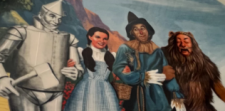
No place like home? The Wizard of Oz and Kansas have been inseparable since farm girl Dorothy Gale first skipped down the yellow brick road. But having an enduring image from the Dust Bowl 1930s might also hold Kansas back from what it wants to be today.
LIBERAL, Kansas — Kansans know the joke. Almost too well.
“Someone hears you’re from Kansas … and they’re like, ‘Oh, you’re not in Kansas anymore,’” Nathan Dowell said. “If I had a nickel for every time I heard that.”
But he doesn’t mind too much. After all, he’s the museum director for two ““Wizard of Oz”-themed attractions in his hometown of Liberal: Dorothy’s House and the Land of Oz.
In one of the museum’s many halls, Dowell peers through a glass display case that holds the collection’s only true artifact from the original 1930s movie set: The small-scale model of Dorothy’s farmhouse that’s seen tossing and twisting in the wind as a tornado transports her from her beloved home in Kansas to a dazzling new world.
The Wizard of Oz’s enduring fame has given Kansas something very few other states have: A global brand. But generations after the film’s release, that brand might not be all bluebirds and lemon drops anymore.
“The movie didn’t work too hard to sell us with how black-and-white everything is. And the dust,” Dowell said, “But the message of the movie is still, ‘there’s no place like home.’”
So is the state’s connection to Oz a gift? Or is it a curse that boxes Kansas into an outdated, inaccurate image?
Perhaps nowhere is that contradiction on display more than right here in the far southwestern corner of Kansas. 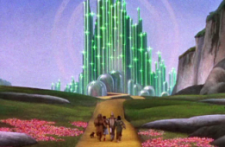
In front of the Dorothy’s House exhibit, our tour guide skips down a path of bricks painted yellow wearing sequined red shoes and a blue gingham dress that museum rules specify must be homemade.
She’s one of 10 Dorothys on staff here. All of them remain stubbornly in character while on the job, refusing to reveal their true identities. But once they retire, they have the chance to see their names join dozens of others etched into a tall, black stone monument out front — a Dorothy hall of fame.
This particular Dorothy is the granddaughter of one of the people who founded this museum. So to her, portraying the most famous fictional Kansan of all feels natural.
“I have some family, like, ‘You do that for a job? You get paid to walk around in red slippers and talk to people?’” the girl said. “I’m, like, ‘Yeah, of course.’”
This roadside attraction dates to 1978, when Liberal resident Max Zimmerman traveled to California for an insurance convention. Zimmerman asked a waiter what he’d expect to see if he visited Kansas. The waiter replied, “Dorothy’s house, of course.”
Just one problem. Kansas didn’t have a Dorothy’s House. So Zimmerman came back to Liberal and began making plans to create one.
The small, white home that tourists visit today is a bonafide Kansas farmhouse from the early 20th century that a museum board member grew up in. Inside, our tour guide points out her favorite toy — a stereoscope — and the extra suitcase that sits packed and ready for a quick escape in case mean Miss Gulch returns to steal Toto.
Behind the house, lies a sprawling tan building where Dorothy continues the tour through a winding maze of replica film sets and memorabilia displays while singing, dancing and reenacting scenes from the movie.
And Liberal’s sites are far from the only Oz attractions the state has to offer. Wamego has its own museum, along with an Oz-themed winery and a taco restaurant named after Toto. The state has at least three yellow brick roads, including the world’s longest one in Sedan. In the 1990s, folks in eastern Kansas even tried — but ultimately failed — to get a massive Oz theme park built.
Liberal’s version of the great and powerful wizard may reside in a warehouse off U.S. 54 rather than the Emerald City, but travelers just keep coming.
One day’s page in the museum guestbook features entries from Mexico, Houston and Washington, DC. A truck driver from northern Idaho interrupted our tour to get his picture with Dorothy.
For a lot of people, Oz still holds a special place in their hearts.
Lee and Terry Veeser, recent retirees from northern Wisconsin, pulled over in the middle of their cross-country road trip.
“I saw the sign for Dorothy and I love the Wizard of Oz,” Terri Veeser said. “I grew up with it … lots of good memories.”
So aside from Dorothy and Toto, what exactly did they expect to find here in Kansas?
“I was thinking we might see a tornado,” Lee Veeser said with a chuckle. His wife added: “Hopefully not.”
And twisters may not be the least flattering thing some visitors associate with Kansas. Our Dorothy has heard it all in her two years as a tour guide.
“I’ve heard a lot of people say that they thought this would just be horse buggies,” Dorothy said. “They’re completely surprised… that it was, I don’t know, modern.”
Of course, what makes it even trickier is that the movie’s caricature of Kansas has just enough truth in it to stick.
Brown dusty wind storms still batter these plains. Even though the number of Kansas farms has shrunk, agriculture remains a pillar of life here. And like Dorothy dashing away from home to escape neighborhood drama, many young people who grow up in rural Kansas continue to leave its small towns in search of a new life somewhere over the rainbow.
But the vision of Kansas that people see in the Oz film is completely fabricated. Auntie Em and Uncle Henry actually farmed a studio lot in California.
And yet, it’s hard to separate that depiction of Kansas from reality, even for experts like Brian Hoyle.
“I’ve never been to Kansas,” Hoyle said. “Although I feel like I have sometimes through the Wizard of Oz.”
He’s a film studies scholar who teaches at the University of Dundee in Scotland.
“It’s amazing how a film can have such cultural resonance,” Hoyle said, “that it sets up in our head that Kansas is this good place, this safe place, this nice place, the place that we kind of yearn to go back to.”
One of the film’s key innovations, he said, is the way it visually contrasts the subdued rural Americana of Kansas and the vibrant Technicolor of Oz. Even to theater-goers in 1939, the tea-stained sepia tones that wash over the scenes of Kansas would have looked old, a throwback to the silent film era.
“Then Munchkinland hits you,” Hoyle said, “and it’s like you haven’t seen color before.”
But in reality, today’s Kansas sits somewhere in between those two extremes.
Yes, it’s windy. But Kansas has harnessed those breezes to become one of the top states for producing renewable wind energy. There are still plenty of farms here, but these days they’re run by fewer farmers who rely more on GPS satellites than scarecrows.
And Liberal — hometown to the film’s archetypal white farm girl — has become the most Hispanic city in the state with roughly ⅔ of its population identifying as Latino. While most small towns in western Kansas have seen populations plummet in recent decades, this city of nearly 20,000 people has more than doubled its number of residents since 1950 — largely thanks to the arrival of immigrant and refugee communities.
The state also has growing urban centers surrounding Wichita and Kansas City that are turning from building grain elevators to building jets, microchips and electric car batteries. But if outsiders still think of Kansas as Dorothy’s backyard, that could hurt efforts to attract the high-tech businesses and workers it needs for the future.
Just a few years ago, the state dropped its Oz-themed tourism slogan, “There’s no place like Kansas.” Before that, a previous slogan branded Kansas as “The Land of Ah’s.”
Colby Sharples-Terry of the state tourism office said it was time to expand outsiders’ view of Kansas beyond the yellow brick road.
“I don’t want to say it’s like a love-hate relationship at all. I absolutely adore the movie,” Sharples-Terry said. “But we in tourism are tasked with changing perceptions about Kansas.”
The state isn’t clicking its heels to leave Oz behind entirely. It could never buy the marketing that Oz has done for Kansas over the years.
And pieces of Oz have permeated American culture and language in ways that go beyond the actual film. Even for folks who haven’t seen the movie, chances are they still know what it means when someone jokes that they’re not in Kansas anymore.
If you search for that ‘not in Kansas anymore’ phrase in Google Scholar, it pops up in the titles of research publications on topics as varied as the European banking union, septic arthritis and academic freedom in the Middle East.
Or consider the many TV and movie remakes. The Broadway musicals. The international ice skating tour. And of course, the 13 other Oz books author L. Frank Baum published after his original wizard tale.
Jeff Deikis, who oversees strategy for Nevada-based tourism marketing agency Noble Studios, said he still views the sprawling Oz culture empire as a net gain for Kansas because it keeps the state in people’s minds. It gives Kansas a distinction that neighboring Great Plains states don’t enjoy.
And even though some parts of the original film have aged poorly — its depiction of little people, its racial whitewashing of both Kansas and Oz — it still has a broadly positive connotation. And that’s something the state can use to sell itself.
“It’s not necessarily that you’re selling The Wizard of Oz,” Deikis said. “You’re selling the sense of magic, magical realism (and) whimsy that people associate with the film and therefore with Kansas.”
But as culture becomes more fragmented, the spell Oz cast over America might start to fade. The film cemented itself in the nation’s zeitgeist with once-a-year network TV broadcast events that became appointment viewing for Boomers growing up in the 1950s and ‘60s. But those annual airings ended in the early 1990s.
Noble Studios creative director, Gabbi Hall, said people her age — she’s a Millennial — are still fairly familiar with Oz. But for future generations, it may not mean much.
“As travelers age,” Hall said, “is that something you can anchor on to as a brand?”
But if not Oz, then what would Kansas anchor its brand to?
Hall said recent research from another agency shows that the top words consumers associate with Kansas are wheat, flat, boring … and The Wizard of Oz. So considering the alternatives, having outsiders envision Dorothy and Toto might not be so bad.
Jane Albright thinks so, even if it means enduring the same old jokes every once in a while.
“Some people wanted to take that as an offense. I certainly don’t,” Albright said. “It’s the most beloved movie in the world.”
She may be biased. She joined the International Wizard of Oz Club as a 13-year-old growing up in Topeka. Decades later, she’s now finishing her sixth year as the club’s president, connecting hundreds of Oz fans around the globe. And because of Dorothy, they all know her home state.
“The whole concept of home is tied to Kansas in that film,” Albright said. “To me, there’s not anything disparaging about that.”
Back at Liberal’s Land of Oz, the tour ends at a display case filled with Oz memorabilia — from dolls to dresses to Dixie cups. Next to it, museum director Dowell reaches toward the wall and pulls down a framed document. A golden seal and governor’s signature proclaim that the state has designated this town as the official home of Dorothy Gale.
Dowell admits he didn’t think much about Oz as a kid, even though his childhood home was a stone’s throw away from the museum he now runs. He jokes that his grade school forced him and his fellow students to watch the film each year as part of the state curriculum.
Oz’s omnipresence here, he said, often makes it feel like out-of-staters have a stronger connection to the movie than residents do. It’s easy for Kansans to take Oz for granted.
But after seeing the enthusiasm that paints tourists’ faces at the museum — they came from all 50 states and 28 countries last year — the film’s message hits him in a new way.
And just like the movie version of Kansas that Dorothy joyfully returns to, maybe the real Kansas doesn’t have to be a magical dreamland to be someplace special. It can simply be home.
“People live here. We’re very excited to live here.” Dowell said. “We’re proud of it.”
David Condos covers western Kansas for High Plains Public Radio and the Kansas News Service. You can follow him on Twitter @davidcondos.
