
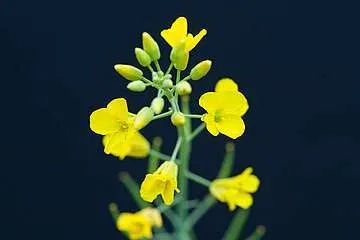
A decision by a Nebraska-based agribusiness to recommission an oilseed crush facility near Goodland has opened an opportunity for farmers in Kansas and Oklahoma, said a Kansas State University agronomist.
Canola breeder Mike Stamm noted that Scoular – which lists more than 100 offices in North America and Asia and sales of more than $9 billion – announced in mid-March that it would retrofit the facility to crush both soybeans and canola.
The facility is expected to begin operations in fall 2024.
“We wanted to support them by getting growers together to learn more,” Stamm said. “For alternative oilseeds like canola to be successfully grown in Kansas, it is crucial to have a readily available end market within the region, which Scoular will provide.”
Stamm said K-State Research and the Great Plains Canola Association will host several canola informational meetings for new and experienced growers. The meetings are scheduled for May 11 in Enid, Oklahoma, and May 18 in Montezuma, Kansas and Harper, Kansas.
He said the meetings will include an update from Scoular on their marketing and pricing strategies and the company’s vision for the rapidly changing renewable fuels market. Brief updates on canola research and extension activities will be given, as well as an update from the Great Plains Canola Association.
The meetings are free to attend, but reservations are required because a meal will be provided. Location and contacts for each meeting include:
Thursday, May 11: Hoover Building, 300 E Oxford Ave, Enid, Okla.
9:30 a.m., Coffee and networking
10 a.m., presentation and meeting
RSVP to Ron Sholar, [email protected]
Thursday, May 18: Montezuma Community Building, 508 West Sunnyside Ave., Montezuma, KS.
12 p.m., presentation and meal
RSVP to the Gray County Extension Office, 620-855-3821, or Kurt Werth, [email protected]
Thursday, May 18, 2023 – Fencepost, 700 E. 14th St., Harper, KS
6 p.m., presentation and meal
RSVP to the Harper County Extension Office, 620-842-5445, or Jenn, [email protected]
Goodland crush facility opens opportunity for farmers in Kansas, Oklahoma

KU News: New book details social justice, activism in American journalism history

From the Office of Public Affairs | http://www.news.ku.edu
Headlines
New book details social justice, activism in American journalism history
LAWRENCE — A University of Kansas associate professor of journalism has edited the forthcoming book “Social Justice, Activism and Diversity in U.S. Media History,” which shares unique stories from American journalism and incorporates multimedia to bring history to life for younger generations. Chapters include stories of a civil rights comic book, the 1913 women’s march on Washington, news coverage of the disability rights movement and public relations in the gay rights movement before 1969.
Racial Equity Collaborative will present community forum
LAWRENCE — The Racial Equity Collaborative — co-founded by the Kansas Department for Children and Families, CarePortal and the University of Kansas School of Social Welfare — will host a community forum from 9 a.m. to 2 p.m. May 3 at Kansas City Kansas Community College. Forum guests will discuss the confusion of neglect and poverty, the progress of kinship care in the state of Kansas and how to make meaningful change.
KU Law awards inaugural Bruce Hopkins Award for Nonprofit Excellence
LAWRENCE – The University of Kansas School of Law awarded the first annual Bruce Hopkins Award for Nonprofit Excellence to Kat Girod, a third-year law student from Prairie Village. The award is named for the law school’s first professor of the practice, who died in 2021, known for his prolific writing and expertise in nonprofit law.
Artists Miller & Shellabarger to perform April 28-29 at Spencer Museum of Art
LAWRENCE — This week the Spencer Museum of Art will host Chicago-based artists Miller & Shellabarger (Dutes Miller and Stan Shellabarger) for a series of public events that explore performance art, queerness and the dynamic of performing as a couple. The free public events are presented in partnership with the Kansas City Art Institute and the Nerman Museum of Contemporary Art.
Full stories below.
————————————————————————
Contact: Mike Krings, KU News Service, 785-864-8860, [email protected], @MikeKrings
New book details social justice, activism in American journalism history
LAWRENCE — A new book from a University of Kansas professor shares unique stories of social justice, activism and diversity in American journalism history and incorporates multimedia to bring history to life for younger generations.
“Social Justice, Activism and Diversity in U.S. Media History,” edited by Teri Finneman, associate professor of journalism at KU, and Erika Pribanic-Smith, associate professor of journalism at the University of Texas at Arlington, assembles a diverse group of prominent journalism historians to examine topics that have often been overlooked or dismissed in history.
“All too often, journalism and history tell the same dominant stories over and over again, usually of ‘great man history,’” Finneman wrote in the introduction. “While we cannot share every story, this book introduces readers to a broader scope of journalism history – to rip out the pages of your history books to reexamine the stories you thought you knew and the ones you were never told.”
Finneman, who is also chair of the Journalism History journal and producer of the associated podcast Journalism History, and Pribanic-Smith assembled the book ahead of the journal’s 50th anniversary next year.
The book includes 22 chapters in six focused parts: Generations, race/ethnicity, gender/sexuality, disability/mental health, religion and class. The book is also focused on being engaging to Generation Z, today’s journalism students and the next generation of media. Each chapter includes links to podcasts, YouTube videos and suggestions for further reading on the topics covered.
“I’m always looking to get people interested in journalism history, especially Generation Z. We thought it would be a good idea to put a book together focusing on the diversity of journalism history,” Finneman said. “There’s no reason history can’t also be interesting. And you can’t understand the present unless you also understand the past.”
While the book will appeal to young people, Finneman said it also will be of interest to anyone who enjoys reading about American history and the media. And though not a typical textbook, “Social Justice, Activism and Diversity in U.S. Media History” can also be of value in the classroom for use in journalism, public relations, advertising, general history courses and more.
Chapters include stories of a civil rights comic book, the 1913 women’s march on Washington, news coverage of the disability rights movement and public relations in the gay rights movement before 1969.
The book features chapters from a diverse team of scholars and historians from across the country, including Melissa Greene-Blye, assistant professor of journalism at KU, who contributed the chapter “Red Power in Print and Action.” An enrolled citizen of the Miami tribe of Oklahoma, Greene-Blye examines the social justice movement that used civil disobedience to demand change in federal Indian policy and to advocate for the sovereign rights of Native Americans to control their own land and resources.
Recent KU alumni Cami Koons and Bella Koscal served as contributing editors and are credited on the book’s cover. Koons read all the book’s chapters to help ensure they are understandable and relatable to Generation Z, while Koscal managed the book’s multimedia.
“The fact that so much effort, hardship and discrimination in American media history is obscured, repressed or forgotten is tragic and embarrassing. I’d be surprised if any Gen Z-er who reads this book doesn’t find a new historical figure to respect or identify with. I certainly did,” said Sam Kricsfeld, Kansas City Jewish Chronicle editor and another recent KU alumnus.
Published by Routledge, the book releases May 12 but is available for pre-order now.
In addition to chronicling journalism history through the book, journal and podcast, Finneman has overseen dozens of oral histories of newspapers in Middle America, including small newspapers’ experiences in the pandemic. She also is publisher of The Eudora Times, a newspaper produced for the community of Eudora with KU journalism students.
-30-
————————————————————————
The official university Twitter account has changed to @UnivOfKansas.
Refollow @KUNews for KU News Service stories, discoveries and experts.
Tweets by KUnews
————————————————————————
Contact: Elizabeth Barton, School of Social Welfare, [email protected], @KUSocialWelfare
Racial Equity Collaborative will present community forum
LAWRENCE — The Racial Equity Collaborative will host a community forum from 9 a.m. to 2 p.m. May 3 at Kansas City Kansas Community College. Forum guests will discuss the confusion of neglect and poverty, the progress of kinship care in the state of Kansas and how to make meaningful change.
This community forum will feature special guest Associate Commissioner Aysha Schomburg of the United States Children’s Bureau. Limited registration for the community forum is still available. For more information, please visit the event page.
The Racial Equity Collaborative comprises three founding organizations: The Kansas Department for Children and Families, CarePortal and the University of Kansas School of Social Welfare. Together, they successfully gathered over 2,500 Kansans to educate, amplify and support the common goal of reducing the number of Black and Brown children in foster care to achieve racial equity in child welfare. This was accomplished through developing a shared language, hosting learning lectures, engaging stakeholders and other activities since September 2021.
-30-
————————————————————————
Subscribe to KU Today, the campus newsletter,
for additional news about the University of Kansas.
http://www.news.ku.edu
————————————————————————
Contact: Emma Herrman, School of Law, [email protected], @kulawschool
KU Law awards inaugural Bruce Hopkins Award for Nonprofit Excellence
LAWRENCE – The University of Kansas School of Law awarded the first annual Bruce Hopkins Award for Nonprofit Excellence to Kat Girod, a third-year law student from Prairie Village, earlier this month at a ceremony held in the Wheat Law Library, where Hopkins’s prolific publications are available for checkout.
“Receiving the Bruce Hopkins Award for Nonprofit Excellence is an immense honor,” Girod said. “I never had the privilege to meet Professor Hopkins, but after meeting his family and colleagues, I know he was an admirable man. As an educator, he cared deeply for his students and supported them in establishing their careers.”
Hopkins wrote more than 40 books on different aspects of nonprofit law during his more than 50-year legal career. “The Law of Tax-Exempt Organizations” has long been considered the definitive source of legal information for nonprofit organizations since its publication in the 1970s.
“Bruce, who served as the law school’s first professor of practice, was the leading expert on nonprofit and tax-exempt organizations in the U.S.,” Dean Stephen Mazza said. “This award reflects two related truths: Bruce’s legal expertise and his commitment to his students.”
Hopkins joined the KU Law faculty in 2008, where he taught courses on nonprofit organizations and the law and mentored countless law students who now practice nationwide. Hopkins practiced for nearly two decades at Polsinelli PC in Kansas City, Missouri, where he helped build a substantial nonprofit law practice group. He earned a Doctor of Juridical Science from KU in 2016 at the age of 72. He died in 2021.
The Bruce Hopkins Award for Nonprofit Excellence was created to continue his legacy and benefit a student who has supported nonprofit organizations and been a voice for the voiceless.
“I have worked with nonprofit organizations in a volunteer or professional capacity since I was in high school,” Girod said. “My work has responded to poverty, immigration, language proficiency, houselessness, domestic violence, early childhood education and postsecondary educational attainment. My work shaped my worldview, my values and my goals. This award is a recognition of the challenging and often thankless tasks so many nonprofit workers do every day.”
“Kat’s record reveals a life devoted to the needs of those who can’t otherwise protect themselves,” Mazza said. “We are deeply grateful to be able to honor Bruce and benefit our students at the same time with this award.”
-30-
————————————————————————
Don’t miss new episodes of “When Experts Attack!,”
a KU News Service podcast hosted by Kansas Public Radio.
https://kansaspublicradio.org/when-experts-attack
————————————————————————
Contact: Elizabeth Kanost, Spencer Museum of Art, 785-864-0142, [email protected], @SpencerMuseum
Artists Miller & Shellabarger to perform April 28-29 at Spencer Museum of Art
LAWRENCE — This week the Spencer Museum of Art will host Chicago-based artists Miller & Shellabarger (Dutes Miller and Stan Shellabarger) for a series of public events on April 28-29 that explore performance art, queerness and the dynamic of performing as a couple.
Married couple Miller & Shellabarger began “Untitled (Pink Tube)” in 2003 as a public performance where they simultaneously crochet at opposite ends of a long tube of pink yarn. They have agreed that when one of them is no longer able to perform, the other will unravel the tube, which will also be a public performance. Their work addresses the rhythm and quality of human relationships as well as universal human experiences and specific experiences related to queer identity. Miller & Shellabarger will perform “Pink Tube” at the Spencer Museum from 10 a.m. to noon and from 1 p.m. to 5 p.m. Friday, April 28, and from noon to 3 p.m. Saturday, April 29.
At 3:30 p.m. April 29, another collaborative duo, Annie Sprinkle and Beth Stephens, will join Miller & Shellabarger for a candid conversation about their years of performance work and what it means to perform as couples. Sprinkle and Stephens, artists and life partners known for their commitment to the environment, have collaborated on multimedia projects since 2002. They are authors of the “Ecosex Manifesto” and producers of the award-winning film “Goodbye Gauley Mountain” and the documentary “Water Makes Us Wet.”
“There will be two full days in which audiences can join Miller & Shellabarger at the Spencer Museum to view their performance and engage them in conversation,” said Joey Orr, Spencer Museum curator for research. “Additionally the lively conversation we anticipate between them with Sprinkle and Stephens is an amazing opportunity and not to be missed.”
These events are all free and open to the public. They are presented in partnership with the Kansas City Art Institute and the Nerman Museum of Contemporary Art.
-30-
————————————————————————
KU News Service
1450 Jayhawk Blvd.
Lawrence KS 66045
Phone: 785-864-3256
Fax: 785-864-3339
[email protected]
http://www.news.ku.edu
Erinn Barcomb-Peterson, director of news and media relations, [email protected]
Today’s News is a free service from the Office of Public Affairs
Horticulture 2023 Newsletter No. 16
https://hnr.k-state.edu/extension/info-center/newsletters/index.html
Blog Post: http://www.ksuhortnewsletter.org
Video of the Week: How to Sharpen a Mower Blade
https://kansashealthyyards.org/component/allvideoshare/video/how-to-sharpen-a-mower-blade?Itemid=101
REMINDERS
Do not remove foliage from spring-flowering bulbs until the foliage dies. You need to give time for the foliage to transfer energy to the bulbs.
Repot houseplants as needed. Go up 1 inch to 2 inches in size of pot.
Keep newly planted trees & shrubs watered as needed. Keep soil moist but not waterlogged.
K-State Garden Hour will present a webinar on drought tolerant plants on May 3. Details in next week’s newsletter.
TURFGRASS
Be on the Lookout for Sod Webworm on Tall Fescue Lawns
We have had numerous reports on tall fescue lawns that greened up this spring but have developed or are developing brown spots. In some cases this leaves the lawn with a pockmarked appearance or larger areas may be browned due to individual spots coalescing. We have found sod webworm damage on turf areas in the Frankfort, KS area (Marshall County) but individual turfgrass areas should be checked to confirm sod webworm as there can be other causes of turf problems. For example, we have also had reports of bronze cutworm damage or a warm-season grass greening up later than tall fescue.
If is very rare for sod webworm damage to show up at this time of year. I have only seen this once before in over 25 years of editing this newsletter.
Look for individual grass blades cut off at ground level. You may also find silken tunnels that the insects use to hide during the day. Large numbers of birds pecking holes in the lawn can also alert you to their presence. Most feeding takes place at night but they may feed during the day on overcast days. They can be especially active near dusk. Individual larva have a brown head capsule and spots down the side. See photo included in the web and blog versions of this newsletter.
Control measures should be considered when you find 2 to 4 webworms per square foot of sod. Irrigate (½ to ¾ inch) to bring the webworms close to the surface unless you can find them feeding. Treat in late afternoon or early evening when the insects are most active. Apply another 1/8 inch of water if possible to activate the insecticide. Suggested insecticides include bifenthrin (Talstar, Bug B Gon Max Insect Killer for Lawns, Ortho Insect Killer for Lawns Granules, Bug Blaster II) and cyhalothrin (Scimitar, Spectracide Triazicide). For more information, see https://hnr.k-state.edu/extension/horticulture-resource-center/common-pest-problems/documents/Sod%20Webworm.pdf . Many thanks to Jason Rugan of Rugan Lawn & Landscape for helping us ID this problem. Let me emphasize again that there can be other causes of turf decline so don’t assume you have sod webworm without checking for their presence. (Ward Upham)
Keep Mower Blades Sharp
Lawn-mowing season is here. Remember that dull blades give the lawn a whitish cast. A dull blade does not cut cleanly but rather shreds the ends of the leaf blades. The shredded ends dry out, giving the lawn that whitish look. A sharp mower blade is even more important when the turf starts putting up seed heads next month. The seed head stems are much tougher than the grass blades and more likely to shred. Under normal use, mower blades should be sharpened about every 10 hours of use. (Ward Upham)
Orchardgrass in Tall Fescue Lawns
Orchardgrass often infests tall fescue lawns. Unfortunately, orchardgrass is lighter green and faster growing than tall fescue, so it is very visible. Homeowners complain of the light green tufts of grass wherever this weed has become established. Even worse, there are no herbicides that will kill the orchard grass without also killing the turf. About the only good thing about orchardgrass is that it is a bunch grass and does not spread.
Orchardgrass often comes in as a contaminant in grass seed, especially K-31 tall fescue. Buying good grass seed is the first line of defense against this weed. Orchardgrass is a pasture grass and therefore is not found in the “weed seed” portion of the seed label. Rather, orchardgrass will be listed as “other crop seed.” Try to buy grass seed that has 0.0% “other crop seed.”
Control options are few and painful. Use glyphosate (Roundup, Killzall Weed and Grass Killer,
Kleeraway Systemic Weed and Grass Killer and others) to spot spray orchardgrass clumps. Any lawn grasses you hit will be killed, so keep the spots sprayed as small as possible. Wait until the spots have turned brown and then cut out the clumps and replace with a small piece of sod.
Large numbers of orchardgrass clumps may mean it is more practical to kill the entire lawn and
start over. This should be done in the fall rather than now.
For information on identification of orchardgrass, including images, go to:
http://kswildflower.org/grass_details.php?grassID=15 (Ward Upham)
FRUIT
Will I Have Peaches This Year?
If your peach trees were in bloom or had already formed fruit and you had freezing temperatures over the weekend, then likely not. Unopened buds are more cold tolerant. So how can you tell if your peach buds are still alive?
To check for low temperature injury to fruit buds or blossoms, use a sharp knife or razor blade and cut the bud in half longitudinally. If the area in the center is white to cream color and the style of the pistil is has not darkened then no damage has been done. But if the center in several buds or blossoms is dark brown or black, it has been killed. (Ward Upham)
Fertilizing Strawberries and Brambles
Most garden soils in Kansas have adequate levels of all nutrients other than nitrogen IF the area has been fertilized in the past. However, it is recommended that a soil test be done to be sure of the nutrient needs of your fruit planting. If the soil test recommends phosphorus and potassium, use a 10-10-10 fertilizer or 12-12-12 instead of what we recommend below but triple the rate. For example, instead of ½ cup per 10 feet of row, use 1.5 cups per 10 feet of row.
Strawberries (June-Bearing): June-bearing strawberries are not fertilized in early spring as this can make the berries soft and more prone to rot. Fertilize at renovation and again in late August to early September. In most cases, strawberries need primarily nitrogen, so the recommendations are for a high nitrogen fertilizer such as a 27-3-3, 29-5-4, 30-3-3 or something similar. Though recommended for lawns, these fertilizers will also work well for strawberries as long as they do not contain weed killers or crabgrass preventers. Apply ½ cup for every 10 feet of row. Note: For more information on renovating strawberries, see page two at http://www.bookstore.ksre.ksu.edu/pubs/mf598.pdf
Strawberries (Everbearing or Day-Neutral): Fertilize in the spring as growth starts and again in early August. Use the rates recommended for June-bearing strawberries. Everbearing (dayneutral) strawberries are not renovated.
Brambles (Blackberries and Raspberries): In most cases, brambles need primarily nitrogen, so use a high nitrogen fertilizer such as a 27-3-3, 29-5-4, 30-3-3 or something similar unless a soil test directs otherwise. Though recommended for lawns, these fertilizers will also work well as long as they do not contain weed killers or crabgrass preventers. Apply ½ cup for every 10 feet of row. Fertilize in spring as growth begins. (Ward Upham)
VEGETABLES
Asparagus Beetles
Be on the lookout for asparagus beetles. Both the adult and larvae of asparagus beetles feed on asparagus spears by chewing the tips and spear surfaces, leading to scarring and staining of the spear tips. Asparagus beetles overwinter as adults in trash near the garden. The adults are a blue/black beetle with a red prothorax with yellow spots. The larvae are a soft, greenish grub. Small, elongated, black eggs — sticking out long ways from the side of asparagus spears — are laid on developing spears.
Early control of beetles is important to reduce feeding damage later. Permethrin will provide control but requires a 3-day waiting period between spraying and harvest. Permethrin is found in Garden and Farm Insect Control and Eight Vegetable, Fruit & Flower Concentrate. (Ward Upham)
Rhubarb Harvest and Seedstalks
Rhubarb, like asparagus, is a perennial vegetable. It is harvested for the leaf stem, which is also called a petiole. Some years rhubarb will produce large, hollow-stemmed seedstalks that arise from the center of the plant. These should be broken or cut out as they appear so that energy will go into plant vigor rather than seed production. It will take several weeks for all the seedstalks to appear so be vigilant in removing them. Newer varieties of rhubarb are selected for vigor, bright red-colored stalks and less of a tendency to produce seedstalks than the older types. (Ward Upham)
Fertilizing Cole Crops
If you planted cole crops such as cabbage, broccoli and cauliflower earlier this spring, they will need a little fertilizer boost. These plants need to mature before summer heat arrives, so they must grow quickly while the weather is cool. A sidedressing of fertilizer about 3 weeks after transplanting helps plants continue to grow rapidly.
Use fertilizers high in nitrogen for sidedressing such as nitrate of soda or blood meal at the rate of 1/3 cup per 10 feet of row. You may also use lawn fertilizers that have close to 30 percent nitrogen such as a 30-3-4 or 29-5-4 but the rate should be cut in half to 3 tablespoons per 10 feet of row. Do not use lawn fertilizers that have weed killers or preventers. Fertilizer must be watered in if timely rains don’t do that job for you.
We have a sheet available that gives recommendations on how to sidedress specific vegetable
crops. It can be found at: https://tinyurl.com/yckz8v3w (Ward Upham)
Red Plastic Mulch and Tomatoes
Plastic mulches have long been known to provide advantages for the vegetable grower including earlier fruiting, increased yields and weed control. More recently advantages have been noted for colored mulches over the more traditional black plastic mulch. With tomatoes, the color of choice has been red. Though normally there is an increase in production of marketable fruit with red mulch over black mulch, the amount of the increase varies with the type of year we have. There may be no increase during years of near-perfect weather or up to a 20% increase with less favorable growing conditions. A good average expected increase is about 12%.
So, how do you apply plastic mulch? Commercial growers have a mulch-laying machine that applies the trickle (drip) irrigation line and the mulch in one operation. Home gardeners must do this by hand. The first step after soil preparation is to place a trickle line near the center of where the mulch will lay as the plastic will prevent rainwater or overhead irrigation from reaching the plants. Then construct trenches for the outer 6 inches of the plastic mulch. This allows the center of the bed to be undisturbed with the edges of the mulch draping down into the trench. Fill the trenches to cover the edges of the mulch. This will prevent wind from catching and blowing the mulch. If the soil has been tilled, a hoe is all that is needed to prepare the trenches. (Ward Upham)
PESTS
Termites or Ants
Both termites and ants are able to swarm and may have wings during part of their lives. Since these insects are close to the same size, people often misidentify flying ants as termites. Since flying ants do not attack wooden structures like termites, it is helpful to be able to tell the difference.
Fortunately, there are several differences that can easily distinguish the two. For example, ants have a thin waist; the waist of a termite is thick. Also, ants’ antennae are elbowed, while termites’ are curved. Thirdly, termites have two pairs of wings that are of equal length. Ants also have two pairs of wings, but theirs are of unequal length. Homeowners who find signs of termite activity should shop for a reputable pest control firm. (Ward Upham)
Contributors:
Ward Upham, Extension Associate
Division of Horticulture
1712 Claflin, 2021 Throckmorton
Manhattan, KS 66506
(785) 532-6173
For questions or further information, contact: [email protected] OR [email protected]
This newsletter is also available on the World Wide Web at: http://hnr.k-state.edu/extension/info-center/newsletters/index.html
The web version includes color images that illustrate subjects discussed. To subscribe to this newsletter electronically, send an e-mail message to [email protected] or [email protected] listing your e-mail address in the message.
Brand names appearing in this newsletter are for product identification purposes only. No endorsement is intended, nor is criticism implied of similar products not mentioned.
K-State Research and Extension is committed to making its services, activities and programs accessible to all participants. If you have special requirements due to a physical, vision or hearing disability, or a dietary restriction please contact Extension Horticulture at (785) 532-6173.
Kansas State University Agricultural Experiment Station and Cooperative Extension Service K-State Research and Extension is an equal opportunity employer. Issued in furtherance of Cooperative Extension Work, Acts of May 8 and June 30, 1914, as amended. Kansas State University, County Extension Councils, and United States Department of Agriculture
Cooperating, Ernie Minton, Dean.
KU News: Fred Logan to receive inaugural Chancellor’s Distinguished Service Award

From the Office of Public Affairs | http://www.news.ku.edu
Headlines
Fred Logan to receive inaugural Chancellor’s Distinguished Service Award
LAWRENCE — A longtime civic leader and higher education supporter is being honored with a new award to be given annually by the University of Kansas. Fred Logan, a widely respected attorney and Kansas community and government leader, has been named the recipient of the inaugural Chancellor’s Distinguished Service Award for his notable service to KU and higher education.
Spencer Museum, Charlotte Street announce Rocket Grants 2023 call for artists
LAWRENCE — The Spencer Museum of Art and Charlotte Street have announced the 2023 cycle of Rocket Grants, with the call for artists opening online May 15. An information session will be held April 21 at the Spencer Museum at the University of Kansas. Artists, curators, collectives and collaborative groups residing within an 80-mile radius of the Kansas City metropolitan area are eligible to apply.
KU Engineering students craft ‘Simulearn’ app to win KC Fed Code-A-Thon
LAWRENCE — Amazon Alexa, Google Home and Home Assistant all make it easy for users to turn on lights, track grocery lists, automate climate controls and handle other relatively mindless home tasks. Now, as part of a competition sponsored by the Kansas City Federal Reserve Bank, a group of University of Kansas engineering students has written an app to help anyone learn the actual computing language that could one day help people program their own devices.
Full stories below.
————————————————————————
Contact: Joe Monaco, Office of Public Affairs, 785-864-7100, [email protected], @UnivOfKansas
Fred Logan to receive inaugural Chancellor’s Distinguished Service Award
LAWRENCE — A longtime civic leader and higher education supporter is being honored with a new award to be given annually by the University of Kansas.
Fred Logan, a widely respected attorney and Kansas community and government leader, has been named the recipient of the inaugural Chancellor’s Distinguished Service Award for his notable service to KU and higher education.
“Fred Logan has been a tireless civic leader and higher education advocate for decades,” said KU Chancellor Douglas A. Girod. “More specifically, he has been a relentless advocate for KU and played a leadership role in many of our most important civic initiatives, particularly with regard to the KU Cancer Center. On behalf of the entire university, I want to thank him for his service to KU and congratulate him on being the recipient of the inaugural Chancellor’s Distinguished Service Award.”
Logan will be honored at this year’s Commencement ceremony May 14 in Lawrence.
“It has been my honor to serve in various civic roles during my career, and I have especially enjoyed the opportunity to assist the University of Kansas in its mission to educate students, serve Kansas communities and conduct research that improves the world,” Logan said. “My true passion has always been education, and I believe deeply in the power of public research universities like KU to change lives and improve our state. I am honored to be recognized by KU, and I hope this award will inspire others to serve their communities however they can.”
Logan began his career as an attorney in Johnson County and soon became involved in state and local politics. In 1987, he became state chairman of the Kansas Republican Party and went on to fill leadership roles in a number of service organizations throughout the Kansas City region.
In 1992, Logan was appointed to fill a vacancy on the Johnson County Community College Board of Trustees. He was elected by Johnson County voters to a four-year term in 1993 and served as board chair from 1994-97.
In 2008, he chaired the campaign committee for the Johnson County Education and Research Triangle initiative, which resulted in additional funding for the KU Cancer Center, the Kansas State University campus in Olathe and the KU Edwards Campus. He went on to serve on the Kansas Board of Regents from 2011-15 and was board chair from 2013-14.
In more recent years, Logan has served as chair of the Masonic Cancer Alliance Partners Advisory Board and was instrumental in securing additional funding for the KU Cancer Center. He is a member of the advisory board for KU’s Dole Institute of Politics and chaired the search committee that hired the Dole Institute’s new director in 2021. In 2020, he provided leadership in the creation of Kansans for Higher Education, a new Kansas political action committee that supports the state’s higher education institutions.
“Fred’s service to this university — and to higher education more broadly — cannot be overstated,” Girod said. “For as long as I’ve been here, Fred has been a person we could call on for advice or support or to ask him to play a leadership role for an important initiative. His answer is always ‘yes,’ and his leadership always leads to a terrific outcome for the university.”
Learn more about the new Chancellor’s Distinguished Service Award.
-30-
————————————————————————
The official university Twitter account has changed to @UnivOfKansas.
Refollow @KUNews for KU News Service stories, discoveries and experts.
Tweets by KUnews
————————————————————————
Contact: Elizabeth Kanost, Spencer Museum of Art, 785-864-0142, [email protected], @SpencerMuseum
Spencer Museum, Charlotte Street announce Rocket Grants 2023 call for artists
LAWRENCE — The Spencer Museum of Art and Charlotte Street have announced the 2023 cycle of Rocket Grants, with the call for artists opening online May 15. An information session will be held April 21 at the Spencer Museum at the University of Kansas for artists interested in applying.
With support from The Andy Warhol Foundation for the Visual Arts, Rocket Grants provide direct funding to artists in the Lawrence and Kansas City area who are creating exceptional, under-the-radar and artist-centered projects in public spaces. Artists, curators, collectives and collaborative groups residing within an 80-mile radius of the Kansas City metropolitan area are eligible to apply.
Rocket Grants award up to $6,000 to individuals or artist groups for projects that exist outside established venues such as museums, galleries, theaters or arts districts. Artists are encouraged to address the community at large or choose a smaller targeted audience. The long-term goals of the Rocket Grants program are to encourage emerging and nontraditional artistic practices in the Lawrence and Kansas City area; to contribute to a thriving arts community; and to build bridges between geographic and cultural communities.
“Five years ago, when I started Halfmoonstudioz, my goal was to help revamp the east side with art one brushstroke at a time. With Rocket Grants I can confidently say I’ve done just that,” said Devin Edwards, a 2022 Rocket Grant recipient who created murals around the east side of Kansas City.
Rocket Grants projects are selected by a jury of four arts professionals working both locally and nationally. Proposals are evaluated on criteria including innovation, thoughtful context, feasibility and meaningful impact.
To apply, artists must submit a Letter of Interest (LOI) online by June 26. The LOI should include a project summary, the artists involved, the intended audience, the specific context of the work, budget needs and relevance of the project. The jury will assess the letters of interest and invite selected projects to complete a full application in July 2023. Rocket Grants recipients will be announced in September 2023.
In addition to the information session at the Spencer Museum, there will be one held at the Charlotte Street Foundation in Kansas City, Missouri, from 5-6 p.m. June 14.
For any questions regarding the application process, please contact Kimberly Kitada, Jedel Family Foundation Curatorial Fellow, at [email protected].
-30-
————————————————————————
Subscribe to KU Today, the campus newsletter,
for additional news about the University of Kansas.
http://www.news.ku.edu
————————————————————————
Contact: Cody Howard, School of Engineering, 785-864-2936, [email protected], @kuengineering
KU Engineering students craft ‘Simulearn’ app to win KC Fed Code-A-Thon
LAWRENCE — Amazon Alexa, Google Home and Home Assistant all make it easy for users to turn on lights, track grocery lists, automate climate controls and handle other relatively mindless home tasks that take up time and attention.
Now, a group of University of Kansas engineering students has written an app to help anyone learn the actual computing language that could one day help people program their own devices.
And they did it all in 30 hours.
The five students, all sophomores in the Department of Electrical Engineering & Computer Science, created the app as part of this year’s Kansas City Fed Code-A-Thon, organized by the Kansas City Federal Reserve Bank. The team finished first among 18 teams from regional colleges who competed over two days to achieve a common goal: help someone learn code and use it in their everyday life.
KU’s team, called N.A.R.C.S. — a name comprising the first letter of the first name of team members Nikhil Raja, Abir Haque, Rahul Amatapu, Chase Burkdoll and Shad Ahmed Shahul Hameed — created an app to help people learn the Python computer programming language using smart home devices.
All five teammates already had struggled enough in their EECS classes — “trying to figure out how conditional statements and for-loops worked,” Haque said — so they were grateful that the announced-on-site theme would allow them to turn the challenge into an opportunity to build upon their collective passion for home automation technologies.
“We were also all friends walking into the competition,” Haque said. “We saw this as a great opportunity to learn about new technologies while hanging out as well.”
Last month’s competition started on a Friday night. Before they’d gone to sleep they’d brainstormed ideas, identified the app’s requirements and designed the solution. They spent Saturday developing and testing the app.
Using TypeScript, React and Git to craft the source code, N.A.R.C.S members had generated an app — dubbed Simulearn — that delivered a working prototype. Teams were judged in five categories: innovation, UX/polish, functionality, impact/potential and presentation.
Experience in the KU School of Engineering, Haque said, certainly prepped the N.A.R.C.S members for success.
“Every class we have taken so far — whether it be Software Engineering, Discrete Structures or a non-EECS class like Linear Algebra — places a great deal of emphasis on developing strong problem-solvers and team players,” said Haque, a student research assistant for the Institute for Information Sciences and an undergraduate research fellow. “In addition, KU does a great job at combining theory with application. These traits are extremely important.”
The KC Fed conducts the annual Code-A-Thon to encourage and inspire college students studying computer science and engineering. Nearly half of all KC Fed employees are information technology professionals.
“We look forward to competing next year,” Haque said. “Seeing that we are still sophomores, we hope to compete in similar competitions to broaden our skills and just have fun.”
-30-
————————————————————————
KU News Service
1450 Jayhawk Blvd.
Lawrence KS 66045
Phone: 785-864-3256
Fax: 785-864-3339
[email protected]
http://www.news.ku.edu
Erinn Barcomb-Peterson, director of news and media relations, [email protected]
Today’s News is a free service from the Office of Public Affairs
