Tuesday, March 10, 2026
Home Blog Page 737

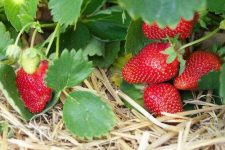
Controlling Weeds in Strawberries     

0
Photo courtesy: istock

             Although a popular fruit among home gardeners, strawberries present a major issue when it comes to weeds. The trailing growth habit of strawberry plants creates a groundcover which makes hoeing a problematic form of weed control. Hand pulling weeds is recommended for small plantings. For larger plantings, herbicides may be more appropriate.

Poast (sethoxydim) is a grass-killing herbicide that can be used once weedy grasses appear in the strawberry patch. This herbicide can be sprayed directly over strawberries without causing harm to the strawberry plants. Anytime chemicals are applied to a crop pay close attention to the directions for re-entry and in the case of edible crops, note the pre-harvest interval (PHI). Strawberries should not be harvested within seven days of application of Poast. Poast can be found in Fertilome Over the Top II and Hi-Yield Grass Killer.

Cynthia Domenghini

Asparagus Beetles 

0
Photo credit: liz west

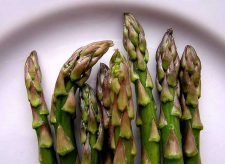
            Be on the lookout for asparagus beetles. Both the adult and larvae of asparagus beetles feed on asparagus spears by chewing the tips and spear surfaces, leading to scarring and staining of the spear tips. Asparagus beetles overwinter as adults in trash near the garden. The adults are a blue/black beetle with a red prothorax with yellow spots. The larvae are a soft, greenish grub. Small, elongated, black eggs — sticking out long ways from the side of asparagus spears — are laid on developing spears.

            Early control of beetles is important to reduce feeding damage later. Permethrin will provide control but requires a 3-day waiting period between spraying and harvest. Permethrin is found in Garden and Farm Insect Control and Eight Vegetable, Fruit & Flower Concentrate.

Ward Upham, Extension Agent

Will I Have Peaches This Year?

0
Peaches and Apricots   

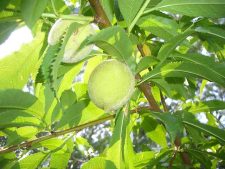
            If your peach trees were in bloom or had already formed fruit and you had freezing temperatures over the weekend, then likely not.  Unopened buds are more cold tolerant.  So how can you tell if your peach buds are still alive?

            To check for low temperature injury to fruit buds or blossoms, use a sharp knife or razor blade and cut the bud in half longitudinally. If the area in the center is white to cream color and the style of the pistil is has not darkened then no damage has been done.  But if the center in several buds or blossoms is dark brown or black, it has been killed.

Ward Upham, Extension Agent

Keep Mower Blades Sharp  

0

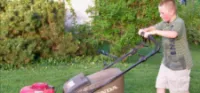
Lawn-mowing season is here. Remember that dull blades give the lawn a whitish cast. A dull blade does not cut cleanly but rather shreds the ends of the leaf blades. The shredded ends dry out, giving the lawn that whitish look. A sharp mower blade is even more important when the turf starts putting up seed heads next month.  The seed head stems are much tougher than the grass blades and more likely to shred. Under normal use, mower blades should be sharpened about every 10 hours of use. (Ward Upham)

Orchardgrass in Tall Fescue Lawns

Orchardgrass often infests tall fescue lawns.  Unfortunately, orchardgrass is lighter green and faster growing than tall fescue, so it is very visible. Homeowners complain of the light green tufts of grass wherever this weed has become established. Even worse, there are no herbicides that will kill the orchard grass without also killing the turf. About the only good thing about orchardgrass is that it is a bunch grass and does not spread.

Orchardgrass often comes in as a contaminant in grass seed, especially K-31 tall fescue. Buying good grass seed is the first line of defense against this weed. Orchardgrass is a pasture grass and therefore is not found in the “weed seed” portion of the seed label. Rather, orchardgrass will be listed as “other crop seed.” Try to buy grass seed that has 0.0% “other crop seed.”

Control options are few and painful. Use glyphosate (Roundup, Killzall Weed and Grass Killer,

Kleeraway Systemic Weed and Grass Killer and others) to spot spray orchardgrass clumps. Any lawn grasses you hit will be killed, so keep the spots sprayed as small as possible. Wait until the spots have turned brown and then cut out the clumps and replace with a small piece of sod.

Large numbers of orchardgrass clumps may mean it is more practical to kill the entire lawn and start over. This should be done in the fall rather than now.

            For information on identification of orchardgrass, including images, go to:

http://kswildflower.org/grass_details.php?grassID=15 \

Ward Upham, Extension Agent

Be on the Lookout for Sod Webworm on Tall Fescue Lawns

0

We have had numerous reports on tall fescue lawns that greened up this spring but have developed or are developing brown spots.  In some cases this leaves the lawn with a pockmarked appearance or larger areas may be browned due to individual spots coalescing. We have found sod webworm damage on turf areas in the Frankfort, KS area (Marshall County) but individual turfgrass areas should be checked to confirm sod webworm as there can be other causes of turf problems.  For example, we have also had reports of bronze cutworm damage or a warm-season grass greening up later than tall fescue.

If is very rare for sod webworm damage to show up at this time of year.  I have only seen this once before in over 25 years of editing this newsletter.

Look for individual grass blades cut off at ground level.  You may also find silken tunnels that the insects use to hide during the day.  Large numbers of birds pecking holes in the lawn can also alert you to their presence.  Most feeding takes place at night but they may feed during the day on overcast days.  They can be especially active near dusk. Individual larva have a brown head capsule and spots down the side. See photo included in the web and blog versions of this newsletter.

Control measures should be considered when you find 2 to 4 webworms per square foot of sod. Irrigate (½  to ¾ inch) to bring the webworms close to the surface unless you can find them feeding.  Treat in late afternoon or early evening when the insects are most active. Apply another 1/8 inch of water if possible to activate the insecticide. Suggested insecticides include bifenthrin (Talstar, Bug B Gon Max Insect Killer for Lawns, Ortho Insect Killer for Lawns Granules, Bug Blaster II) and cyhalothrin (Scimitar, Spectracide Triazicide). For more information, see https://hnr.k-state.edu/extension/horticulture-resource-center/common-pest-problems/documents/Sod%20Webworm.pdf .  Many thanks to Jason Rugan of Rugan Lawn & Landscape for helping us ID this problem. Let me emphasize again that there can be other causes of turf decline so don’t assume you have sod webworm without checking for their presence.

Ward Upham, Extension Agent