Thursday, March 12, 2026
Home Blog Page 752

Lovina and Her Family Celebrate Easter

0
Lovina made Easter baskets for each of her grandchildren.

I need to write this column this morning before I leave. Sisters Verena and Emma, nieces Elizabeth and Emma, Crystal (nephew Benjamin’s wife), daughters Elizabeth, Susan, Verena, Lovina, and I are going to daughter Loretta’s house to clean today. Walls, ceilings, windows, furniture, floors, etc. will be cleaned thoroughly. It’s always a good feeling once all is cleaned again. This is in preparation for communion services, which Dustin and Loretta will host on April 30, Lord willing. It will be an enjoyable day to spend together. 

I cleaned some windows yesterday here in my house. Some of that rain makes the windows dirty and then of course there are the little love prints on the inside left by my precious grandchildren. I need to do some spring cleaning since we won’t host church services again here until December. All the families that need to have a tent to host church take it during the summer months. Since we have a pole barn we can get heat, we take our turn in the winter months, early spring, or late fall. The last time we hosted church was in May 2022. So I almost need to do deep cleaning in between that time. We have around 35 families that host church, so it’s a while until our turn comes around again. 

Loretta is going to make breakfast for us all this morning before we clean. She plans to have pancakes, sausage, scrambled eggs, and rhubarb juice and coffee. Lunch is being brought in by everyone. 

Sister Emma has four grandchildren, and I have 10, but four of those are in school. We will still have 10 children there, ages four and younger. It should be an interesting day!

We are having a lovely week weatherwise. Son Joseph hauled manure on the garden and in the garden beds last night. My husband Joe wants to till the garden again now since the manure is added. We have a small tiller that they use to till in the garden beds. Joe is getting eager to get potatoes planted. I also want to plant peas, some radishes, and sweet onions soon. This week, the temperature is in the 70s. I do hope our cold weather is pretty well over for this season. 

On Good Friday, we had a nice day with the family all being home. The menu included mashed potatoes, gravy, dressing, pork and beans, grilled chicken, lettuce salad, a veggie tray, cheese, hot peppers, colored eggs, and more. There were a few dessert options of berry cream cheese muffins, swiss roll bars (homemade of course), and dirt pudding. The desserts and salad were brought in by my daughters, so that made it easier for me. Sister Verena also came for lunch and then stayed a few nights. 

After lunch, Joe and I gave our 10 grandchildren Easter baskets. I make them myself, filling them with little goodies such as a coloring book, colors, bubbles, and more. It’s much cheaper to do it this way. Then came the time for the children to go look for the plastic eggs we hid filled with candy. They were beyond excited, and it was so fun to see their excited little faces when they found the eggs. The day was nice and sunny but chilly. At least it wasn’t raining. I hope everyone had a blessed Easter. 

Sunday evening, Joe and I went to daughter Verena’s for a hobo supper by the campfire. It was a nice evening to sit by the fire. Daughter Elizabeth, Tim, and children; daughter Susan, Ervin, and children; sons Benjamin and Kevin, and nephew Henry were also there for the evening. 

I need to get started with the morning work before I head over to Loretta’s. God bless!

Deep-Fried Morels

3/4 cup all-purpose flour

1/2 cup milk

1 egg, beaten

1/2 teaspoon salt

Olive oil for panfrying

12 to 15 large Morel mushrooms

Stir the flour, milk, egg, and salt together in a large bowl. Heat 1 inch of oil in a large skillet until sizzling. Dip the mushrooms in the batter and put them in the skillet. Fry each side until golden brown. Using a slotted spoon, transfer to paper towels to drain. 


Lovina’s Amish Kitchen is written by Lovina Eicher, Old Order Amish writer, cook, wife, and mother of eight. Her newest cookbook, Amish Family Recipes, is available wherever books are sold. Readers can write to Eicher at Lovina’s Amish Kitchen, PO Box 234, Sturgis, MI 49091 (please include a self-addressed stamped envelope for a reply); or email [email protected] and your message will be passed on to her to read. She does not personally respond to emails.


Contact: [email protected];  316-281-4413

Say What?

0
lee pitts

Please pardon me for being brash, but I think I’m a very polite and well mannered person. I owe it all to my grandmother who was a real stickler for proper manners, vocabulary and elocution. Believe me, if my thank-you notes for Christmas gifts weren’t postmarked December 26 I might be cut-off completely the following year and I could hardly afford that. My grandmother was probably the reason why I didn’t learn how to be a really good cusser until I went to work in the oilfields.

People who study such things say that a language somewhere in the world becomes extinct every two weeks. Even in America we’re losing words at an alarming rate and while I think it’s good that the “n” word is used less and less, it saddens me not to hear words like persnickety, cahoots and horsefeathers any more. Regarding our present sad, sickly state, we need to round up all the doctors who had anything to do with curing “cooties” and making that word disappear from the American lexicon and replacing it with COVID 19.

Listen to the way today’s teenagers talk and you’ll realize we’re witnessing the death of chivalry in this country. Here are ten words or phrases that are more endangered than all the monkey tree frogs and fanged bats combined.

#10 Hello or Goodbye- On my daily walks I often pass others and only about 20% of them bother to acknowledge my existence in any way. Mostly it’s because they have earbuds in their ears listening to rap music or they are too busy yelling at their smart phones. When I was a kid we got a kick out of using creative ways to say “goodbye” and used phrases like, “See you later alligator,” “After awhile crocodile,” and “See you around like a donut.”

#9 I’m Sorry- Heavens to Murgatroyd, I haven’t heard anyone take responsibility for anything they said or did since I was knee high to a grasshopper.

#8 Excuse me- This is a derivative or subspecies of the phrase “come again.” Now days teenagers are more apt to say, “What chew talking about?”

#7 Thank You- The last time I got a thank you note in the mail was during the Nixon administration. And e mail
thank you’s don’t count because they are too easy. To show real appreciation you should have to look for a Hallmark card, buy a stamp and go to the Post Office.

#6 No, thank you- This idiom has been replaced by, “Get lost.” Or, “For the hundredth time, please tell your computer to quit robo-calling me and take my name off your list.”

#5 How are you? This query used to show one’s sincere interest in a person’s physical well being. Now it’s only heard when the beneficiary of an elderly, sick rich person wants to know when you intend to bite the dust and if there was anything said recipient could do to hasten such an outcome.

#4 Your welcome- This phrase went out with Betamax, get the lead out, cut a rug, soda jerks and hobos. The updated version is: “No problemo.”

# 3 Let me get that for you- This phrase was last heard in 1987 and was used when a man would open the door for a lady, or a bus full of ladies from the rest home. A gentleman did this even if it meant not getting his favorite seat by the window because one of the ladies took it.

#2 I beg your pardon- This was used by the older, more well-bred and civilized people of my youth. We on the playground used an alternative phrase: “Liar, liar, pants on fire.” This polite expression is older than Methusala and was used when someone said or did something that flabbergasted you. Since no one is “flabbergasted” any more, or has any idea of who Methusala is, people just say: “Chew messin’ with me, man?”

#1 Please- A polite request as in, “PLEASE Mister Big Shot, would you turn off that obnoxious phone or go outside to talk. I’m trying to enjoy a $45 lunch with my wife and don’t need to know about your booming business, your sorry sex life or your otherwise egotistical existence.

Fertilizing the Home Orchard   

0

Fruit trees benefit from fertilization around the bloom period, but the amount needed varies with the age of the tree. Normally, trees primarily need nitrogen, so the recommendations are for a high nitrogen fertilizer such as a 27-3-3, 29-5-4, 30-3-3 or something similar. Though recommended for lawns, these fertilizers will also work well as long as they do not contain weed killers or crabgrass preventers. Use the following rates:

            Trees 1 to 2 years old, apply one-fourth cup of fertilizer per tree;

            Trees 3 to 4 years old, apply one-half cup per tree;

            Trees 5 to 10 years old, apply 1 to 2 cups per tree;

            Trees more than 10 years old, apply 2 to 3 cups.

You may also use nitrate of soda (16-0-0) but double the rate recommended above. If a soil test calls for phosphorus and potassium, use a 10-10-10 but triple the rate.

On apple trees, last year’s growth should be 8 to 10 inches, cherries should have 10 to 12 inches, and peaches should equal 12 to 15 inches of terminal growth. If less than this, apply the higher rate of fertilizer, and if more, apply the lesser amount.

Spread all fertilizer evenly on the ground away from the trunk of the tree and to the outer spread of the branches. Water in the fertilizer with at least 1/4 inch of water if rain does not do the job for you.

Fertilizing Grapes

Year of Planting: Apply one-half cup of a 10-10-10, 12-12-12 or similar fertilizer per vine as growth begins in the spring. Repeat after one month. Fertilizers should be spread evenly from the trunk out 3 to 5 feet.

Second Year: Apply 1 cup of a 10-10-10, 12-12-12 or similar fertilizer per vine as growth begins in the spring. Fertilizers should be spread evenly from the trunk out 3 to 5 feet.

Mature Vines (3 years and older): If the soil test recommends phosphorus and potassium, use a 10-10-10, 12-12-12 or similar fertilizer at the rate of 2 cups per mature vine. Fertilizers should be spread evenly from the trunk out 3 to 5 feet.

If, however, there are adequate levels of phosphorus and potassium, add 3/4 cup of a high nitrogen fertilizer such as a 27-3-3, 29-5-4, 30-3-3 or something similar instead of the 10-10-10. Though recommended for lawns, these fertilizers will also work well as long as they do not contain weed killers or crabgrass preventers. Fertilizers should be spread evenly from the trunk out 3 to 5 feet.

Ward Upham, Extension Agent

Henbit and Chickweed in Lawns

0


The plant with the little purple flowers that have been showing up in home lawns is called henbit. If you are not sure this is what you have, check the stems. If they are square rather than round, you have henbit. A plant that also is low growing but has round stems and tiny white flowers is chickweed.

Both these plants are winter annuals and start to grow in the fall. They spend the winter as small plants and so most people do not pay much attention to them until they start to flower in the spring. Trying to kill either one at this late stage with a herbicide usually is a waste of time and money. Though plants may be burned back, they will rarely be killed. So what should you do? Remember, these are winter annuals that will die as soon as the weather turns hot.   Keep the lawn mowed until nature takes its course.

However, you can do something next fall that will help the following spring. There are two possible courses of action, as far as chemical controls go. The first is to apply a preemergence herbicide in early to mid-September.  This will prevent henbit and other winter annuals from germinating. Preemergence herbicides labeled for both henbit and chickweed include prodiamine (Barricade), dithiopyr (Dimension),  isoxaben (Gallery), pendimethalin (Halts and others), oryzalin (Surflan and Weed Impede) and XL. All but Surflan, Weed Impede and XL are also labeled for speedwell. The second course of action is to wait until late October or early November (after most henbit has germinated) and use a postemergence broadleaf herbicide, such as those mentioned above. With this approach, most of the henbit will be killed but, because small numbers of henbit continue to germinate through the late fall and winter, some plants will be missed. This approach works well because henbit is relatively easy to kill in the fall and many people want to treat for dandelions at that time (i.e., October) anyway. Just remember you will have to do some spot-spraying in the spring if you want to get all the henbit. As a final note, henbit will not be very competitive in dense, healthy lawns, so good cultural management will reduce the need for herbicides.

Ward Upham, Extension Agent

CHS Inc. and MKC to expand grain marketing joint venture

0

Joint venture will expand market access and create new opportunities for U.S. cooperatives and farmers

ST. PAUL, Minn. and MOUNDRIDGE, Kan.  Longtime cooperative partners
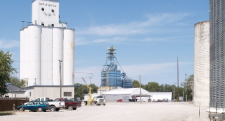
CHS Inc. and Mid-Kansas Cooperative (MKC) today announced their intention to expand their current grain marketing joint venture to maximize the value of an end-to-end cooperative supply chain in the Southern Plains. This development will expand market access and patronage- eligible options to maximize owner value by connecting area farmers and cooperatives with end- use markets and customers.

“CHS has been successfully partnering with MKC through joint ventures for more than 10
years,” said John Griffith, executive vice president, ag business, CHS. “This initiative expands our collaborative presence and maximizes our complementary asset base in the region to create an efficient, integrated supply chain to connect cooperative- and farmer-owners in the Southern Plains with customers around the world while leveraging the TEMCO terminal in Houston, Texas.”

This expanded partnership will drive long-term growth through a responsive grain network and reinvestment to expand marketing opportunities and modernize rail infrastructure in this vital growing region. The two companies are currently building a rail-served grain terminal near Sterling, Kansas, that is scheduled to be operational in 2024.
“Expanding our relationship with CHS will open up market access and create new opportunities for our farmers,” said Brad Stedman, president and CEO, MKC. “Our track record of successful partnership and shared vision to create value for cooperative-owners and customers makes MKC and CHS the right partners to link farmers with a more defined southern supply chain.”

According to the cooperative partners, both companies will continue to independently own and operate assets throughout the region while expanding their grain marketing joint venture, designed to more efficiently move grain through a seamless distribution channel. The companies expect to begin to operate the expanded 50/50 joint venture this summer.
About CHS CHS Inc. (www.chsinc.com) creates connections to empower agriculture. As a leading global agribusiness and the largest farmer-owned cooperative in the United States, CHS serves customers in 65 countries and employs more than 10,000 people worldwide. We provide critical crop inputs, market access and risk management services that help farmers feed the world. Our diversified agronomy, grains, foods and energy businesses recorded revenues of $47.8 billion in fiscal year 2022. We advance sustainability through our commitment to being stewards of the environment, building economic viability and strengthening community and employee well- being.

About MKC – MKC, headquartered in Moundridge, Kansas, is a full-service farm cooperative offering a complete line of products, programs, and services for both farm and urban customers throughout Kansas. MKC specializes in grain, agronomy, energy, feed and risk management.

The cooperative has more than 11,000 members and 8,000 customers through a wholly owned subsidiary, Mid-West Fertilizer. More than 600 employees play a key role in the growth and success of the cooperative. MKC’s mission is to create customer, employee, and partner success to provide a safe and sustainable food supply. Learn more about MKC at mkcoop.com and follow the MKC story on Facebook, Twitter and Instagram.

This document and other CHS Inc. publicly available documents contain, and CHS officers and representatives may from time to time make, “forward-looking statements” within the meaning of the safe harbor provisions of the U.S. Private Securities Litigation Reform Act of 1995. Forward-looking statements can be identified by words such as “anticipate,” “intend,” “plan,” “goal,” “seek,” “believe,” “project,” “estimate,” “expect,” “strategy,” “future,” “likely,” “may,” “should,” “will” and similar references to future periods. Forward-looking statements are neither historical facts nor assurances of future performance.

Instead, they are based only on CHS current beliefs, expectations and
assumptions regarding the future of its businesses, financial condition and results of operations, future plans and strategies, projections, anticipated events and trends, the economy and other future conditions. Because forward- looking statements relate to the future, they are subject to inherent uncertainties, risks and changes in circumstances that are difficult to predict and many of which are outside of CHS control. CHS actual results and financial condition may differ materially from those indicated in the forward-looking statements. Therefore, you should not place undue reliance on any of these forward-looking statements.

Important factors that could cause CHS actual results and financial condition to differ materially from those indicated in the forward-looking statements are discussed or identified in CHS filings made with the U.S. Securities and Exchange Commission, including in the “Risk Factors” discussion in Item 1A of CHS Annual Report on Form 10-K for the fiscal year ended August 31, 2022.

These factors may include: the inability to consummate the transaction described in this press release; changes in commodity prices; the impact of government policies, mandates, regulations and trade agreements; global and regional political, economic, legal and other risks of doing business globally; the ongoing war between Russia and Ukraine; the impact of inflation; the impact of epidemics, pandemics, outbreaks of disease and other adverse public health developments, including COVID-19; the impact of market acceptance of alternatives to refined petroleum products; consolidation among our suppliers and customers; nonperformance by contractual counterparties; changes in federal income tax
laws or our tax status; the impact of compliance or noncompliance with applicable laws and regulations; the impact of any governmental investigations; the impact of environmental liabilities and litigation; actual or perceived quality, safety or health risks associated with our products; the impact of seasonality; the effectiveness of our risk management strategies; business interruptions, casualty losses and supply chain issues; the impact of workforce factors; our funding needs and financing sources; financial institutions’ and other capital sources’ policies concerning energy-related businesses; uncertainty regarding the transition away from LIBOR and the replacement of LIBOR with an alternative reference rate; technological improvements that decrease the demand for our agronomy and energy
products; our ability to complete, integrate and benefit from acquisitions, strategic alliances, joint ventures, divestitures and other nonordinary course-of-business events; security breaches or other disruptions to our information technology systems or assets; the impact of our environmental, social and governance practices, including failures or delays in achieving our strategies or expectations related to climate change or other
environmental matters; the impairment of long-lived assets; and other factors affecting our businesses generally.

Any forward-looking statements made by CHS in this document are based only on information currently available to CHS and speak only as of the date on which the statement is made. CHS undertakes no obligation to update any forward-
looking statement, whether written or oral, that may be made from time to time, whether as a result of new information, future developments or otherwise except as required by applicable law.