Thursday, March 12, 2026
Home Blog Page 753

Catalytic Converter Thefts Spike 1370.37% in Kansas during 3-year period

0

You read that right, 1370.37%!

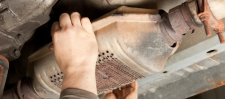
Catalytic converter thefts have been plaguing the country since the start of the pandemic as thieves took advantage of unsuspecting car owners at never before seen levels. New data from BeenVerified, a public data company, shows that since 2019, catalytic converter thefts have skyrocketed 1370.37% in Kansas in three years.

The study, Catalytic Converter Thefts Hit New Record in 2022—But Some States See Declines includes state by state crime data from January 2019 through 2022. The study estimates that the theft of catalytic converters quadrupled across the U.S. in 2021, a 353% increase from all reported thefts of catalytic converters in 2020, a previous record year for these thefts, and is again up another 20% this year when comparing the first four months of the year.

Kansas ranks 30 for the number of catalytic converter thefts per 100k registered automobiles.

Here’s the breakdown for Kansas:

Kansas  Catalytic Theft Numbers
Percentage change thefts 2019 vs 2022 1370.37%
2019 thefts 27
2020 thefts 102
2021 thefts 362
2022 thefts
397
% Change Thefts YoY 2019 vs 2020
277.78%
% Change Thefts YoY 2020 vs 2021
254.90%
Percentage change thefts 2021 vs 2022
9.67%
Thefts per 100k Automobiles 2022
42
Rank Thefts per 100k Automobiles 2022
30
Rank Total thefts
33

Note that the number of actual thefts estimated is based on insured thefts and the number is likely much higher but the percentage increase is a clear indicator 

World-Class Professional Bull Riding Returns to Wichita, Kansas, April 22 – Interviews Available with Veteran Rider Michael Lane Inbox

0
Winning more than a million dollars as a professional bull rider, Dave Samsel will be featured at the K-State Rodeo Club Bull Riding School, February 12-13, in Manhattan.

For one night only, some of the best bull riders in the world will battle the sport’s rankest bovine athletes in the ultimate showdown of man vs. beast in one of the most exciting live sporting events to witness.

To attend the event, please apply for a media credential via the online portal, here.

Positioned near the end of the regular season, fans will watch on as some of the sport’s newest up-and-coming talent goes head-to-head against established stars vying for crucial points to return to the sport’s top tour and ultimately be crowned the 2022 Velocity Tour Champion

Among the contenders hoping for great success in Kansas is veteran rider Michael Lane.

  • Beginning his career as a youngster riding his siblings’ show sheep, Michael Lane has since become one of the world’s top professional bull riders.
  • As the winningest bull rider on the PBR’s Pendleton Whisky Velocity Tour, in 2021 Lane appeared to be poised to be crowned the tour’s year-end champion until injury struck.
  • Winning two events throughout the regular-season in both Wichita, Kansas, and Bangor, Maine, Lane was ranked No. 1 in the tour standings ahead of the two-day Velocity Tour Finals in Las Vegas. Lane, however, was unable to compete, sidelined by a broken thumb. Unable to challenge for the title, Lane finished runner-up to Champion Adriano Salgado by a mere 26.5 points.
  • In 2022, despite a strong start to the season, winning the Velocity Tour event in North Charleston, South Carolina, Lane fell short of his first Velocity Tour Championship and a berth to the prestigious PBR World Finals.
  • Eager to reverse his fortunes in 2023, determined to be crowned by the PBR Velocity Tour Champion and return to the prestigious PBR World Finals for the fourth time in his career, Lane is ready to take Wichita by storm.
  • Lane has previously competed in Wichita five times. In addition to winning the event in 2021, he was runner-up in 2015.

Prior to the PBR’s return to Wichita, would you be interested in covering this landmark event?

PBR athletes, including veteran rider Michael Lane, stock contractors and operational staff are available for interviews, either by phone or video conference, as soon today, or in the greater Wichita area starting Friday, April 21.

When a Kansas county wants people to plant milkweed but a city makes them rip it out

0
Across the Midwest, some city codes threaten people with fines for having milkweed on their property. But experts say many places have dropped those rules to support monarchs with urban and suburban butterfly gardens.

Oliver Hernandez’s front yard hums with plenty of bugs for the 12-year-old and his friends to find.

“It’s kind of fun just knowing that there are lots of caterpillars in the yard,” he said.

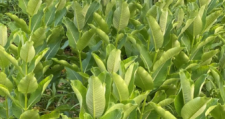
About a third of the yard looks like a teeny swath of prairie, with wild indigo, bee balm and, until recently, a key plant for monarch butterflies: common milkweed.

Last fall, the city of Overland Park told Oliver’s mother to rip the milkweed out of her pollinator garden.

That bummed Oliver because it’s a plant where brightly striped yellow, black and white caterpillars would appear each summer, grow fat on leaves and transform into the feather-light marvels of nature most famous for what they do next.

“They are pretty,” he said. “Also, whenever they become butterflies, they fly to Mexico. I think that’s pretty cool.”

Across the U.S., milkweed bans are disappearing. But this Kansas suburb and plenty of other towns and cities across the Midwest continue to define it in their city codes as flora non-grata.

Sometimes city, county and state rules conflict, leaving homeowners to navigate mixed messages from local governments that can’t see eye-to-eye on whether to promote milkweed or kill it off.

City workers may not have much heart for enforcing these rules. The plight of the continent’s dwindling monarch population is, after all, well-known.

Ginger Werp, Oliver’s mother, got the impression that the city worker who showed up at her door in late September didn’t really like telling her to remove environmentally beneficial plants.

“Our world is becoming degraded and needs us to change,” Werp said. “Not all of the cities in Johnson County have this rule.”

In fact, Werp points out, this county encourages homeowners to plant common milkweed and reimburses part of the cost for people who replace grass turf with native plants — including this one. The goal is to feed wildlife and fill the soil with deep roots that absorb stormwater and slow the pace of pollution washing into streams.

Werp knows about the program because she works at a nonprofit organization that, among other things, helps the county run it.

And she knows about native plants because wading into prairies to identify species and collect seeds for habitat restoration projects is her full-time job.

Oliver’s front-yard insectary likely came to the city’s attention because his mother and her neighbors have very different tastes in landscaping.

On a street lined with neatly trimmed bushes and traditional lawns, Werp’s little meadow is perhaps 12 feet by 7 feet. The tallest plants, native Maximilian sunflowers, tower above her head.

Instead of mulching the bed in the typical Suburban style (with cedar chips or other store-bought options), Werp lets fallen sycamore leaves mulch her plot.

Rather than chopping down plant stalks in the fall, she lets them stand, so her family can watch finches raid the garden for seeds all winter.

Werp knows this isn’t everyone’s cup of tea.

“I’ve had some uncomfortable conversations with neighbors about it,” she said of her flower bed. “But it doesn’t bother me. … I think it’s pretty, I think it’s fun. My son and I have a good time out here.”

She supposes a neighbor became concerned that her naturalistic landscaping would hurt home resale values.

But when a city worker showed up to inspect her handiwork, he said most of the plants could stay. She only had to remove the contraband common milkweed, Asclepias syriaca.

Werp agreed and the matter ended there.

Had she refused, the city could have sent someone to remove the milkweed and charge her for the work.

Overland Park’s code allows it to prosecute violators, though it’s not clear that the city would actually pursue something so stringent against a butterfly enthusiast. The penalties include a fine of $50 to $500 and/or up to 10 days in jail.

Other cities in Kansas and nearby states frown on milkweed, too — usually common milkweed but sometimes its relatives, as well.

St. LouisLamar and Sunset Hills, Missouri, put landowners who tolerate milkweed on notice, as do Huron and Redfield, South Dakota, which define milkweeds as “dangerous and unhealthy.”

Winfield, Kansas, puts common milkweed on its list of “rank” plants that harbor rats and insects, pose fire risks or blight neighborhoods.

Sometimes, city codes hinge on context.

Prairie Village lists common milkweed as a no-no, followed immediately by this caveat: “Native plants contained in a native garden, such as common milkweed and other pollinators (sic), would be considered a cultivated garden and not classified as a rank weed.”

City bans on milkweed are on the way out, the National Wildlife Federation says, a fact that it welcomes.

“They have been historically very, very common,” said Mary Phillips, head of the group’s Garden for Wildlife program that aims to integrate habitat into cities and suburbs. “Particularly in the central United States.”

She traces that history to the region’s agriculture. Milkweed can sicken livestock when they eat enough of it. Animals tend to steer clear of the toxic plants, but accidental poisonings do happen, particularly if milkweed infiltrates a hayfield and gets cut, dried and served up to livestock mixed into their hay.

Cities that no longer worry about keeping cattle safe have nevertheless retained the historical opposition to milkweed.

“The real trend is that those bans are being reversed,” Phillips said. “There’s a lot of pushback to get those overturned.”

In 2017, Illinois passed two state laws. One forced cities and counties to drop milkweed bans. The other declared milkweed the state wildflower.

Illinois cities such as Ottawa still have bans on their books, but the state law trumps it.

Asclepias syriaca, or common milkweed, is the species that cities most commonly target.

This species spreads not just through its seeds, but also through underground runners.

It takes work to control it in a flower garden, which might explain city bans where they still exist.

Yet the same city codes usually allow aggressive, commercially profitable species that wreak environmental damage, such as the invasive ornamental pear trees that Johnson County Park and Recreation workers are racing to control.

The reality is, many cities may not have anyone on staff who knows when or why milkweed was banned.

An Overland Park spokesperson said the city considers common milkweed a noxious weed because the Kansas Department of Agriculture does.

But the state agency refuted that. It says all Kansas milkweeds are “native and beneficial.”

“As far as we know it has never been listed as a noxious weed and there is no indication that there is any interest in listing it as noxious,” a Department of Agriculture spokeswoman said by email. “While it’s not healthy for cattle to eat, they generally avoid it.”

The center of the country is a significant flyway for migrating monarchs. And on their way north from Mexico each spring, they lay eggs.

These famous travelers — by some counts, they were five times as numerous in the 1990s — can’t survive without milkweed.

A monarch butterfly can happily nectar on the blossoms of a wide variety of plant species, but its offspring eat just one thing: milkweed leaves. Without that, the females can’t produce descendants any more than humans can rear babies without breast milk or formula.

But milkweed has gotten harder to find.

“That entire (central) flyway was so heavy with milkweed many, many years ago,” Phillips said.

But today, as Monarch Watch at the University of Kansas notes, genetically modified corn and soybeans allow aggressive glyphosate herbicide (sold most commonly under the brand name Roundup) application that kills, among other things, milkweed. The plants have disappeared from tens of millions of acres of cropland.

Monarch Watch founder Chip Taylor and other researchers wrote in 2020 that restoring milkweed “is the conservation measure that will have the greatest impact” for helping the insects.

Monarch Watch distributes milkweed plants for habitat restoration, encourages the creation of pollinator gardens in cities and suburbs, and mails free plants to eager schools.

Common milkweed holds particular significance.

A 2018 study by researchers at Iowa State University and the USDA compared nine types of milkweed at 10 sites across Iowa from 2015 to 2017. They found Asclepias syriaca was one of two types where monarchs laid the most eggs.

Its decline makes some homeowners passionate about offering their yards as refuge by planting the long-maligned species, with its large leaves and spheres of pink blooms.

As some governments see the plant in a new light, it can lead to conflicting messages, such as the discrepancy between Johnson County and Overland Park.

In 2014, Canada’s most populous province, Ontario, ended its battle against common milkweed. But as recently as last summer, a butterfly enthusiast there lost her milkweed-heavy pollinator garden to Toronto workers with weed wackers enforcing the city’s landscaping rules.

Lawrence lists common milkweed as a weed in its city code, but its parks and recreation department grows the plant in pollinator gardens.

“Our stance is that common milkweed in a properly maintained garden is perfectly acceptable,” a city spokeswoman said by email.

The city, which is part of a National Wildlife Federation pledge to support monarchs, says it can enforce its weed rule when properties aren’t properly tended.

But a citizen advisory board has asked the city commission to strike milkweed and other plants from Lawrence’s list of 56 weed species. It recommends using the state’s far shorter list.

“The list has kind of grown (over the decades) and nobody knows where a lot of this stuff came from,” said advisory board vice chairman Ben Sikes, a biologist. “Many of the species that are on there, we know are native species. Many of them are important for habitat or for food for native animals and insects.”

For example, the city weed list includes western ironweed and hoary vervain — popular food troughs for native bees and inchworms with the endearing habit of coating themselves in flower petals.

The Lawrence City Commission hasn’t acted on the recommendation.

From the Kansas News Servivce.

Cheese Scalloped Carrots

0

I ‘think’ the first time I ran this recipe was about 8 years ago. Often I suggest asparagus for my holiday dinner. In reality more folks are probably going to eat carrots than asparagus! Especially the younger generation. “IF” I were serving more than 8-10 guests I would probably use both vegetables. If Phillip, our son, has input he might even suggest creamed peas. (This was always my brother, Greg’s favorite side.)

At Easter I often used a green and white cross-stitched tablecloth my friend, Francis, made for us. Yes, I go rather ‘old-fashioned’ dressing my table to the max whether I’m using every day dishes or something special. This is also a day when you need to use cloth napkins. Don’t take it for granted that those gathered at your table aren’t absorbing all the particulars about your dinner. In years to come they will remember certain foods served inside specific dishes. If you don’t believe me, just ask the grandkids! You’ll also be surprised when these memories surface. (This year I went with a blue theme, with some of my flea-market dishes.)

I wanted to run my scalloped pineapple again this year, but figured many of my 10-year plus readers would be tired of seeing it! Easter just isn’t Easter without Scalloped Pineapple, (Thank you Shirley Hinkle!) Shirley is the one who got our family started on this delectable dish. Ervin always says he doesn’t care what I fix for the big Easter or Spring Dinner, just make sure we have scalloped pineapple.

The grass is getting green and most of the trees here in the Ozarks are budding out. We may be having our pollen season a bit early this year. For those who have never experienced ‘pollen season’, allow me to describe it. For 4-5 weeks pollen coats everything! You could wipe a chair, table or bench off and in 30 minutes it’s covered again. Typically it’s the first week of May before we can hose the decks and use the outside porches.

Enjoy your Spring with family and friends, get outside and let the fresh air to lift your attitude to a new plateau. Simply Yours, The Covered Dish.

Cheese Scalloped Carrots
12 medium carrots, sliced 1/4 – 1/2 inch thick
1/4 cup butter
1 small onion, minced
1/4 cup flour
1 teaspoon salt
1/4 teaspoon dry mustard
2 cups milk
1/8 teaspoon pepper
1/4 teaspoon celery salt
1/2 pound sharp cheddar cheese, shredded
3 cups buttered bread crumbs

Preheat oven to 350 degrees. Pre-cook carrots for 15-20 minutes, drain. Place butter and minced onion in a medium saucepan and cook 2-3 minutes. Add the flour, salt, mustard and milk. Cook, stirring mixture until nice and smooth; add the celery salt and pepper. In a 2-quart casserole, place a layer of carrots, layer of cheese. Repeat until both are used, ending with carrots on top. Pour on the sauce, top with the crumbs. Bake uncovered 25 minutes or until golden brown.
Serves 8 persons.

Be Prepared when the Fish are Biting

0

Have you ever stepped into the water on the first fishing trip of the spring only to find your waders leaked? Or lost a nice fish because the line on your reel was old and snapped? Or even found while trying to make the first cast of the year that your reel wouldn’t work at all? All of the above are scenarios that can easily be avoided with a little prior planning. So here are a few tips to help make you ready for action when your buddy calls and screams into the phone “The fish are bitin’!”

Check your gear early. We all lose tackle each year to rocks and “stick fish,” so go through your tackle box, make a list and stock up. Check your waders for leaks. If they didn’t leak the last time you took them off, they probably won’t leak now, but be sure; it’s better than an unexpected boot full of cold water. Line on fishing reels should be changed every few years; the more often you use it the more often it should be changed. You can buy spools of line and DIY, or most sporting goods stores have a machine to do it for a small fee. If you fish from a boat, hopefully you’ve gone over it by now to make sure the batteries are good, the motor starts and runs well and the trailer tires aren’t flat. Also be certain to have life preservers on board for every passenger, because if stopped by wildlife and parks on the water or at the dock, they will check that. If you hate wearing life jackets while fishing like most of us do, look into some of the new technology that now allows life jackets to be much smaller, thinner and less obstructing.

We were just leaving town the other day when my wife snapped her fingers in the air and stated “Darn, I forgot to get my new fishing license.” That excuse won’t fly with a game warden if you get checked only to discover your fishing (or hunting) license has expired, so be sure yours is up-to-date. If you are 65, you can purchase a lifetime combination hunting / fishing license for only $42.50 that’s good until you turn 74 and no longer need a license; it’s the deal of the century! Have you ever bought your hunting license late in the season, and grumbled about it only being good for a short time until New Year’s Eve? Well grumble no more as that now has changed. Now all annual licenses (NOT special permits like deer and turkey tags and fur harvester’s permits) are valid for 365 days from the time you purchase them. So, for example, if you buy a hunting license just in time for the November pheasant opener, that license will be good until that date the following year. And to take convenience one step further, if you purchase licenses online, you can now sign up for a feature called “auto renew” that will send you a notice a few weeks before your new license is due each year, then automatically renew it and charge it to a credit or debit card.

Along with possessing the proper licenses and permits, comes knowledge of all Kansas fishing rules and regulations. Some regulations are statewide and apply to every cubic inch of Kansas water, whether lake, river, stream or reservoir. Some lakes and reservoirs however have length limits, etc that are unique to that water. That’s why every Kansas fisherman’s tackle box should contain a copy of the 2023 Kansas Fishing regulations Summary, a multi-page pamphlet that lists all that information for all Kansas lakes, reservoirs, state fishing lakes and community fishing lakes, so you should never get “caught” with your hook bare, so to speak. These should be available everywhere tackle and licenses are sold.

If you’re like me, and not a died-in-the-wool fisherman, it’s handy to know what lakes and reservoirs are best for what fish species. Another handy booklet no Kansas fisherman should be without is the 2023 Fishing Forecast. This forecast is assembled by Kansas fisheries biologists using data gathered when they sample lakes in each of their jurisdictions. For each fish species, it rates lakes, reservoirs, state fishing lakes and community fishing lakes for largest fish and largest fish populations. These forecasts are available at all Kansas Dept of Wildlife, Parks and Tourism offices and to download online from the website at www.ksoutdoors.com. So instead of helping put the “pro” in procrastinate, take care of business by getting your fishing stuff in order, making certain your license is up-to-date, arm yourselves with all the available information readily available about Kansas fishing regulations and opportunities, and take someone along who’s new to fishing as you continue to Explore Kansas Outdoors!

Steve can be contacted by email at [email protected].