
A young citified dude, Fellin Tuhitt, quickly came into a veritable fortune by selling a hot, new Silicon Valley dot-com startup. Needing to invest his new fortune, the neophyte decided to buy a huge cattle ranch. He hired an exclusive western-land agent and the agent soon found Fellin’s heart’s desire in remote Wyoming.
He bought the place — lock, stock, and barrel — including the ranch’s sizable herds of registered cattle and high-bred performance Quarter Horses, and it’s impressive Yellowstone-like ranch mansion and barns.
He took immediate possession and quickly bought all the pre-requisites for a cattle rancher — fancy dually-pickup with all the trimmings, a long stock trailer with living quarters, a pair of Border Collies, and a rear-window gun rack, with a gleaning new gold-engraved Marlin 32-caliber lever action rifle on full display.
Very soon, a group of Fellin’s Silicon Valley cohorts came for a visit. They found the impresario ranching tycoon relaxing on his front porch, nursing a tall glass of French-imported red wine, python-leather boots propped up on the porch railing. Fellin wuz gazing out across a vast herd of grazing cattle that seemed to stretch to the horizon.
Amazed and awestruck at the rural panorama, one of Fellin’s best friends, exclaimed, “Now that is an impressive sight! How many head of cows are out there?”
To which, ol’ Fellin replied, “Partner, can’t tell you that yet. They’re all grazing in the wrong direction and I can’t see their heads.”
***
An elderly farmer was ailing, so he went to see his primary care physician (we used to call them doctors).
After a series of expensive tests, the medical team delivered some bad news. They told the old farmer he had no more then six months to live.
But, then the farmer delivered his own bad news — he couldn’t pay his out-of-sight medical bills within six months.
That’s when the doctor and his team delivered good news. They predicted the farmer would live for at least six more months.
***
Well, the calendar noted that spring officially arrived on March 20. The early spring weather in the Flint Hills has confirmed that the calendar is correct. In the few days, the temperature soared to 70, then dropped overnight to 14, then snowed a half-inch. Today, the weather is 47 and overcast, with 0.08-inch of rain plus a real quick snow squall for a minute or two. I’ll add that the wind has mostly blown a gale from the southwest, but one afternoon it came in at the same velocity from the southeast.
***
And another of our spring resident bird species showed up a couple days ago. A single killdeer arrived and when I spied it, it was unaccountably mingling with a small flock of blackbirds. I don’t think the killdeer wuz ready to set up housekeeping. I haven’t seen it since. Guess it moved on north — or froze.
***
The gardening urge hit me the other day and I planted a quick bed of radishes. I’m hoping that the cold weather won’t kill the young plants and I’ll be munching on fresh radishes by late April.
Yesterday, I also overseeded some white clover in my chicken plots. It wuz right before the little shower today. I think the timing was good for germination.
I’ve got my sweet pea seed bought, but I’ve got to wait to plant until I can till the garden again. I always get gardening fever in the spring, but as I age out, I’m discovering that my gardening ambition is not matched by my gardening energy.
I’m not buying any seed potatoes this spring. I’ve got a sufficient pile of sprouted spuds left over from last fall to give us enuf potatoes for this summer.
***
Overheard at the local coffee shop: Rancher talking about returning home after an overnight trip: “On my way home yesterday, I stopped at a roadside diner for breakfast. It had a homelike atmosphere and it was actually like eating breakfast at home — cold coffee, runny eggs, limp bacon, and burnt toast.
***
A young farmer was bringing his young daughter up to speed on the family’s history. He and his young daughter were thumbing through a family photo album.
He finally came to the wedding pictures of him and his wife. “That’s a picture of Mommy and me getting married. It was wonderful. The best day of my life.”
His daughter looked up and asked earnestly, “Was that the day that Mommy first started working for us?”
***
Words of wisdom for the week: Modern math applied to big city traffic: “The number of horn blasts in a traffic jam is equal to the sum of the squares behind the wheels.”
“A race horse in the only animal capable of taking a few thousand persons for a ride at the same time.”
Have a good ‘un.
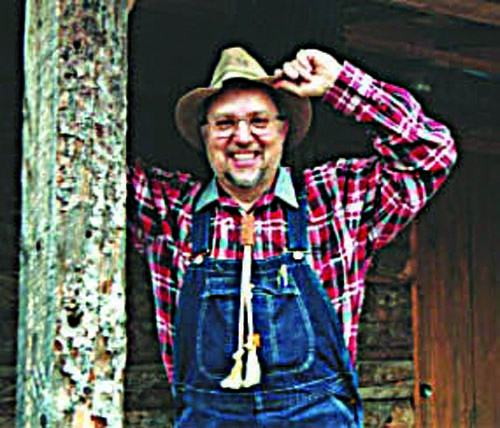
Dude rancher’s dilemma
KU News: Policy over personal: How Native media cover women in politics

From the Office of Public Affairs | http://www.news.ku.edu
Headlines
Policy over personal: How Native media cover women in politics
LAWRENCE – National Native news outlets focus more on policy issues when covering women in politics than the problematic, gendered stereotypes commonly emphasized in mainstream media, according to a new journalism study. “The influence of Indigenous standpoint: Examining Indian Country press portrayals of Native women in politics” was recently published in Newspaper Research Journal and is the latest work by two University of Kansas professors of journalism & mass communications.
13 Jayhawks to participate in Capitol Graduate Research Summit
LAWRENCE — Eight University of Kansas graduate students from the Lawrence campus and five from KU Medical Center will put their groundbreaking research on public display for the 20th annual Capitol Graduate Research Summit. Legislators and the public are invited to learn about the influence of research underway at KU during the event from 10 a.m. to 2 p.m. March 22 on the first-floor rotunda in the Kansas Capitol.
KU theatre design student earns spot at national Kennedy Center festival
LAWRENCE — The Department of Theatre & Dance at the University of Kansas has announced recognition from the Kennedy Center American College Theatre Festival, Region V. Lindsay Webster, graduate student in scenography from Novi, Michigan, won a first-place national award for costume design for “The Labyrinth of Desire,” which qualified her for competition this spring in Washington, D.C. Other honorees include Hazel Youngquist, a senior in theatre performance from Perry, who won the Jane Childs DTM Legacy Award for First-Time Presenters for his work on the University Theatre’s production of “Everybody,” and doctoral candidate Timmia Hearn DeRoy, of Lawrence, who was honored for direction of “Everybody.”
Full stories below.
————————————————————————
Contact: Rick Hellman, KU News Service, 785-864-8852, [email protected], @RickHellman
Policy over personal: How Native media cover women in politics
LAWRENCE – National Native news outlets focus more on policy issues when covering women in politics than the problematic, gendered stereotypes commonly emphasized in mainstream media, according to a new journalism study.
“The influence of Indigenous standpoint: Examining Indian Country press portrayals of Native women in politics” was recently published in Newspaper Research Journal and is the latest work by two University of Kansas professors of journalism & mass communications.
Melissa Greene-Blye, who also is affiliated with KU’s Indigenous Studies Program and is an enrolled citizen of the Miami Tribe of Oklahoma, and co-author Teri Finneman analyzed a year’s worth of the three leading Native American newspapers’ coverage of U.S. Reps. Sharice Davids and Yvette Herrell and Secretary of the Interior Deb Haaland.
The authors found striking differences in how Native media outlets cover women in politics compared with common mainstream journalistic approaches. For example, there was little to no emphasis on their appearance, identity as women and personal lives. Rather, the focus was on policies, such as Missing and Murdered Indigenous Women legislation, Indian boarding schools and Native voting rights.
“It gives political leaders a space to speak at length and in detail about the work they’re doing,” Greene-Blye said. “It is definitely creating a different space for these women and for Native voices in general that does not and has not existed outside of Native media.”
The data illustrated the influence of Indigenous standpoint on the journalistic norms of Native media outlets as it was clear that coverage centered around the promotion of policies considered important to Native communities — to the extent that conservative voices that did not align with these stances were often left out of the coverage, according to the researchers. As a result, Davids, a Kansas Democrat, received five times the press of Herrell, a New Mexico Republican.
“You definitely see more coverage of Sharice Davids and Deb Haaland because their viewpoints are more in line with the broader community across Indian Country,” Greene-Blye said. “However, there are differences of opinion, perspective and political leanings within Indian Country. So when you see coverage of Herrell or other conservatives, it is usually because there is a specific aspect of what they’re supporting that is of benefit to that nation in that moment, or they are being criticized for opposing the consensus.”
As the title stated, the research paper is informed by Indigenous standpoint theory, which Greene-Blye defined as “the idea that you as a scholar cannot separate your lived experience from your scholarly perspective.”
“So along with a couple of our colleagues in the broader scholarship field of media history, we are starting to examine how it informs the work that Native media do,” she said.
The authors use the term “strong objectivity,” as opposed to advocacy, to describe the role that Native media — and thus those outlets’ audiences — see for themselves. This differs from the use of “objectivity” by mainstream media since it has a different goal.
“So strong objectivity is compensating for these marginalized voices that have been left out all these years and giving their voice more prominence,” Finneman said.
By avoiding mainstream journalistic practice that believes “both sides” need to be in a story, Finneman said Native media are “getting away from much of the political theater that really has no substance” that is common in the national political media. Finneman is also the author of “Press Portrayals of Women Politicians, 1870s-2000s.”
“Certainly, democracy and politics as a whole would be much better served if we would focus more on actual policy and serious issues, rather than focusing on political theater and sound bites,” Finneman said.
-30-
————————————————————————
The official university Twitter account has changed to @UnivOfKansas.
Refollow @KUNews for KU News Service stories, discoveries and experts.
Tweets by KUnews
————————————————————————
Contact: Evan Riggs, Office of the Provost, 785-864-1085, [email protected], @KUProvost
13 Jayhawks to participate in Capitol Graduate Research Summit
LAWRENCE — Eight University of Kansas graduate students from the Lawrence campus and five from KU Medical Center are putting their groundbreaking research on public display. Legislators and the public are invited to learn about the influence of research underway at KU during the 20th annual Capitol Graduate Research Summit from 10 a.m. to 2 p.m. March 22 on the first-floor rotunda in the Kansas Capitol. Kansas Gov. Laura Kelly has proclaimed March 22 Graduate Research Day to recognize crucial contributions to the state’s economic development and quality of life through research conducted by graduate students at Kansas Board of Regents universities.
KU graduate students are working to develop solutions to societal questions and challenges. The findings and possible commercialization of these innovations can affect Kansans’ lives and potentially elevate the state’s economic status. Their research covers a broad range of topics, including:
1. Second-life battery energy storage for sustainable power grids
2. Accessibility of written medication information for patients with visual impairment
3. Use of novel blood biomarkers to evaluate Alzheimer’s disease risk and burden.
“The graduate students representing KU at the Capitol Graduate Research Summit are at the forefront of groundbreaking research,” said Jennifer Roberts, vice provost for graduate studies and academic affairs. “They are wonderful examples of how essential graduate students are to advancing the university’s commitment to conducting impactful research that addresses key challenges faced by the state, nation and the world. The students presenting their work continue highlighting the impact and importance of high-profile and interdisciplinary research in KU’s five strategic research areas of the Research Rising initiative.
“As the research skills of these students are honed and advanced, their work drives innovations to secure our digital and social worlds, improves our understanding and how we approach intellectual and developmental disabilities research, and creates healthier and more sustainable communities and environments.”
KU graduate students will join peers from Emporia State University, Fort Hays State University, Kansas State University, Pittsburg State University and Wichita State University at the summit.
The top two presenters from KU will each receive a $500 award and recognition on the Office of Graduate Studies Twitter and Facebook pages during Graduate-Professional Student Appreciation Week.
Founded by graduate students 20 years ago, the summit brings attention to the innovative research conducted by students at state universities with an emphasis on the public benefits of graduate students’ research. This free event provides an opportunity for the public — as well as Paul Hughes, Department of Commerce deputy secretary of business development, and state senators and representatives – to learn more about the important work of graduate students across the state.
KU’s participants are listed below by name, area of study and title of their research presentations.
From KU Lawrence
1. Kalin Baca, doctoral student in chemical engineering, “Recycling Refrigerants to Reduce Global Warming.”
2. Kara Bamberger, doctoral student in pharmacy, “Accessibility of Written Medication Information for Patients with Visual Impairment.”
3. Kelly Beym, graduate student in geography, “Cultivating Equity Through 638: How Tribal Self-Determination Projects Impact Economies Through Food Procurement Preferences.”
4. Grant Downes, doctoral student in bioengineering, “Engineering a Novel Insulin Compound as a Type 1 Diabetes Therapy.”
5. Amir Farakhor, doctoral student in mechanical engineering, “Second-Life Battery Energy Storage for Sustainable Power Grids.”
6. Samantha Ghali, doctoral student in child language, “Building Early Literacy Skills at Home: Insights from Bilingual Families.”
7. Ryan Lemasters, doctoral student in philosophy, “Carebots Don’t Care: An Ethical Analysis of Socially Assistive Robots in Kansas’ Elderly Care Industry.”
8. Tanvir Hossain, doctoral student in electrical engineering, “Peek Inside the Box: Gamified Learning of Computing Hardware Fundamentals.”
From KU Medical Center
1. Samantha Cintron, doctoral student in nursing, “Natural Killer Cell Changes in Patients with Post-COVID-19 Syndrome Treated with a Mushroom Supplement.”
2. Zachary Green, doctoral and medical student with the KU Alzheimer’s Disease Research Center, “Use of Novel Blood Biomarkers to Evaluate Alzheimer’s Disease Risk and Burden.”
3. Paige Pearson, medical student in pediatric orthopedic surgery, “Risk Factors for Failure of Cast Immobilization in Pediatric Scaphoid Fracture Presenting Greater than 28 Days After Injury.”
4. Makenna Snyder, doctoral student in therapeutic science, “Falls in Individuals Using Wheelchairs: An Observational Study.”
5. Griffin Welfer, doctoral student in biochemistry and molecular biology, “Telomeric Ribonucleotides Cause Rapid Telomere Shortening and Telomere Instability.”
-30-
————————————————————————
Subscribe to KU Today, the campus newsletter,
for additional news about the University of Kansas.
http://www.news.ku.edu
————————————————————————
Contact: Lisa Coble-Krings, Department of Theatre & Dance, 785-864-5685, [email protected], @KUTheatre
KU theatre design student earns spot at national Kennedy Center festival
LAWRENCE — The Department of Theatre & Dance at the University of Kansas has announced that the following students have earned awards and recognition from the Kennedy Center American College Theatre Festival, Region V. Almost all of the work was part of actualized productions of KU’s University Theatre.
National awards
Lindsay Webster, a third-year MFA in scenography student from Novi, Michigan, won a first-place national award for costume design for “The Labyrinth of Desire,” work which qualified her for national competition this spring in Washington, D.C. Additionally, she earned a second-place national award for scenic design, also for “The Labyrinth of Desire.” This is the second year in a row Webster has represented the university in costume design on a national level.
Other honors
Taiane Lacerda, a second-year MFA student from Florianópolis, Brazil, earned the Don Childs DTM Cross-Discipline Collaboration Award for “Into the Woods” and “A Midsummer Night’s Dream,” both of which were part of her summer internship taken for course credit. Hazel Youngquist, a senior in theatre performance from Perry, won the Jane Childs DTM Legacy Award for First-Time Presenters for his work on the University Theatre’s production of “Everybody.”
Regional commendations
Some of the theatre & dance department’s students and faculty received commendations, all tied to KU’s production of “Everybody.” Youngquist was honored for lighting design and Lacerda for scenic design. Rana Esfandiary, assistant professor of design & technology, was honored for costume design. Doctoral candidate Timmia Hearn DeRoy, of Lawrence, was honored for direction, and the “Everybody” cast was recognized for ensemble performance.
“The students’ growth was evident within the first days of attending the conference. They had the chance to receive feedback about their work, attend workshops and network. This opportunity helped them find focus for their future,” said Kelly Vogel, academic associate and resident artist in the department. “As their professor, this is one of my favorite experiences with the students.”
The KCACTF-Region V annual conference and awards took place in January 2023 in Des Moines, Iowa. Region V includes Kansas, Iowa, Minnesota, Missouri, Nebraska, North Dakota and South Dakota. At various times during 2022, representatives of KCACTF came to Lawrence to judge the submitted plays and provide responses.
The University Theatre and University Dance Company are production wings of the University of Kansas’s Department of Theatre & Dance, offering five to six public productions throughout the academic year. The University Theatre and University Dance Company productions are funded in part by KU Student Senate fees, and the theatre’s season is supported by Truity Credit Union.
-30-
————————————————————————
KU News Service
1450 Jayhawk Blvd.
Lawrence KS 66045
Phone: 785-864-3256
Fax: 785-864-3339
[email protected]
http://www.news.ku.edu
Erinn Barcomb-Peterson, director of news and media relations, [email protected]
Today’s News is a free service from the Office of Public Affairs
Bred Cow Market Influences Rebuilding Cowherd Numbers
“Rebuilding cowherd numbers through bred cow purchases requires diligence to several impacting market factors.”
That’s according to Elliott Dennis, University of Nebraska, Lincoln, livestock risk management economist.
The recent United States Department of Agriculture (USDA) 2023 cattle inventory report showed a 4-percent reduction in beef cows.
There is a 6-percent decrease in heifers retained as replacements and a 5-percent reduction in heifers expected to calve this year. Feeder cattle supplies will be reduced nationally in 2023.
“Continued liquidation in 2023 will depend on the profit margins producers expect to receive,” Dennis emphasized.
Higher prices for feeder cattle are expected, but higher feed costs are limiting the profit potential, he said.
Much has been said about weather patterns changing this year. “If weather pattern changes, it will benefit the Southern Plains with a cool and wet spring and summer,” Dennis said. “Whereas the Northern Plains generally will stay dry in the summer before a cool and wet fall.”
There will be producers who have feed resources and believe profits are to be had in 2023 and 2024. “The quickest way for producers to increase feeder cattle supply is through addition of bred females,” Dennis said.
Bred heifers receive a premium over bred cows. For example, the price ratio of bred heifers to bred cows has averaged 2.5-percent during the last five years.
The premium is the widest in spring March-May and the lowest in fall September-November.
There is a premium due to the longer useful life of the cow in the herd. But it is smaller than expected due to potential issues with calving, which can occur with first-calf heifers.
However, the national bred cow price masks several factors that impact price. Age, weight, months bred, genetics, and market conditions are the primary drivers of bred cow prices.
An Oklahoma City bred heifer and bred cow sales study estimated the premiums and discounts in the bred cow market.
A three-year-old, six-months-bred, medium-to-large-size black cow in February this year would be valued at $1,150. But the price has averaged $870 during the past three years.
Producers selling cows older than this should expect to receive a discount. These tend to decrease almost linearly from zero to 20-percent as cows age.
A four-year-old bred cow would cost $1,150, but a seven-year-old bred cow would cost $1,035 which is a 10-percent discount. A 10-year-old bred cow would cost $920 which is a 20-percent discount.
“Producers considering marketing older cows as bred should acknowledge the heavy discounts assigned as age increases,” Dennis explained.
Similarly, the closer the cow is to calving, the more expensive the bred cow becomes relative to a six-month-pregnant bred cow.
Discounts and premiums are nearly linear between a 4-percent premium $1,196 for an eight-month-pregnant bred cow. A 5-percent discount $1,092 for a four-month-pregnant bred cow and a 12-percent discount $1,012 for a one-month-pregnant bred cow.
“These premiums and discounts exist as there is less risk of losing a calf as its age increases,” Dennis said. “There are lower production costs before the calf’s birth and revenue is received more quickly when late-gestating cows are purchased.”
Selling this same bred cow at different times of the year will impact the price received. Producers looking to buy bred cows in the late winter or early spring should expect to pay a premium.
Highest premiums are in March as producers purchase cows on the same calving cycle in anticipation of summer pastures.
Prices peak in March at approximately an 8-percent premium $1,242. Prices are lowest a 4-percent discount $1,104 in the summer and fall as producers are culling while retaining heifers. Selling the same quality, age, and pregnancy stage results in a difference of $138 per cow.
“Current market conditions will also play a role in the price of bred cows,” Dennis said. “The feeder cattle and corn markets are the two largest drivers of bred cow prices.”
Higher feeder cattle prices create incentives to produce more calves, and bred cows are the quickest way to do so. Higher corn prices increase the cost of gain in feedlots.
“This puts downward pressure on feeder cattle prices,” Dennis said. “However, the impact is delayed as it takes at least six-to-eight-months before the potential calf will reach the feedlot.
Combining these impacts and price forecasts can show the premiums and discounts producers will receive for a bred cow.
The nearby feeder cattle price at the time of sale has a much larger impact than the nearby corn price.
For example, a 50-cent decline would increase the price of the bred cow by less than one percent. Whereas a $10-per-hundredweight increase in the feeder cattle contract increases the price by 5.29-percent.
“Producers rebuilding herds by purchasing bred cows should be aware of these factors before buying or selling cows,” Dennis summarized.
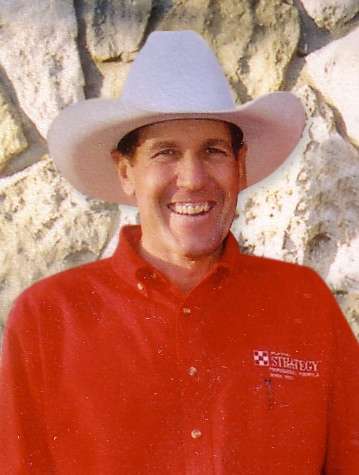
CUTLINE
Elliott Dennis, University of Nebraska, livestock economist, said, “Rebuilding cowherd numbers through bred cow purchases requires diligence to several impacting market factors.”
I AM SO PROUD TO BE HERE
“THE HOME SHOULD BE THE TREASURE CHEST OF LIVING.”
La Cornbusier
I am just so happy to be able to write this column today. The only things in life that are a guaranteed are death and taxes. And I made it through yesterday and am still here. The last two weeks have been particularly hard. I finally gave up and went to my doctor on my own. I have seen way too many clinics, doctors, and hospitals in the last two years. For some reason I was getting worse by the day and was progressively getting weaker and shorter of breath. Had I had been able to give notice I was ready to let all of you down and suspend my column.
When I saw my doctor the first words out of her mouth were, “I have never seen you breath like this before!” I was in a wheelchair and was fighting for my next breath. Needless to say that I was scared to death.
After a day and night of hell I am here to write to you.
The news on the TV in the background was another school shooting. Another self centered person decided that her life was valueless and taking the life away from the innocent was what she decided to do. None of those kids and people in Nashville had any idea that it would be their last day on earth. But it was. I went to the doctor all ready to go on to the hospital. I was allowed to prepare, but they were not.
The title of this was taken from Minnie Pearl that was a standard part of her act. “I AM JUST SO PROUD TO BE HERE!” So am I.
The politicians and news media were ready with their standard reactions to the shootings. That is starting to really tic me off. What makes a person do such heinous acts? we don’t know. There is one thing we do know and that is that evil has full control of this world. What can be done about it? Stop supporting evil.
When you are at the point that you realize that nothing you have can be taken with you, except love. There is only one place that that is found. All of the protesting, heinous acts, what you have made or anything you can do is going to matter in the end except love.
So I am happy to write at least one more time. I would prefer that it will be much more.
What is that purple flower growing in my lawn?

Scott Eckert,
Harvey County
Extension Agent,
Horticulture
Have you ever been in a conversation about weeds? If not, here’s an idea for a conversation starter. Can you tell me what the purple flowers are in early spring popping up everywhere are? A few other clues are: If the stem is square rather than round, you have henbit. A plant that also is low growing but has round stems and tiny white flowers is chickweed.
Both these plants are winter annuals and start to grow in the fall. They spend the winter as small plants and so most people do not pay much attention to them until they start to flower in the spring. Trying to kill either one at this late stage with a herbicide usually is a waste of time and money. Though plants may be burned back, they will rarely be killed. So what should you do? Remember, these are winter annuals that will die as soon as the weather turns hot. Keep the lawn mowed until nature takes its course.
However, you can do something next fall that will help next spring. Henbit and chickweed usually germinate about mid-October. Spraying with 2,4-D, Weed-B-Gon, Weed Free Zone, Weed Out, or Trimec in late October to early November can go a long way toward eliminating these plants as they are small and relatively easy to control. Choose a day that is at least 50 degrees F. These herbicides will work at temperatures below 50 degrees but the weeds are killed at a slower rate. You may also use a preemergent herbicide for lawns in late September as long as have not recently put down grass seed. Spraying with the postemergence herbicides mentioned earlier will also catch dandelions which the preemergent herbicides will miss.
Spot treating will probably be needed in the spring (March) whichever method of control you use but is more likely with the use of preemergent herbicides. Use Weed Free Zone, Speed Zone, Weed Out, Weed-B-Gon, Trimec, or one of the special henbit herbicides early in the spring before they have put on much growth.
