Friday, March 13, 2026
Home Blog Page 767

Apple Tree Sprays    

0

Apples are the fruit most likely to be damaged by diseases and insects of any fruit grown in Kansas.  Two common diseases on apple trees are cedar apple rust and apple scab. Though some apple varieties are resistant to these diseases — including Liberty, Jonafree, Redfree, Freedom and Williams Pride — most varieties are susceptible. For a listing of the disease resistance of various cultivars, go to: https://extension.missouri.edu/g6022

Fungicide sprays during April and May are critical to preventing disease on susceptible varieties. The first spray should go down when leaves appear. A fungicide that is available to homeowners and very effective for control of apple scab and cedar apple rust is myclobutanil (Immunox, Fungi-Max and F-Stop Lawn & Garden Fungicide). There are several formulations of Immunox but only one is labeled for fruit. Check the label.  Sprays should be done on a 7- to 10-day schedule to keep the protective chemical cover on the rapidly developing leaves and fruit.  These diseases are usually only a problem during April and May.

An insecticide will need to be added to this mixture after petal drop to prevent damage from codling moths that cause wormy apples.  We have five products that can be used.  They are listed below along with the maximum number of sprays that can be used per year.

Product                       Maximum Number of Sprays/Year

Bonide Malathion                               2

Bonide Fruit Tree Spray                     2

Bonide Fruit Tree and Plant Guard    4

Cyd-X                                                 No limit

In order to protect bees, DO NOT use any insecticide during bloom.  Wait until petal fall.

Although gardeners may continue to use myclobutanil after May, certain other fungicides are more effective on summer diseases such as sooty blotch and fly speck. Consider using Bonide Fruit Tree and Plant Guard or Bonide Fruit Tree Spray after petal drop as both contain an insecticide(s) and fungicide(s). However, you are limited in the number of applications per year allowed.

An organic control with the trade name Cyd-X is also labeled but will control only codling moth.

A spreader-sticker can be added to the fungicide-insecticide chemical mixture to improve the distribution and retention of the pest control chemicals over the leaves and fruit. Sprays are applied every 10 to 14 days. A hard, driving rain of about 1 inch or more will likely wash chemicals from the leaves and fruit. In such cases, another application should be made.

 Another organic control that is often overlooked is bagging. There are bags made specifically for this purpose and are called Japanese apple bags.  However,  3 lb paper bags (lunch bags) can work as well.  Cut the lunch bags down to six inches long and cut a slit to slip over the stem of the apple.  Place the bag over a single fruit when it is the size of quarter (about 3 weeks after petal fall) and secure with a twist tie.  The bag should be removed three weeks before harvest to allow the apples to color.  The Japanese apple bags already have the slit cut and a twist tie built in.  Once the bags are placed on the fruit, no additional sprays are needed.  The bags prevent both fungus diseases and attacks by insects.  For a video illustrating all the steps required for bagging apples, see https://www.youtube.com/watch?v=sbbmgJ5F1wc .  Following are the steps that need to be taken if bags are not used and the trees will be sprayed.

        Leaves Appear: Immunox, Fungi-Max or F-Stop Lawn & Garden Fungicide

        Petal Drop: Add insecticide to the Immunox, Fungi-Max or F-Stop.  The mixture is Immunox, Fungi-Max or F-Stop + one of the listed insecticides.

June 1: Drop the Immunox, Fungi-Max or F-Stop so you are applying only Bonide Fruit Tree and Plant Guard or Bonide Tree Fruit spray.  Another option is to use one of the other listed insecticides plus Captan.

Spray every 10 to 14 days from the first application until the last.  The last application would be either until the fruit is bagged or two weeks before harvest.  Actually my last application goes down about August 15 as I don’t have many problems past then.

Ward Upham, Extension Agent
TURFGRASS

0

Proper Timing for Crabgrass Preventers  Crabgrass preventers are another name for preemergence herbicides that prevent crabgrass seeds from developing into mature plants. Many people have a somewhat foggy idea of how they work and assume they kill the weed seed.  Such is not the case. They do not kill the seed or even keep the seed from germinating but rather kill the young plant after it germinates.  Therefore, they do not prevent germination but prevent emergence.

Crabgrass preventers are just that – preventers. With few exceptions they have no effect on existing crabgrass plants, so they must be applied before germination. Additionally, preventers do not last forever once applied to the soil.  Microorganisms and natural processes begin to gradually break them down soon after they are applied. If some products are applied too early, they may have lost much of their strength by the time they are needed. Most crabgrass preventers are fairly ineffective after about 60 days, but there is considerable variation among products. (Dimension and Barricade last longer. See below.)

For most of Kansas, crabgrass typically begins to germinate around May 1 or a little later. April 15 is normally a good target date for applying preventer because it gives active ingredients time to evenly disperse in the soil before crabgrass germination starts.  Even better, base timing on the bloom of ornamental plants. The Eastern Redbud tree is a good choice for this purpose. When the trees in your area approach full bloom, apply crabgrass preventer. A follow-up application will be needed about 8 weeks later unless you are using Dimension or Barricade. Products that do require a follow-up application include pendimethalin (Scotts Halts) and Team (Hi-Yield Crabgrass Control).

Dimension and Barricade are the only two products that give season-long control of crabgrass from a single application. In fact, they can be applied earlier than April 15 and still have sufficient residual strength to last the season. Barricade can even be applied in late fall for crabgrass control the next season

Dimension can be applied as early as March 1. Because of the added flexibility in timing, these products are favorites of lawn care companies who have many customers to service in the spring. Though Dimension is usually not applied as early as Barricade, it is the herbicide of choice if it must be applied later than recommended. It is the exception to the rule that preemergence herbicides do not kill existing weeds. Dimension can kill crabgrass as long as it is young (two- to three-leaf stage). Dimension is also the best choice if treating a lawn that was planted late last fall. Normally a preemergence herbicide is not recommended unless the lawn has been mowed two to four times. But Dimension is kind to young tall fescue, perennial ryegrass, and Kentucky bluegrass seedlings and some formulations can be applied as early as two weeks after the first sign of germination. However, read the label of the specific product you wish to use to ensure that this use is allowed. Lawns established in the fall can be safely treated with Dimension the following spring even if they have not been mowed.

Note that products containing Dimension and Barricade may use the common name rather than the trade name. The common chemical name for Dimension is dithiopyr and for Barricade is prodiamine. Remember, when using any pesticide, read the label and follow instructions carefully.

We recommend crabgrass preventers be applied before fertilizer so that the grass isn’t  encouraged to put on too much growth too early. However, it may be difficult to find products that contain preemergents without fertilizer. Those that don’t contain fertilizer are listed below.

Barricade

– Howard Johnson Crabgrass Control Plus with 0.37 Prodiamine 00-00-07

– Pennington Pro Care Crabgrass Control Plus .37 Prodiamine 0-0-7 Turf Fertilizer

Pendimethalin

– Scotts Halts

Team (Benefin + Trifluralin)

– Hi-Yield Crabgrass Control

Dimension

– Hi-Yield Turf & Ornamental Weed and Grass Stopper

Ward Upham, Extension Agent

USDA Announces Additional Assistance for Distressed Farmers Facing Financial Risk

0

WASHINGTON, March 27, 2023 – The U.S. Department of Agriculture (USDA) today announced that beginning in April it will provide approximately $123 million in additional, automatic financial assistance for qualifying farm loan program borrowers who are facing financial risk, as part of the $3.1 billion to help distressed farm loan borrowers that was provided through Section 22006 of the Inflation Reduction Act (IRA). The announcement builds on financial assistance offered to borrowers through the same program in October 2022.

The IRA directed USDA to expedite assistance to distressed borrowers of direct or guaranteed loans administered by USDA’s Farm Service Agency (FSA) whose operations face financial risk. For example, in the October payments, farmers that were 60 days delinquent due to challenges like natural disasters, the pandemic or other unexpected situations were brought current and had their next installment paid to give them breathing room.

“In too many cases, the rules surrounding our farm loan programs may actually be detrimental to helping a borrower get back to a financially viable path. As a result, some are pushed out of farming and others stuck under a debt burden that prevents them from growing or reacting to opportunities,” said Agriculture Secretary Tom Vilsack. “Loan programs for the newest and more vulnerable producers must be about providing opportunity and tailored to expect and manage stumbles and hurdles along the way. Through this assistance, USDA is focusing on generating long-term stability and success for distressed borrowers.”

In October 2022, USDA provided approximately $800 million in initial IRA assistance to more than 11,000 delinquent direct and guaranteed borrowers and approximately 2,100 borrowers who had their farms liquidated and still had remaining debt. USDA shared that it would conduct case-by-case reviews of about 1,600 complex cases for potential initial relief payments, including cases of borrowers in foreclosure or bankruptcy. These case-by-case reviews are underway.

At the same time in October 2022, USDA announced that it anticipated payments using separate pandemic relief funding totaling roughly $66 million on over 7,000 direct loans to borrowers who used the USDA Farm Service Agency’s disaster-set-aside option during the COVID-19 pandemic. The majority of these payments have been processed and USDA anticipates it will complete all such payments in April 2023.

New Assistance for Distressed Borrowers

FSA intends to provide the new round of relief starting in April to additional distressed borrowers. This will include approximately $123 million in automatic financial assistance for qualifying Farm Loan Program (FLP) direct loan borrowers who meet certain criteria. Similar to the automatic payments announced in October 2022, qualifying borrowers will receive an individual letter detailing the assistance as payments are made. Distressed borrowers’ eligibility for these new categories of automatic payments will be determined based on their circumstances as of today. More information about the new categories that make up the $123 million in assistance announced today and the specific amount of assistance a distressed borrower receives can be found described in this fact sheet, IRA Section 22006: Additional Automatic Payments, Improved Procedures, and Policy Recommendations.

To continue to make sure producers are aware of relief potentially available to them, all producers with open FLP loans will receive a letter detailing a new opportunity to receive assistance if they took certain extraordinary measures to avoid delinquency on their FLP loans, such as taking on more debt, selling property or cashing out retirement accounts. The letter will provide details on eligibility, the specific types of actions that may qualify for assistance, and the process for applying for and providing the documentation to seek that assistance.

These steps are part of a process USDA announced along with the October payments that is focused on assisting borrowers unable to make their next scheduled installment. Earlier this year, all borrowers should have received a letter detailing the process for seeking this type of assistance even before they become delinquent. Borrowers who are within two months of their next installment may seek a cashflow analysis from FSA using a recent balance sheet and operating plan to determine their eligibility.

Tax Resources

USDA will continue to work with the Department of Treasury to help borrowers understand the potential tax implications from the receipt of an IRA payment, including that options may be available to potentially avoid or alleviate any tax burden incurred as a result of receiving this financial assistance.

In early April, USDA will send a specific set of revised tax documents, educational materials and resources to borrowers that received assistance in 2022, including a link to a webinar hosted by a group of farm tax experts to provide education on the options available. USDA cannot provide tax advice and encourages borrowers to consult their own tax professional, but FSA is providing educational materials for borrowers to be aware of the options. USDA has tax-related resources available at farmers.gov/taxes.

Improved Procedures and Policy Recommendations

FSA is finalizing changes to its policy handbooks to remove unnecessary hurdles, improve loan making and loan servicing and provide more flexibility on how loans are structured to maximize the opportunities for borrowers. Additional details on those changes can be found in the linked fact sheet and are the start of a broader set of process enhancements. The fact sheet also provides information on the eight, no-cost legislative proposals included in the Fiscal Year 2024 President’s Budget that are designed to improve the borrower experience.

USDA touches the lives of all Americans each day in so many positive ways. In the Biden-Harris Administration, USDA is transforming America’s food system with a greater focus on more resilient local and regional food production, fairer markets for all producers, ensuring access to safe, healthy and nutritious food in all communities, building new markets and streams of income for farmers and producers using climate smart food and forestry practices, making historic investments in infrastructure and clean energy capabilities in rural America, and committing to equity across the Department by removing systemic barriers and building a workforce more representative of America. To learn more, visit www.usda.gov.

Bringing grass-fed meat, with a twist, from the Kansas prairie to consumers nationwide

0
Photo credit: U.S. Department of Agriculture

Looking to own a cow or steer but not have the responsibility of feeding and housing it?

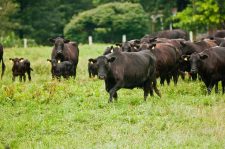
A Kansas direct-to-consumer agriculture company, Agridime, brings consumers from urban centers across the U.S. together with ranchers. Consumers can participate in ranching by buying ownership in the cattle they will eventually consume or simply purchasing a sirloin steak, brisket or ground beef online or in a market.

If the consumers want, they can drive to the ranch in central or western Kansas, Arizona, Missouri and Oklahoma and meet their own cow or steer, and when it’s time for processing, they can share in the profits. In addition, the company sells boxed and portioned meat that is shipped directly to a home or business. Beef can also be purchased in their warehouses in Herington, Kansas and Gilbert, Arizona.

This turned-around beef-to-table concept is the brainchild of two brothers who grew up on a ranch in central Illinois and spent summers helping their grandfather with his cattle on his ranch in Missouri.

Josh and Jason Link run Agridime, which has contracts with ranchers in central and western Kansas, as well as Arkansas, Missouri, Oklahoma and North Dakota that supply the cattle to this out-of-the-box model that started a few years ago in Kansas.

Consumers can invest in a herd or a single animal, depending on their interest or financial ability. By having consumers buy the animals directly or buy the cuts of beef or beef boxes, Agridime is allowing ranchers to do what they do best: raise cattle, both grass-fed and conventional. The rancher does not have to worry about selling to feedlots or negotiating with consumers or grocery stores.

The Links saw the cattle industry was changing, and because of their ranching background, they wanted the rancher to have more say in what happened with their end product. They decided to use Kansas as a base for their business because of the state’s ideal prairie.

Josh Link met up with Kevin Morgan at Morgan Creek Farms near Hope, Kansas, in Dickinson County.

Morgan grew up on a ranch. Like his father, and his grandfather before him, he raised cattle conventionally for decades. As a fifth-generation rancher, he wanted to go back to the old ways, having cattle graze on his pasture. He and both Links hooked up, helping to form the backbone of Agridime.

“Josh and Jason and I, we started seeing problems within our industry that were pretty obvious to everybody,” Morgan said. “And as we worked through it, we started to see that we all kind of had the same solutions to those problems, and we turned that into a vision.”

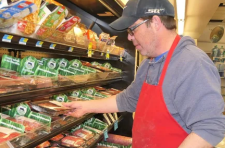
One of the beef packing warehouses is located in Herington, Kansas, just down the road from Morgan’s ranch. In addition to shipping pork, chicken and beef out of this warehouse, the company sells their product at the local grocery story, Barnes Heartland Foods in Herington.

“To see that process go from a few guys with a vision to a retail section full of meat that came from your own work, is a pretty humbling experience,” Morgan said.

It’s a win-win situation for the grocery store as well.

“It’s a locally grown product with better quality beef that is very price comparative,” said Chris Barnes, the manager of Barnes Heartland Foods. “We know where it’s coming from. The product speaks for itself.”

Barnes said he started buying from Agridime during COVID and hasn’t stopped.

“By using the local guys, we never ran out,” he said. “Our customers love the products.”

Buying directly from the rancher

Ranchers across the country are trying to tell their stories and get their product directly into the consumer’s hands. But sometimes this can be difficult, as ranchers must take care of their animals and often don’t have time to worry about how to ship the product or where to slaughter the animal, as often waiting lists are long.

Some of the work of bringing farm and ranch products directly from the the producer to consumers started before COVID, but the movement increased dramatically after the epidemic.

“After they (the producer) developed relationships with consumers, and some trust with some educational work, this provided the opportunity to then do some direct marketing,” said Matt Teagarden, CEO of the Kansas Livestock Association. “And then COVID provided additional opportunities.”

Teagarden said this direct to consumer model continues to grow “based on the number of of ranchers and producers who have some kind of online presence and are doing some direct to consumer marketing.”

The Kansas Beef Council has a page on their website that tells consumers where they can purchase Kansas beef directly from the rancher.

“What we’ve done there is made that available to producers across the state,” Teagarden said.

The site gives a little bit of detail about the rancher, how they’re selling the product and if they have a retail store,

“The difference (between buying directly from the producer or the rancher) is that direct from the rancher you know that consumers are going to have some kind of relationship with that ranch or that producer, even if it’s just that one transaction, there’s a deeper relationship,” Teagarden said. “They’ve learned about the operation; they get to know the family. I think sometimes the consumer family visits the ranch family. It goes much beyond just a purchase of meat.”

Kansas is sixth in the nation for head of beef cows, with 1.3 million head and third nationally for cattle on ranches and feed yards, totaling about 6.25 million. In 2021, Teagarden said, the cattle industry made up $9.85 billion in cash receipts in Kansas.

Agridime’s executive director and co-owner, Josh Link said he wants both consumers and producers to make agricultural decisions based on spending every dime wisely. From rancher to butcher to buyer, Agridime is in control of the supply chain, running more than 15,000 head of cattle in central Kansas.

The cattle raised and sold on Agridime’s partner ranches head to a medium-sized processing plant in Texas. This includes the grass-fed cattle, who are both grass-fed and grass-finished, meaning they are not headed to feed yards and fattened up with grains.

By putting together a variety of ranchers and giving them access to a larger market and strong supply chain, Link is hoping to change the system and make it more profitable and easier for the rancher. As more people buy cattle from Agridime’s ranchers, those ranchers can hire more workers.

If someone wants to invest in an animal, on average, the investors get a 10% to 15% return on investment. Link said, this can amount to about $200 or higher for each angus steer.

“I like to tell people cattle is something that you can see and touch and feel,” Link said. “We just hope that we can continue to be able to feed more cattle and and be able to enter more markets.”

What’s next for Agridime?

Along with selling their product in small grocery stores and online, Agridime has entered the restaurant market by selling directly to eateries and soon hopes to open their own farm-to-table dining experience in Kansas.

In addition, the company has branched out into spices and ready-made-meals, using meat products. They also own their own chicken and hog farms and offer these products online.

“The chickens are free range, no antibiotic, no hormone and also no GMO grains are fed to the chickens,” Link said. “The pigs, they are outside. They’re not confined. They were what I’d call (raised in) an open-air environment with no antibiotics, no hormones.”

In addition to chickens and pigs, Link hopes to branch out to sheep and goats, but meanwhile they continue to grow their consumer and product base.

“We’ve more than doubled in size in the last year. I think it just really is a testament to the American consumer’s desire for regenerative agriculture and clean food, nutritious food and knowing where your food comes from,” Link said. “We’re able to do what we do because it’s our producers and our partners that truly make what we do possible.”

Kansas Forest Service to lead fire mitigation project near Scott City

0

K-State Research
and Extension news service

Kansas Forest Service officials have announced that an annual project that aids in training new wildland firefighters on how to reduce the risk of wildfires will be held April 3-7 in Scott City.
The Hazard Fuels Mitigation project will take place at the Scott Wildlife Area and Historic Lake Scott State Park. The exercise is held in partnership with the Kansas Department of Wildlife and Parks, and Hutchinson Community College.
“This annual project is a great opportunity for the Kansas Forest Service and our partner agencies to work together to improve wildfire response and incident management skills, while at the same time doing work that will reduce the risk of catastrophic wildfires around Scott Lake​,” said Eric Ward, assistant fire manager with the Kansas Forest Service, and incident commander for this year’s project.
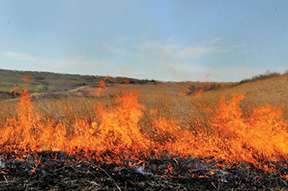
Officials said the project includes conducting prescribed burns; reducing undesirable vegetation; removing deceased trees from wooded areas; and establishing fire breaks in hazardous areas. Hutchinson Community College students in the fire science program will gain experience working alongside mentors in the wildland fire community.
Scott Wildlife Area will be closed during the project, for the safety of mitigation personnel and local hunters. For more information on the closure, visit the website for the Kansas Department of Wildlife and Parks.
Continuous updates throughout the mitigation project will be posted on the Kansas Forest Service Twitter Page, @KSforestservice, as well as Facebook and Instagram. Questions, comments or concerns should be directed to Kansas Forest Service public information officer Shawna Hartman, [email protected]