
All my adult life I’m been intrigued by watersheds. Why? I guess it’s the simple fact that every single drop of water that falls on land anywhere on Earth is instantaneously part of a watershed.
The tiniest of watersheds are smaller than a square inch. The largest watershed in the U.S. is the watershed of the Mighty Mississippi River, which contains millions of acres. It starts at the Continental Divide in Montana, runs several thousand miles down the Missouri River drainage, and ends up flowing out of the Mississippi River delta into the Gulf of Mexico.
As I travel through any part of the U.S., I’m constantly trying to determine when I’m crossing from one watershed to another. It’s not easy to identify the specific geographic high ground that marks the transition from one watershed into another. Over the years, I’ve gotten better at the process, but still get frustrated in my attempts.
And, then? Voila! My good friend Rocky Crick plops into my e-mail in-box a website called “River-Runner.” It’s a “fantabulous” website for watershed aficionados like me.
The lengthy website address is: https://river-runner.samlearner.com/?fbclid=IwAR2dWBI5-_p3mBdy8tXKv4oGt8i8s2UjO8HQ6_H_XLQu7tY7SAvLW2_v2Pc
It uses Google Earth software and aerial photography to visually follow watersheds downstream. Here’s how neat it works: Open the website up to the map of the U.S. and click anywhere on it. Your click represents a falling drop of water. From where it lands, the website traces the downstream movement of that drop of water until it dumps into an ocean somewhere — providing landmarks for the whole “drop” journey. There are lots of ways to “fine tune” what you are watching.
While River-Runner is extremely interesting to me, it still leaves one question unanswered: How long does it take a drop of water to make it’s full watershed journey? No one knows and I can’t think of any way to measure it. So, I’ll just mark it down as one of life’s unsolved mysteries.
***
Our nation seems to lurch from one crisis to another. California has complained for years about chronic drought and no snowpack. Now it’s problem is flooding and an immense snowpack.
Our borders used to be relatively secure. Now they leak like a sieve.
A week ago, the condition of our banking system barely registered to the average guy or gal. This week the fragile banking system is #1 in the news and in conversations. This morning at the Old Geezers’ Breakfast Club, banking was the top topic for BS-ing about. The consensus among the 21 BS-ers seemed to be “the more regulators tell us it’s under control, the less likely it is.”
Interesting days are ahead of us.
***
This is the time of the year when new foals are being born and mares are being re-bred. The equine market has rebounded since it hit bottom a few years ago.
When thinking about the Horse Industry, I’m reminded of my long-departed horseman buddy, Canter N. Trott. His favorite comment about raising horses was: “To be successful in the horse business, you don’t need good horses. You need good horse buyers.”
So true — and not just about horses.
***
I know spring weather is just around the corner. This week the harbingers of spring arrived — both robins and meadowlarks. I saw my first meadowlarks two days ago and this morning our yard was full of robins. They stayed a few hours and then moved on north.
The red-winged blackbirds won’t be too far behind and then the purple martins and the turkey buzzards.
The annual Flint Hills ritual “burning of the grass” has already started.
***
We continue with our downsizing project. We hope to downsize a bunch with a garage and yard sale. Unless we change our mind, the date is April 15-16.
***
A farmer is attending an aggie convention in Las Vegas and he becomes transfixed with the high-stakes gambling tables. He didn’t have the money, nor the inclination, to gamble for real, so he satisfied his urge by making mental bets.
In no time at all, he lost his mind.
***
Words of wisdom for the week: Here’s a word I bet few readers know the meaning of: “borborygmus.” And, we’ve all experienced it at one time or another. It means “the rumbling of gasses in our guts.”
Here’s a very simple, but highly effective, diet to follow to lose weight. “For every bite of food you put into your mouth, if it tastes good — spit it out.”
Have a good ‘un.
Watersheds
Teachers and schools
On the first day of class in Latin II our teacher, Gladys De Nio, told us how to open the new textbooks: Starting with the front and back covers, press down, a few pages at a time, finishing in the middle. This preserves the book’s spine, she said.
Books are treasures. Treat them that way, she said.
Mrs. Denio also taught English. She was a slight woman with a kind face, rigorous habits and a generous devotion to language. She spoke with authority and a forgiving lilt, a voice that invited us to show her that we liked learning. It was a delight to listen, whether she was explaining a phrase from Cicero or the glories of Walt Whitman. Her enthusiasm was contagious, and under the sting of her kindly lash I have been chasing the elusive elements of expression for a long time.
Other teachers also inspired us to absorb their lessons. Jim Mariner, young and lanky, was our guide through the bewildering maze of physics and formulae. His lectures were about solving problems but he emphasized that understanding them holds a secret, the route toward an answer.
John Buckner, the director of music, led a small seminar in the humanities. We explored the arts’ influence over the centuries ‒ how people live and think, the shape and color of their buildings, their landscapes, their clothing, and how they lay out their cities and their politics ‒ for starters.
Teachers helped us want to learn more. They opened doors, showed us how to expand the orbit of our curiosity.
This has not changed. In today’s schools the equipment is different, the curriculum is reformed and technology has muscled in. But teachers remain the students’ source of inspiration, hope, enlightenment. The dedication of De Nios, Buckners and Mariners lives in today’s teachers who offer the comfort of wisdom, the delight of humor, and the blessing of an attitude toward right and wrong.
*
But in Topeka the world is flat, the moon is made of green cheese and school libraries are awash in filthy ideas. The legislature, submitting to directives from distant, hardcore cause lobbies, has again turned sour on schools and teachers.
One measure creates a ‘parents bill of rights’ requiring teachers to post online every piece of material they use and to give parents more say (as if they don’t now) about what goes on in the classroom.
Another, Senate Bill 83, sluices more public funds to private schools by expanding “educational savings accounts” and private school vouchers ‒ and creating big tax write-offs for private school tuition.
This extends state control of local classrooms. In Kansas sharp-edged conservatives are reviving the dark Brownback years, when teacher pensions once were targeted in an attempt to backfill $400 million in deficit spending.
Model legislation, drafted today by out-state cause lobbies ‒ Florida’s Moms for Liberty, Washington’s ALEC and the Heritage Foundation among them ‒ continues to fester in the back channels at Topeka, smearing distrust on educators.
For example, teachers could be charged with a crime for using material viewed by others as “harmful” to minors. The legislation was vague, leaving such terms as “obscene” and “harmful” to the imagination. The state’s obscenity law was to be changed. Teachers using material which depicts “homosexuality” could be charged with a class B misdemeanor.
Legislators have also pressed to weaken student vaccination programs, denounce or fire teachers for using “offensive” materials, ban from libraries any materials considered obscene by a measure of “community standards.”
In 2015, lawmakers tried to forbid job-related paycheck deductions, a way to cancel payroll contributions for (teacher) union dues.
At one point, bills were introduced to require that school district employees be fingerprinted and submit to criminal background checks every five years.
*
The attitudes that lead to classroom suppressions spring from the darkest days, returning schools to the standards that provoked the 1925 trial of John Stokes, a teacher in Dayton, Tenn. He was charged with bringing evolution to the classroom. It wasn’t that Stokes had asked his students to think about the science, but that he had asked them to think at all.
Imagine legislators now, out to get today’s De Nios, Mariners and Buckners, teachers who inspire students to think and to aspire. Schools are a community’s well spring, firm and immutable. They are not decoys for political swindlers. They are to perpetuate and extend the spirit of young generations.
‘Pistol Pete’ Was Frontier Lawman For Which Oklahoma State University Mascot Was Named
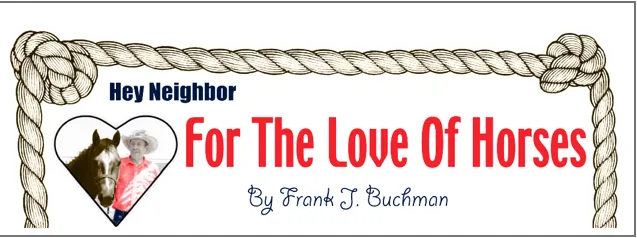
Oklahoma State University’s “Pistol Pete” mascot is named after a real Wild West lawman cowboy.
Frank “Pistol Pete” Eaton was born October 26, 1860, in Hartford, Connecticut.
At the age of eight, Frank moved with his family to Twin Mound, Kansas. Twin Mound is now a ghost town in western Douglas County. It was named for two natural mounds that rise gently from the landscape.
The “famous” scout, sheriff, gunman, working cowboy, passed away April 8, 1958, age 97, at Perkins, Oklahoma with burial in Perkins Cemetery.
According to Frank’s youngest daughter, Elizabeth Wise, “His dad, my grandpa, was shot in cold blood by six former confederates. They had served during the war with the Quantrill Raiders.”
The six men, from the Campsey and the Ferber clans, rode with the vigilante Southerners. After the war, they called themselves “Regulators.”
In 1868, Mose Beaman, his father’s friend, said to Frank, “My boy, may an old man’s curse rest upon you, if you do not try to avenge your father.” Beaman then taught Dad how to handle a gun, Wise said.
At the age of 15, Frank Eaton visited Fort Gibson, Oklahoma, to learn more about shooting guns. Although too young to join the Army, Frank outshot everyone at the fort. “He competed with the cavalry’s best marksmen, beating them every time,” Wise said.
The fort’s commanding officer, Colonel John Coppinger gave Frank a marksmanship badge and a new nickname, “Pistol Pete.”
During his teen years, Frank claimed that he was faster on the draw than Buffalo Bill. From his first days as a lawman, Frank Eaton was said to “pack the fastest guns in the Indian Territory.” By the end of his career, Frank would allegedly have 11 notches on his gun.
At twenty-nine, Frank Eaton joined the land rush to Oklahoma Territory and settled southwest of Perkins, Oklahoma. “He served as sheriff and later became a blacksmith,” Wise said.
Married twice, Frank Eaton had nine children, 31 grandchildren, and lived to see three great-great-grandchildren.
Eaton carried a loaded .45 Colt claiming, “I’d rather have a pocket full of rocks than an empty gun.”
He was also known to throw a coin in the air, draw, and shoot it before it hit the ground. The common saying in the mid-western United States, “hotter than Pete’s pistol,” traces back to Frank Eaton’s shooting skills.
Frank Eaton wrote two books that exemplify his life as an early day lawman. The first was an autobiography titled Veteran of the Old West: Pistol Pete, which tells a tale of his life as a Deputy United States Marshal and cowboy.
His second book, which was published 30 years after his death, is entitled Campfire Stories: Remembrances of a Cowboy Legend. It is a collection of yarns and recollections that Frank Eaton told the visitors who came to sit on his front porch in Perkins, Oklahoma.
After seeing Frank Eaton ride a horse in the 1923 Armistice Day Parade in Stillwater, Oklahoma, university students decided that “Pistol Pete” would be a suitable school mascot.
Previously the college had been known as the “Princeton of the Prairie” with a tiger mascot and colors of orange and black.
Many at the school were unhappy with the “Tigers” mascot. They felt “Pistol Pete,” symbolic of the American Old West and Oklahoma’s land run roots, better represented the college.
“Cowboys” and “Aggies” were used interchangeably until the school became Oklahoma State University in 1957, and “Cowboys” became the sole nickname.
However, it was not until 1958 that “Pistol Pete” was adopted as the school’s mascot. The familiar caricature of “Pistol Pete” was officially sanctioned in 1984 by the university as a licensed symbol.
In more recent years, the University of Wyoming and New Mexico State University began using variations of OSU’s artwork as logos for their schools.
To this day, Pistol Pete’s likeness is a visible reminder of the Old West to literally millions of people yearly as a symbol of colleges whose mascots pay homage to the cowboy.
From 1950 through 1956, Frank Eaton wrote a weekly column for The Perkins Journal. It was titled “Truthful Pete Says,” and later “Pistol Pete Says.”
The stories consisted of Frank Eaton’s philosophy of life, humorous incidents, and recollections of Frontier Days. Frank often told of his experiences as a member of The Journal staff setting type by hand and cranking the old hand press.
Real film footage of Deputy Frank Eaton shows a picnic gathering of former lawmen at Frank’s home in Perkins, not far from Stillwater.
On March 15, 1997, the National Cowboy Hall of Fame posthumously honored Frank Eaton with the Director’s Award.
Elizabeth Wise, together with Oklahoma State University’s James Halligan, accepted the award for Frank “Pistol Pete” Eaton.
On April 9, 2022, Frank Eaton was posthumously inducted by the National Cowboy Western Heritage Center and Museum in Oklahoma City into the Hall of Great Westerners.
The award was accepted by three of Eaton’s grandchildren, (Elizabeth Wise’s children), William Wise, Dinah Wagner, and Harvey Wise.
Sharing the stage with them were 27 former Oklahoma State University Pistol Pete mascots.
CUTLINES
Frank “Pistol Pete” Eaton was an early day Oklahoma lawman.
“Pistol Pete” is the widely recognized Oklahoma State University mascot named after early day lawman Frank “Pistol Pete” Eaton.
Oklahoma State University named their mascot Pistol Pete after early day lawman Frank Eaton.
Two books were written by Frank “Pistol Pete” Eaton about his life as a Frontier lawman in Oklahoma.
This statue of Frank Eaton is on the Oklahoma State University IT campus in Okmulgee, Oklahoma.
Cowboy Horses And Bulls
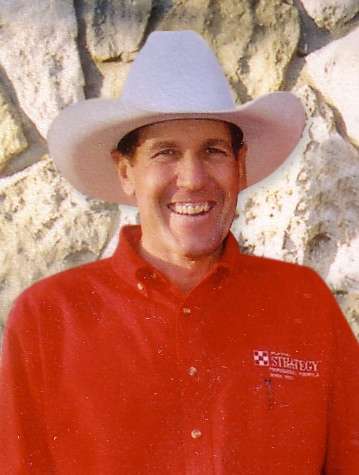
“The Cowboy’s Kind” of horses and bulls.
When breeding, raising, and selling a couple dozen Quarter Horses annually, they were advertised as “The Cowboy’s Kind.”
That description became symbolic of the ranch offering increasing the appeal to certain buyers. There are different opinions of what “The Cowboy’s Kind” means.
Original intention was that the horses were the kind working cowboys would want to use in ranching operations.
This contrasts with horses that were strictly show horses looking pretty when in horseshows. Not that the horses weren’t nice looking, but they were specifically for working cowboys.
That doesn’t mean only cowboys could ride the horses because they had all-around ability. The horses worked well for racetrack, barrel racing, pleasure classes, trail riding, parades, and as family horses.
Still, there’s something about calling a horse “The Cowboy’s Kind” that made them appealing to diverse clientele. For some reason, many people seem to have an inner often denied desire to be a “cowboy.”
But there is a wide variation in people’s definition of who a cowboy really is. Dan Webster lists different meanings for cowboy. 1.“One who tends cattle on horseback.” 2. “One having recklessness, aggressiveness, independence.” 3. “A person operating in an uncontrolled, unregulated manner.”
So, a lot of people actually have the desire to be somewhat reckless, aggressive, uncontrolled at certain times. They appeal to “The Cowboy’s Kind.”
However, working ranch cowboys sometimes take offense to a horse being described as “The Cowboy’s Kind.” For some of them to fit that description, a horse must have “cow sense, work cattle naturally without specific training.”
Yet other cowboys think a horse must be able to work a rope naturally when used for catching cattle.
While “The Cowboy’s Kind” was considered an original description promoting the ranch produced horses, others now use the same term.
It grabbed attention when a purebred bull sale catalog received in the mail promoted their offering “The Cowboy’s Kind,” too.
Those cattle breeders weren’t talking about horses but rather about bulls fitting needs of a working cowboy’s cowherd.
Evidently, the bulls are intentionally bred to fit well in a ranch operation without requiring additional work of the cowboy. Those bulls are “The Cowboy’s Kind.”
Reminded of Zechariah 6:3: “There are red horses, black horses, white horses, dapple horses. All the horses were powerful.”
+++ALLELUIA+++
XVII–12–3-19-2023
Letter to the Editor: Time to appeal property taxes

Dear Editor,
When I moved back from Denver in 2017 to raise my family in the same small agricultural town in Reno County where I was raised, as excited as I was, I knew it came with some trade offs. For one, I braced myself for the fact that I would be lucky to find a job earning even a quarter of what I was earning in the city. I also knew that my school-aged children were going to have a limited amount of classes, sports, and other activities from which to choose. The good news was, at the time, that even though there was a ceiling on what I could earn annually, I could feel secure in knowing that I could afford to outright own my property and retire here eventually on a fixed income. That was more than 6 years ago. That was before I realized that Reno County Appraisers were going to make me rethink my future, and probably have other property owners in small Reno County towns rethinking theirs, as well.
I don’t know how, for example, properties from our town (pop. 583) and Hutchinson (pop. 40,202) all got put into the same category, when the only thing they have in common is they’re all in Reno County. My small town doesn’t have a hospital or clinic, it doesn’t have a grocery store, a hardware store, an auto parts store, a liquor store, or even a stoplight. We essentially do not have an economy. We have to drive 30 minutes one way to get to any of those things in Hutchinson. We do not have job opportunities aside from those occasionally offered by the nursing home and the 1A school district, and even if we did, we presently don’t have any daycare options. There isn’t a highway going through our town to make it convenient to go anywhere. It’s an acquired taste. People of means do not relocate or buy property here. There are three reasons people live in/move to this town: because it’s cheap for those living below the poverty line, it’s a good place to hide if you’re a criminal (there are no police), or because they’re sentimental like I am and want to live where they were raised. I’m not complaining. I love it here and I love our residents, but our town is threatened now because of the way the county appraisers are lumping our properties together with properties located in places of greater population, amenities, and economy.
Since purchasing my home at approximately the Reno County tax appraiser’s valuation of my home in 2017, my property value has risen 169% in those 6 years. Sure I made some small improvements but not anywhere near that degree. I’ve bought and sold real estate in three different states. I understand how it works and that property values will increase, but I moved home expecting to pay annual property taxes for the rest of my life at a steadily increasing amount, not a 169% jump in 6 years. My income certainly didn’t jump that much. This leaves my family’s future in this town uncertain.
To top that off, our school district has been desperately trying to pass a bond that would repair the school’s leaking roofs and windows and bring our gym up to today’s standards. It didn’t pass last year by a small margin, but we are trying again after shaving the total requested dollar amount down significantly. However, since receiving their new property valuations from Reno County last week, town members who were preparing to vote in favor of the bond are now rethinking if it’s financially feasible for them. The closing of our school would be detrimental to our town’s survival, and we all understand that, but many townspeople’s hands are now tied upon seeing their new valuation. Without the repairs and upgrades to our school, I cannot envision we will have a school in another 20 years, and that’s being optimistic. Even raising their taxes by just $15 a month is a huge deal for most of our residents. What Reno County is doing to small towns and their citizens is impeding their ability to survive.
It is not fair to lump our small town properties with those in Hutchinson or other towns with larger populations and economies. That is comparing apples to gold plated oranges. By law, taxes must be fair and equitable, and that comparison is neither. The 2021 census reported that a whopping 19.1% of my town’s families live in poverty, whereas 8.3% of Hutchinson families live in poverty. None of the comps Reno County used to justify raising my property value last year were from my own area, but two of the comps were from Willowbrook, an upscale suburb of Hutchinson. Per the 2021 census, 0.0% of Willowbrook families live in poverty, and they have an average income of more than two and a half times that of families in my town. How does this comparison make sense? Last year, after Reno County failed to compromise with me, we landed in Topeka where a judge heard my case and awarded a compromise that was greatly in my favor. This year, after another momentous jump in “value,” I have no choice but to appeal again. I believe in paying my fair share of taxes, but they need to be based in reality and not inflated property values. That’s the point of this letter. I would like to encourage anyone who feels that their property has been unfairly valued, to double check the comps or methods their county used to derive their valuation, and appeal it until you are satisfied. You have 30 days from the date the notice was mailed to you to let them know you are appealing it. It is easy and free to do, even when you have to appeal above the county. The county appraiser’s website allows you to look up properties that you feel are actually realistically comparable to yours. Arm yourself with data and go argue your case. Fight for yourself and for your community, because if we don’t, no one else will. – S. Mizell
