Saturday, March 14, 2026
Home Blog Page 780

EquiFest Of Kansas To ‘Celebrate’ With ‘One-Of-A-Kind’ Horses And Country Music Evening Of Entertainment

0

A “Celebration” within a major celebration “Best” describes the Thursday evening, March 16, program during EquiFest of Kansas in Salina.
At the Saline County Livestock Expo Center and Tony’s Pizza Events Center (TPEC), March 16-19, EquiFest features everything horses.
“Expanded to four days this year, EquiFest will be extraordinarily special,” promised Justine Staten, Kansas Horse Council (KHC) executive director.
Serving the Kansas equine industry with leadership direction through education, promotion, and advocacy, KHC sponsors EquiFest as its main fundraiser.
“We predict ‘Celebration’ to be the most unique first-of-its-kind compilation of entertainment for horse enthusiasts,” Staten declared.
It’ll be a collaboration of Staten and Jennifer Gatrel, Cowgill, Missouri, beginning in TPEC Arena at 6 o’clock.
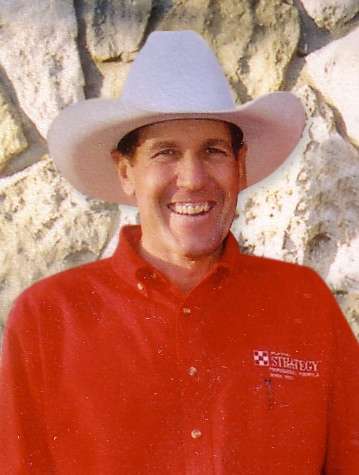
Program features liberty horsemanship Patrick Sullivan, Pegasus Riders, singer Gary Pratt, cowboy-actor Caleb Martin, singer-songwriter Savanna Chestnut, American Freedom Riders, Mustang champion Angeline Saliceti, and Western dressage Cyndi Harris.
“We are excited that Geff and Dawn Dawson will serve as announcers, play-by-play so to speak, for the program,” Staten said. “They are well-known throughout the Midwest for cowboy music, poetry, and storytelling to provide colorful commentary during the ‘Celebrate’ presentations.”
Gatrel has been obsessed with creating equestrian productions since childhood. She grew up and became a leader of Rodeo Kids, a large horse youth group performing acts around the country.
“Her favorite time of the year was the ‘Home Show’ where the horseback kids performed a full-length show,” Staten noted. “Jennifer worked at the legendary Dixie Stampede and loved the magic of entertaining and telling a story with horses.”
Later, Gatrel had a trick riding troupe offering custom event openings and riding, even had three years organizing ostrich racing.
Patrick Sullivan’s Modern-Day Horsemanship facilitates the connection between horse and human beyond the competition arena, Gatrel said.
“Old school horsemanship is combined with leadership techniques of today building solid foundation for every horse discipline,” according to Gatrel.
“Through a deeper connection between horse and human, Modern Horsemanship is encouraging the trust that enables healing, growth, and leadership.” Sullivan will also conduct several additional demonstrations during EquiFest.
“The Pegasus Riders are composed of two 12-year-old equestrian performers and their seven equine partners,” Gatrel said. “They specialize in trick riding, roman riding, dance, and equestrian liberty.”
Staten acknowledged, “These multi-talented kids have performed alongside the nation’s leading equestrian performers offering dynamic acts stunning audiences around the world.”
The Pegasus Riders will also present several additional colorful, action-filled personalized programs during EquiFest.
Gary Pratt is a National Cowboy & Western Heritage Wrangler Award winning cowboy and western singer, Gatrel pointed out.
“He is a songwriter, historian, storyteller, and accomplished guitarist who draws upon his military and ranching experience.” she said. Pratt’s diverse background is said to offer authentically classic performances for audiences of all ages.
“Caleb Martin is known for his natural acting talent, likable personality, and outstanding work ethic.” Gatrel said. “This has quickly earned him a great reputation among many professionals in the film industry.”
Martin has ridden horses since a young age, is an experienced professional horseman, and a winning rodeo team roper. “Recently, Caleb used his horse riding, musical vocals, and stunt skills in a prequel to the television show Yellowstone,” Staten noted.
Savanna Chestnut is a country music singer from Americus, who was a Team Blake contestant on The Voice television show. “She grew up singing in a family-owned bar and became a professional nostalgic country singer after high school,” Gatrel said.
“A Flint Hills native, Savanna’s voice is as clear and country as the prairie sky she grew up under,” Staten said. “Her singing and songwriting reflect her heartfelt, no-frills character.”
With a number of recordings along with songwriting awards, Savanna Chestnut will sing with backup from The Farm Hands Band.
Seven young cowgirls form The American Freedom Riders Drill Team from North Central Kansas. “They host fundraisers throughout the year representing the men and women who have fought for our great country,” Gatrel said.
“These cowgirls love riding and supporting our country,” Staten noted. “It’s their way of giving back to the families who lost a loved one and those fortunate to return home.”
The drill team will also be performing opening ceremonies for the EquiFest Ranch Rodeo performances Friday and Saturday evenings, March 17-18.
From Topeka, Angeline Saliceti and her Mustang Samson are both 16-years-old. “They have collected numerous state, region, national, and world titles in the most diverse performance competitions,” Gatrel pointed out.
Samson is from Wyoming’s Green Mountain Herd Management Area and was adopted from the Hutchinson Correctional Facility in 2012. “Both horse and owner then just six-years-old have accomplished so much as a unique team featured in worldwide media,” Staten said.
Specializing in Western dressage and working equitation, Cyndi Harris and her husband operate Antelope Creek, a horse facility at Udall. They board horses and Cyndi trains and gives lessons to students who have a wide variety of interests.
“Cyndi was born with a passion for horses. and has had an eclectic equine experience,” Staten said. “She has always used the elements of dressage in her training feeling that dressage is the foundation for every discipline.”
“About 50-percent of the ‘Celebration’ music will be sung live at the event,” Gatrel promised. “There will be fog, theatrical lighting, beautiful costuming, and talented equine and human performers.”
Staten acknowledged, “Jennifer Gatrel loves collaboration with talented horse people, and storytelling using the shared love of the horses. She believes a great show makes the audience feel a wide range of emotions from fear, love, joy, and even sadness.”
“We are so excited about the EquiFest ‘Celebration’ as a special new spectator attraction nobody wants to miss,” Staten invited.
“This extraordinary display of equestrian and musical talents showcases various arts and skills. A drill team, trick riding, Roman riding, liberty, Western dressage, and freestyle set to music, live and recorded,” Gatrel promised. “It’s a night of theatrical magic performances by talented equestrians and musicians a presentation only happening Thursday evening, March 16, at 6 o’clock.”
Actually, there will be even an advance EquiFest program with a breakaway roping clinic all-day Wednesday, March 15, at 8 o’clock, Staten pointed out.
More about the “Celebration” and complete EquiFest of Kansas schedule with details can be found at www.equifestofks.com.
+++30+++
CUTLINE
Top left to right, Patrick Sullivan, Pegasus Riders, Gary Pratt, Caleb Martin, Savanna Chestnut, American Freedom Riders, Angeline Saliceti, and Cyndi Harris will present ‘Celebrate’ opening night at the EquiFest of Kansas in Salina, March 16-19. Bottom right, Dawn and Geff Dawson will serve as announcers, play-by-play color-commentary, for the theatrical magic performances by talented equestrians and musicians.


Debt Collection

0
Thayne Cozart
Milo Yield

Ol’ Kleenan Baggitt, a farmer local seed corn dealer fell behind in his inventory payments to company headquarters. To make matters worse, Kleenan furthermore completely ignored three increasingly sharp and threatening letters from company headquarters demanding payment.
Finally, the company’s regional manager, B. A. Hardcase, appeared in person, waving the sheaf of unpaid seed bills in Kleenan’s face.
Much to the manager’s surprise, ol’ Kleenan sat down at his desk and astounded him by writing a check for every cent owed without a moment’s hesitation.
“Why didn’t you send me a check and save both of us all this unpleasantness?” demanded Hardcase.
“Well, I didn’t have the cash to begin with,” admitted Kleenan. “So, I copied your demand letters word for word, and threat for threat, and mailed them out to the corn growers who were behind in the payments for the seed they’d bought from me. The results were so good I held up my payment to you till I could get your complete set.’’
***
Overheard around the co-op coffee pot: “Old Doc Crawford is the roughest doctor in town. Yesterday, he beat around on my back and sides and chest until I had to cough. Then he’d growled: ‘How long you had that nasty cough?’ Then he wrote out an expensive antibiotic prescription!”
* * *
A farm mother took her small daughter to the family dentist, Dr. Picken Floss. She assured her nervous daughter that the procedure would be painless.
When the daughter emerged from the procedure room, she yelled, “He’s not a painless dentist like you said he’d be.’’
“I’m sorry,” her mother answered, “Did he hurt you much?”
“Naw ,” the daughter shrugged, “but he sure yelled when I bit his thumb.”
* * *
Two days ago the temperature got up into the 70s and my thoughts turned to fishing. And just thinking about fishing, got me to thinking about fishing liars.
Here’s my favorite fish liar story from Farmer Brown:
First fisherman: “And what about your catches, Brown? Have you caught any worth mentioning?”
Farmer Brown: “No, last one I caught was too small to take home. So two men helped me throw it back in the lake.”
I’m eager for the weather to wake the fish up from their winter slumber.
***
I spent a good bit of time within the last week continuing to sift and sort my “stuff,” getting ready for serious downsizing.
Nevah and I have been a serious readers all our lives and have accumulated a couple hundred books of all sizes, purposes, and genres — every kind imaginable, ranging from coffee table books, to history, biographies, romance, humor, hunting, fishing, travel, cookbooks, politics, and reference.
We’ll never have room for them all at our new home, if we ever get it built, so the books need to go.
So, we loaded three boxes — the limit — and dropped them off at The Dusty Bookshelf in Manhattan, Kan. An employee said the store owner would go through the books and decide which ones to pay me for. I’d have two weeks to take all the rejects home or the store would put the books up for give-away.
Well, in a couple of days I got an email that said I could come pick up the rejects — and I could bring three more boxes if I wanted so.
So, last Sunday, Nevah and I made another trip to Manhattan and our first stop wuz at The Dusty Bookshelf. Out of the three boxes, it bought 18 books. The amount wuz $40 for in-store credit or $20 for cash.
I wuz a bit disappointed at the paltry amount, but thanked the store, pocketed the cash, and left the other three boxes. At least, 18 books will go to appreciative readers and we’ll see if we can sell any of the rejects at another used book store or at the garage/yard sale we plan sometime in April.
***
Amongst our belongings are many thick albums of generations of family pictures. Most the pictures are Kodak or Polaroid and we’ll likely keep them all.
But what are we going to do with the gazillions of pixels and pictures that reside inside our computers and smart phones? Our grandkids and great-grandkids have thousands of pictures on our computers — with more being added weekly.
That’s a pleasant problem that I’ve not seen addressed by anyone. Shall we download the pictures to compact disks, auxiliary hard drives, thumb drives, or just leave them on our computers and smart phones?
And, how should our heirs inherit all my columns, other writings, and other “computerized” family stuff?
***
Words of wisdom for the week: “Too often in life, the success of a man’s career is directly related to the disappearance to his hair.” Have a good ‘un.

Falling flat

1
john marshal

The Legislature is at it again, slogging on about a flat tax ‒ that is, a single rate for Kansas income taxes. (How “flat” became attached to this old idea is anyone’s guess, but it seems fitting.)
Late last month the state senate approved a single 4.75 percent tax to replace the state’s three-bracket order. The House is massaging the plan.
Our current system is called progressive because rates increase as taxable income increases, in three tiers:
– 3.1% for taxable income of less than $15,000 ($30,000 married filing jointly);
– 5.25% for taxable income over $15,000 but less than $30,000 ($60,000 jointly);
– 5.7% for taxable income above $30,000 ($60,000 jointly).
The plan in Senate Bill 169, applies the flat rate to single-payer taxable incomes more than $5,225 and couples’ incomes above $10,450.
Senate and House Republicans, dominant in both chambers, like the idea. They say the proposal will reduce taxes for most Kansans.
Skeptics, including a handful of Republicans, say the single rate gives the wealthiest Kansans thousands of dollars in tax relief with low-income citizens left to save a few bucks here and there.
For the low-income bracket, the proposed flat tax is a 53 percent rate increase (from 3.1 percent to 4.75). The middle brackets have a 9.5 percent rate cut, from 5.25 to 4.75. For the high brackets, a 17 percent rate cut (from 5.7 to 4.75).
The Senate bill mirrors legislation offered a year ago by State Sen. Gene Suellentrop, a Wichita Republican who wanted to junk the progressive tax with a flat rate of 4.75 percent. The plan was left to simmer.
Flat tax proposals are nothing new, especially at the federal level. When he ran for president in 1996 and 2000, Steve Forbes wanted a flat 17 percent tax on personal and corporate income.
Newt Gingrich, Ben Carson, Rand Paul, Rick Perry, Ted Cruz, Herman Cain are among those who have revived various flat tax proposals. Marco Rubio flirted with the idea. In 2015, Jerry Moran campaigned for a federal sales tax to replace the income tax. Stiff resistance continued in Washington; the flat tax lobbies have turned to the states.
*
Any change in tax structure invites the matter of cost. Flat tax proponents say their plan in Kansas would cost the state roughly $568 million over its first full fiscal year. A different estimate, from the Washington’s Institute on Taxation and Economic Policy: $764 million.
There are other offshoots ‒ for one, more pressure on local taxes. The legislature for two decades has suspended a law ordering the transfer of state revenue to cities and counties for property tax relief. Lawmakers have skirted the obligation and used the money to pay for other things ‒ or, during the Brownback years, cover their deficit spending.
Gov. Laura Kelly’s budget surplus this year bumps $2 billion, an embarrassment of riches due mostly to federal covid relief. The governor wants to put away $500 million. State treasurer Steve Johnson recommends stashing $1 billion; you never know what will happen, he says. Both are smart inclinations.
Republican legislators see a pot of money and want to spend a billion or more on income tax cuts ‒ a windfall for the haves and have-mores; small beans for the have-nots.
Local tax relief is left to the winds.
*
The flat tax brings big levies for the middle classes and the poor, who pay relatively little in income taxes already, and massive relief for the rich, who spend a tiny bit on taxable goods and services.
Flat tax proponents envision a two-tier economy from the dark Brownback years ‒ one for the upper brackets and leftovers for the rest.
The term “flat tax” offers the appeal of simplicity. In spite of reality, it may seem fairer than a “progressive” income tax. It sustains supply-siders and Brownback acolytes who insist that untaxed income will be ladled from above, wealth trickling down to benefit the hoi polloi.
If simplicity defines the flat tax, it also invites the appeal of loopholes and tampering. The discussion will incubate talk of exemptions. The premise of equity is nibbled apart with plans for avoidance. The simple edges toward the complex. Stock buybacks, hedge funds, derivatives, mortgage-backed securities and other schemes will creep into the conversation. What is fair becomes what is advantageous, especially for the haves who want to have more.


Rhubarb 

0

Rhubarb is a perennial vegetable that can be a bit tricky to grow in Kansas. It is native to northern Asia (possibly Siberia) and so is adapted to cold winters and dry summers. However, it is susceptible to crown rot and should not be subjected to “wet feet.” It should be grown in a well-drained soil. The addition of organic matter can increase drainage as well as raise the soil level so that crown rot is less likely.  Also, have a soil test done as rhubarb does best with a pH below 7.0.

Rhubarb should be planted from mid-March to early April in Kansas. Mix 5 to 10 pounds of well-rotted barnyard manure into the soil for each 10 square feet of bed before planting.

Rhubarb is propagated from crowns (root sections) that contain one or two buds. Plants should be spaced 2 to 3 feet apart in the row with 4 to 5 feet between rows. The crowns are planted shallow so that the buds are just one-half to 1 inch below the soil surface. Firm soil around the crowns and make sure they are not in a depression that holds water. You may want to ‘hill’ the plants slightly to prevent water from collecting around the crown which can lead to crown rot.  Recommended varieties include Canada Red, Crimson Red, McDonald and Valentine.

Rhubarb needs rejuvenated at least every 5 to 10 years and should be dug and divided from mid-March to early April. Use a cleaver or ax to cut crowns into sections that each contain one or two buds. Plant as described above.

Newly transplanted rhubarb should not be harvested the first year so the plant can recover from the transplant process. Only a few stalks should be harvested the second year to allow the plant to continue to build up its energy reserves. The harvest season for plants that are three years or older usually lasts about 8 weeks. Harvest only the largest and best stalks by pulling them slightly to the side so that they break away from the plant. Never harvest over one-third of the leaf stalks at one time. Only the leaf stalk (petiole) is eaten as the leaf blade contains oxalic acid and is poisonous.

Established rhubarb should be fertilized in late March. Fertilize according to soil test or use a 10-10-10, 12-12-12 or similar fertilizer and broadcast or band at the rate of 1.5 to 2 pounds per 100 square feet or about 1/2 cup per plant.

An additional 1/4 cup of fertilizer per plant of a high nitrogen fertilizer such as a 27-3-3, 28-4-4 or something similar in late June or July after the last harvest is often helpful to stimulate recovery from the harvest season. Though most of these high nitrogen fertilizers are lawn fertilizers, each will work well for our purposes as long as they do not contain weed killers or weed preventers.

Mulches can be used to reduce moisture loss, prevent weed growth and provide winter protection. However, it should be pulled away in the spring to allow the soil to warm so that early growth is encouraged.

Ward Upham, Extension Agent

Lettuce Eat Local: Berry crazy babies

0

Amanda Miller
Columnist
Lettuce Eat Local


“I’m not even mad, I’m just impressed.” Brian and I have quoted this movie phrase to each other many times in applicable situations, and there were several occasions this past week where it felt very, very fitting.
We were babysitting one of our longterm foster girls who has been reintegrated with her loving family. Rosie and her big sister left our home about half a year ago, after having been with Brian, Benson, and me for over nine months. We are delighted and so grateful to have continued contact with the girls, thanks to their bio parents’ openness and graciousness, and we’ve even had the girls and their two brothers over for a few days or a weekend several times.
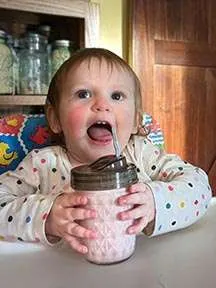
But since the other kids are in school, this time we got just Rosie, and for a whole week. I was so excited for crazy baby life again. She hasn’t lived with us since she was only 11 months old, and let me tell you, it’s very different now that she’s 1½. She had been just starting to take steps, and now she is careening around the house with incredible velocity. It’s so fun to see her little brown pigtails bobbing and weaving all over — and it’s amazing the destruction left in her wake.
There must be some scientific law of synchronization that addresses how two bodies in movement increase exponentially in force and power rather than merely combining the sum of their individual parts…especially when those bodies are toddler-sized. Benson and Rose are 8 months apart, so kind of like twins, and now that they’re old enough to work together (or very much against each other) it’s a whole new ballgame.
The first morning Rosie was here, I had a deadline to meet and a class to teach, so I had no time to clean up the house before we had to leave. I don’t think I have ever left the house in such a state of disrepair; Brian can attest to the impressive level of chaos the babies achieved in those few short hours. The pompoms, play-doh, cheerios, books, toys, kitchen towels, and all other manner of even hypothetically reachable objects were everywhere.
In these moments, it is best to just be impressed and laugh, instead of be upset. If I’m not literally following behind and cleaning up their latest mess while they move on to make the next, it’s inevitable that I fall behind anyway, so I might as well be resigned to my fate.
The kitchen floor was perpetually such a wreck that it felt irresponsible to even put the broom away.
We of course did have some calmer moments. Moments of silence that gradually dawned on me, with that strange realization that what I was hearing was nothing. A wave of relief intersected with a gnawing horror; the chances of the two of them just playing quietly and not slyly wreaking havoc were very slim. I had to gauge the value of what I was getting done, versus the value of whatever they were getting undone.
But then they would scamper away giggling and shrieking, or run into me for a group hug-snuggle, or drag me into the teepee with them. Benson wasn’t talking much when Rose moved away, but now I love hearing his emotive little voice yelling for her to come or begging me to go wake her up from nap. It’s been a hilarious, precious, tiring, splendid week. We’ll miss her deeply next week, but always be grateful for the chance to love her and her family.
And hopefully I’ll mop the floor tomorrow.

Fresh Strawberry Milk

8 ounces strawberries, destemmed
16 ounces milk, plus more as desired
a splash of vanilla
a pinch of salt
local honey to taste — 1-2 tablespoons?
optional: ½ cup cottage cheese

Combine all ingredients in a blender, and process until smooth. Adjust milk and honey to your personal preference.

The volume of strawberries consumed (and dripped and dropped and smashed) in our home this week is also impressive. I did not do much stovetop cooking, as there was always someone in my arms or at least wrapped around my legs, but plenty of one-dish meals and salads — and things thrown in a blender. I know my recipe used a blender last week too, but I’m gonna be honest, I use it every day, so it’s hard to stay away. Rosie chugged this nutritious, creamy strawberry milk like a crazy woman, and I drank my glass during her nap so I could enjoy it without being tackled for it.
Prep tips: seeing the cottage cheese listed might throw you for a bit of a loop, but it’s a great way to get in some extra creaminess and protein, along with just a hint of tang that pairs well with the sweetness of the strawberries.