Sunday, March 15, 2026
Home Blog Page 796

Pruning Deciduous Shrubs   

0

Gardeners are eager to get out and do something in the landscape this time of year. One chore that can be taken care of now is pruning certain shrubs. Often, gardeners approach pruning with trepidation, but it is not as difficult as it may seem. Remember, not all shrubs need to be pruned (i.e. witch hazel), and certain shrubs, which will be identified later, should not be pruned this time of year. Shrubs are pruned to maintain or reduce size, rejuvenate growth, or to remove diseased, dead or damaged branches. Deciduous shrubs are those that lose their leaves each winter. Evergreen shrubs maintain foliage all year and include yews and junipers.

Deciduous shrubs are placed into three groups:

                  – Those that flower in the spring on wood produced last year;

                  – Those that flower later in the year on current season’s growth; and

                  – Those that may produce flowers, but those flowers are of little ornamental value.

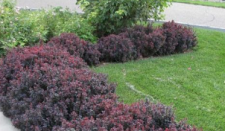
 Shrubs that flower in the spring should not be pruned until immediately after flowering.  Though pruning earlier will not harm the health of the plant, the flowering display will be reduced. Examples of these types of plants include forsythia, lilac and mock orange. Shrubs that bloom on current season’s growth or that do not produce ornamental flowers are best pruned in late winter to early spring. Examples include Rose-of-Sharon, pyracantha, Bumald spirea and Japanese spirea.

Pruning during the spring allows wounds to heal quickly without threat from insects or disease. There is no need to treat pruning cuts with paints or sealers. In fact, some of these products may slow healing. There are three basic methods used in pruning shrubs: thinning, heading back and rejuvenating. Thinning is used to thin out branches from a shrub that is too dense. It is accomplished by removing most of the inward growing twigs by cutting them back to a larger branch. On multi-stemmed shrubs, the oldest canes may be completely removed.

Heading back is done by removing the end of a branch by cutting it back to a bud and is used for either reducing height or keeping a shrub compact. Branches are not cut back to a uniform height because this results in a “witches-broom” effect.

Rejuvenation is the most severe type of pruning and may be used on multi-stem shrubs that have become too large, with too many old branches to justify saving the younger canes. All stems are cut back to 3- to 5-inch stubs. This is not recommended for all shrubs but does work well for spirea, forsythia, pyracantha, ninebark, Russian almond, little leaf mock orange, shrub roses and flowering quince.

Ward Upham, Extension Agent

Iris Leaf Spot Control Starts Now 

0

Now is a good time to begin control measures for iris leaf spot by removing old, dead leaves. Iris leaf spot is a fungus disease that attacks the leaves and occasionally the flower stalks and buds of iris. Infection is favored by wet periods during the spring, and emerging leaves eventually show small (1/8- to 1/4-inch diameter) spots. The borders of these spots are reddish, and surrounding tissue first appears water-soaked, and then yellows. Spots enlarge after flowering and may coalesce. The disease tends to be worse in wet weather and may kill individual leaves. Though the disease will not kill the plant directly, repeated attacks can reduce plant vigor so that the iris may die from other stresses. Spores are passed to nearby plants by wind or splashing water.

Because this disease overwinters in old leaves, removal and destruction of dead leaves will help with control. For plants that had little infection the previous year, this may be all that is needed. Plants that were heavily infected last year should be sprayed with chlorothalonil (Bravo Fungicide, Fertilome Broad Spectrum Landscape & Garden Fungicide, Ortho Garden Disease Control, GardenTech Daconil, Bonide Fungonil, Bravo Flowable Fungicide) or myclobutanil (Immunox, Fungi-Max, Fertilome F-Stop Lawn & Garden Fungicide) starting when leaves appear in the spring. Repeat sprays every seven to 10 days for four to six sprays. Iris leaves are waxy, so be sure to include a spreader-sticker in your spray to ensure good coverage.

Ward Upham, Extension Agent

Soil Temperature and Vegetables  

0

One of the most neglected tools for vegetable gardeners is a soil thermometer. Soil temperature is a much better measure of when to plant than air temperature or the calendar. Planting when soil is too cool can cause some seeds to rot and transplants to sit there.

A number of vegetables can germinate and grow at cool temperatures. For example, peas will germinate and grow well at a soil temperature of 40 F. Though lettuce, parsnips, and spinach can sprout at a soil temperature of 35 F, they prefer at least 45 F for best germination and growth.  Radishes also do well at a soil temperature of 45 F.  Even if the seeds of these cool-season crops are planted below the recommended soil temperature, the seed will rarely rot.

Warm-season crops such as tomatoes, sweet corn and beans are different.  They prefer at least 55 F for germination (or transplanting), but others such as peppers, cucumbers, melons and sweet potatoes need it even warmer, about 60 F.  If planted when soils are too cool, they likely will rot before germinating.

Taking soil temperature accurately is a bit of a science. First, use a thermometer with a metal probe.  These are sold in many garden, auto parts and hardware stores.  Those in auto parts stores are used to measure the temperature inside air conditioning ducts and are often less expensive than those used for gardening.   Take the temperature 2.5 inches deep at about 10 to 11 a.m. Temperature variations throughout the day and night affect soil temperature, with lowest readings after dawn and warmest around mid-afternoon. The late-morning reading gives a good average temperature. If taking the soil temperature at this time is not practical, take a reading before you leave for work and a second when you return home and use the average. Also be sure to get a consistent reading for four to five days in a row before planting, and make sure a cold snap is not predicted.

An excellent guide sheet on this subject is published by the Alabama Cooperative Extension System and is titled “Soil Temperature Conditions for Vegetable Seed Germination.” It can be found at https://tinyurl.com/1jw297zt

Ward Upham, Extension Agent

Lettuce

0

Though lettuce is most often planted directly from seed in late March to early April, it can be started from transplants. Transplants allow lettuce to mature earlier so that it escapes the excessive heat that can lead to a strong flavor and bitterness.

Seed should be started four to five weeks before transplanting. Because transplants are planted at the same time as direct seeding, now would be a good time to begin. Use a seed starting mix and plant shallow as lettuce requires light for germination. A soil media temperature of 60 to 68 degrees will encourage germination. Watch the media temperature carefully, as seed can enter a thermal dormancy if germination temperatures are excessive. Also, a cooler temperature of 55 to 60 degrees should be used once the plants emerge.

Time to maturity varies depending on the type of lettuce, with leaf lettuce being the quickest, followed by bibb, romaine, and buttercrunch lettuce. Head or crisphead lettuce is the slowest and is least likely to mature before becoming bitter.

Spacing also varies with type. Leaf lettuce plants are spaced 4 to 6 inches apart, buttercrunch, bibb, and romaine are set at 6 to 8 inches and head lettuce should be at least 8 inches apart in the row. Lettuce does not have an extensive root system and requires regular watering if rainfall is lacking.

Fertilize before planting according to soil test. Plants should also be sidedressed when about 1/3 grown. Sidedressing is done with fertilizers that have more nitrogen than phosphorus and potassium. Use 1/3 cup of nitrate of soda (16-0-0) or 1/4 cup of a 27-3-3, 29-5-4 or similar fertilizer per 10 feet of row. The latter fertilizers are lawn fertilizers but will work well for sidedressing as long as they do not contain weed killers or weed preventers.

Ward Upham, Extension Agent

Cure the Itch by Planting Peas  

0

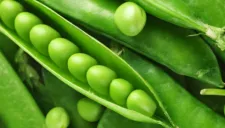
If you are tired of winter and hunger for spring, try planting peas as soon as the soil dries and the soil temperature reaches 40 degrees. There are several types of peas we can plant in Kansas. Probably the most common is the shelling pea and the old standard in this group is Little Marvel. Though Little Marvel is still on our recommended list, we have a number of others that do well including Green Arrow, Knight, Maestro, Burpeeana and Mr. Big. All of these are early maturing types that allow us to harvest a crop before the hot weather arrives and stops production.

Snow peas are those commonly used in stir-fry that have a crisp edible pod.  Recommended varieties include Dwarf Grey Sugar and Mammoth Melting Sugar.

Sugar snap peas resemble shelling peas but have a thick, fleshy pod and can be eaten fresh, steamed or cooked. Like snow peas, they are not shelled but eaten pod and all. We recommend Sugar Bon, Sugar Ann, Super Sugar Snap and Sugar Sprint.

Peas should be planted shallow, about one-half inch deep, to encourage rapid germination and emergence. Seed in the row should be spaced 2 inches apart. Many people often plant two rows 6 o 8 inches apart so the floppy plants can support one another. For some older varieties, this may not be enough. They may need trellising to support the growing vines. Fencing may be needed to keep rabbits away.

Ward Upham, Extension Agent