Sunday, March 15, 2026
Home Blog Page 795

Horticulture 2023 Newsletter No. 7

0

https://hnr.k-state.edu/extension/info-center/newsletters/index.html

Blog Post: http://www.ksuhortnewsletter.org

Video of the Week: Growing Asparagus
https://kansashealthyyards.org/all-videos/video/growing-asparagus

REMINDERS
1. Draw vegetable garden layout.
2. Replace or add mulch as needed.

UPCOMING EVENTS
Design & Grow Gardening Workshop
March 4, 2023
Sedgwick County Extension Center
For details, see https://tinyurl.com/2m6zvvk5

TURFGRASS
Lawn Calendar for Cool-Season Grasses
The following suggestions are for cool-season grasses such as Kentucky bluegrass or tall fescue. Zoysiagrass, bermudagrass, and buffalograss are warm-season grasses and require a different maintenance regime. A warm-season grass calendar will be covered in a later newsletter.
March
Spot treat broadleaf weeds if necessary. Treat on a day that is 50 degrees or warmer. Rain or irrigation within 24 hours of application will reduce effectiveness.
April
Apply crabgrass preventer when redbud trees are in full bloom, usually in April. The preventer needs to be watered in before it will start to work. One-quarter inch of water will be enough to water in any of the products commonly available. Remember that a good, thick lawn is the best weed prevention and may be all that is needed.
May
Fertilize with a slow-release fertilizer if you water your lawn or if you normally receive enough rainfall that your turf doesn’t go drought-dormant during the summer. If there are broadleaf weeds, spot treat with a spray or use a fertilizer that includes a weed killer. Rain or irrigation within 24 hours of application will reduce effectiveness of the weed killer, but the fertilizer needs to be watered in. If you are using a product that has both fertilizer and weed killer, wait 24 hours after application before watering in. If grubs have been a problem in the past, apply a product containing imidacloprid or chlorantraniliprole during May or anytime from May through June for imidacloprid. These products work to prevent grub damage. If rainfall does not occur within 24 hours, irrigate with 1/4″ of water.
June through Mid-July
Apply second round of crabgrass preventer by June 15 – unless you have used Dimension (dithiopyr) or Barricade (prodiamine) for the April application. These two products normally provide season-long control with a single application. Remember to water it in.
Late-July through August
If you see grub damage, apply a grub killer that contains Dylox. Imidacloprid and chlorantraniliprole are effective against young grubs but may not be effective on late instar grubs. The grub killer containing Dylox must be watered in within 24 hours or effectiveness drops.
September
Fertilize around Labor Day. This is the most important fertilization of the year. Water in the fertilizer if rainfall does not occur.
November
Fertilize. This fertilizer is taken up by the roots but is not used until the following spring. Water in fertilizer. Spray for broadleaf weeds even if they are small. Broadleaf weeds are much easier to control in the fall than in the spring. Try to spray on a day that is at least 50 degrees. Rain or irrigation within 24 hours reduces effectiveness. Use label rates for all products! (Ward Upham)

VEGETABLES
Planting Asparagus

Though it is too early to plant asparagus, it is not too early to make plans and prepare the soil. This crop is a perennial and will survive for many years if given proper care. It prefers full sun and a well-drained soil and is usually placed on the edge of the garden area so that there is no need to till around the area to plant other crops.
Proper soil prep is especially important for perennial crops. Take a soil test to ensure proper levels of nutrients. See the accompanying article on how to take a soil test for the correct procedure.

Work the soil as early in the spring as possible but do not work wet soil as clods will form. Then add two inches of organic matter to the surface and the fertilizer and work again so the organic matter and fertilizer are blended into the soil.
Asparagus can be propagated from seed but is more often started from 1-year-old crowns. These crowns are planted deeply; 6 to 8 inches deep either in a hole for each crown or in a trench with shallower planting recommended for soils with more clay. Space plants 18 to 24 inches apart. Fill in the trench gradually over the growing season to encourage growth.
March 15 to April 15 is the best planting time. Adapted varieties include Jersey Giant, Jersey King, Jersey Knight, Jersey Supreme and Purple Passion. These are all male hybrids that will produce three times as much as our old Martha or Mary Washington varieties. Males have a number of advantages over females in that they live longer, emerge earlier in the spring, are more productive and eliminate potential volunteer plants that can reduce the productivity of a planting.
Weed control is very important. Competition with weeds results in slow establishment. A shallow hoeing should be all that is needed. (Ward Upham)

FLOWERS
Fertilizing Spring-flowering Bulbs
The best time to fertilize spring-flowering bulbs is when foliage emerges in the spring rather than at flowering. Traditionally, gardeners have applied fertilizer during bloom or a bit after, but because bulb roots start to die at flowering, fertilizer applied at bloom is wasted. Roots are active when the foliage first pokes through the ground. Nutrients applied then help the plant produce flowers the following year. If bulbs have been fertilized in the past, there is often plenty of phosphorus and potassium in the soil. It is best to take a soil test to be certain.
If the soil needs phosphorus and potassium, use a complete fertilizer (such as 10-10-10, 9-9-6, etc.) at the rate of 2.5 lbs. per 100 square feet. This would equal 1 rounded teaspoon per square foot. If phosphorus and potassium are not needed, blood meal makes an excellent fertilizer. It should be applied at the rate of 2 lbs. per 100 square feet or 1 teaspoon per square foot. Lawn fertilizers such as a 27-3-3 or 30-3-3 can be used, but cut the rate to a third of that applied for blood meal. Also make sure the lawn fertilizer does not contain a weed preventer or weed killer.
Remember to leave the foliage until it dies naturally. The energy in the foliage is transferred to the bulb as the foliage dies and will help the bloom for the next year. (Ward Upham)

MISCELLANEOUS
Soil Testing
Most gardeners think that soil tests are done only to find out what nutrients are deficient. However, it is just as important to know if you have adequate levels of nutrients so you don’t add unneeded fertilizer. The most basic soil test checks pH and the levels of phosphorus and potassium. Most of the lawn and garden soil tests that come out of our soil-testing lab show more than adequate levels of both phosphorus and potassium. If those nutrients are not needed, applying them is a waste of money and can be a source of pollution. In extreme cases, excess phosphorus can interfere with the uptake of micronutrients. So, if you haven’t taken a soil test in several years, take one this spring.
Begin by taking a representative sample from a number of locations in the garden or lawn. Each sample is composed of about 8 sub-samples that go from the surface to 6 to 8 inches deep. Mix the sub-samples together in a clean container and select about 1 pint of soil. For more detail on taking a soil test, click here and choose “Soil Analysis” in the left column.
Take the soil to your local K-State Research and Extension office to have tests done at the K-State soil-testing laboratory for a fee. A soil test determines fertility problems, not other conditions that may exist such as poor drainage, poor soil structure, soil borne diseases or insects, chemical contaminants or damage, or shade with root competition from other plants (see accompanying article). All of these conditions may reduce plant performance but cannot be evaluated by a soil test. (Ward Upham)

Soil Tests When Soils are Wet
If your soil is wet, it would be best to wait until the soil dries before taking samples. Though it is possible to take soil tests when soils are wet, there are precautions.
Soil samples should be air-dried before being submitted for testing. Do NOT use artificial means of drying such as an oven or microwave as such treatment may result in inaccurate readings of nutrient levels. Also, be sure to use a clean container to collect the sample. Wet samples are more likely to absorb foreign materials adhering to the container, which may also influence soil test results.
For more detail on taking a soil test, click here and choose “Soil Analysis” in the left column. Then click “Sample Collection” at the bottom of the center column.
Take the sample into your local extension office. If you don’t know the address for your local, county extension office, see http://www.ksre.ksu.edu/Map.aspx (Ward Upham)

Gardening Calendar
The Kansas Healthy Yards website has a gardening calendar that many gardeners find helpful. It lists all the months of the year and the chores that can be done during that month. Each month is divided into separate sections such as Vegetables and Fruits, Flowers, Lawns, Trees and Shrubs and Houseplants. Not all suggestions will be helpful each year but are important to have included. For example, one of the January tips is on removing snow and ice on limbs. You may brush off the snow, if desired, but ice should be allowed to melt naturally.
To find the gardening calendar, go to http://kansashealthyyards.org/ and click on “Gardening Calendar” in the gray bar at the top of the page. (Ward Upham)

What a Soil Test Does Not Tell You
Though soil tests are useful for identifying nutrient deficiencies as well as soil pH, they do not tell the whole story. We often receive soils from gardeners that are having a difficult time growing crops even though the soil test shows the pH is fine and nutrients are not deficient. Here are some factors that can affect plant growth that are not due to nutrient deficiencies or pH.
Not enough sun: Plants need a certain minimum amount of sun before they will grow well. As a general rule, flowering (and fruiting) plants need at least 6 to 8 hours of full sun per day. There are, of course, exceptions such as impatiens that bloom well in shade. Move sun-loving plants into more sun or use plants that are better adapted to shady conditions.
Poor soil physical characteristics: Roots need oxygen as much as they need water. A tight clay soil or excessive water can restrict soil oxygen levels as well as make root penetration of the soil difficult. Increasing the organic matter content of clay soils can help rebuild good structure. Add a 2-inch layer of organic matter and till it in.
Walnut trees: Walnuts give off a natural herbicide that interferes with the growth of some plants such as tomatoes. Vegetable gardens should be at least 50 feet away from walnut trees if possible. For a listing of plants that are susceptible to walnut, go to this site.
Tree roots: Trees not only compete with other plants for sun but also for water and nutrients. Extra water and nutrients may be needed.
Shallow soils: When new homes are built, the topsoil is often stripped off before the soils are brought to grade. Though the topsoil should be replaced, it sometimes is not or is not replaced to the same depth as it was originally. You are left with a subsoil that usually does not allow plants to grow well due to a lack of soil structure. Adding topsoil to a depth of 8 to 12 inches would be best but this often is not practical. In such cases, try to rebuild structure by adding organic matter and working it into the soil.
In other cases, a thin layer of soil may be spread over rock or construction debris. Plantings in shallow soils will wilt and die more quickly than other plants that are on a deeper soil. Use a soil probe to find such obstructions.
Too much phosphorus: Most Kansas soils are naturally low in phosphorus. However, soils that have been fertilized for a number of years may have phosphorus levels that are quite high. As a matter of fact, the majority of soil tests we receive show phosphorus levels in the “high” category. Extremely high phosphorus levels can interfere with the uptake of some micronutrients such as iron, manganese and zinc.
High phosphorus soils should only be fertilized with fertilizers that have no or relatively low amounts of phosphorus.
Improper watering: Roots develop where conditions are best for growth. Shallow, frequent watering leads to roots developing primarily near the surface of the soil where the soil is moist. Such shallow root systems are easily damaged by heat and any interruption in the watering schedule. It is better to water less frequently and to a greater depth to encourage a deeper root system that is less sensitive to heat and water stress.
Watering during the evening can also be detrimental to plants if the irrigation wets the foliage. Many diseases are encouraged by free water on the leaves. Watering late in the day often will keep the foliage wet until dew forms. Dew will keep the foliage wet until it evaporates the next morning. It is better to water early in the morning so leaves do not stay wet as long. If you must water late in the day, use drip irrigation if practical (such as in a vegetable garden).
Overwatering: Roots need to breathe. In other words, they must have oxygen in order to survive. Be careful to not water so heavily that the soil remains saturated. Water deeply but allow soil to dry somewhat between waterings. (Ward Upham)
Contributors: Ward Upham, Extension Associate

Division of Horticulture
1712 Claflin, 2021 Throckmorton
Manhattan, KS 66506
(785) 532-6173

For questions or further information, contact: [email protected] OR [email protected]
This newsletter is also available on the World Wide Web at:
http://hnr.k-state.edu/extension/info-center/newsletters/index.html
The web version includes color images that illustrate subjects discussed. To subscribe to this newsletter electronically, send an e-mail message to [email protected] or [email protected] listing your e-mail address in the message.

Brand names appearing in this newsletter are for product identification purposes only. No endorsement is intended, nor is criticism implied of similar products not mentioned.

K-State Research and Extension is committed to making its services, activities and programs accessible to all participants. If you have special requirements due to a physical, vision or hearing disability, or a dietary restriction please contact Extension Horticulture at (785) 532-6173.



‘Safe, Sound, Sane On The Trail’ Program At Free Admission Sunday EquiFest Of Kansas

0

“Trail riding can be enjoyable relaxing exercise on horseback experiencing and feeling God’s incomprehensible works of nature firsthand.”
For this to be true, both the rider and the horse must feel comfortable in their part of the adventure.
However, that’s not always the case as riders can be frightened of their mounts and horses cautious of their riders.
So, “Safe, Sound, Sane On The Trail” is a special program at the EquiFest of Kansas in Salina March 16-19.
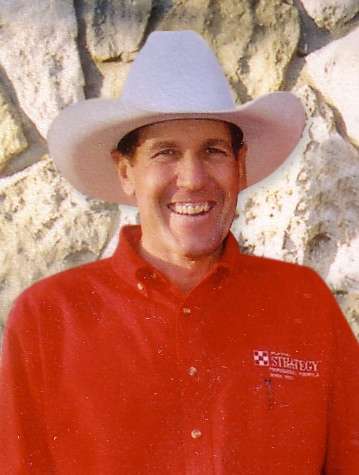
B. Rex Buchman, Christian horseman, will present the demonstration Sunday morning, March 19, at 11:30.
There is no Sunday admission charge for EquiFest at the Saline County Livestock Expo Center and Tony’s Pizza Events Center.
Rex and Teresa Buchman in concert with Matthew and Angie Jobe, Windsor, Missouri, are partners in the Flint Hills Ranching Adventures Company.
At Buchman’s Bar U Ranch near Burdick, they host trail rides, cattle drives, branding events, horsemanship camps, and a four-day cowboy camp.
“It is really important to have a team for these events,” Buchman insisted. “More than one set of eyes and ears are essential to keep people safe.”
Buchman has participated in horsemanship clinics throughout the Midwest and competed successfully in major working horse competitions. He has also hosted three clinics at his Burdick ranch with Buster McLaury, who is also a clinician at EquiFest this year.
Importance of horse and rider communications cannot be overemphasized, Buchman pointed out.
“Regardless of how well trained a horse is, there are situations which will make it shy,” he said. “That takes a rider by surprise and too often they become frightened and might even fall off.”
To prevent such occurrences, Buchman said, “Safety is of first concern for all trail riders. The horse is not generally at fault, but the rider must know how to control themselves and their mount in every situation.”
During his presentation, Buchman intends to have a few horses with riders to explain how to stay mounted during unexpected circumstances. “There will be different levels of experience among riders and horses with various degrees of training,” he said.
While riders often bring their own horses for trail rides, Buchman also provides horses for some inexperienced participants. “It is a continuous challenge to have horses that those with little horse background can enjoy riding safety,” he admitted.
Neighbor ranchers often let Buchman use their horses for the trail rides. “These horses are used to being ridden in the Flint Hills and will often work just fine for first time riders,” Buchman said. “They’re sometimes better than horses ridden by their owners because neither horse nor rider have been in the wide-open spaces.”
While horsemanship is required of the riders, they also need to understand the basics of horse training, the clinician said.
“Inexperienced riders should be mounted on a horse with more training and people experience,” Buchman said. “Putting a first-time rider on a horse that hasn’t had much riding is an accident looking to happen.”
Attempt is made to match horses with riders. “It doesn’t take long to tell if somebody has ridden before and knows basic horsemanship,” Buchman said.
“The riders must understand the importance of using the reins, the stirrups, and their legs,” Buchman explained. “Those are the basic driving tools for a horse and handling them correctly will help prevent a wreck. There’s a time to hang on to the horse and then know when to give the horse freedom to move.”
Of course, every horse will work different depending on the rider. “I have several people ride my horses, so they better understand people’s differences,” Buchman continued. “A ‘one-man horse’ who’s only been ridden by a single person just doesn’t understand somebody new the first time.”
Horses and riders need to “get along” with each other on the trail. “I have riders do ‘exercises’ spacing apart, passing each other, facing one another, and going side-by-side,” Buchman said.
Certain horses travel faster while others are timid and more cautious in moving forward. “It’s important to give the slower horse time to think and follow the leader,” Buchman explained. “Horses can change dispositions in a crowd as well as when they are left alone or behind.”
A “pen-wheel set-up” is used by Buchman to increase understanding among fast moving and slower horses. “I put the horses that want to trot or lope on the outside and let them go until tired. Horses in the center relax and become regenerated to move out,” Buchman described briefly.
Serving as an Extension agent in New Mexico early in his career, Buchman helped train youth riders. “I learned as much from them as they did from me,” he said. “I continue to put those experiences to use today.”
Additionally, the clinician gives ample credit to his dad Burton Buchman and his grandpa Keith Davis, both working ranch cowboys. “I remember how they handled horses and what they’d do with a certain horse in a specific situation,” he said.
Strong in faith intending to follow God’s principles in life, Buchman said, “God talks to us like a horse talks to us. We must listen to God and to the horse and respond to each other’s directions. We are disciples making disciples.”
A working rancher with a purebred Red Angus cow-calf operation, Buchman raises horses and trains horses.
“Every horse is different regardless of the breeding and must be handled that way,” he said. “The best training a horse can get is on a cattle ranch working in the wild open spaces of the Flint Hills.”
More information about Buchman can be found on Facebook, email [email protected], and phone 620-794-5332.
Besides Buchman, several other prominent Kansas horse trainers-owners are to be featured at EquiFest on free-admittance-Sunday, March 19.
Additional details concerning EquiFest can be found at www.equifestofks.com.
+++30+++

CUTLINES
B. Rex Buchman hosts Flint Hills Ranching Adventures at his Bar U Ranch near Burdick. He will present a “Safe, Sound, Sane On The Trail” program Sunday morning at the EquiFest of Kansas in Salina, March 16-19.

Flint Hills Ranching Adventures gives horseback riders an opportunity to ride trails and assist with cattle work at B. Rex Buchman’s Bar U Ranch near Burdick. Buchman will be a Sunday morning clinician at the Kansas EquiFest of Kansas in Salina, March 16-19.

Leading a group of trail riders through Flint Hills pastures at the Clover Cliff Ranch, B. Rex Buchman has experiences assisting all types of horses and riders. He’ll share some helpful philosophy and advice during a special Sunday morning, March 19, program at the EquiFest of Kansas in Salina.

A Gathering for Gardeners

0

A day filled with free gardening information for homeowners and gardeners has been
scheduled for Saturday, March 11th. The Hutchinson Horticulture Club organizes and sponsors this event as their educational project for the community. It is being held at Our Redeemer Lutheran Church at 407 East 12 th just west of the Cosmosphere. After not holding a Gathering for the past 2 years, the Club is pleased to host the event this year. This would have been the 34 th year for this annual event.

Doors open at 8:30 a.m. with the morning session beginning at 9:00 a.m. The first topic
is Growing Herbs & Vegetables in Containers by Pam Paulsen, Reno County Horticulture Agent for K-State Research and Extension. She will cover many edibles that will grow well in containers that you may not have considered. Next at 10:00 a.m., the topic New Annual Plants – 2021 to 2023 will be presented by Mike DeRee with the Ball Seed Company. He will show many plants that their researchers have developed during the past couple of years. The last presentation for the morning will begin at 11:00 a.m. Holly Dickman, Water Conservation Specialist for the City of Hays, will present Drought Tolerant Ornamentals. She will cover some of the cultural practices that can help make the landscape more drought resistant and will share a plant list covering a wide variety of plants.

The afternoon programs will resume at 1:00 p.m. with Dr. Charles Marr, Professor
Emeritus at K-State Research & Extension in Manhattan, presenting Tomato Varieties & challenges. He will discuss the various types of tomatoes and help explain some fruit
production problems. At 2:00 p.m. Dena Podrebarac, the Milkweed Coordinator for Monarch
Watch in Lawrence, will present Monarch Watch & How Gardeners Can Help. She will cover information on Monarch Watch’s 30 years of research education and conservation and tell us for Pollinators will be covered by Scott Vogt, the Executive Director of the Dyck Arboretum of the Plains in Hesston. Many pollinators prefer certain flower forms or specific plants. He will give us many suggestions to make our gardens more pollinator friendly.

There will be no charge to attend any of the “Gathering for Gardeners” programs
although registration at the door is requested. Door prize drawings will be held thoughout the day. This schedule is designed so individuals may attend any or all of the topics.

Insight: Building a Better Farm Bill

0
Image courtesy: Kansas Farm Bureau

Glenn Brunkow,
Pottawatomie County farmer and rancher

It’s farm bill time again. The discussions are beginning to happen and starting to heat up. Over the past couple of months, the talks have switched from continuing on with a farm bill with similar policies as the 2018 version or options that are dramatically different. What will happen is really anyone’s guess, and that is both a challenge and an opportunity for Kansas Farm Bureau and agriculture in general.
There are a couple  of lines of thinking when it comes to what the farm bill might look like, both are tied to crop insurance. Crop insurance is probably the number one concern when it comes to a new farm bill. As ag producers we know that we rely on crop insurance to help us through weather events like drought and fluctuations in prices and income. It is our way of evening out income in a business that sees wide swings.
One school of thought is to tie crop insurance premiums to what we are doing to help with climate change. Kansas Farm Bureau and American Farm Bureau policy would be very much opposed to this. We all know we are the best at conserving our natural resources, and no one care more about the environment than farmers and ranchers. The heartburn is in having practices mandated by those who may not understand agriculture and why we do what we do. Worse yet those mandates could come from others who might be opponents of modern agriculture.
Another idea is to tie crop insurance premiums to a producer’s income. Farm Bureau would also be opposed to such a means test. Again, risk management and protection should not be limited to one farmer over another. We also know that many of our large producers are multi-generational. Both of these options are only in the beginning level and that is why each of us can play such an important role as the debate over the next farm bill gets started.
It is important for each of us to reach out to our members of Congress to let them know how important the farm bill is for agriculture and specifically how important crop insurance is. Please, write, email or call your representative and senators and tell them how this policy affects you. There will also be opportunities for us to add input at meetings and town halls, be sure you attend any and all that you can.
Remember we are less than 2 percent of the population and as the other 98 percent gets farther removed from farms and ranches, they do not understand the importance of the farm bill. In this volatile economy and the long-term drought many of us have suffered through, it is just as critical as it ever has been to make our heard. If we do not advocate for ourselves, no one else will. Watch your emails and texts for alerts from Kansas Farm Bureau and, please, respond when asked. We are in the beginning stages of discussions and hopefully we can have a say in building a better farm bill.


Old MacDonald’s Farm Is Gone

0
By Brandi Buzzard Frobose on February 21, 2023
brandi buzzard old macdonald

Close your eyes and picture this: a farmhouse and big red barn sitting atop a grassy, green hill. In front of the barn, in the farmyard, chickens peck the ground searching for insects and remnants of corn, children play with dogs and a farmer repairs a thresher. In the sprawling pastures surrounding the picturesque scene, cows nonchalantly graze and calves frolic.

What a beautiful image, right?

That diorama — often associated with Old MacDonald’s farm — is heartwarming and nostalgic, but that kind of farming has long been retired in this age of modern agriculture.

Threshers were phased out long ago in favor of combines to make farming more efficient. There are still innumerable flocks of free-range chickens on farms, but meeting the demand for eggs and other poultry products requires the adoption of modern practices. Farmers today raise chickens in temperature-controlled barns, free from predators and outside pests. And while the cows from Old Mac’s farm are still grazing today, the methods and science behind cattle nutrition have evolved to improve the health of both livestock and land.


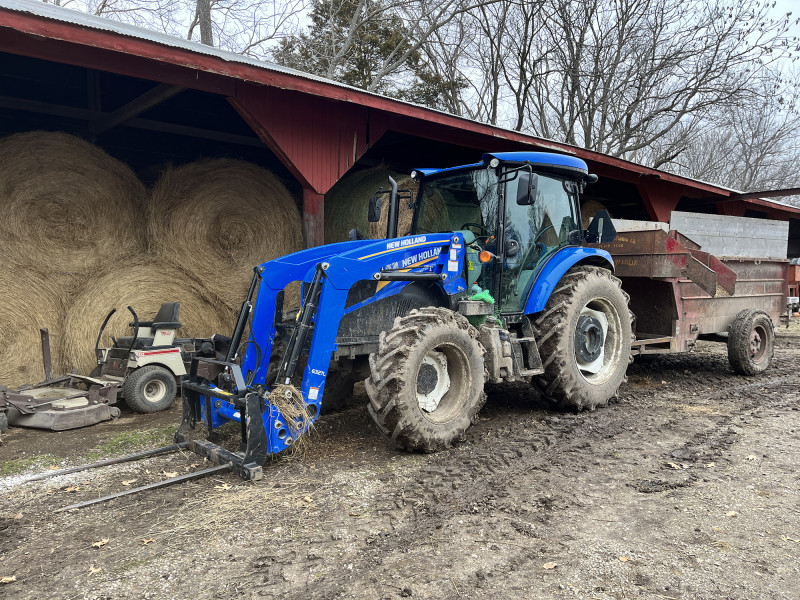
brandi buzzard tractor silage wagon


And about those green pastures…

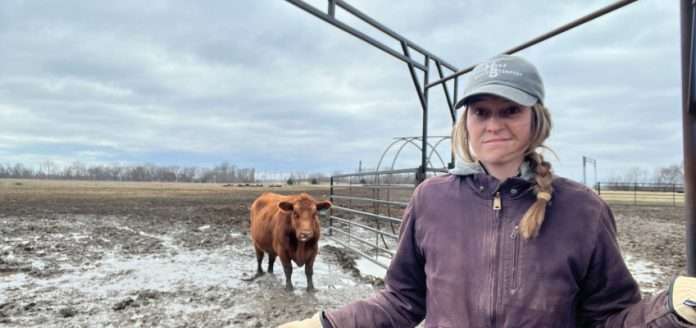
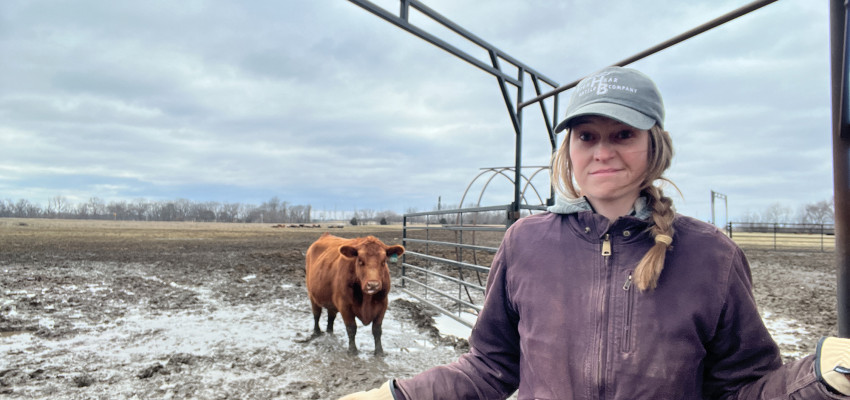
While it would be nice to have lush green grass all the time, the reality is from October through March, there is an awful lot of sloppy brown mud on our ranch. And while mud is hard on everything — people, animals and machinery — it’s a sign of always-needed moisture, so we don’t complain about mud. Muddy farms and ranches are not eye-appealing, and our ranch looks nothing like Old Mac’s farm during mud season, but it’s the truth. Farm and ranch life isn’t always pretty, but it’s always worthwhile.

Oh, and those little calves frolicking around?

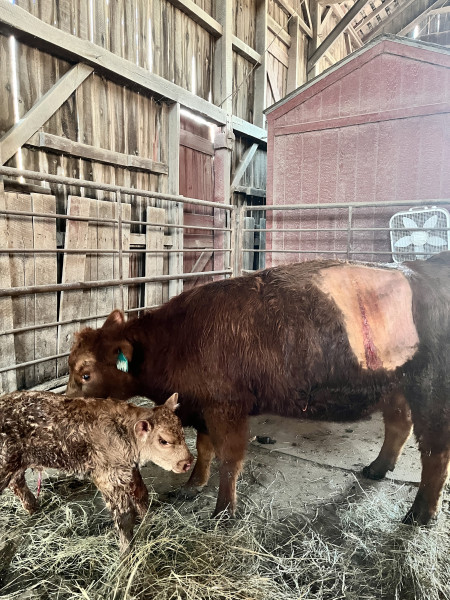
Yes, they are cute but calving season isn’t always sunshine and rainbows. Some cows have issues delivering their calves, just like humans, and occasionally a medical professional has to step in to aid with delivery to keep all parties safe. Recently, one of our heifers was struggling to deliver her first-ever calf. She pushed on her own for quite a while to no avail so our herdsman put her in the barn and tried to help by pulling the calf in unison with her pushes. However, the calf would not exit the premises. Finally, our herdsman and I decided she needed to go to the vet where she received an emergency cesarean section to save both her life and the calf’s. Now, almost two weeks later, both cow and calf are doing well and have returned to the herd after a brief stay in a barn stall with supervision. The cow will likely be able to have a calf again next year, and she has a gnarly battle scar to show for her efforts.


brandi buzzard with c section cow

Again, this isn’t the classic imagery of raising cattle that has been perpetuated for decades, but it is the reality. And, as a rancher, I want to make sure you know the truth about how we are caring for animals in all seasons, preserving the land through the mud and doing our best to raise safe, nutritious food in modern-era agriculture.