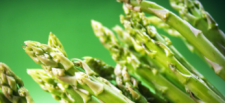
Though it is too early to plant asparagus, it is not too early to make plans and prepare the soil. This crop is a perennial and will survive for many years if given proper care. It prefers full sun and a well-drained soil and is usually placed on the edge of the garden area so that there is no need to till around the area to plant other crops.
Proper soil prep is especially important for perennial crops. Take a soil test to ensure proper levels of nutrients. See the accompanying article on how to take a soil test for the correct procedure.
Work the soil as early in the spring as possible but do not work wet soil as clods will form. Then add two inches of organic matter to the surface and the fertilizer and work again so the organic matter and fertilizer are blended into the soil.
Asparagus can be propagated from seed but is more often started from 1-year-old crowns. These crowns are planted deeply; 6 to 8 inches deep either in a hole for each crown or in a trench with shallower planting recommended for soils with more clay. Space plants 18 to 24 inches apart. Fill in the trench gradually over the growing season to encourage growth.
March 15 to April 15 is the best planting time. Adapted varieties include Jersey Giant, Jersey King, Jersey Knight, Jersey Supreme and Purple Passion. These are all male hybrids that will produce three times as much as our old Martha or Mary Washington varieties. Males have a number of advantages over females in that they live longer, emerge earlier in the spring, are more productive and eliminate potential volunteer plants that can reduce the productivity of a planting.
Weed control is very important. Competition with weeds results in slow establishment. A shallow hoeing should be all that is needed.
The following suggestions are for cool-season grasses such as Kentucky bluegrass or tall fescue. Zoysiagrass, bermudagrass, and buffalograss are warm-season grasses and require a different maintenance regime.
March
Spot treat broadleaf weeds if necessary. Treat on a day that is 50 degrees or warmer. Rain or irrigation within 24 hours of application will reduce effectiveness.
April
Apply crabgrass preventer when redbud trees are in full bloom, usually in April. The preventer needs to be watered in before it will start to work. One-quarter inch of water will be enough to water in any of the products commonly available. Remember that a good, thick lawn is the best weed prevention and may be all that is needed.
May
Fertilize with a slow-release fertilizer if you water your lawn or if you normally receive enough rainfall that your turf doesn’t go drought-dormant during the summer. If there are broadleaf weeds, spot treat with a spray or use a fertilizer that includes a weed killer. Rain or irrigation within 24 hours of application will reduce effectiveness of the weed killer, but the fertilizer needs to be watered in. If you are using a product that has both fertilizer and weed killer, wait 24 hours after application before watering in. If grubs have been a problem in the past, apply a product containing imidacloprid or chlorantraniliprole during May or anytime from May through June for imidacloprid. These products work to prevent grub damage. If rainfall does not occur within 24 hours, irrigate with 1/4″ of water.
June through Mid-July
Apply second round of crabgrass preventer by June 15 – unless you have used Dimension (dithiopyr) or Barricade (prodiamine) for the April application. These two products normally provide season-long control with a single application. Remember to water it in.
Late-July through August
If you see grub damage, apply a grub killer that contains Dylox. Imidacloprid and chlorantraniliprole are effective against young grubs but may not be effective on late instar grubs. The grub killer containing Dylox must be watered in within 24 hours or effectiveness drops.
September
Fertilize around Labor Day. This is the most important fertilization of the year. Water in the fertilizer if rainfall does not occur.
November
Fertilize. This fertilizer is taken up by the roots but is not used until the following spring. Water in fertilizer. Spray for broadleaf weeds even if they are small. Broadleaf weeds are much easier to control in the fall than in the spring. Try to spray on a day that is at least 50 degrees. Rain or irrigation within 24 hours reduces effectiveness. Use label rates for all products!
Together, Lovina and her family made 23 gallons of broth into pon hoss.
Lovina’s Amish Kitchen
Lovina Eitcher,
Old Order Amish
Cook, Wife &
Mother of Eight
Today is granddaughter Andrea’s (Tim and Elizabeth’s) first birthday. Friday evening, we will go to Tim and Elizabeth’s for supper in honor of her birthday. She has the biggest eyes and the sweetest smile.
Tim came tonight to pick up their lard press which we used last Saturday when we butchered pigs. He brought along grandson T.J., four, and granddaughter Allison, three, but both had fallen asleep on the way over. Grandma didn’t get to enjoy them, but I put a baggie of candy in their hands, so they would know they were here when they woke up.
Saturday, we butchered two pigs. One was for us, and one was for Dustin and Loretta.
It’s a long day, but always enjoyable to all be together working.
First, the pigs are dressed, and then the big black kettles are set up to start heating water to cook the meat off the bones. The hams, tenderloins, bacon, and ribs are cut out, and the rest is cut out for sausage. The fat from the pigs gets cut into one-inch cubes for rendering. The liver, brains, heart, tongue, and other parts are all saved from the pigs. Most of our children love the brains fried in butter after being rolled in flour. I have never tasted the brains or tongue. Mom would make pickled tongues, but I am different, I guess. My children say, “Mom, how do you know if you don’t like something if you never tasted it?” Anyways the brains aren’t that much in quantity and usually have to be portioned, so they all get a taste. Daughter Lovina said that she thinks the brains taste better than any meat she’s ever had. She most certainly doesn’t take after her namesake (me) on that subject. Haha!
The lard gets rendered in one kettle, and the bones are cooked in the other. Then, when the meat comes off the bones, it is brought inside, where the meat is picked off the bones. It is then put through the grinder. We would make liver pudding with most of this meat years ago. Since we don’t have many in the family that like liver pudding, we always put this meat in the pon hoss. It makes the pon hoss taste even better.
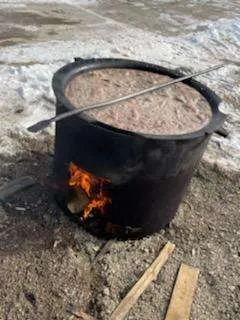
The broth from the bones is strained, measured, and put back in the kettle; then, the meat and seasonings are added. We usually put in two tablespoons of salt and one tablespoon of black pepper for each gallon of juice. Next, the flour is sifted in the broth, which should be boiling hard. Someone needs to be constantly stirring. The men usually take turns. We add around four cups of flour per gallon of broth. So this year, we made 23 gallons of broth into pon hoss, which would take around 92 cups of flour. I was a little short in flour, and the pon hoss was a little harder to fry, but we actually like it almost better this way. When the pon hoss no longer sticks to a metal dipper, then it’s ready to come off the fire. It is then poured into pans. I use 9 x 13 foil pans, and each pan holds around a gallon of pon hoss.
Once the pon hoss is cooled, it can be sliced and fried on each side until crisp. I like mine very crisp, but some in the family want it softer. It is kind of like frying bacon: Some like it crispier than others.
The sausage is ground, packaged, and put in the freezer. We canned a few quarts for Dustin and Loretta. I still had plenty canned.
The “fischlie” (a Swiss word), the backstrap, is a small tenderloin that is just under the spine at the rear end of the body cavity. For as long as I can remember, this was the meat fried on butchering day.
So along with that, on the menu we had mashed potatoes, gravy, corn, cheese, grape tomatoes, ice cream, and a variety of bars and applesauce.
After everything was done, all the big dishes, grinders, and slicers were cleaned.
Joe sliced all the hams, pork chops, and ribs, and those were bagged and put in the freezer. The shoulders are put in the freezer whole. Joe will cut those into pork steak with the meat saw. He likes them frozen to cut. The bacon is soaked in a brine that Dustin made. It will soak for a week and then be sliced too.
Another year of pork meat in the freezer. We still need to butcher beef yet this winter. Are we thankful enough to have plenty to eat and preserve? God is good! God’s blessings to all!
Together, Lovina and her family made 23 gallons of broth into pon hoss.
It’s not often I feel like it’s the perfect occasion to break out the grits, but there are exceptions to any rule. This past Saturday morning was that exception.
Our family was just coming out of a tough month or so, and while we are all safe and healthy, we were still feeling a bit of the strain.
So when it worked out for my mom to use airline points to fly in from Ohio for a week, we were all thrilled. Even as an adult having lived 850 miles away for over a decade now, for me everything just feels better knowing my mom is coming. It felt better for Benson, too, as he got to stay home with Grandma for the last few days of the unusual circumstances that had Brian and me leaving every morning. Don’t get me wrong, friends had been taking absolutely amazing care of him during the other days, but it was time for him to have a little more stability.
And a little more spoiling, apparently. It is amazing the shift parents go through when they turn into grandparents.
Although, to be fair, I am also putty in my two-year-old’s outstretched, pleading hands.
But all that to say, I wanted to make my mom’s stay as pleasant as possible, especially as she provided free childcare for us; so if she asked for something, I wanted for her to get it. Unfortunately, she doesn’t ask for a lot, but fortunately, I am clearly her daughter and many of our needs coincide and/or are intuitive. I tried to make sure there were plenty of hot teas offered, half-caf coffees brewed, and dark chocolates circulated; and then when time allowed, games and puzzles for us, and storybooks for Benson.
Oddly lacking from her week with us were any walks (thank you, Kansas wind) and much substantial cooking. I actually can’t think of another time we’ve been together and those things haven’t taken a much higher precedence, but like I said, this was an unusual time. Before Mom came, I had whipped out a bunch of meal components when I had a couple hours since I couldn’t know what our schedule had in store for us. Apparently I was a little too effective, and we found ourselves eating leftovers almost the whole time she was with us. We did make tacos and cookies — you know, the essentials — although not a whole lot else.
But one thing she did request and I made certain to comply with was to have scrambled eggs for breakfast. She likes how I take our very fresh, very free-range eggs and cook them low and slow, with just the right amount of cheese and salt; simple, tender, flavorful. Brian and I usually do pancakes alongside, but suddenly I remembered the bag of stone-ground white corn grits I had gotten recently.
It was free with a promotional coupon, or else I wouldn’t have gotten them…ringing endorsement, I know. I love cornmeal things, but yellow, not white; and Brian doesn’t really like anything in either color.
However. I know Mom really has a hankering for grits every now and then; we did live in Southern Alabama for the first part of my life. I knew there could be no better time to break out the white grits than with those creamy eggs on her last morning with us.
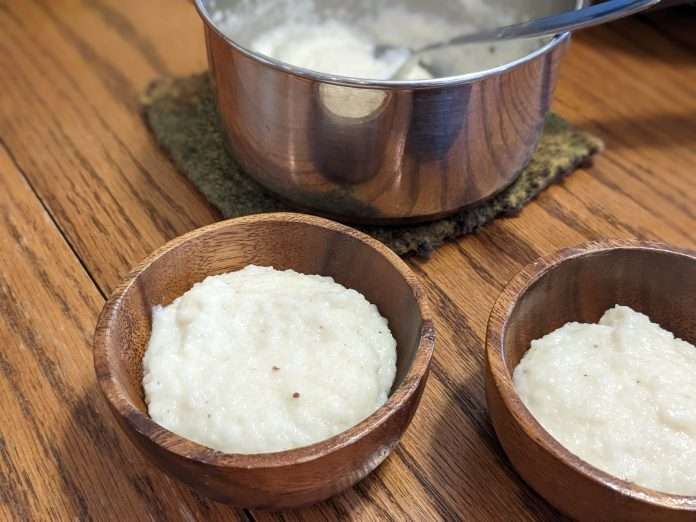
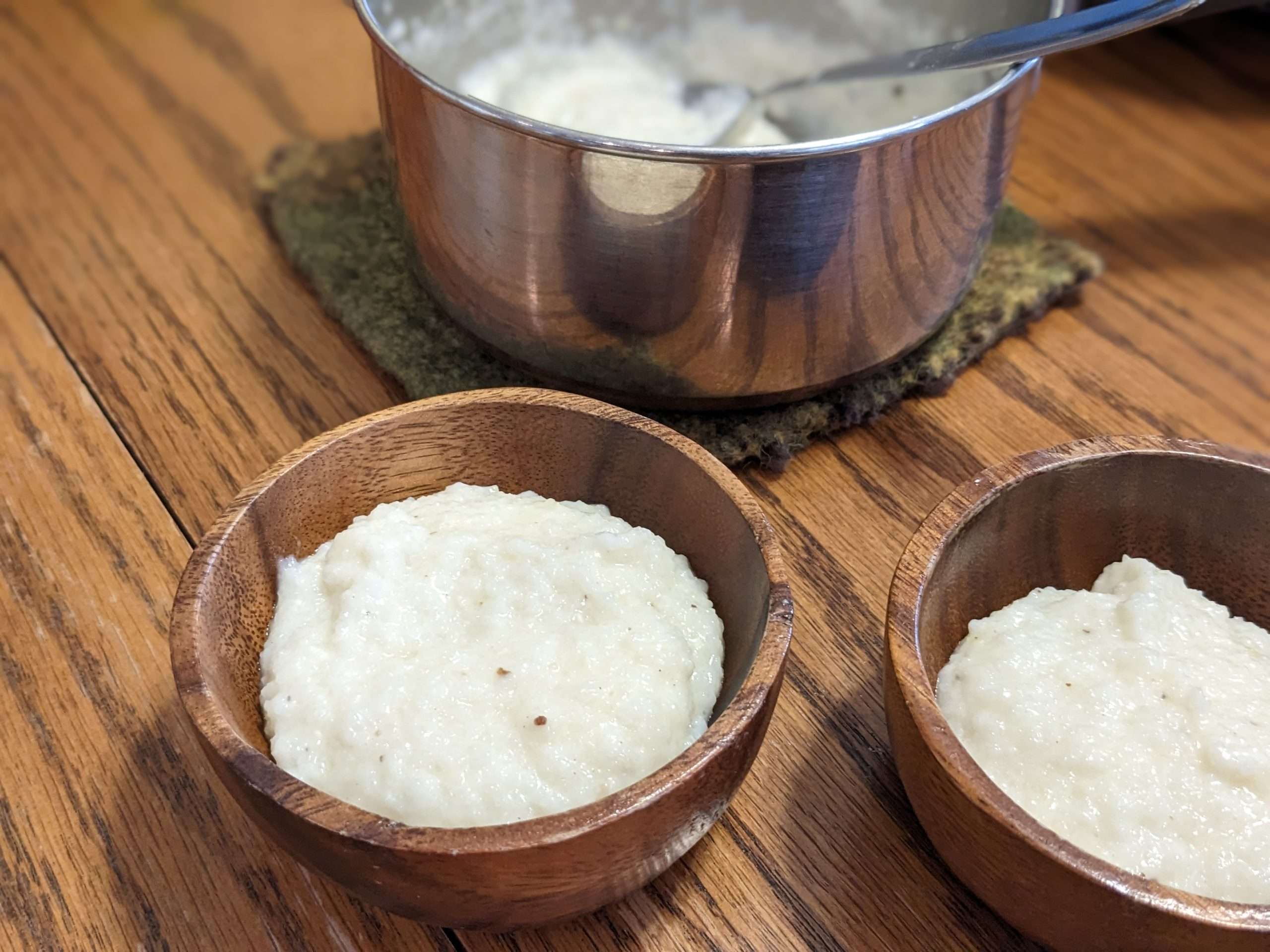
And they were perfect. Benson must subconsciously be influenced by his Southern heritage, for he shoveled in giant spoonsful of cheesy grits. Mom seemed to appreciate them, and Brian and I both ate bowls of grits as well, and even enjoyed them.
Who knows, we might even cook more of the bag of grits before the next time she visits.
Amanda can be reached by email at [email protected]
“The breeding cattle improvement industry has lost one of its best very own.”
Bill Jackson passed away in early January at the age of 80 in Pratt.
Cattle breeders in both dairy and beef businesses throughout the world have been directly and indirectly influenced by Bill Jackson.
For nearly four decades, Bill served as fieldman and artificial insemination instructor for the Kansas Artificial Breeding Unit (KABSU) at Manhattan.
A cattle geneticist at heart, Bill entered the profession when artificial insemination was a relatively new route to improving cattle.
Likely most dairymen and beef cattle producers who do artificial insemination knew or were trained by Bill Jackson. He traveled the Midwest both training and doing artificial insemination work and bull semen collection for major operations.
Cattle breeders were met and advised personally when determining which sires to mate to their cows. Most conscientious selection was made of bulls determining suitable quality for collecting semen to be distributed worldwide.
Born in 1942, Bill grew up on a Pagosa Springs, Colorado, ranch developing love for agriculture, wildlife, and athletics. His job was taking care of the cow herd, especially during calving season.
Bill still found time to hunt, fish and became an outstanding athlete on state championship football, basketball and baseball teams.
Attending Colorado State University studying agriculture education, Bill met two people who changed his life forever.
Eileen Doherty became his wife of 57 years and mother of their three sons. College academic advisor Tom Sutherland guided Bill into the field of cattle genetics which became his lifetime career.
Upon college graduation, Bill and Eileen moved to Manhattan, Kansas, where Bill started working for KABSU. Sons Bill, Joe, and Mike were born to the couple who soon started building their own cattle operations near Olsburg.
Despite unexpected loss of son Joe, the family became very active in the community. Bill coached athletic teams of which their sons were members and was on the school board initiating an agriculture curriculum.
He was a director the Pottawatomie County Rural Water District Number 2 which Eileen founded and managed. Leaders of agriculture youth organizations, strong in faith Bill and Eileen served diverse capacities in their Seven Dolors Catholic Church.
First acquaintance with Bill was traveling throughout the Midwest with him to write stories about select breeders utilizing KABSU services.
Mutual interests soon lead to close friendship and all of the Jackson family attending annual ranch production sales. They bought a couple of Quarter Horse colts and regularly assisted in all facets of the horse auction.
After retirement from KABSU and dispersing personal ranching operations, Bill spent the last ten years living near Preston, Kansas. He assisted with care of Eileen whose health had declined.
Bill enjoyed helping Mike and wife Sarah with their agriculture operations. Pride apparent, Bill was a regular attendee at three granddaughters many sports, agriculture, and community activities.
Eileen passed away September 20, 2021, with Bill’s passing January 8, 2023. They are survived by their sons Bill and Mike, and their families including five grandchildren.
Services were at Seven Dolors Catholic Church with interment of Bill beside Eileen at the Mariadahl Cemetery, Olsburg.
+++30+++
CUTLINES
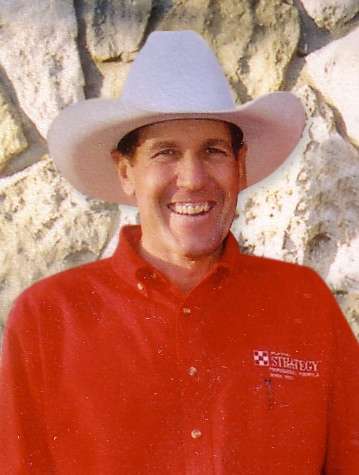
Bill Jackson served many years as fieldman and artificial insemination instructor for the Kansas Artificial Breeding Unit (KABSU) at Manhattan.
Bill and Eileen Jackson were active leaders in many community activities including the rural water district, athletics, youth groups, school, and church.