Sunday, March 15, 2026
Home Blog Page 806

KU News: NAVO Trio plans ‘Hidden Gems by Women Composers’ concert series

0

From the Office of Public Affairs | http://www.news.ku.edu

Headlines

Editors: Note upcoming performances in Lindsborg, Overland Park and Topeka.

Contact: Rick Hellman, KU News Service, 785-864-8852, [email protected], @RickHellman
New trio of musicians dedicated to uncovering hidden gems
LAWRENCE – Based in the Kansas City area and taking its name from the Indo-Persian word for “new” and the Uzbek word for “music” or “melody,” the NAVO arts organization is focused on the new and the international. Now the new NAVO Trio, featuring two University of Kansas School of Music faculty members and one former member, is looking both forward and backward in time to bring overlooked music by women and nonbinary composers to the light of the concert hall and recordings.
This will be demonstrated by the program of the trio’s first series of concerts at regional venues, starting Feb. 18 in Overland Park.
The NAVO Trio is composed of oboist Margaret Marco, professor of music; pianist Ellen Sommer, associate professor of the practice at KU; and violinist and former KU faculty member Véronique Mathieu, who now holds the David L. Kaplan Chair in Music at the University of Saskatchewan.
Marco is also associate dean for diversity, equity, inclusion & belonging at KU’s School of Music, and she said the mission of NAVO Trio aligns closely with the goals of DEIB.
“We are researching works by underrepresented composers, and we are bringing those to the public for worldwide dissemination,” Marco said. “It is our mission to envision new works and to find works from the past by women and nonbinary composers.”
The performers describe NAVO Trio as a “subset” of the 8-year-old nonprofit NAVO. The women had played together previously in various NAVO and School of Music performances. Their first public performance was last year in Kansas City, Missouri.
“The trio naturally formed itself,” Mathieu said.
“There’s no doubt that when we get together for rehearsal, we click, and the music we make is just beautiful,” Sommer said.
Marco agreed and said she was looking forward to yet more in the upcoming series of performances.
“The performances help meld the group,” she said. “In rehearsal, we woodshed and talk about our interpretation, about tempi — all of those things. But for me, it isn’t until the performances that we really start to gel and get into each other’s spirits a little bit.”
In addition to baroque period and other classical works, NAVO Trio’s “Hidden Gems by Women Composers” concerts will feature four new or newly arranged compositions, some of which address the existential threat of climate change. The trio received a grant from the Barlow Endowment for Music Composition, based at Brigham Young University in Provo, to commission a piece by Chinese Canadian composer Alice Ho called “A Wind of Dust.”
“Our focus on this piece was to think about what was happening to our climate, and that’s where the title came from,” Marco said. “It’s a fact that our climate is heating up. And especially in Kansas, we can really feel the effects of that. I think the title is a bit ominous because, as we know, in western Kansas, our reservoirs are starting to dry up.
“And then we have another commission from Anne Guzzo, who is a composer from the University of Wyoming. It’s an amazing piece called ‘Shimmering Sentinels,’ and it’s also nature related. Anne wanted to write a piece about the beautiful aspen tree, which, unbeknownst to many people, has this incredible structure underneath the ground, which creates a huge grove of cloned trees.”
Another KU School of Music faculty member, Ingrid Stölzel, is the NAVO Arts organization’s composer in residence, and she is working on a new piece for the trio, Marco said.
The musicians hope to record the new works for an album sometime this summer. Meanwhile, they are anxious to perform.
“Having a smaller ensemble creates more opportunities in terms of outreach performances, traveling and going on the road,” Mathieu said. “Performing as a trio allows us to go to schools or conferences and to play outside of the Lawrence-Overland Park-Kansas City radius, so it’s a more portable ensemble in some ways. We can reach out to different audiences.”
NAVO Trio concert series
1. 7:30 p.m. Feb. 18, Atonement Lutheran Church ELCA, 9948 Metcalf Ave., Overland Park. Admission is free, but RSVP here to save a seat.
2. 3 p.m. Feb. 19, Grace Episcopal Cathedral, 701 SW 8th Ave., Topeka, in the Great Spaces Concert Series. For tickets, visit the Cathedral Spaces website.
3. Noon Feb. 20, Polsky Theatre at Johnson County Community College, 12345 College Blvd., Overland Park, as part of the Ruel Joyce Recital Series. Free and open to the public.
4. 2 p.m. Feb. 25, Birger Sandzen Memorial Gallery, 401 N. First St., Lindsborg. Free and open to the public.
-30-

————————————————————————

KU News Service
1450 Jayhawk Blvd.
Lawrence KS 66045
Phone: 785-864-3256
Fax: 785-864-3339
[email protected]
http://www.news.ku.edu

Erinn Barcomb-Peterson, director of news and media relations, [email protected]

Today’s News is a free service from the Office of Public Affairs

KU News: Four KU students nominated for Truman scholarships

0

From the Office of Public Affairs | http://www.news.ku.edu

Headlines

Center for East Asian Studies resumes public health series programming
LAWRENCE — The Center for East Asian Studies (CEAS) will continue its 2022-23 public health series with two Global Asia Speaker events and a two-day symposium in the coming months. The first speaker event, in “Dying with the Buddha: The Twenty-four Buddhist Talismans in Chosŏn Korea,” will take place at 7 p.m. Feb. 9. The interdisciplinary symposium April 7-8 will welcome Aileen Smith, an activist and photographer who will screen “Minamata.” The 2020 feature film is a biographical drama about Smith and her partner, Wichita photojournalist W. Eugene Smith, as they worked to expose the ravages of industrial mercury poisoning in the Japanese village of Minamata.

KU Libraries will welcome dean candidates to campus
LAWRENCE – Four candidates will give public presentations in a bid to be the next dean of University of Kansas Libraries. The name of each candidate will be announced approximately two business days before their respective campus visit, with visits scheduled Feb. 13, 16, 21 and 23. All public presentations will take place in Watson Library in the Watson 3 West Event Space, and they will be livestreamed.

Four KU students nominated for Truman scholarships
LAWRENCE — Four outstanding students have been selected as the University of Kansas nominees for Harry S. Truman Scholarships. The prestigious national awards, which provide up to $30,000 for graduate study, are given to college juniors for leadership in public service. They are highly competitive, with only about 60 Truman Scholars named nationwide each year. The four nominees are students from Eudora, Lawrence and Olathe.

Full stories below.

————————————————————————

Contact: LaGretia Copp, Center for East Asian Studies, 785-864-0307, [email protected], @KUEastAsia
Center for East Asian Studies resumes public health series programming
LAWRENCE — The Center for East Asian Studies (CEAS) will soon launch the second phase of its 2022-23 public health series. Last fall, the center presented a film series addressing diverse public health-related issues. CEAS will continue its series with two Global Asia Speaker events and a two-day symposium in spring 2023.
The first event is a virtual talk by Sujung Kim, associate professor of religious studies at DePauw University. She will discuss the religious, historical and iconographic dimensions of healing talismans and talismanic culture in East Asia in “Dying with the Buddha: The Twenty-four Buddhist Talismans in Chosŏn Korea” at 7 p.m. Feb. 9.

The second Global Asia speaker, Rae Erin Dachille, assistant professor of religious studies and East Asian studies at University of Arizona, will lecture on Tibetan Buddhism with a focus on body mandala, ritual, representation and imagination in “Applying the Antidote: A Tantric Perspective on Body, Representation and Imagination” at 3:30 p.m. Feb. 15 at the Sabatini Multicultural Resource Center.
The CEAS Public Health Symposium on April 7-8 at the Sabatini center will bring together graduate students from various disciplines with a wide range of theoretical and methodological approaches to highlight whole-body mental health and healthy behaviors; health access and communication in contexts of race, class, gender, sexuality, caste, ethnicity and other intersectionalities, providing new connections with culturally diverse and hard-to-reach populations; and quick and informed responses to health risks and public health emergencies or pandemics. The symposium will start with a keynote address followed by three panels covering the topics mentioned. Each panel features guest scholars and KU graduate students from varied disciplines to foster further active interactions, knowledge exchanges and academic collaboration. Graduate students will also be able to register for a professionalization workshop.
On the second day of the symposium, the center will welcome Aileen Smith, activist, photographer and co-author of “Minamata: The Story of the Poisoning of a City and the People Who Choose to Carry the Burden of Courage” (Holt, 1975). She will screen the feature film “Minamata” (2020) at the Lawrence Public Library at 2 p.m. The movie is a biographical drama about Aileen and her partner, Wichita photojournalist W. Eugene Smith, as they worked to expose the ravages of industrial mercury poisoning in the Japanese village of Minamata. Smith and Andrew Levitas, the film’s director, will lead a discussion after the showing. Smith also plans to visit local high schools for dialogues on public health, environmental issues and social movements.
CEAS is a Title VI-funded National Resource Center that promotes East Asian languages and cultures to a variety of audiences in the Midwest through K-12 and community college educator workshops and resources, public events, and area partnerships. The center was founded in 1959.

-30-
————————————————————————
The official university Twitter account has changed to @UnivOfKansas.
Refollow @KUNews for KU News Service stories, discoveries and experts.


————————————————————————

Contact: Evan Riggs, Office of the Provost, 785-864-1085, [email protected], @KUProvost
KU Libraries will welcome dean candidates to campus
LAWRENCE – Four candidates will give public presentations in a bid to be the next dean of University of Kansas Libraries. The university is seeking a leader who will guide KU Libraries beyond its traditional responsibilities to meet the emerging needs of the university and the community it serves.
Dean candidates will describe their vision and aspiration for the role of libraries in the next 10 years at a flagship state university.
“Each finalist brings expertise in the field and would benefit KU Libraries, the university and the community,” said Arvin Agah, dean of the KU School of Engineering and co-chair of the search committee. Mary Walsh, chief information officer for KU Lawrence/Edwards, also serves as co-chair of the search committee.
Members of the KU community are encouraged to attend each candidate’s public presentation and provide feedback to the search committee. The name of each candidate will be announced approximately two business days before their respective campus visit.
All public presentations will be in Watson Library in the Watson 3 West Event Space, and they will be livestreamed. Public presentations for each of the candidates are scheduled for the following dates:
1. Candidate 1: 2:30-3:30 p.m. Feb. 13
2. Candidate 2: 3:30-4:30 p.m. Feb. 16
3. Candidate 3: 3-4 p.m. Feb. 21
4. Candidate 4: 3-4 p.m. Feb. 23
“The search committee reviewed an excellent field of candidates,” Walsh said. “We are thrilled by the finalists who will visit campus and share with the KU community their vision for the future of libraries.”
KU Libraries sets out to transform lives by inspiring the discovery and creation of knowledge for the university and global community. Furthermore, KU Libraries is a place of welcome, amplifying the diverse voices of the KU community. It also serves as a leader in the dissemination of knowledge, advancing innovative and substantial ways to collect, create and steward resources. KU Libraries partners in connecting and engaging communities, fostering student success and transformative research.
More information about the department and the search committee can be found online.

-30-
————————————————————————
Subscribe to KU Today, the campus newsletter,
for additional news about the University of Kansas.

http://www.news.ku.edu
————————————————————————

Contact: Erin Wolfram, Academic Success, 785-864-2308, [email protected]
Four KU students nominated for Truman scholarships
LAWRENCE — Four outstanding students have been selected as the University of Kansas nominees for Harry S. Truman Scholarships.
The prestigious national awards, which provide up to $30,000 for graduate study, are given to college juniors for leadership in public service. They are highly competitive, with only about 60 Truman Scholars named nationwide each year.
This year’s KU nominees:
1. Sivani Badrivenkata, Lawrence, majoring in pharmaceutical sciences
2. Kat Balke, Eudora, majoring in English and Italian
3. Cherin Russell, Lawrence, majoring in English
4. Caroline Steele, Olathe, majoring in political science and Spanish and minoring in social justice
Criteria for the nominations include an extensive record of campus and community service, commitment to a career in government or the nonprofit and advocacy sectors, communication skills and a high probability of becoming a “change agent,” and a strong academic record with likely acceptance to the graduate school of the candidate’s choice.
The campus nomination process is coordinated by the Office of Fellowships, a unit of Academic Success. Students interested in applying for the Truman Scholarship in future years are encouraged to contact the office, which can nominate a limited number of students each year.
Scholars receive priority admission and supplemental financial aid at some premier graduate institutions, leadership training, career and graduate school counseling, and special internship opportunities within the federal government.
Since 1981, 20 KU students have become Truman Scholars. Samuel Steuart was the most recent KU student to receive the honor in 2019.
Congress established the Truman Scholarship Foundation in 1975 as the federal memorial to President Harry S. Truman. A national selection committee reviews applications from more than 800 nominees for the Truman Foundation. Approximately 200 students will be named finalists in late February and invited for regional interviews in March and early April. The scholarship recipients will be announced in late April.
More information about KU’s nominees is below:
Sivani Badrivenkata, from Lawrence, is the daughter of Dayakar Badri and Haarisa Valasa and a graduate of Free State High School. Badrivenkata is majoring in pharmaceutical sciences and plans to pursue a doctorate in pharmaceutical chemistry to teach and conduct translational research in academia with a focus on integrating biologics in formulations to address global health needs. She currently conducts research in Michael Hageman’s pharmaceutical chemistry lab to assess the viability/efficacy of lactoferrin to treat vaginal E. coli infections in pregnant patients to prevent neonatal sepsis. Badrivenkata is a recipient of a spring 2023 Undergraduate Research Award, presented at the 2022 Kansas Pharmacists Association’s annual meeting and tradeshow and participated in the 2022 summer Undergraduate Research Program within the KU Department of Pharmaceutical Chemistry. She currently works as a speech and debate assistant coach at Free State High School, and in summer 2021, she was a research intern for a prostate clinical research project through KU Medical Center. Badrivenkata is a KU Global Scholar and a member of the University Honors Program, for which she serves as a program ambassador and previously served as an honors seminar assistant. Additionally, she hosted an art exhibition at the Kansas Union Gallery in fall 2021 and currently has five paintings displayed in KU campus libraries through spring 2023.

Kat Balke, from Eudora, is the daughter of Jennifer and Bruce Balke and a graduate of Blue Valley High School. Balke is double majoring in English and Italian and aspires to earn a doctorate in English with a concentration in British medieval literature; become an English professor; and run a campus women’s center to support, advocate for and provide a safe space for abuse survivors. Balke transferred to KU from DePauw University. In her role as the vice president of equity and justice within student government, she successfully drafted legislation naming the new first-year residence hall Vernon E. Jordan Jr. Hall after the institution’s first African American graduate. Currently at KU, in collaboration with Jonathan Lamb, associate professor of English, Balke is researching ecofeminism in William Shakespeare’s “As You Like It.” Additional research interests include gender, sexuality and consent in the Middle Ages. She also serves as a peer consultant and workshop facilitator for the KU Writing Center and is a student representative on the KU Core Curriculum Committee. Balke is the recipient of numerous awards, including the Helen Rhoda Hoopes Award for best English undergraduate essay written by a woman and was selected as a 2022 Distinguished Italian Student.

Cherin Russell, from Lawrence, is the daughter of Elizabeth Coleman and a graduate of Lawrence High School. Russell is a McNair Scholar majoring in English and plans to earn a master’s degree in interdisciplinary studies and become a grant writer at a consultancy or environmental nonprofit. She recently joined the volunteer team at the Ballard Center to assist with grant writing and environmental concerns. Russell also serves as a mentor within KU’s Academic Retention and Engagement Center and a tutor for the Academic Learning Center. Russell was awarded second place for the Helen Rhoda Hoopes Award for best English undergraduate essay written by a woman and earned the Certificate of Excellence in French Studies three semesters in a row, the TRIO 1st Year Achievement Award and the Paul B. Lawson Memorial Scholarship given to outstanding juniors. She has been a volunteer and advocate in the Lawrence community for more than 10 years and currently serves as an advocate at KU for nontraditional students and students with invisible disabilities.

Caroline Steele, from Olathe, is the daughter of Tim and Julie Steele and a graduate of Olathe Northwest High School. Steele is double majoring in political science and Spanish and minoring in social justice. She plans to pursue joint juris doctor and master’s degrees in public policy or public affairs, become an immigration attorney and develop policy for immigration reform. She has held several positions within Kappa Alpha Theta sorority, including vice president of Panhellenic executive board, founder and committee chair of the Wellness Committee, chair of the Spirit Committee and member of the Diversity, Equity & Inclusion Committee. She is also a member of the Dole Institute Student Advisory Board, a founding executive board member of the Women in Leadership Conference within KU Student Senate and a founding member of the Accessibility Committee and member of the Diversity, Equity, & Inclusion Committee of the KU Panhellenic Association. Steele currently serves as an Eye of an Immigrant ally, volunteers with the Johnson County Christmas Bureau and is a voter registration volunteer. In 2021, she served as the legal and city manager’s intern with the City of Olathe, and in 2022, she was a legislative intern in the office of Kansas Rep. Steven Johnson. Steele is a member of the University Honors Program and is the recipient of numerous awards, including the KU Chancellor’s Scholarship for academic excellence, the Great Plains Association Paul Max Service Scholarship for outstanding and innovative dedication to service and the Olathe Northwest Faculty Award, given to one outstanding senior in the graduating class.

-30-

————————————————————————

KU News Service
1450 Jayhawk Blvd.
Lawrence KS 66045
Phone: 785-864-3256
Fax: 785-864-3339
[email protected]
http://www.news.ku.edu

Erinn Barcomb-Peterson, director of news and media relations, [email protected]

Today’s News is a free service from the Office of Public Affairs
Lovina Explains the Process for Butchering Pigs

0
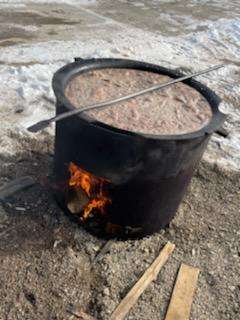
Together, Lovina and her family made 23 gallons of broth into pon hoss.

Today is granddaughter Andrea’s (Tim and Elizabeth’s) first birthday. Friday evening, we will go to Tim and Elizabeth’s for supper in honor of her birthday. She has the biggest eyes and the sweetest smile. 

Tim came tonight to pick up their lard press which we used last Saturday when we butchered pigs. He brought along grandson T.J., four, and granddaughter Allison, three, but both had fallen asleep on the way over. Grandma didn’t get to enjoy them, but I put a baggie of candy in their hands, so they would know they were here when they woke up. 

Saturday, we butchered two pigs. One was for us, and one was for Dustin and Loretta. 

It’s a long day, but always enjoyable to all be together working.

First, the pigs are dressed, and then the big black kettles are set up to start heating water to cook the meat off the bones. The hams, tenderloins, bacon, and ribs are cut out, and the rest is cut out for sausage. The fat from the pigs gets cut into one-inch cubes for rendering. The liver, brains, heart, tongue, and other parts are all saved from the pigs. Most of our children love the brains fried in butter after being rolled in flour. I have never tasted the brains or tongue. Mom would make pickled tongues, but I am different, I guess. My children say, “Mom, how do you know if you don’t like something if you never tasted it?” Anyways the brains aren’t that much in quantity and usually have to be portioned, so they all get a taste. Daughter Lovina said that she thinks the brains taste better than any meat she’s ever had. She most certainly doesn’t take after her namesake (me) on that subject. Haha!

The lard gets rendered in one kettle, and the bones are cooked in the other. Then, when the meat comes off the bones, it is brought inside, where the meat is picked off the bones. It is then put through the grinder. We would make liver pudding with most of this meat years ago. Since we don’t have many in the family that like liver pudding, we always put this meat in the pon hoss. It makes the pon hoss taste even better. 

The broth from the bones is strained, measured, and put back in the kettle; then, the meat and seasonings are added. We usually put in two tablespoons of salt and one tablespoon of black pepper for each gallon of juice. Next, the flour is sifted in the broth, which should be boiling hard. Someone needs to be constantly stirring. The men usually take turns. We add around four cups of flour per gallon of broth. So this year, we made 23 gallons of broth into pon hoss, which would take around 92 cups of flour. I was a little short in flour, and the pon hoss was a little harder to fry, but we actually like it almost better this way. When the pon hoss no longer sticks to a metal dipper, then it’s ready to come off the fire. It is then poured into pans. I use 9 x 13 foil pans, and each pan holds around a gallon of pon hoss. 

Once the pon hoss is cooled, it can be sliced and fried on each side until crisp. I like mine very crisp, but some in the family want it softer. It is kind of like frying bacon: Some like it crispier than others.

The sausage is ground, packaged, and put in the freezer. We canned a few quarts for Dustin and Loretta. I still had plenty canned. 

The “fischlie” (a Swiss word), the backstrap, is a small tenderloin that is just under the spine at the rear end of the body cavity. For as long as I can remember, this was the meat fried on butchering day. 

So along with that, on the menu we had mashed potatoes, gravy, corn, cheese, grape tomatoes, ice cream, and a variety of bars and applesauce. 

After everything was done, all the big dishes, grinders, and slicers were cleaned.

Joe sliced all the hams, pork chops, and ribs, and those were bagged and put in the freezer. The shoulders are put in the freezer whole. Joe will cut those into pork steak with the meat saw. He likes them frozen to cut. The bacon is soaked in a brine that Dustin made. It will soak for a week and then be sliced too. 

Another year of pork meat in the freezer. We still need to butcher beef yet this winter. Are we thankful enough to have plenty to eat and preserve? God is good! God’s blessings to all!

Breakfast Quiche

1 pound precooked ham, sausage, or bacon or a combination of meats

8 ounces grated cheese

8 eggs

3/4 cup flour

4 tablespoons butter

3 cups milk

1 teaspoon salt

In a greased 9 x 13-inch pan, make a layer of meat and top with cheese. Combine the rest of the ingredients in a blender and pour over the meat and cheese. Bake at 350 degrees for 35-45 minutes or till set in the middle. 

Ice, muck and a $480 million price tag: the Keystone oil spill cleanup carries on in Kansas

0
Trucks are hauling oil-drenched soil to a landfill near Omaha. Crews are building a five-acre pond to continue treating contaminated water.

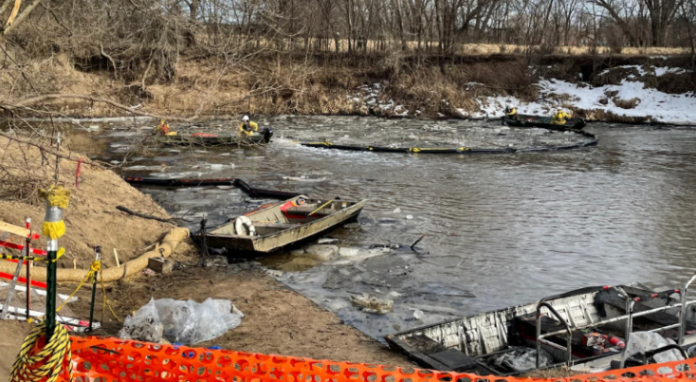
In the two months since the Keystone pipeline erupted in Washington County, Mill Creek has gone from being coated in floating oil nearly a foot deep, to a layer less than one inch.

About four miles of the creek remain shut off from the normal flow of water as part of the ongoing, round-the-clock cleanup.

Workers have pulled nearly 2 million gallons of oily water out of Mill Creek, carrying on in freezing temperatures by breaking and melting ice.

In mid-December, the Environmental Protection Agency says, about 1.5 miles of the stream were coated bank-to-bank in floating oil that pooled more than 10 inches deep in some places.

By Jan. 25, less than one-tenth of a mile remained coated bank-to-bank in floating oil that had dropped to less than one inch deep.

Now, no areas of the creek remain coated bank-to-bank, the federal agency says, though workers are still recovering oil.

Since workers bypassed about four miles of Mill Creek to help with the cleanup and stop chemicals and bitumen from washing downstream, part of the isolated stream now has little water left and workers are pulling ice and sediment from the creek bed and banks, the EPA says.

The agency says oil company TC Energy and state environmental officials have taken samples from drinking water wells near the spill site, but tests haven’t turned up any chemicals from the spill.

Springtime brings heavier rains to the area, and landowners worry about the risk that hard rains could cause the creek to overflow its banks.

The EPA says workers built a spillway in case of flooding. The National Weather Service provides daily input. And two weeks ago, TC Energy began work to increase the pumping capacity for diverting water.

Contaminated water

The nearly 2 million gallons of fluid pulled out of Mill Creek so far go into huge tanks or treatment ponds to separate the water and oil before transporting the oil to a refinery.

Workers inject air into the contaminated water to help vaporize some of the remaining chemicals. They also treat the water with granular activated carbon, the Kansas Department of Health and Environment says.

Next, samples of the treated water will go to a lab for analysis to determine whether workers can pour the water back into the creek downstream from the cleanup site.

“If not, the water will be re-treated until all contaminants are removed,” said KDHE, which oversees water treatment and discharge.

The EPA says construction is ongoing for a large water treatment system, including 5 acres of pond or ponds for the contaminated surface water. It says the ponds will be more efficient than the tanks now that most of the oil has been pulled from Mill Creek.

TC Energy says crews have recovered about 90% of the spilled oil. It has deleted from its website a counter that showed updates on how many barrels have been recovered.

Soil to Nebraska

A Nebraska landfill agreed to take the contaminated soil from the Keystone oil spill.

Trucks began hauling away the topsoil on Jan. 17 from the site in Washington County where the Keystone ruptured on Dec. 7 and sprayed extra sticky tar sands oil called diluted bitumen, or dilbit, onto several acres of prairie, cropland and Mill Creek.

“Laboratory analysis of the oil and waste defined it as not being hazardous,” KDHE said in an email.

A Shawnee County landfill north of Topeka, Rolling Meadows, had previously been named as a potential destination for waste from the oil spill.

“Landfills have discretion on whether or not they wish to receive waste,” KDHE said. “Pheasant Point Landfill (near Omaha) accepted the waste.”

In addition to the contaminated soil, Pheasant Point will take other waste from the site, such as oily protective clothing and absorbent pads, and floating booms used to block the oil slick on the surface of Mill Creek.

Cleanup costs and corporate donations

Separately, the Canadian company behind the oil spill will donate $60,000 to Washington County Hospital as part of a campaign it launched after the incident to match donations from the public.

TC Energy has also said it would give $7,500 to equip local emergency responders with better mobile and radio equipment.

TC Energy reported an annual revenue of nearly $10 billion and a net income of more than $1.5 billion in its most recent yearly report.

Last week the company estimated that cleaning up and investigating the Keystone spill will cost $480 million, and said it has “appropriate insurance coverage.”

The company is still investigating why the pipeline erupted, but has so far said that “bending stress on the pipe and a weld flaw” played a role.

Read more about the Keystone spill in Kansas:

30 years ago, these Kansas farmers were told to use less water. Here’s how they did it

0
Farmers in the Walnut Creek basin have faced strict restrictions on how much they can water their crops since the early 1990s. Those limits have pushed them to change their methods and their mindsets.

HAYS, Kansas — Trying to cut back on irrigation in western Kansas isn’t a new idea.

More than three decades ago, the state came to farmers in the Walnut Creek basin south of Hays with a mandate. Farmers had to drastically change how much water they used on their crops. Some had to cut irrigation by nearly half.

Roger Mohr, who has grown grain in that area since 1970, remembers the irrigation limits didn’t go over well — at least at first.

“None of us liked that when it happened,” Mohr said. “But we all realized that we had to make changes.”

new study from Kansas State University shows how farmers in this part of west-central Kansas have made those changes to meet the state’s strict irrigation restrictions since they began in 1992.

  • ‘This is do or die’: Western Kansas farmers push to save the Ogallala Aquifer before it’s too late
  • Here’s how this year’s drought has battered the Midwest — and what it might mean for next year
  • This city in Kansas really conserves its water, but that still might not be enough to survive
  • How bad was the 2022 drought? For these 7 Kansas communities, it was the driest on record
  • Kansas wheat farmers face a tougher future as climate change ramps up dry, hot, windy weather
  • Up to 1 million birds count on Kansas wetlands during migration. Drought has left them high and dry 

    The research focuses on the Walnut Creek Intensive Groundwater Use Control Area, or IGUCA, which spans part of the creek’s basin in Ness, Rush and Barton counties.

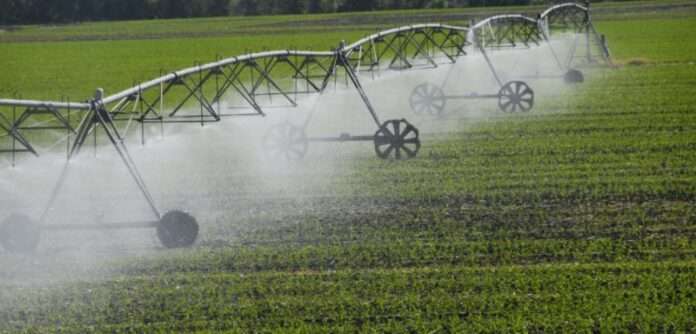
    Prior to the IGUCA’s restrictions, Mohr said, nearly all of the irrigation in his area came from inundating fields with long trenches of water that ran between the crop rows — a method that’s notorious for losing water to evaporation and runoff. Now, pretty much every piece of land that can field a more-efficient center pivot irrigation system has one.

    The water limits spurred farmers to make other changes, too. They’ve switched up what they grow, Mohr said, from mostly irrigated corn — which requires a lot of water — to a rotation that includes other crops, such as soybeans and sorghum. Some of his neighbors have gone beyond center pivots and installed subsurface drip irrigation systems that conserve even more water.

    Those changes have meant some big upfront expenses for farmers. But in Mohr’s view, it’s been worth it.

    “We have to be very careful,” Mohr said, “because without water, none of us are going to be here.”

    The state established the Walnut Creek IGUCA to leave more water for nearby streams that flow into Cheyenne Bottoms, a critical wetland bird habitat that the recent drought temporarily dried up. If aquifer levels decline enough, the water that historically flowed in a stream above it can get sucked underground and leave a dry bed on the surface.

    As opposed to local enhanced management areas, or LEMAs, that allow local landowners to come up with their own plan for cutting irrigation, IGUCAs are initiated by the state. And farmers don’t have a say about how big the cuts are or whether they have to abide by the rules the state sets.

    Here’s what that meant for farmers in the Walnut Creek area. Those who got their water rights after October of 1965 had to cut their irrigation the most — roughly twice as much as those with older water rights that were established between 1945 and 1965. Some farmers, like Mohr, had land that fell into both categories.

    The junior water rights holders, which make up roughly half of the total allocations in the area, had to reduce their water use by 42%. Those with more senior rights only had to cut irrigation by around 20%.

    Nathan Hendricks, a Kansas State University agricultural economics professor who worked on the study, said that 20% cut purposefully left senior rights farmers with as much water as the state determined was the bare minimum for growing irrigated corn in that area.

    “The juniors just got whatever was left after that amount,” Hendricks said. “So it became much more restrictive.”

    The remaining one-fifth of farmers had water rights that were established prior to the Kansas Water Appropriation Act of 1945 and didn’t have to reduce their irrigation at all — basically serving as a control group for the study.

    And it turns out that if the farmers weren’t forced to cut their water use, they didn’t choose to do it on their own. The farmers whose irrigation got grandfathered in, Hendricks said, have hardly changed how much they water their crops over the past few decades.

    Up to a certain point — around a 25% reduction in irrigation, Hendricks said — farmers can shrink their water use by just sprinkling fewer inches on a field. But once irrigation cuts exceed 25%, they pretty much have to stop watering some fields altogether, leaving the crops planted there to rely on the weather or choosing to not plant crops on those fields at all.

    The K-State study reports that the reduction in irrigated acres around Walnut Creek significantly reduced the area’s land values. That’s because there’s a big difference between rental rates for irrigated and nonirrigated farmland.

    In Barton County, for instance, an irrigated acre of land is worth more than twice as much as one without irrigation.

    The study calculated all of the potential money forfeited due to those cheaper rents within this IGUCA and showed it adds up to a loss of $283,000 per year for the region.

    For the farmers who had to stop irrigating some of their fields entirely, Hendricks said, it’s likely they also took a personal financial hit to their harvests and profits.

    “If you’re backing off irrigated acres,” Hendricks said, “it’s hard to imagine there’s not a loss.”

    Other research from part of northwest Kansas has shown that some farmers who cut irrigation end up seeing their profits go up as they spend less money pumping water from underground and buying seed and fertilizer. But the conditions farmers face — the local climate, the depth and quality of their section of aquifer — can vary greatly from one part of the state to another.

    And with the ongoing extreme drought, there’s only so much farmers can do to make up for a lack of rain even if they have irrigation.

    Parts of Ness County near the western edge of the Walnut Creek IGUCA experienced their driest year on record in 2022. And many farmers in west-central Kansas already saw drought burn up their wheat and corn crops last year, drastically reducing harvests.

    Without some precipitation in the next 60 days, Mohr said, farmers in his area will have to start making tough choices about the coming season.

    “Mother Nature’s water,” Mohr said, “is much better than irrigating water.”

    David Condos covers western Kansas for High Plains Public Radio and the Kansas News Service. You can follow him on Twitter @davidcondos.